
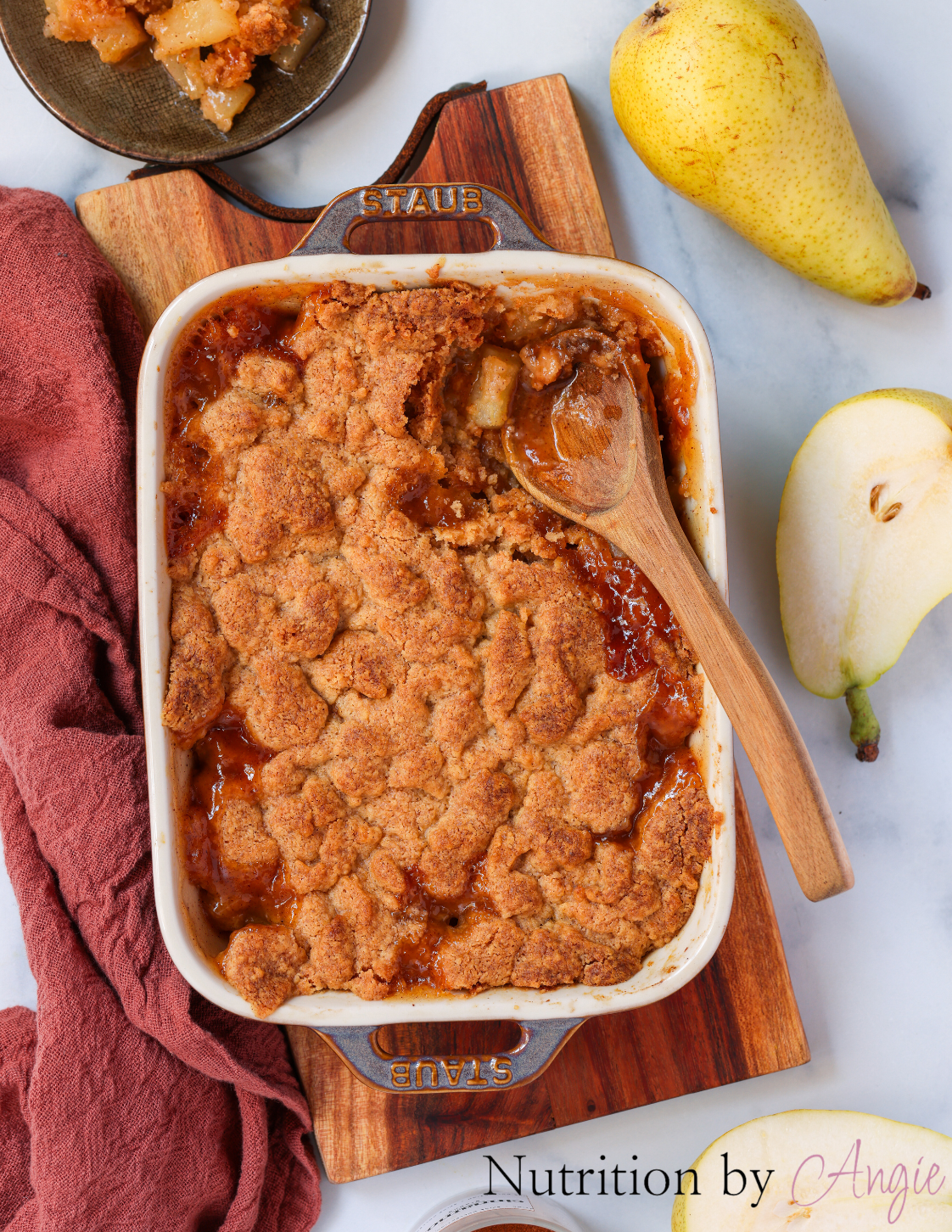
Vegan Pear Crumble with Cinnamon and Coconut Sugar
Vegan • Plant-Based • Dairy-Free with Suitable Ingredients • Egg-Free • Homemade Fruit Dessert • Cinnamon Pear Crumble • Easy Vegan Baking • Autumn Dessert • Comfort Food • Make-Ahead Dessert
This recipe contains wheat (gluten) from the all-purpose flour. Vegan butter may contain soy, nuts or other allergens, depending on the brand. Some vegan butter products may also contain traces of milk due to manufacturing processes. Check all packaged ingredients carefully. Use certified gluten-free flour and suitable vegan butter if a gluten-free version is required.
Introduction
This Vegan Pear Crumble with Cinnamon and Coconut Sugar is a comforting, fruit-filled dessert that combines tender, naturally sweet pears with a golden, buttery-style crumble topping.
The combination of juicy pears, warming cinnamon, rich coconut sugar and a crisp flour-based topping creates a delicious contrast of textures and flavours.
The pear filling becomes soft and fragrant during baking, while the crumble topping develops a golden, slightly crisp finish.
Melted vegan butter provides richness and helps the topping form delicious crumbly clusters.
Coconut sugar adds a deep, caramel-like sweetness that complements the delicate flavour of pears.
Ground cinnamon brings warmth and aroma, making this dessert particularly appealing during autumn and winter.
One of the main highlights of this easy vegan pear crumble is its use of fresh pears.
Pears provide dietary fibre, potassium, vitamin C and naturally occurring polyphenols.
They also contain water and naturally occurring sugars, which contribute to the soft, juicy texture of the filling.
The recipe uses 1kg of pears, making fruit the main ingredient by weight.
This provides a generous amount of pear flavour throughout the dessert.
However, the recipe also contains 145g of coconut sugar in total, alongside 115g of vegan butter.
These ingredients contribute substantial added sugar and fat across the finished dish.
Although coconut sugar is often marketed as a natural alternative to refined sugar, it remains a form of added sugar.
Its nutritional effects should be considered in the same way as those of other added sugars.
Similarly, vegan butter is not automatically low in saturated fat.
The fat composition depends on the oils used to make it.
Products containing coconut oil or palm oil may contain substantial amounts of saturated fat.
For people following a cholesterol-conscious dietary pattern, the type and amount of fat used are important considerations.
These factors do not mean that pear crumble cannot be enjoyed.
Instead, they highlight the importance of considering sweet desserts within the context of an overall balanced diet.
This homemade pear crumble with coconut sugar is best viewed as a delicious occasional dessert rather than a significant source of essential nutrients.
The pears contribute valuable fibre and plant compounds, while the crumble topping provides sweetness, richness and texture.
All-purpose flour creates the structure of the topping.
Cornstarch helps thicken the pear juices, preventing the filling from becoming excessively watery.
Cinnamon enhances the natural sweetness of the pears without contributing additional sugar.
The dessert is also completely egg-free and can be dairy-free when prepared with suitable vegan butter.
This makes it a convenient option for people following a vegan diet.
Pear crumble can be enjoyed warm or cooled, depending on preference.
It pairs beautifully with unsweetened plant-based yoghurt, a suitable dairy-free custard or a small scoop of vegan ice cream.
For a more balanced dessert, unsweetened fortified soy yoghurt can provide additional protein and potentially calcium.
The recipe is also useful for using ripe pears.
Pears that are slightly soft can develop a deliciously tender texture during baking.
However, very overripe pears may release excessive liquid and create a softer filling.
Choosing pears that are ripe but still hold their shape can provide the best balance of flavour and texture.
This vegan cinnamon pear crumble is particularly suitable for family meals, seasonal gatherings and cosy weekend desserts.
It can also be prepared ahead of time and reheated when needed.
With its tender pear filling, warming cinnamon and golden coconut sugar crumble, this dessert offers a delicious combination of comforting flavours and textures.
Benefits of All the Ingredients
All-Purpose Flour
All-purpose flour provides the main structure of the crumble topping.
It is typically made from refined wheat.
Flour contains carbohydrates, some plant-based protein and varying amounts of vitamins and minerals.
Its nutritional composition depends on the type of flour and whether it is fortified.
All-purpose flour provides:
Carbohydrates: Supply energy for everyday activities.
Plant-Based Protein: Contributes to overall protein intake.
B Vitamins: Depending on enrichment and fortification.
Iron: Depending on fortification.
Phosphorus: Supports healthy bones and teeth.
Selenium: Supports normal thyroid function.
Starch: Helps create the structure of baked goods.
Flour and Carbohydrates
All-purpose flour provides carbohydrates.
Carbohydrates are broken down during digestion into glucose, which can be used by the body's cells.
The 120g of flour used in this recipe contributes carbohydrates and structure to the crumble topping.
Flour and Energy
Carbohydrates are an important source of energy.
They support everyday activities and physical performance.
However, the crumble topping also contains substantial added sugar and fat.
Flour and Plant-Based Protein
Wheat flour contains some plant-based protein.
Protein contributes to normal muscle maintenance and tissue repair.
However, the amount of protein in a serving of pear crumble is likely to be modest.
Flour and B Vitamins
Wheat flour may provide B vitamins.
These contribute to normal energy metabolism.
The amounts depend on the flour and any fortification.
Flour and Iron
All-purpose flour may provide iron.
Iron contributes to normal oxygen transport.
The amount varies depending on the flour and fortification.
Flour and Selenium
Wheat flour may contribute selenium.
Selenium supports normal thyroid function and helps protect cells from oxidative stress.
The amount depends partly on the selenium content of the soil in which the wheat was grown.
Flour and Dietary Fibre
Refined all-purpose flour generally contains less dietary fibre than wholemeal flour.
Fibre supports normal digestive function.
Using some wholemeal flour can increase the fibre content of the topping, although it may change the texture.
Flour and Gluten
Conventional all-purpose wheat flour contains gluten.
People with coeliac disease should use certified gluten-free flour.
Flour and Crumble Texture
Flour combines with fat and sugar to create a crumbly topping.
During baking, the topping develops a golden texture.
Why Flour Works Well
All-purpose flour creates the structure of the crumble.
It provides a crisp, crumbly contrast to the soft pear filling.
Coconut Sugar
Coconut sugar provides sweetness and a caramel-like flavour.
It is made from the sap of coconut palm flowers.
Coconut sugar is often marketed as a natural sweetener.
However, it remains a form of added sugar.
This recipe uses 100g in the topping and 45g in the filling.
Coconut sugar provides:
Carbohydrates: Primarily in the form of sugars.
Energy: Supplies calories.
Small Amounts of Minerals: Depending on the product.
Caramel-Like Flavour: Adds depth to baked goods.
Brown Colour: Contributes to the appearance of the crumble.
Coconut Sugar and Carbohydrates
Coconut sugar is primarily composed of sugars.
These carbohydrates provide energy.
The 145g used in this recipe contributes a substantial amount of added sugar across the dessert.
Coconut Sugar and Added Sugar
Coconut sugar is an added sugar.
Although it is derived from a plant, it is not nutritionally equivalent to whole fruit.
Its contribution to total sugar intake should be considered in the same way as other added sugars.
Coconut Sugar and Minerals
Coconut sugar may contain small amounts of minerals.
However, the quantities are generally too small to make it a meaningful source of essential nutrients at typical serving sizes.
Coconut Sugar and Glycaemic Response
Coconut sugar is sometimes promoted as having a lower glycaemic index than white sugar.
However, glycaemic responses vary, and coconut sugar should not be assumed to have a substantially healthier effect on blood glucose.
Coconut Sugar and Dental Health
Frequent consumption of added sugars contributes to the risk of dental caries.
This applies to coconut sugar as well as other sugars.
Coconut Sugar and Flavour
Coconut sugar has a rich, caramel-like flavour.
It complements the natural sweetness of pears and the warmth of cinnamon.
Coconut Sugar and Baking Texture
Sugar contributes more than sweetness in baking.
It affects moisture retention, browning and texture.
Reducing sugar may change the finished crumble.
Coconut Sugar and Portion Size
The amount of sugar consumed per serving depends on the number and size of portions.
Smaller portions can help manage added sugar intake.
Why Coconut Sugar Works Well
Coconut sugar provides sweetness and a caramel-like flavour.
It enhances the pears and cinnamon, although it contributes substantial added sugar.
Ground Cinnamon
Ground cinnamon provides a warm, sweet aroma.
It is made from the dried bark of cinnamon trees.
Cinnamon contains naturally occurring aromatic compounds, including cinnamaldehyde.
Ground cinnamon provides:
Cinnamaldehyde: Contributes to its distinctive aroma.
Polyphenols: Naturally occurring plant compounds.
Small Amounts of Manganese: Depending on the quantity used.
Warm Flavour: Enhances the perception of sweetness.
Cinnamon and Aromatic Compounds
Cinnamon contains cinnamaldehyde.
This compound contributes to its characteristic warm aroma.
Cinnamon and Antioxidant Plant Compounds
Cinnamon contains naturally occurring polyphenols.
These have been studied for their antioxidant properties.
However, the half teaspoon used in this recipe provides only a small nutritional contribution.
Cinnamon and Sweetness
Cinnamon has a naturally sweet aroma.
It can enhance the perception of sweetness without adding sugar.
Cinnamon and Blood Glucose
Cinnamon has been studied for its potential effects on blood glucose regulation.
However, results are mixed, and culinary amounts should not be considered a treatment for diabetes.
Cinnamon and Coumarin
Cassia cinnamon contains more coumarin than Ceylon cinnamon.
Very high, regular intakes of coumarin may be harmful to the liver.
The small amount used in this recipe is unlikely to be a concern for most people.
Cinnamon and Flavour
Cinnamon complements pears beautifully.
It adds warmth and depth to the dessert.
Why Cinnamon Works Well
Cinnamon provides a comforting aroma.
It enhances the fruit flavours and caramel-like sweetness of the coconut sugar.
Vegan Butter
Vegan butter provides richness and helps create the crumble topping.
It is typically made from a blend of vegetable oils, water and other ingredients.
The nutritional composition varies considerably between brands.
Some vegan butter products contain coconut oil or palm oil, which are rich in saturated fat.
Vegan butter may provide:
Fat: Supplies energy.
Unsaturated Fatty Acids: Depending on the oils used.
Saturated Fatty Acids: Depending on the oils used.
Vitamin E: Present in varying amounts.
Vitamin A: If fortified.
Vitamin D: If fortified.
Texture: Helps create a crumbly topping.
Vegan Butter and Fat
Vegan butter provides dietary fat.
Fat is an energy-dense nutrient.
It also helps carry fat-soluble vitamins in the diet.
Vegan Butter and Saturated Fat
Some vegan butter products contain substantial saturated fat.
The amount depends on the oils used.
Products made with coconut oil or palm oil may be higher in saturated fat.
Vegan Butter and Unsaturated Fats
Some vegan butter products contain oils rich in unsaturated fats.
Replacing saturated fats with unsaturated fats can help improve LDL cholesterol levels.
Checking the nutrition label can help identify products with a more favourable fat profile.
Vegan Butter and Vitamin E
Some vegetable oils contain vitamin E.
Vitamin E helps protect cells from oxidative stress.
However, the amount present in vegan butter varies.
Vegan Butter and Fortification
Some vegan butter products contain added vitamins A or D.
These nutrients should only be claimed when the product is fortified.
Vegan Butter and Baking Texture
Vegan butter helps create a crumbly topping.
It coats the flour and contributes tenderness.
Vegan Butter and Flavour
Vegan butter adds richness.
It helps create a traditional crumble flavour without dairy butter.
Vegan Butter and Portion Size
The 115g of vegan butter used in this recipe contributes a substantial amount of fat across the dessert.
Portion size is relevant when considering overall energy and saturated fat intake.
Vegan Butter and Allergens
Some vegan butter products contain soy, nuts or other allergens.
Checking the label is important.
Why Vegan Butter Works Well
Vegan butter provides richness and texture.
It helps create a golden, crumbly topping that contrasts with the soft pears.
Pears
Pears are the main ingredient in this dessert.
They provide natural sweetness, moisture and dietary fibre.
Pears are particularly valued for their fibre content, potassium and naturally occurring polyphenols.
The recipe uses 1kg of pears, making fruit the main ingredient by weight.
Pears provide:
Dietary Fibre: Supports normal digestive function.
Pectin: A naturally occurring soluble fibre.
Vitamin C: Supports normal immune function.
Potassium: Supports normal muscle function.
Copper: Supports normal iron transport.
Vitamin K: Supports normal blood clotting.
Naturally Occurring Polyphenols: Contribute to dietary plant compound intake.
Water: Contributes moisture.
Natural Carbohydrates: Supply energy.
Pears and Dietary Fibre
Pears provide dietary fibre.
Fibre supports normal bowel function and digestive health.
The amount depends partly on whether the skins are included.
Because this recipe uses peeled pears, some fibre is removed.
Pears and Pectin
Pears contain pectin, a type of soluble fibre.
Pectin contributes to the fibre content of pears.
However, the amount provided by a serving of pear crumble should not be assumed to produce a specific cholesterol-lowering effect.
Pears and Vitamin C
Pears contain vitamin C.
Vitamin C contributes to normal immune function and collagen formation.
Some vitamin C is lost during baking.
Pears and Potassium
Pears provide potassium.
Potassium contributes to normal muscle function and the maintenance of normal blood pressure.
Pears and Copper
Pears contain copper.
Copper contributes to normal iron transport and connective tissue maintenance.
Pears and Vitamin K
Pears contain vitamin K.
Vitamin K contributes to normal blood clotting and bone maintenance.
The amount is relatively modest compared with leafy green vegetables.
Pears and Polyphenols
Pears contain naturally occurring polyphenols.
These contribute to dietary plant compound intake.
The amounts vary depending on the pear variety and whether the skin is included.
Pears and Natural Sweetness
Pears contain naturally occurring sugars.
These provide sweetness alongside water, fibre and micronutrients.
Pears and Water
Pears have a high water content.
This contributes to the juicy texture of the filling.
Pears and Digestive Health
Pears contain fibre and fermentable carbohydrates.
These can support intestinal bacteria but may cause bloating in some individuals.
Pears and Sorbitol
Pears naturally contain sorbitol, a sugar alcohol.
Sorbitol can cause digestive discomfort in people who are sensitive to FODMAPs.
Individual tolerance varies.
Pears and Baking
Pears soften during baking.
They release juices that combine with the coconut sugar and cornstarch.
Pears and Texture
Ripe but firm pears generally hold their shape better during baking.
Very ripe pears may create a softer filling.
Pears and Heart-Conscious Nutrition
Pears are naturally low in saturated fat.
They provide fibre and naturally occurring plant compounds.
Including fruit regularly contributes to a heart-conscious dietary pattern.
Why Pears Work Well
Pears provide natural sweetness, moisture and a delicate flavour.
They create a soft, juicy filling that complements the crisp crumble topping.
Cornstarch
Cornstarch, also known as cornflour in Ireland and the UK, is used to thicken the pear filling.
It is made from the starch of maize.
Cornstarch is primarily composed of carbohydrates.
Cornstarch provides:
Carbohydrates: Supply energy.
Starch: Helps thicken fruit fillings.
Texture: Creates a smooth, cohesive filling.
Cornstarch and Carbohydrates
Cornstarch is primarily composed of starch.
Starch is a carbohydrate that supplies energy.
The 30g used in this recipe contributes carbohydrates across the dessert.
Cornstarch and Thickening
Cornstarch absorbs liquid when heated.
Its starch granules swell and thicken the pear juices.
This helps create a cohesive filling.
Cornstarch and Texture
Cornstarch helps prevent the pear filling from becoming excessively watery.
It creates a smooth, glossy consistency.
Cornstarch and Gluten
Pure cornstarch is naturally gluten-free.
However, cross-contact can occur during manufacturing.
People with coeliac disease should choose certified gluten-free products where appropriate.
Cornstarch and Nutritional Contribution
Cornstarch provides relatively few vitamins, minerals or dietary fibre.
Its main purpose in this recipe is thickening.
Cornstarch and Alternatives
Other thickeners may be used in some fruit desserts.
However, the amount required may differ.
Why Cornstarch Works Well
Cornstarch thickens the pear juices.
It helps create a rich, spoonable fruit filling.
Why Vegan Pear Crumble Makes a Delicious Homemade Dessert
Includes Fresh Fruit
Pears provide dietary fibre, potassium and naturally occurring plant compounds.
Contains Dietary Fibre
Pears contribute fibre that supports normal digestive function.
Provides Natural Fruit Sweetness
Pears contain naturally occurring sugars alongside water and fibre.
Contains Vitamin C
Pears contribute vitamin C, although some is lost during baking.
Includes Naturally Occurring Polyphenols
Pears and cinnamon provide a variety of plant compounds.
Offers a Dairy-Free Dessert Option
Vegan butter replaces conventional dairy butter.
Contains No Eggs
The recipe is naturally egg-free.
Works Well for Family Desserts
Pear crumble is a familiar, comforting dessert that can be shared.
Can Be Prepared Ahead of Time
The dessert can be made in advance and reheated when needed.
Allows Control Over Ingredients and Portions
Homemade baking allows ingredient choices and portion sizes to be adjusted, although this recipe still contains substantial added sugar and fat.
Delicious Serving Suggestions
With Unsweetened Soy Yoghurt
Serve with unsweetened fortified soy yoghurt for additional plant-based protein and potentially calcium.
With Vegan Vanilla Ice Cream
Pair with a small scoop of vegan vanilla ice cream for a traditional dessert combination.
Check the saturated fat and sugar content, as these vary between products.
With Dairy-Free Custard
Serve with warm dairy-free custard for a comforting dessert.
Choose a suitable vegan product.
With Fresh Berries
Add raspberries, strawberries or blueberries for extra fruit and a refreshing contrast.
With Chopped Walnuts
Sprinkle with chopped walnuts for crunch, unsaturated fats and plant-based omega-3 ALA.
With Extra Cinnamon
Finish with a light sprinkle of cinnamon for additional warmth and aroma.
Tips for the Best Vegan Pear Crumble
Choose ripe but firm pears: They provide sweetness while holding their shape.
Avoid excessively soft pears: They may create a watery filling.
Peel pears evenly: This creates a smooth texture.
Cut pears into similar-sized pieces: This encourages consistent baking.
Use fresh pears: They provide the best flavour.
Choose good-quality coconut sugar: Its flavour varies between brands.
Measure coconut sugar accurately: The recipe already contains a substantial amount.
Consider reducing added sugar if preferred: This may change sweetness and texture.
Use fresh ground cinnamon: It provides the best aroma.
Measure cinnamon accurately: Too much can overpower the pears.
Choose suitable vegan butter: Check the ingredients and fat composition.
Check vegan butter allergens: Soy or nuts may be present.
Melt vegan butter gently: Avoid overheating it.
Allow melted butter to cool slightly: This helps create the desired topping texture.
Measure flour accurately: Too much can create a dry topping.
Use certified gluten-free flour if required: Conventional wheat flour contains gluten.
Avoid overmixing the crumble topping: This helps preserve a crumbly texture.
Use cornstarch to thicken the filling: It helps control excess moisture.
Measure cornstarch accurately: Too much can create a gummy filling.
Mix cornstarch evenly with the pears: This helps prevent lumps.
Choose a suitable baking dish: A shallow dish encourages even baking.
Spread the filling evenly: This helps the pears cook consistently.
Distribute the crumble topping evenly: This encourages consistent browning.
Avoid pressing the topping down too firmly: A loose texture creates a better crumble.
Bake until the filling is bubbling: This helps ensure the cornstarch has thickened.
Allow the crumble to rest before serving: The filling thickens as it cools.
Serve warm if preferred: This highlights the cinnamon and pear flavours.
Store leftovers in an airtight container: This helps preserve freshness.
Refrigerate promptly: Cool and refrigerate within two hours.
Consume refrigerated leftovers within approximately 3–4 days: Keep at 5°C or below.
Freeze in suitable portions: This makes the dessert convenient for future occasions.
Reheat thoroughly: Ensure the filling is piping hot before serving.
Avoid repeated reheating: This helps maintain texture and food safety.
Serve in suitable portions: This helps manage added sugar and saturated fat intake.
A Note on Pears, Coconut Sugar and Cholesterol-Friendly Nutrition
This Vegan Pear Crumble combines fresh pears, flour, coconut sugar, vegan butter and cinnamon.
Pears are the main ingredient by weight.
They provide dietary fibre, potassium, vitamin C and naturally occurring polyphenols.
Including fruit regularly contributes to a varied and balanced dietary pattern.
Pears contain pectin, a type of soluble fibre.
Soluble fibre can contribute to cholesterol management as part of a balanced diet.
However, the amount of pectin in a serving of pear crumble is unlikely to provide a meaningful cholesterol-lowering effect on its own.
The recipe uses peeled pears.
Leaving pear skins on in suitable recipes can increase dietary fibre intake.
All-purpose flour provides carbohydrates and structure.
However, refined flour generally contains less fibre than wholemeal flour.
Coconut sugar provides sweetness and a caramel-like flavour.
Despite its natural origin, it remains an added sugar.
The 145g of coconut sugar used in this recipe is a substantial amount.
Reducing added sugar intake is relevant to overall dietary quality, dental health and energy balance.
Vegan butter contributes richness and texture.
However, vegan butter is not automatically low in saturated fat.
The saturated fat content depends on the oils used.
Products containing coconut oil or palm oil may contain substantial amounts of saturated fat.
Replacing saturated fats with unsaturated fats can help improve LDL cholesterol levels.
For people managing cholesterol, choosing products with a more favourable unsaturated-to-saturated fat ratio may be beneficial.
Cinnamon adds warmth and aroma.
However, the small amount used should primarily be appreciated for flavour rather than considered a therapeutic ingredient.
Cornstarch thickens the filling but provides relatively little dietary fibre or micronutrients.
This dessert can be enjoyed as part of a balanced dietary pattern.
Portion size and frequency are particularly relevant because the recipe contains substantial added sugar and fat.
Pairing a small serving with unsweetened fortified soy yoghurt can provide additional protein and potentially calcium.
A varied vegan dietary pattern that regularly includes vegetables, fruit, whole grains, legumes, nuts, seeds and unsaturated fats can support cardiovascular health and overall nutritional wellbeing.
With its tender pear filling, warming cinnamon and golden coconut sugar crumble, this Vegan Pear Crumble is a delicious, comforting homemade dessert best enjoyed in moderation as part of a varied and balanced diet.