
Venison Bone Broth
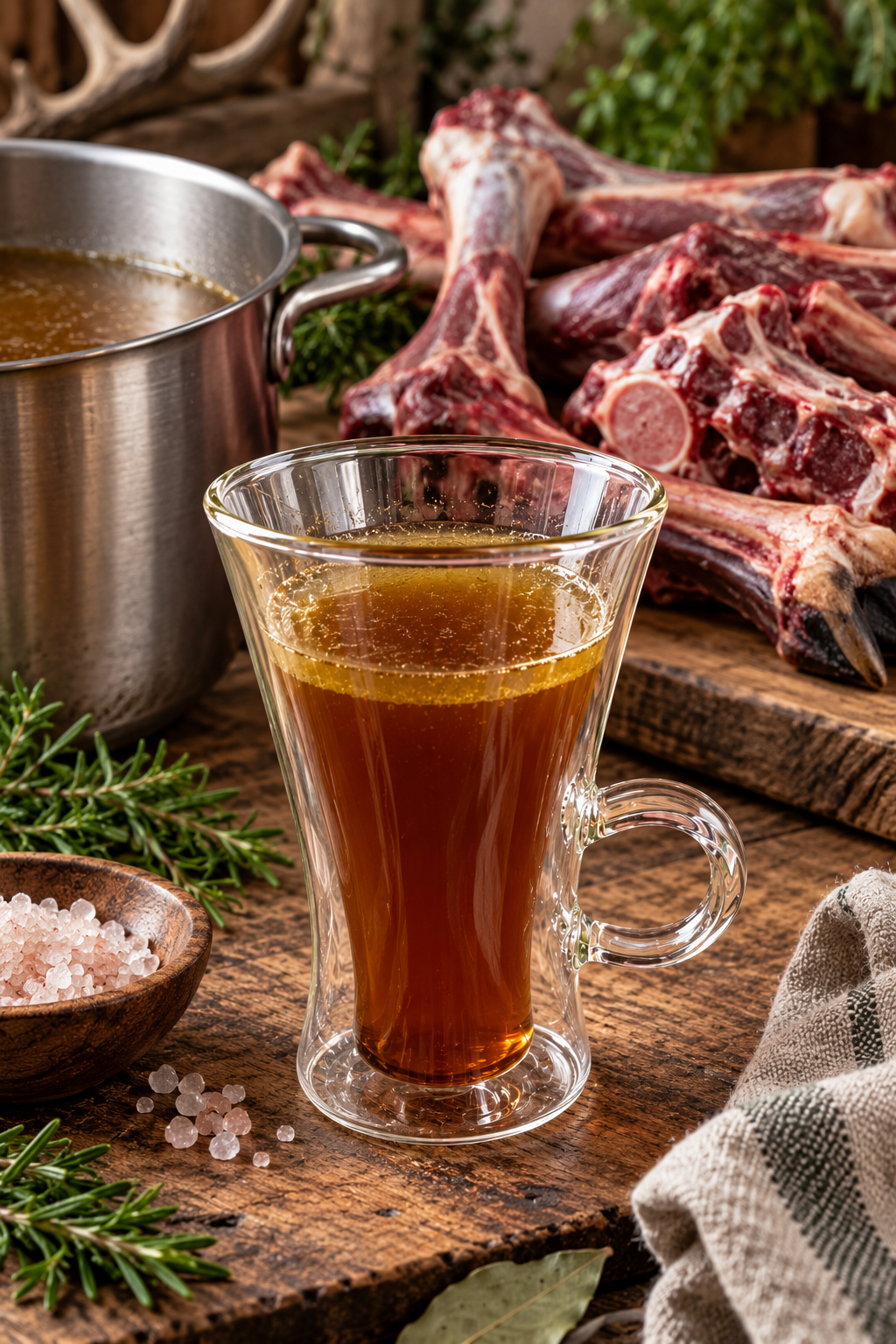
Homemade Venison Bone Broth
Carnivore • Ketovore • Keto • Primal • High-Protein • Gluten-Free • Dairy-Free • Zero-Carb
Introduction
This Homemade Venison Bone Broth is a simple, traditional way to make use of more of the deer, transforming venison bones, joints, neck bones and trimmings into a rich and deeply savoury broth.
Using the front legs is particularly useful for bone broth because they contain bones, joints, connective tissue, tendons and cartilage. Combined with meaty neck bones and trimmings, they create a full-bodied broth that can become beautifully gelatinous once chilled.
Slowly simmering the venison in water allows components from the bones and connective tissues to move into the cooking liquid while concentrating the natural flavour of the meat. The result can be enjoyed warm on its own or used as a base for soups, stews, sauces and other venison recipes.
For families who hunt their own deer, making venison bone broth is also an excellent nose-to-tail cooking technique. Instead of discarding bones and tougher connective tissues after butchering, they can be turned into another useful food for the kitchen.
Made with nothing more than venison, water and sea salt, the basic recipe is suitable for carnivore, ketovore, keto and Primal diets. Apple cider vinegar can also be included as an optional addition for those following a less strict carnivore approach.
Benefits of All the Ingredients
Venison Front Legs, Bones and Joints
Venison front legs contain much more than bone. The joints and surrounding tissues contain collagen-rich connective tissue, cartilage and tendons, making them particularly useful for preparing a naturally gelatinous broth.
During prolonged moist cooking, collagen breaks down into gelatin, which gives well-made bone broth its characteristic body and jelly-like consistency after refrigeration.
Any meat remaining around the bones also contributes flavour and protein to the broth.
Using the front legs for broth is an excellent example of nose-to-tail venison cooking, allowing parts of the animal that might otherwise be underused to become a valuable kitchen ingredient.
Venison Neck Bones and Trimmings
Venison neck bones and trimmings contribute additional meat, connective tissue and flavour.
The neck contains numerous muscles and connective tissues because it is heavily used by the animal. These tougher tissues respond particularly well to long, slow cooking.
Leaving some meat and connective tissue attached to the bones creates a richer, more savoury broth than using completely cleaned bones alone.
After cooking, any tender meat that separates easily from the bones can also be removed and used in soups, stews or other meals rather than discarded.
Water
Cold water provides the cooking medium that gradually extracts flavour and soluble components from the venison during simmering.
Starting with enough water to completely cover the bones ensures they remain submerged throughout the initial cooking process.
As the broth slowly cooks and some water evaporates, the flavour becomes increasingly concentrated.
For an especially rich broth, avoid adding excessive amounts of water. The bones should be covered, but they don't need to be swimming in a very large volume of liquid.
Sea Salt
Sea salt enhances the natural savoury flavour of venison.
Adding salt conservatively is particularly useful when the broth will later be reduced or used as an ingredient in other recipes, because reducing the liquid also concentrates its saltiness.
The final seasoning can therefore be adjusted after cooking.
Apple Cider Vinegar – Optional
A small amount of apple cider vinegar can provide mild acidity to the cooking liquid.
It's commonly included in traditional bone broth recipes and adds a subtle acidic note, although vinegar isn't necessary to produce a nutritious or gelatin-rich broth. Long, gentle cooking and using plenty of joints and connective tissue are more important for developing the characteristic gelatinous texture.
For a strict carnivore bone broth, simply leave the apple cider vinegar out.
Why Venison Makes Excellent Bone Broth
Venison is particularly well suited to nose-to-tail cooking because a harvested deer provides much more than steaks and roasting joints.
Front legs, neck bones, joints and connective tissues that aren't always used for conventional cuts can become valuable ingredients for broth.
A properly prepared venison bone broth can provide gelatin and amino acids derived from collagen, including glycine and proline, alongside varying amounts of protein and minerals. The exact nutritional composition can vary considerably depending on the bones used, the amount of attached meat and connective tissue, the water-to-bone ratio and cooking time.
A broth that turns into a soft jelly when refrigerated is a good indication that a substantial amount of gelatin has moved into the liquid during cooking.
For a hunting household, it's one of the simplest ways to use more of the deer and minimise waste while producing a versatile homemade staple.