
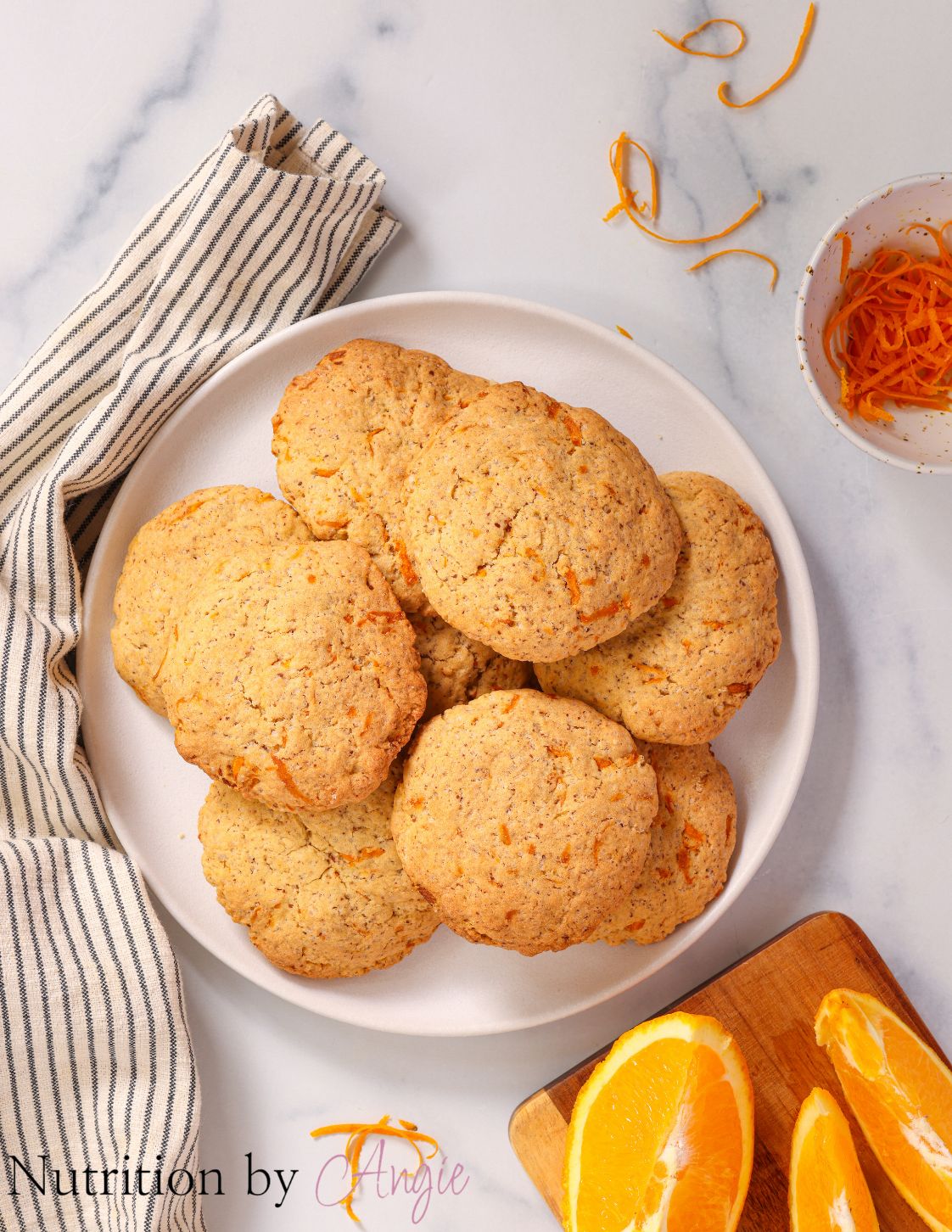
Vegan Orange Cookies with Coconut Sugar, Flaxseed and Fresh Orange Zest
Vegan • Plant-Based • Dairy-Free with Suitable Ingredients • Egg-Free • Homemade Cookies • Orange Zest Biscuits • Easy Vegan Baking • Coconut Sugar Cookies • Afternoon Tea Treat • Make-Ahead Baking
This recipe contains wheat (gluten) from the self-raising flour. Vegan margarine may contain soy or other allergens, depending on the brand, and some products carry milk cross-contact warnings. Check the ingredients of the margarine, flour and vanilla extract carefully. Spelt or ordinary wheat flour is not suitable for people with coeliac disease; use an appropriate gluten-free self-raising flour blend if required.
Introduction
These Vegan Orange Cookies with Coconut Sugar, Flaxseed and Fresh Orange Zest are fragrant, buttery-style homemade biscuits with a delicate citrus flavour and a rich, caramel-like sweetness.
Made with ground flaxseed, vegan margarine, coconut sugar, vanilla extract, self-raising flour and fresh orange zest, they offer a simple way to enjoy classic home baking without eggs or dairy butter.
The combination of orange and vanilla creates a beautifully balanced flavour.
Fresh orange zest adds bright, aromatic citrus notes, while vanilla brings warmth and sweetness.
Coconut sugar contributes a deeper flavour than ordinary white sugar, giving the cookies a subtle caramel-like character.
Vegan margarine provides richness and helps create a tender texture.
Self-raising flour gives the dough structure and contains raising agents that influence the finished cookies' texture.
Ground flaxseed adds a small amount of dietary fibre and plant-based omega-3 fatty acids.
It can also contribute to binding in vegan baking, particularly when mixed with water.
However, because the ingredient list specifies ground flaxseed without additional liquid, its precise binding effect will depend on how the dough is prepared.
One of the most appealing features of these easy vegan orange cookies is their use of fresh citrus zest.
Orange zest contains aromatic oils that provide concentrated orange flavour.
This allows the cookies to taste distinctly citrusy without requiring orange juice or artificial orange flavouring.
The zest also contains naturally occurring plant compounds, including flavonoids.
However, the zest of one orange is used across the entire batch, so its nutritional contribution per cookie is small.
The ground flaxseed is another interesting ingredient.
Flaxseed provides alpha-linolenic acid (ALA), an essential plant-based omega-3 fatty acid.
It also contains dietary fibre, lignans and minerals.
However, this recipe uses only one tablespoon of ground flaxseed across the batch.
Although it adds nutritional variety, the amount in an individual cookie is likely to be modest.
These cookies also contain 200g of coconut sugar and 200g of vegan margarine.
Both ingredients make important contributions to flavour and texture.
Coconut sugar is an added sugar, despite its natural-sounding name.
Vegan margarine can contain varying amounts of saturated and unsaturated fats depending on the oils used.
Consequently, these cookies are best enjoyed as an occasional sweet treat rather than regarded as a health food simply because they are vegan.
This distinction is important when discussing plant-based baking.
A vegan recipe can be delicious, convenient and suitable for people avoiding animal products without necessarily being low in sugar, fat or calories.
What matters most is the overall dietary pattern, including the frequency and portion size of sweet foods.
These orange zest vegan biscuits are particularly suitable for afternoon tea, seasonal baking, family gatherings and homemade gifts.
Their citrus flavour makes them feel fresh and fragrant, while the coconut sugar and vanilla create a comforting sweetness.
They can be enjoyed with tea, coffee or a suitable plant-based milk.
For a more substantial snack, they can be paired with fresh fruit and a protein-containing food such as unsweetened fortified soy yoghurt.
The recipe is also a useful introduction to vegan baking because it demonstrates how traditional ingredients can be replaced with plant-based alternatives.
Vegan margarine replaces dairy butter.
Ground flaxseed can contribute some of the binding properties often associated with eggs.
Self-raising flour helps provide structure and lift.
Fresh orange zest adds flavour without requiring a complicated ingredient list.
With their rich coconut sugar sweetness, delicate vanilla aroma and vibrant orange zest, these Vegan Orange Cookies are a delicious homemade treat to enjoy as part of a varied and balanced diet.
Benefits of All the Ingredients
Ground Flaxseed
Ground flaxseed comes from the seeds of the flax plant, Linum usitatissimum.
Flaxseeds are particularly valued for their dietary fibre, plant-based omega-3 fatty acids and naturally occurring lignans.
Ground flaxseed is often used in vegan baking because it can absorb liquid and develop a gel-like consistency.
This can help bind ingredients together.
Ground flaxseed provides:
Alpha-Linolenic Acid (ALA): An essential plant-based omega-3 fatty acid.
Dietary Fibre: Supports normal digestive function.
Plant-Based Protein: Contributes to overall protein intake.
Lignans: Naturally occurring plant compounds.
Magnesium: Supports normal muscle and nerve function.
Thiamin (Vitamin B1): Supports normal energy metabolism.
Manganese: Contributes to normal metabolism.
Phosphorus: Supports healthy bones and teeth.
Copper: Supports normal iron transport.
Flaxseed and Omega-3 Fatty Acids
Flaxseed is a valuable source of alpha-linolenic acid, or ALA.
ALA is an essential omega-3 fatty acid.
It contributes to the maintenance of normal blood cholesterol levels when consumed in sufficient amounts.
The tablespoon used in this recipe provides ALA across the batch.
However, the amount consumed in an individual cookie depends on the number of cookies made.
Flaxseed and ALA Conversion
The body can convert some ALA into EPA and DHA.
However, this conversion is limited.
Flaxseed should not be considered nutritionally identical to algae-derived EPA and DHA supplements.
Flaxseed and Dietary Fibre
Flaxseed contains soluble and insoluble dietary fibre.
Fibre supports normal bowel function and digestive health.
The amount provided by one tablespoon across an entire batch of cookies is relatively small.
Flaxseed and Soluble Fibre
Flaxseed contains soluble fibre that can absorb water.
This property contributes to its usefulness in vegan baking.
Regular flaxseed consumption has been studied for its effects on cholesterol.
However, one tablespoon divided across a batch of cookies is unlikely to provide a meaningful cholesterol-lowering effect on its own.
Flaxseed and Lignans
Flaxseed is a rich dietary source of lignans.
Lignans are naturally occurring plant compounds.
They have been studied for their potential biological effects.
However, flaxseed should not be considered a treatment for disease.
Flaxseed and Plant-Based Protein
Flaxseed contains plant-based protein.
Protein contributes to normal muscle maintenance and tissue repair.
The quantity used in this recipe makes only a modest contribution to overall protein intake.
Flaxseed and Magnesium
Flaxseed provides magnesium.
Magnesium contributes to normal muscle and nerve function.
It also supports normal energy metabolism.
Flaxseed and Thiamin
Flaxseed contains thiamin, also known as vitamin B1.
Thiamin contributes to normal energy metabolism and nervous system function.
Flaxseed and Manganese
Flaxseed provides manganese.
Manganese contributes to normal metabolism and bone maintenance.
Flaxseed and Ground Versus Whole Seeds
Ground flaxseed is generally easier to digest than whole flaxseed.
Grinding helps make its nutrients more accessible.
Whole flaxseeds may pass through the digestive system partly intact.
Flaxseed and Vegan Baking
When ground flaxseed is mixed with water, it can form a gel-like mixture.
This is sometimes used as an egg substitute.
However, ground flaxseed alone does not always replace all the structural functions of an egg.
The finished cookie texture depends on the overall recipe.
Flaxseed and Storage
Ground flaxseed contains unsaturated fats that can oxidise over time.
Storing it in an airtight container in the refrigerator can help preserve freshness.
Why Ground Flaxseed Works Well
Ground flaxseed adds a small amount of fibre and plant-based omega-3 ALA.
It can also contribute to the texture and binding properties of vegan cookie dough.
Vegan Margarine
Vegan margarine provides richness, tenderness and flavour.
It is generally made from vegetable oils, water and other ingredients.
The nutritional composition varies considerably between brands.
Some vegan margarines contain oils rich in unsaturated fats, while others contain coconut oil or palm oil, which can increase saturated fat content.
Vegan margarine may provide:
Fat: Supplies energy.
Unsaturated Fatty Acids: Depending on the oils used.
Saturated Fatty Acids: Depending on the oils used.
Vitamin E: Depending on the vegetable oils used.
Vitamin A: If fortified.
Vitamin D: If fortified.
Texture: Helps create tender cookies.
Moisture: Contributes to dough consistency.
Vegan Margarine and Dietary Fat
Vegan margarine provides dietary fat.
Fat supplies energy and contributes to the texture of baked goods.
It also helps the body absorb fat-soluble vitamins.
Vegan Margarine and Unsaturated Fats
Some vegan margarines contain oils rich in unsaturated fats.
These may include rapeseed, sunflower or other vegetable oils.
Replacing saturated fats with unsaturated fats can help improve LDL cholesterol levels.
Vegan Margarine and Saturated Fat
Not all vegan margarines are low in saturated fat.
Products containing coconut oil or palm oil may contain substantial amounts.
Checking the nutrition label is important when choosing a product for cholesterol-conscious cooking.
Vegan Margarine and Vitamin E
Some vegetable oils naturally contain vitamin E.
Vitamin E helps protect cells from oxidative stress.
However, the amount in vegan margarine depends on the oils and processing methods used.
Vegan Margarine and Fortification
Some vegan margarine products are fortified with vitamins A or D.
These nutrients should only be claimed when the product is fortified.
Vegan Margarine and Baking Texture
Margarine contributes tenderness to cookie dough.
Fat influences how the cookies spread and how their texture develops during baking.
Vegan Margarine and Moisture
Margarine contains both fat and water.
The proportion varies between products.
This can affect cookie texture, particularly when using a soft spread rather than a block-style baking margarine.
Vegan Margarine and Flavour
Vegan margarine provides a rich, buttery-style flavour.
It complements the orange zest and vanilla.
Vegan Margarine and Energy Density
Margarine is energy-dense because of its fat content.
The 200g used in this recipe contributes a substantial amount of fat and energy across the batch.
Vegan Margarine and Allergens
Some vegan margarine products contain soy or other allergens.
Others may carry milk cross-contact warnings.
Checking the ingredient label is essential.
Vegan Margarine and Product Choice
A margarine suitable for baking generally provides more predictable results than a very low-fat spread.
Products with different water and fat contents can behave differently in cookie dough.
Why Vegan Margarine Works Well
Vegan margarine provides richness and tenderness.
It helps create a satisfying cookie texture without dairy butter.
Coconut Sugar
Coconut sugar provides sweetness and a caramel-like flavour.
It is made from the sap of coconut palm flowers.
Coconut sugar is sometimes marketed as a natural alternative to refined sugar.
However, it remains a form of added sugar.
Coconut sugar provides:
Carbohydrates: Primarily in the form of sugars.
Energy: Supplies calories.
Small Amounts of Minerals: Depending on the product.
Caramel-Like Flavour: Adds depth to baked goods.
Brown Colour: Contributes to cookie appearance.
Moisture Retention: Influences baked texture.
Coconut Sugar and Carbohydrates
Coconut sugar is primarily composed of sugars.
These carbohydrates supply energy.
The 200g used in this recipe contributes a substantial amount of added sugar across the batch.
Coconut Sugar and Added Sugar
Coconut sugar is an added sugar.
Although it comes from a plant, it is not nutritionally equivalent to whole fruit.
Its contribution to overall sugar intake should be considered in the same way as that of other added sugars.
Coconut Sugar and Minerals
Coconut sugar may contain small amounts of minerals.
However, these amounts are generally too small to make it a meaningful source of essential nutrients at typical serving sizes.
Coconut Sugar and Glycaemic Response
Coconut sugar is sometimes promoted as having a lower glycaemic index than white sugar.
However, glycaemic responses vary.
Coconut sugar should not be assumed to have a substantially healthier effect on blood glucose.
Coconut Sugar and Dental Health
Frequent consumption of added sugars contributes to the risk of dental caries.
This applies to coconut sugar as well as other sugars.
Coconut Sugar and Flavour
Coconut sugar has a caramel-like flavour.
It complements the fresh orange zest and vanilla extract.
Coconut Sugar and Browning
Sugar contributes to browning during baking.
It influences the colour and flavour of the cookies.
Coconut Sugar and Texture
Sugar affects cookie spread, crispness and moisture retention.
Reducing sugar can change the finished texture.
Coconut Sugar and Portion Size
The amount of sugar consumed per cookie depends on the number and size of cookies made.
Smaller portions can help manage added sugar intake.
Coconut Sugar and Overall Dietary Balance
Sweet foods can be included in a balanced diet.
However, frequent consumption of foods high in added sugar can make it more difficult to maintain an overall nutrient-dense dietary pattern.
Why Coconut Sugar Works Well
Coconut sugar provides rich sweetness and a caramel-like flavour.
It complements the citrus and vanilla, although it contributes substantial added sugar.
Vanilla Extract
Vanilla extract provides a sweet, warm aroma.
It is typically made by extracting flavour compounds from vanilla beans.
Vanilla contains naturally occurring aromatic compounds, including vanillin.
Vanilla extract provides:
Vanillin: Contributes to its characteristic aroma.
Aromatic Plant Compounds: Enhance flavour.
Small Amounts of Polyphenols: Depending on the product.
Sweet Aroma: Enhances the perception of sweetness.
Vanilla and Vanillin
Vanilla extract contains vanillin.
Vanillin is the main compound responsible for vanilla's characteristic aroma.
Vanilla and Aromatic Compounds
Vanilla contains a variety of naturally occurring aromatic compounds.
These contribute to its complex flavour.
Vanilla and Antioxidant Plant Compounds
Vanilla contains naturally occurring plant compounds.
Some have been studied for their antioxidant properties.
However, the teaspoon used in this recipe provides a negligible nutritional contribution.
Vanilla and Sweetness
Vanilla has a naturally sweet aroma.
It can enhance the perception of sweetness without contributing much sugar itself.
Vanilla and Flavour Balance
Vanilla complements citrus flavours.
It softens the sharper notes of orange zest and balances the caramel-like coconut sugar.
Vanilla and Alcohol
Traditional vanilla extract may contain alcohol as a carrier.
Most of the alcohol is used in very small quantities, and some may evaporate during baking.
Alcohol-free vanilla flavourings are available for those who prefer them.
Vanilla and Added Sugar
Some vanilla flavourings contain added sugar.
Checking the label can help identify the product's composition.
Why Vanilla Extract Works Well
Vanilla adds warmth and aromatic depth.
It complements the fresh orange zest and rich coconut sugar.
Self-Raising Flour
Self-raising flour provides the main structure of the cookies.
It is typically made from wheat flour with added raising agents.
The exact composition varies between brands.
Self-raising flour provides carbohydrates, some plant-based protein and varying amounts of vitamins and minerals.
Self-raising flour provides:
Carbohydrates: Supply energy.
Plant-Based Protein: Contributes to overall protein intake.
B Vitamins: Depending on enrichment and fortification.
Iron: Depending on fortification.
Phosphorus: Supports healthy bones and teeth.
Selenium: Supports normal thyroid function.
Starch: Contributes to cookie structure.
Raising Agents: Help influence the finished texture.
Self-Raising Flour and Carbohydrates
Self-raising flour provides carbohydrates.
Carbohydrates supply energy for everyday activities.
The 320g used in this recipe forms the main structural component of the cookies.
Self-Raising Flour and Plant-Based Protein
Wheat flour contains some plant-based protein.
Protein contributes to normal muscle maintenance and tissue repair.
However, cookies are not generally a concentrated source of protein.
Self-Raising Flour and B Vitamins
Wheat flour may provide B vitamins.
These contribute to normal energy metabolism.
The amounts depend on the flour and any fortification.
Self-Raising Flour and Iron
Some self-raising flours provide iron.
Iron contributes to normal oxygen transport.
The amount depends on the flour and fortification.
Self-Raising Flour and Selenium
Wheat flour may contain selenium.
Selenium supports normal thyroid function and helps protect cells from oxidative stress.
The amount varies depending on the wheat's growing conditions.
Self-Raising Flour and Dietary Fibre
Refined self-raising flour generally contains less dietary fibre than wholemeal flour.
Fibre supports normal digestive function.
Using a wholemeal self-raising flour blend may increase fibre content, although it can change the cookie texture.
Self-Raising Flour and Gluten
Conventional self-raising flour contains wheat gluten.
It is not suitable for people with coeliac disease or wheat allergy.
Certified gluten-free self-raising flour blends are available.
Self-Raising Flour and Raising Agents
Self-raising flour contains chemical raising agents.
These release gas during baking and influence the texture of the cookies.
Self-Raising Flour and Cookie Structure
Flour provides starch and proteins that help the dough hold its shape.
The balance of flour, fat and sugar affects the final texture.
Self-Raising Flour and Measuring
Accurate measurement is important.
Too much flour can create dry, dense cookies.
Self-Raising Flour and Storage
Flour should be stored in a cool, dry place.
Old self-raising flour may produce less reliable results because its raising agents can lose effectiveness over time.
Why Self-Raising Flour Works Well
Self-raising flour provides structure and lift.
It helps create a tender cookie texture.
Fresh Orange Zest
Fresh orange zest provides the distinctive citrus flavour in these cookies.
It is the coloured outer layer of orange peel.
The zest contains aromatic oils and naturally occurring plant compounds.
Orange zest provides:
Limonene: A naturally occurring citrus aroma compound.
Flavonoids: Naturally occurring plant compounds.
Small Amounts of Vitamin C: Depending on preparation and baking.
Aromatic Oils: Provide concentrated orange flavour.
Small Amounts of Dietary Fibre: Contribute minimally at culinary quantities.
Orange Zest and Citrus Aroma
Orange zest contains aromatic oils.
Limonene is one of the main compounds responsible for its citrus fragrance.
These oils provide concentrated orange flavour.
Orange Zest and Flavonoids
Orange peel contains naturally occurring flavonoids.
These have been studied for their potential biological properties.
However, the zest of one orange divided across a batch of cookies provides only a modest nutritional contribution.
Orange Zest and Vitamin C
Orange peel contains vitamin C.
However, the amount of zest used is small, and some vitamin C is lost during baking.
These cookies should not be considered a meaningful source of vitamin C.
Orange Zest and Dietary Fibre
Orange peel contains dietary fibre.
However, the amount of zest used in this recipe contributes very little fibre per cookie.
Orange Zest and Flavour
Orange zest provides a bright, refreshing citrus flavour.
It complements the sweetness of coconut sugar and the warmth of vanilla.
Orange Zest and Natural Aromatics
Fresh zest contains aromatic compounds that can be lost over time.
Using freshly grated zest generally provides the strongest flavour.
Orange Zest and the White Pith
The white layer beneath orange zest is called the pith.
It can taste bitter.
Using only the coloured outer layer helps create a cleaner citrus flavour.
Orange Zest and Food Preparation
Oranges should be washed thoroughly before zesting.
This helps remove surface dirt and residues.
Orange Zest and Baking
Orange zest retains much of its aroma during baking.
However, some volatile compounds are lost with heat.
Fresh zest generally provides a stronger flavour than old, dried zest.
Orange Zest and Sweetness
Orange zest adds flavour without contributing significant sugar.
This makes it useful for enhancing sweet baked goods.
Why Orange Zest Works Well
Orange zest provides a fresh citrus aroma.
It gives the cookies their distinctive flavour without requiring orange juice.
Why Vegan Orange Cookies Make a Delicious Homemade Treat
Offer a Dairy-Free Baking Option
Vegan margarine replaces conventional dairy butter.
Contain No Eggs
Ground flaxseed contributes to the plant-based ingredient mixture.
Provide Fresh Citrus Flavour
Orange zest adds a bright, fragrant aroma.
Include Plant-Based Omega-3 ALA
Ground flaxseed contributes ALA, although the amount per cookie is small.
Contain Some Dietary Fibre
Flour and flaxseed contribute modest amounts of fibre.
Provide Carbohydrates for Energy
Flour and coconut sugar contribute carbohydrates.
Offer a Homemade Alternative to Shop-Bought Biscuits
Making cookies at home allows control over ingredients and portion size.
Work Well for Afternoon Tea
Their orange and vanilla flavours pair beautifully with tea or coffee.
Can Be Prepared Ahead of Time
The cookies can be stored in an airtight container.
Allow Ingredient Choices to Be Adjusted
Different suitable vegan margarines and flour blends can be selected according to dietary needs.
Delicious Serving Suggestions
With Unsweetened Tea
Enjoy a cookie with black tea, green tea or herbal tea.
The fresh orange flavour complements a variety of warm drinks.
With Coffee
Serve alongside coffee for an afternoon treat.
The caramel-like coconut sugar and vanilla flavours pair particularly well with coffee.
With Fresh Orange Segments
Pair with fresh orange segments for additional fruit, vitamin C and dietary fibre.
With Unsweetened Soy Yoghurt
Serve with unsweetened fortified soy yoghurt for additional plant-based protein and potentially calcium.
With Fresh Berries
Enjoy alongside strawberries, raspberries or blueberries for extra fruit and nutritional variety.
With a Small Glass of Plant-Based Milk
Pair with unsweetened fortified soy or almond milk.
Fortified varieties may provide calcium and vitamin B12.
Tips for the Best Vegan Orange Cookies
Choose fresh oranges: Fresh zest provides the strongest citrus aroma.
Wash oranges before zesting: This helps remove surface dirt and residues.
Use only the coloured zest: Avoid the bitter white pith.
Grate zest finely: This helps distribute the flavour evenly.
Use freshly grated zest: Its aromatic oils are strongest when fresh.
Choose good-quality vanilla extract: Its flavour affects the finished cookies.
Check vanilla extract ingredients: Some products contain added sugar or other ingredients.
Use ground flaxseed: It is easier to incorporate than whole seeds.
Store ground flaxseed properly: Refrigeration helps preserve freshness.
Choose a vegan margarine suitable for baking: Fat and water content affect texture.
Check margarine allergens: Soy or other ingredients may be present.
Check the saturated fat content: Vegan margarines vary considerably.
Avoid using very low-fat spreads: They may contain too much water for reliable baking.
Measure coconut sugar accurately: The recipe already contains a substantial amount.
Consider reducing sugar if preferred: This may change sweetness, spread and texture.
Use fresh self-raising flour: Old raising agents may be less effective.
Measure flour accurately: Too much can create dry cookies.
Remember that self-raising flour contains gluten: Use a suitable alternative if required.
Avoid overmixing the dough: This helps prevent a tough texture.
Chill the dough if it becomes too soft: This can help control spreading.
Use evenly sized portions: This encourages consistent baking.
Leave space between cookies: They may spread during baking.
Use baking parchment: This helps prevent sticking.
Watch the cookies closely: Coconut sugar can create a darker colour.
Avoid overbaking: Cookies may continue to firm as they cool.
Allow cookies to cool on the tray briefly: This helps prevent breakage.
Transfer to a cooling rack: This helps prevent excess moisture underneath.
Store in an airtight container: This helps maintain freshness.
Keep in a cool, dry place: This helps preserve texture.
Freeze suitable portions if desired: This makes the cookies convenient for future occasions.
Serve in suitable portions: This helps manage added sugar and fat intake.
A Note on Flaxseed, Coconut Sugar and Cholesterol-Friendly Nutrition
These Vegan Orange Cookies combine ground flaxseed, vegan margarine, coconut sugar, vanilla extract, self-raising flour and fresh orange zest.
Ground flaxseed is a valuable source of alpha-linolenic acid, an essential plant-based omega-3 fatty acid.
ALA contributes to the maintenance of normal blood cholesterol levels when consumed in sufficient amounts.
Flaxseed also provides dietary fibre and naturally occurring lignans.
However, the recipe contains only one tablespoon of ground flaxseed across the entire batch.
The amount consumed in an individual cookie is therefore relatively small.
These cookies should not be considered a meaningful source of omega-3 fatty acids unless the portion size and actual nutrient content support that claim.
Self-raising flour provides carbohydrates and structure.
Conventional refined flour generally contains less dietary fibre than wholemeal flour.
Choosing whole grains regularly can contribute to a heart-conscious dietary pattern.
However, the cookies themselves are made primarily from refined flour, added sugar and margarine.
Coconut sugar provides sweetness and a caramel-like flavour.
Despite its natural origin, coconut sugar remains an added sugar.
The 200g used in this recipe is a substantial amount.
Reducing added sugar intake is relevant to overall dietary quality, dental health and energy balance.
Vegan margarine provides richness and texture.
However, its nutritional composition depends on the oils used.
Some vegan margarines contain substantial saturated fat, particularly when coconut oil or palm oil is included.
Replacing saturated fats with unsaturated fats can help improve LDL cholesterol levels.
Choosing a vegan margarine with a lower saturated fat content may improve the overall fat profile of the cookies.
Fresh orange zest adds aromatic flavour and naturally occurring plant compounds.
However, the small amount used contributes relatively little vitamin C or fibre per cookie.
Vanilla extract enhances flavour without contributing significant nutrients.
These cookies can be enjoyed as part of a varied and balanced diet.
Portion size and frequency are particularly relevant because the recipe contains substantial added sugar and fat.
Pairing a cookie with fresh fruit or unsweetened fortified soy yoghurt can provide additional nutrients.
A varied vegan dietary pattern that regularly includes vegetables, fruit, whole grains, legumes, nuts, seeds and unsaturated fats can support cardiovascular health and overall nutritional wellbeing.
With their rich coconut sugar sweetness, delicate vanilla aroma and vibrant fresh orange zest, these Vegan Orange Cookies are a delicious homemade treat best enjoyed in moderation as part of a balanced diet.