
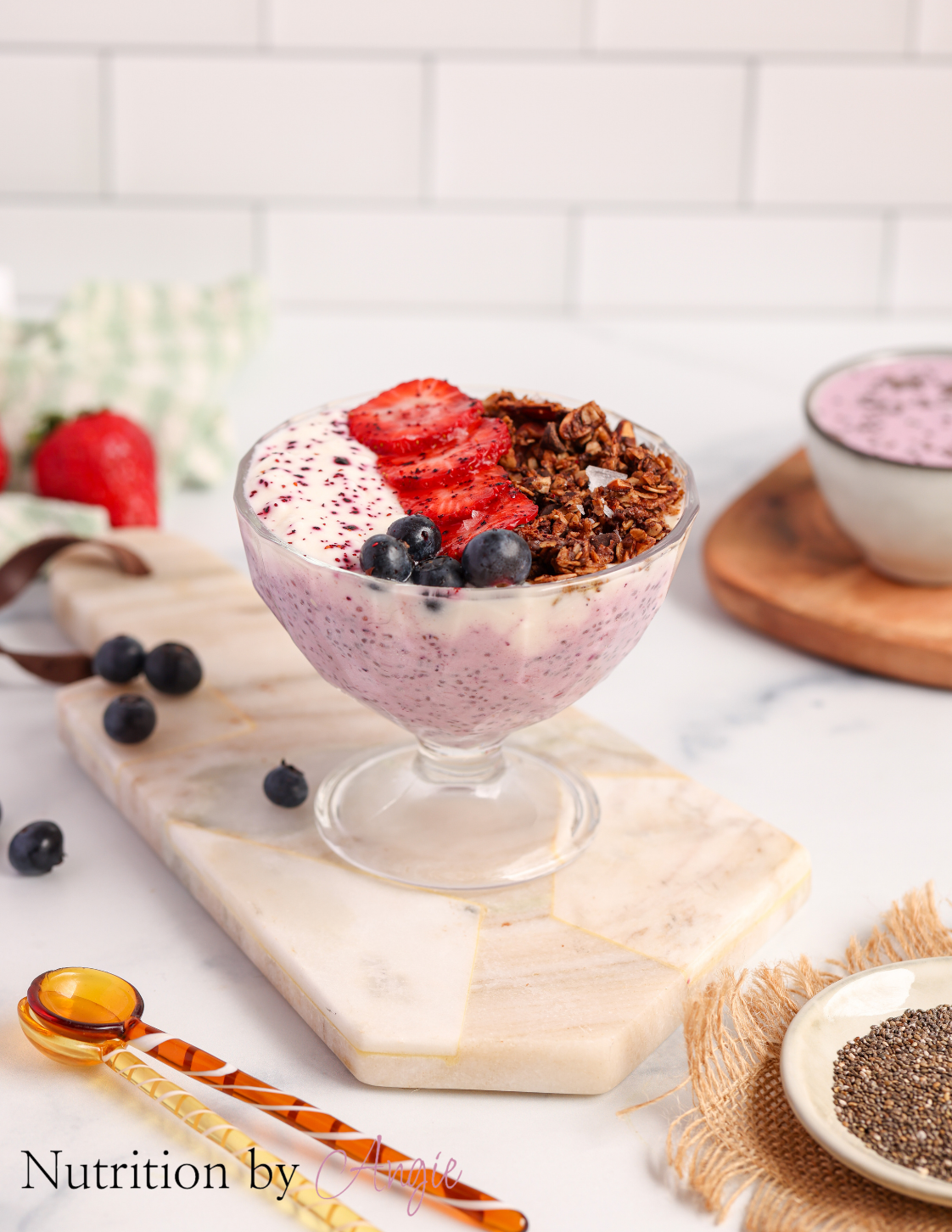
Raspberry Chia Pudding with Chocolate Granola and Greek Yoghurt
Pescatarian-Friendly • High-Fibre • Protein-Rich Breakfast • Omega-3 ALA Source • Make-Ahead Breakfast • Antioxidant-Rich Berries • Easy Meal Prep • Healthy Breakfast or Snack
This recipe contains milk (milk and Greek yoghurt). Chocolate granola may contain oats, wheat, nuts, seeds, soy or milk, depending on the recipe. Check the granola ingredients carefully for allergens. Oats are not automatically suitable for people with coeliac disease unless appropriately certified gluten-free.
Introduction
This Raspberry Chia Pudding with Chocolate Granola and Greek Yoghurt is a delicious, creamy and satisfying breakfast that combines juicy raspberries, fibre-rich chia seeds, smooth milk, thick Greek yoghurt and crunchy chocolate granola.
With its vibrant pink colour, refreshing berry flavour and rich chocolate topping, this recipe creates a beautiful balance of sweetness, creaminess and crunch.
The chia pudding provides a soft, spoonable texture, while the Greek yoghurt adds extra creaminess and high-quality protein.
Chocolate granola introduces a satisfying crunch and a rich cocoa flavour that pairs beautifully with the tartness of raspberries.
A handful of fresh berries completes the dish, adding colour, freshness and naturally occurring plant compounds.
One of the main nutritional highlights of this healthy raspberry chia pudding is its combination of dietary fibre, plant-based omega-3 fatty acids and protein.
Chia seeds are particularly rich in dietary fibre and alpha-linolenic acid (ALA), a plant-based omega-3 fatty acid.
ALA is an essential fatty acid that must be obtained through the diet.
It contributes to the maintenance of normal blood cholesterol levels when consumed in sufficient amounts.
Chia seeds also provide magnesium, phosphorus, calcium and manganese.
These minerals contribute to normal muscle function, bone maintenance and energy metabolism.
Raspberries are another valuable source of dietary fibre.
They also provide vitamin C, manganese and naturally occurring polyphenols.
Their vibrant red colour comes from plant pigments, including anthocyanins.
These compounds have been studied for their antioxidant properties.
Milk contributes high-quality protein, calcium, vitamin B12 and riboflavin.
The exact nutritional composition depends on whether whole, semi-skimmed or skimmed milk is used.
Greek yoghurt provides additional protein and calcium.
Its thick texture complements the chia pudding and creates a satisfying layered breakfast.
The chocolate granola adds flavour, crunch and additional nutrients depending on its ingredients.
Granola made with oats, nuts and seeds can contribute dietary fibre, unsaturated fats and minerals.
However, chocolate granola may also contain added sugar and saturated fat, particularly when made with chocolate, coconut oil or other rich ingredients.
The nutritional value therefore depends on the specific granola recipe.
This raspberry chia pudding with chocolate granola is particularly convenient because the pudding can be prepared ahead of time.
Chia seeds absorb liquid and form a gel-like texture, making them ideal for overnight breakfasts.
The finished pudding can be served in jars, bowls or glasses.
Adding the chocolate granola just before serving helps preserve its crunchy texture.
For people interested in balanced eating, this recipe combines fruit, dairy, seeds and a cereal-based topping.
It provides a mixture of carbohydrates, protein, fats and dietary fibre.
The chia seeds and raspberries contribute substantial fibre, while milk and Greek yoghurt provide high-quality protein.
This makes the pudding a satisfying breakfast or snack.
It is also easy to customise according to individual preferences.
Different berries, milk varieties and granola recipes can be used to create different flavours and textures.
With its creamy raspberry chia base, thick Greek yoghurt, crunchy chocolate granola and fresh berry topping, this Raspberry Chia Pudding is a delicious, nourishing and convenient pescatarian-friendly breakfast.
Benefits of All the Ingredients
Milk
Milk provides the liquid base for the chia pudding.
It contributes creaminess, protein, calcium and several important vitamins and minerals.
The nutritional composition varies depending on whether whole, semi-skimmed or skimmed milk is used.
Milk provides:
Complete Protein: Contains all nine essential amino acids.
Calcium: Supports healthy bones and teeth.
Vitamin B12: Supports normal nervous system function.
Riboflavin (Vitamin B2): Supports normal energy metabolism.
Phosphorus: Supports bone maintenance.
Potassium: Supports normal muscle function.
Iodine: Supports normal thyroid function.
Vitamin A: Present in varying amounts depending on fat content and fortification.
Vitamin D: Present when fortified, with amounts varying by country and product.
Milk and Complete Protein
Milk provides complete protein containing all nine essential amino acids.
Protein contributes to normal muscle maintenance, tissue repair and the production of enzymes and other important molecules.
The 300ml of milk used in this recipe contributes protein to the chia pudding.
Milk and Calcium
Milk is a valuable source of calcium.
Calcium contributes to the maintenance of normal bones and teeth.
It also supports normal muscle function and nerve signalling.
Milk and Vitamin B12
Milk provides vitamin B12.
Vitamin B12 contributes to normal nervous system function and red blood cell formation.
It also supports normal energy metabolism.
Milk and Riboflavin
Riboflavin, also known as vitamin B2, contributes to normal energy metabolism.
It also helps protect cells from oxidative stress.
Milk is a useful dietary source of riboflavin.
Milk and Iodine
Milk can provide iodine.
Iodine contributes to normal thyroid hormone production.
The amount varies depending on farming practices, animal feed and processing.
Milk and Potassium
Potassium contributes to normal muscle function and the maintenance of normal blood pressure.
Milk provides potassium alongside other foods such as fruit, vegetables and legumes.
Milk and Fat Content
Whole milk contains more saturated fat than semi-skimmed or skimmed milk.
For people following a cholesterol-conscious dietary pattern, lower-fat milk can help reduce saturated fat intake.
Milk and Texture
Milk provides a smooth, creamy base.
It allows chia seeds to absorb liquid and form a pudding-like consistency.
Why Milk Works Well
Milk contributes creaminess and high-quality protein.
Its mild flavour complements the raspberries and chocolate granola.
Raspberries
Raspberries provide natural sweetness, refreshing tartness and a vibrant pink colour.
They are particularly valued for their dietary fibre, vitamin C and naturally occurring polyphenols.
Raspberries provide:
Dietary Fibre: Supports normal digestive function.
Vitamin C: Supports normal immune function.
Manganese: Contributes to normal metabolism.
Vitamin K: Supports normal blood clotting.
Folate: Contributes to normal cell division.
Anthocyanins: Naturally occurring plant pigments.
Ellagic Acid and Ellagitannins: Naturally occurring polyphenols.
Potassium: Supports normal muscle function.
Raspberries and Dietary Fibre
Raspberries are a valuable source of dietary fibre.
Fibre supports normal bowel function and digestive health.
The 200g of raspberries used in this recipe provides a substantial contribution to the pudding's fibre content.
Raspberries and Vitamin C
Raspberries provide vitamin C.
Vitamin C contributes to normal immune function and collagen formation.
It also helps protect cells from oxidative stress.
Raspberries and Manganese
Raspberries provide manganese.
Manganese contributes to normal metabolism and the maintenance of normal bones.
It also helps protect cells from oxidative stress.
Raspberries and Anthocyanins
Raspberries contain anthocyanins.
These naturally occurring pigments contribute to their red colour.
Anthocyanins have been studied for their antioxidant properties.
Raspberries and Ellagitannins
Raspberries contain ellagitannins and related polyphenols.
These compounds have been studied for their potential biological effects.
However, ordinary raspberry consumption should not be considered a treatment for disease.
Raspberries and Heart-Conscious Nutrition
Raspberries contribute fibre and naturally occurring plant compounds.
Regularly including berries as part of a balanced diet is associated with favourable cardiovascular health outcomes.
Raspberries and Digestive Health
The fibre in raspberries supports normal digestive function.
Some raspberry fibres can be fermented by intestinal bacteria.
This contributes to the production of short-chain fatty acids.
Fresh Versus Frozen Raspberries
Fresh raspberries provide a delicate texture and bright flavour.
Frozen raspberries are convenient and can retain valuable nutrients.
In Ireland and the UK, imported frozen berries are often advised to be boiled before consumption because of potential viral contamination. Follow current national food safety guidance, then cool them before adding to the pudding.
Why Raspberries Work Well
Raspberries provide a refreshing tartness that balances the creamy milk and rich chocolate granola.
Their colour also creates an attractive breakfast.
Chia Seeds
Chia seeds are the main thickening ingredient in this pudding.
They come from the Salvia hispanica plant.
Chia seeds are particularly valued for their dietary fibre, plant-based omega-3 fatty acids, protein and minerals.
Chia seeds provide:
Dietary Fibre: Supports normal digestive function.
Alpha-Linolenic Acid (ALA): An essential plant-based omega-3 fatty acid.
Plant-Based Protein: Contributes to overall protein intake.
Calcium: Supports healthy bones and teeth.
Magnesium: Supports normal muscle and nerve function.
Phosphorus: Supports bone maintenance.
Manganese: Contributes to normal metabolism.
Iron: Contributes to normal oxygen transport.
Zinc: Supports normal immune function.
Naturally Occurring Polyphenols: Contribute to dietary plant compound intake.
Chia Seeds and Dietary Fibre
Chia seeds are particularly rich in dietary fibre.
Fibre supports normal digestive function and contributes to feelings of fullness.
The four tablespoons used in this recipe provide a valuable amount of fibre.
Chia Seeds and Soluble Fibre
Chia seeds contain soluble fibre that absorbs water.
This creates the gel-like texture characteristic of chia pudding.
Soluble fibre can contribute to digestive health.
However, the cholesterol-lowering evidence for chia specifically is less established than for beta-glucan from oats and barley.
Chia Seeds and Omega-3 Fatty Acids
Chia seeds are a valuable source of alpha-linolenic acid (ALA).
ALA is an essential omega-3 fatty acid.
It contributes to the maintenance of normal blood cholesterol levels when consumed in sufficient amounts.
The body can convert some ALA into EPA and DHA, but this conversion is limited.
Chia seeds should not be considered nutritionally identical to oily fish.
Chia Seeds and Plant-Based Protein
Chia seeds provide plant-based protein.
Protein contributes to normal muscle maintenance and tissue repair.
Chia Seeds and Calcium
Chia seeds contain calcium.
Calcium contributes to the maintenance of normal bones and teeth.
However, the amount absorbed may be influenced by naturally occurring compounds in the seeds.
Chia Seeds and Magnesium
Chia seeds provide magnesium.
Magnesium contributes to normal muscle and nerve function.
It also supports normal energy metabolism.
Chia Seeds and Phosphorus
Phosphorus contributes to the maintenance of normal bones and teeth.
It also plays a role in energy metabolism.
Chia Seeds and Manganese
Manganese contributes to normal metabolism and bone maintenance.
Chia seeds provide manganese alongside other seeds, nuts and whole grains.
Chia Seeds and Satiety
Chia seeds absorb liquid and expand.
Their fibre content and gel-like texture can contribute to feelings of fullness.
Chia Seeds and Digestive Tolerance
Because chia seeds are high in fibre, large portions may cause digestive discomfort in some people.
Introducing fibre gradually and consuming adequate fluids can help improve tolerance.
Chia Seeds and Food Safety
Chia seeds should be adequately hydrated before being eaten in large amounts.
Dry chia seeds can absorb substantial liquid and expand.
People with swallowing difficulties should avoid consuming large spoonfuls of dry chia seeds.
Why Chia Seeds Work Well
Chia seeds absorb milk and create a thick, creamy pudding.
They also contribute fibre, plant-based omega-3 fatty acids and minerals.
Benefits of the Serving Ingredients
Greek Yoghurt
Greek yoghurt adds creaminess, tanginess and high-quality protein.
It is a strained yoghurt with a thick texture.
Greek yoghurt provides:
Complete Protein: Supports normal muscle maintenance.
Calcium: Supports healthy bones and teeth.
Vitamin B12: Supports normal nervous system function.
Riboflavin: Supports normal energy metabolism.
Phosphorus: Supports bone maintenance.
Potassium: Supports normal muscle function.
Greek Yoghurt and Protein
Greek yoghurt provides complete protein.
The eight tablespoons used in this recipe contribute additional protein to the finished pudding.
The exact amount depends on the brand and serving size.
Greek Yoghurt and Calcium
Greek yoghurt provides calcium.
Calcium contributes to normal bone and tooth maintenance.
Greek Yoghurt and Live Cultures
Some Greek yoghurt products contain live bacterial cultures.
These cultures are used during fermentation.
The presence and type of live cultures vary between products.
Greek Yoghurt and Fat Content
Full-fat Greek yoghurt contains more saturated fat than reduced-fat varieties.
Choosing lower-fat Greek yoghurt can help reduce saturated fat intake.
Why Greek Yoghurt Works Well
Greek yoghurt creates a creamy contrast to the raspberry chia pudding.
Its tanginess balances the sweetness of the chocolate granola.
Chocolate Granola
Chocolate granola provides crunch, richness and a satisfying chocolate flavour.
The nutritional composition depends on the recipe.
Chocolate granola may contain oats, nuts, seeds, cocoa, sweeteners and oils.
Depending on its ingredients, chocolate granola may provide:
Dietary Fibre: Particularly from oats, nuts and seeds.
Complex Carbohydrates: Supply energy.
Plant-Based Protein: From oats, nuts and seeds.
Magnesium: Supports normal muscle and nerve function.
Iron: Contributes to normal oxygen transport.
Unsaturated Fats: From nuts and seeds.
Polyphenols: Particularly from cocoa.
Added Sugars: Depending on the sweeteners used.
Chocolate Granola and Oats
If the granola contains oats, it may provide beta-glucan, a type of soluble fibre.
Oat beta-glucan can help lower LDL cholesterol when consumed in sufficient amounts.
The benefit depends on the amount of oats and beta-glucan in the granola.
Chocolate Granola and Nuts
If the granola contains nuts, it may provide unsaturated fats, protein, vitamin E and magnesium.
The exact nutritional contribution depends on the nut varieties and quantities.
Chocolate Granola and Cocoa
Cocoa contains naturally occurring flavanols.
These compounds have been studied for their effects on vascular function.
However, chocolate granola should not automatically be considered a significant source of cocoa flavanols.
Chocolate Granola and Added Sugar
Some chocolate granolas contain substantial amounts of added sugar.
Checking the recipe or nutrition label can help identify the sugar content.
Chocolate Granola and Saturated Fat
Chocolate granola may contain saturated fat from chocolate, coconut oil or other ingredients.
The amount varies between recipes.
Chocolate Granola and Texture
Granola provides a crunchy contrast to the soft chia pudding.
Adding it immediately before serving helps preserve its texture.
Why Chocolate Granola Works Well
Chocolate granola adds richness and crunch.
Its cocoa flavour complements the tart raspberries beautifully.
Fresh Berries
A handful of fresh berries adds colour, freshness and additional fruit variety.
Suitable berries include raspberries, blueberries, strawberries and blackberries.
Berries may provide:
Vitamin C: Supports normal immune function.
Dietary Fibre: Supports normal digestive function.
Manganese: Contributes to normal metabolism.
Anthocyanins: Naturally occurring plant pigments.
Other Polyphenols: Contribute to dietary plant compound intake.
Fresh Berries and Dietary Fibre
Berries provide dietary fibre.
Fibre supports normal digestive function and contributes to feelings of fullness.
Fresh Berries and Vitamin C
Many berries provide vitamin C.
Vitamin C contributes to normal immune function and collagen formation.
Fresh Berries and Antioxidant Plant Compounds
Berries contain naturally occurring polyphenols.
These compounds have been studied for their antioxidant properties.
Fresh Berries and Dietary Variety
Using different berries increases the variety of fruit in the meal.
Different varieties provide different vitamins, minerals and plant compounds.
Why Fresh Berries Work Well
Fresh berries provide a colourful finishing touch.
They add natural sweetness and refreshing flavour.
Why Raspberry Chia Pudding with Chocolate Granola Makes a Nourishing Breakfast
Provides Dietary Fibre
Chia seeds and raspberries contribute fibre that supports digestive health.
Contains Plant-Based Omega-3 Fatty Acids
Chia seeds provide ALA, an essential omega-3 fatty acid.
Provides High-Quality Protein
Milk and Greek yoghurt contribute complete protein.
Contains Calcium
Milk, yoghurt and chia seeds contribute calcium.
Provides Vitamin C
Raspberries and fresh berries contribute vitamin C.
Contains Important Minerals
Chia seeds provide magnesium, phosphorus and manganese.
Includes Naturally Occurring Polyphenols
Raspberries and other berries contain a variety of plant compounds.
Offers a Balance of Textures
Creamy chia pudding, thick yoghurt and crunchy granola create a satisfying combination.
Works Well for Meal Preparation
The chia pudding can be prepared ahead of time.
Easy to Customise
Different berries, milk varieties and granola recipes can be used.
Delicious Serving Suggestions
With Extra Fresh Raspberries
Add more fresh raspberries for additional fibre and a refreshing tart flavour.
With Sliced Banana
Serve with sliced banana for natural sweetness, potassium and carbohydrates.
With Chopped Almonds
Add chopped almonds for extra crunch, unsaturated fats and vitamin E.
With Fresh Strawberries
Top with sliced strawberries for additional vitamin C and colour.
With a Spoonful of Nut Butter
Add a small amount of almond or peanut butter for extra richness, protein and unsaturated fats.
As a Layered Breakfast Jar
Layer the raspberry chia pudding with Greek yoghurt, chocolate granola and fresh berries.
This creates an attractive make-ahead breakfast.
Tips for the Best Raspberry Chia Pudding with Chocolate Granola
Choose good-quality chia seeds: Fresh seeds provide the best flavour.
Measure chia seeds accurately: The amount affects the thickness.
Use milk you enjoy: Whole, semi-skimmed or skimmed milk can be used.
Choose lower-fat milk if preferred: This can reduce saturated fat intake.
Use fresh or frozen raspberries: Both work well.
Follow food safety guidance for frozen berries: Imported frozen berries may need boiling before use.
Allow heated raspberries to cool: This prevents the mixture from becoming warm.
Mash or blend raspberries if preferred: This creates a smoother pudding.
Stir chia seeds thoroughly: This helps prevent clumping.
Stir again after a few minutes: This encourages even hydration.
Allow enough chilling time: Chia seeds need time to absorb liquid.
Refrigerate the pudding: This helps it thicken safely.
Adjust the consistency with milk: Add a little more if the pudding becomes too thick.
Use plain Greek yoghurt: Flavoured varieties may contain added sugar.
Choose reduced-fat Greek yoghurt if preferred: This can lower saturated fat intake.
Check the chocolate granola ingredients: Nutritional content varies between recipes.
Add granola just before serving: This keeps it crunchy.
Use fresh berries for garnish: They add colour and texture.
Wash fresh berries gently: Remove any damaged fruit.
Serve in jars or bowls: Both work well.
Prepare individual portions: This makes breakfast convenient.
Store in airtight containers: This helps preserve freshness.
Refrigerate promptly: Milk- and yoghurt-based puddings require careful storage.
Consume refrigerated pudding within approximately 3–4 days: Keep at 5°C or below.
Store granola separately: This prevents it from becoming soggy.
Avoid leaving the pudding at room temperature for extended periods: This supports food safety.
Introduce chia seeds gradually if needed: Their high fibre content may cause digestive discomfort in some people.
Consume adequate fluids: This supports normal digestion when eating fibre-rich foods.
Check allergens carefully: Milk, nuts, soy or gluten-containing cereals may be present depending on the granola.
A Note on Chia Seeds, Raspberries and Cholesterol-Friendly Nutrition
This Raspberry Chia Pudding with Chocolate Granola combines fibre-rich seeds, fruit, dairy and a crunchy cereal-based topping.
Chia seeds are particularly valuable because they provide dietary fibre and the plant-based omega-3 fatty acid ALA.
ALA contributes to the maintenance of normal blood cholesterol levels when consumed in sufficient amounts.
Chia seeds also provide magnesium, phosphorus, manganese and plant-based protein.
Raspberries contribute dietary fibre, vitamin C and naturally occurring polyphenols.
Regularly including berries as part of a balanced diet can support overall cardiovascular health.
Milk and Greek yoghurt provide complete protein and calcium.
However, the saturated fat content depends on the dairy products selected.
Choosing semi-skimmed or skimmed milk and reduced-fat Greek yoghurt can help lower saturated fat intake.
Chocolate granola contributes flavour and texture.
If it contains oats, it may provide beta-glucan, a soluble fibre that can help lower LDL cholesterol when consumed in sufficient amounts.
However, the amount of beta-glucan depends on the granola recipe.
Some chocolate granolas contain substantial amounts of added sugar and saturated fat.
Checking the ingredients can help identify a suitable option.
Granola made with oats, nuts, seeds and moderate amounts of sweetener can contribute fibre and unsaturated fats.
Replacing saturated fats with unsaturated fats can help improve LDL cholesterol levels.
Fresh berries add additional fibre and naturally occurring plant compounds.
Serving the pudding with fruit and a moderate amount of granola creates a satisfying breakfast.
A balanced pescatarian dietary pattern that includes fish, vegetables, fruit, whole grains, legumes, nuts, seeds and unsaturated fats can support cardiovascular health and overall nutritional wellbeing.
With its creamy raspberry chia base, thick Greek yoghurt, crunchy chocolate granola and fresh berry topping, this Raspberry Chia Pudding with Chocolate Granola is a delicious, satisfying and fibre-rich breakfast that can be enjoyed as part of a varied and balanced diet.