
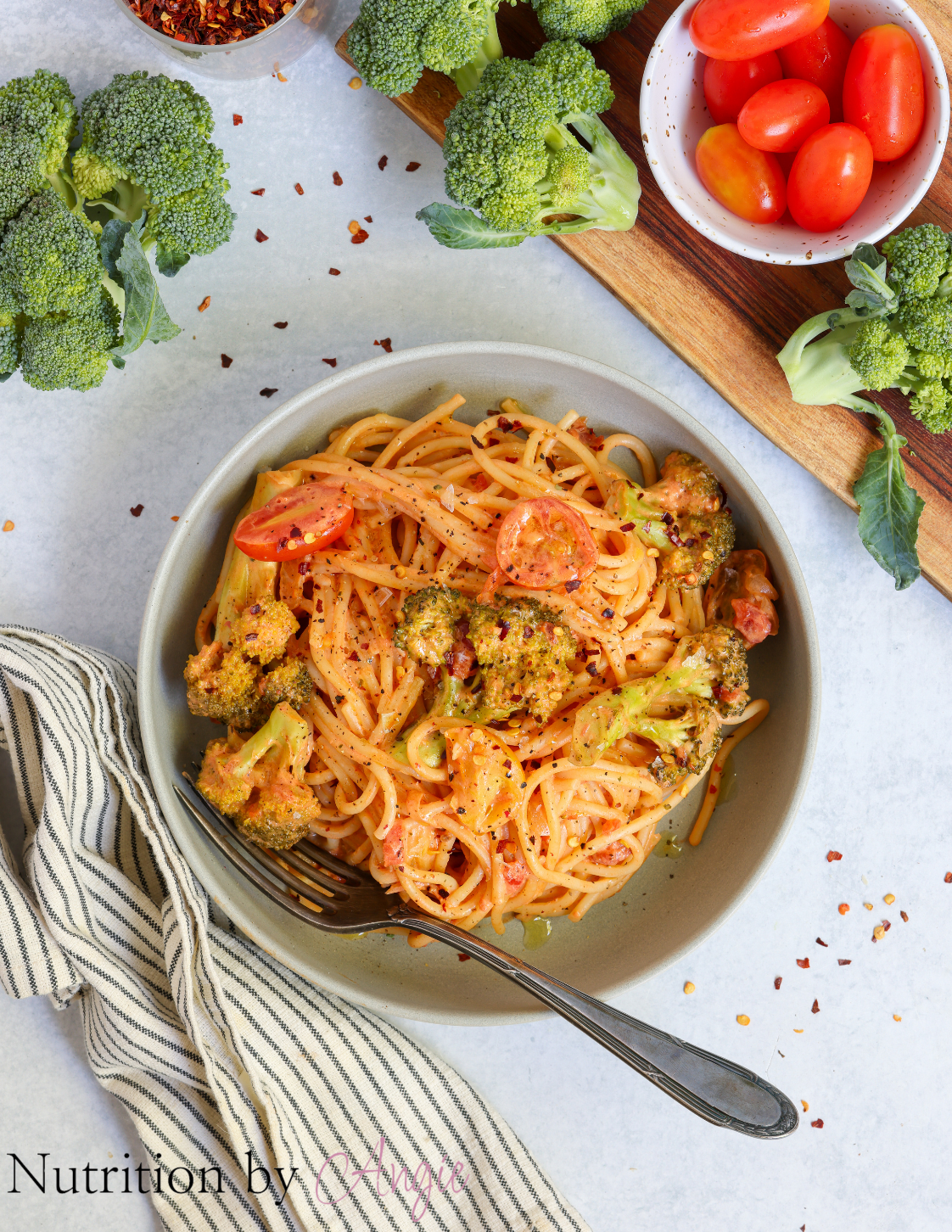
Creamy Broccoli Tomato Pasta with Sun-Dried Tomatoes and Coconut Milk
Vegan • Plant-Based • Dairy-Free • Fibre-Rich • Easy Pasta Dinner • Mediterranean-Inspired • Family-Friendly • Comfort Food • Meal-Prep Friendly
This recipe contains gluten if conventional wheat spaghetti is used. Sun-dried tomatoes and other packaged ingredients may contain additional allergens or traces of allergens depending on the brand. Choose certified gluten-free pasta if required, and check all labels carefully.
Introduction
This Creamy Broccoli Tomato Pasta with Sun-Dried Tomatoes and Coconut Milk is a delicious, comforting and satisfying vegan dinner that combines tender spaghetti, fresh broccoli, juicy cherry tomatoes, aromatic garlic and a rich tomato-based sauce.
The combination of fresh tomatoes, concentrated tomato paste and sun-dried tomatoes creates a deeply savoury sauce with layers of sweetness, acidity and umami flavour.
Full-fat coconut milk adds creaminess and richness without using dairy cream.
The result is a smooth, comforting pasta dish with vibrant vegetables and a beautifully balanced tomato flavour.
One of the main nutritional highlights of this healthy vegan broccoli tomato pasta is its combination of vegetables, carbohydrates and naturally occurring plant compounds.
Broccoli is a cruciferous vegetable that provides vitamin C, vitamin K, folate, dietary fibre and naturally occurring glucosinolates.
Cherry tomatoes contribute vitamin C, potassium and lycopene, a carotenoid responsible for their red colour.
Tomato paste and sun-dried tomatoes provide concentrated tomato flavour and can contribute lycopene.
Garlic and onion add aromatic depth and naturally occurring sulphur compounds.
Spaghetti provides carbohydrates that supply energy for everyday activities.
If whole-wheat spaghetti is used, the dish will generally contain more dietary fibre than when prepared with conventional refined wheat pasta.
The sauce is particularly appealing because it uses several forms of tomato.
Fresh cherry tomatoes contribute juiciness and brightness.
Tomato paste provides concentrated savoury flavour.
Canned chopped tomatoes add moisture and acidity.
Sun-dried tomatoes create a rich, slightly sweet and intensely savoury finish.
Together, these ingredients produce a tomato sauce with greater depth than one made from fresh tomatoes alone.
Full-fat coconut milk provides the creamy texture.
It is a convenient dairy-free alternative to conventional cream.
However, coconut milk contains substantial amounts of saturated fat.
For people following a cholesterol-conscious dietary pattern, the saturated fat content is worth considering.
A reduced-fat coconut milk or another suitable plant-based cooking alternative can lower the saturated fat content, although the texture and flavour may change.
This creamy vegan tomato pasta with broccoli is a useful way to include vegetables in a familiar and satisfying meal.
The broccoli adds colour, texture and nutritional variety.
Its mild flavour works particularly well with the rich tomato sauce.
The garlic and onion provide a savoury foundation, while the sun-dried tomatoes contribute an intense Mediterranean-inspired flavour.
This dish is particularly suitable for weeknight dinners because it uses accessible ingredients and can be adapted according to preference.
It can also be prepared ahead of time and stored in suitable portions.
For people following a vegan diet, the recipe provides carbohydrates, vegetables, dietary fibre and a range of vitamins and minerals.
However, it is not especially high in protein unless a protein-rich pasta or additional plant protein is included.
Serving it with chickpeas, lentils, tofu or another suitable protein source can create a more balanced main meal.
With its tender spaghetti, fresh broccoli, juicy cherry tomatoes and creamy sun-dried tomato sauce, this Creamy Broccoli Tomato Pasta is a delicious and nourishing vegan dinner that combines comfort food with valuable plant-based nutrients.
Benefits of All the Ingredients
Spaghetti
Spaghetti provides the carbohydrate foundation of this recipe.
It is traditionally made from durum wheat semolina and water.
Spaghetti supplies carbohydrates, some protein and varying amounts of dietary fibre.
The nutritional composition depends on whether refined wheat, whole-wheat or another type of pasta is used.
Spaghetti provides:
Carbohydrates: Supply energy for everyday activities.
Plant-Based Protein: Contributes to overall protein intake.
B Vitamins: Support normal energy metabolism.
Iron: Contributes to normal oxygen transport.
Phosphorus: Supports healthy bones and teeth.
Selenium: Supports normal thyroid function.
Dietary Fibre: Particularly in whole-wheat varieties.
Magnesium: Present in greater amounts in whole-grain pasta.
Spaghetti and Carbohydrates
Spaghetti provides carbohydrates.
Carbohydrates are broken down during digestion into glucose, which can be used by the body's cells.
The 280g of dry spaghetti used in this recipe provides a substantial carbohydrate contribution across the meal.
Spaghetti and Energy
Carbohydrates are an important source of energy.
They support everyday activities and physical performance.
Pasta can be part of a balanced dietary pattern when served with vegetables, protein-rich foods and suitable fats.
Spaghetti and Plant-Based Protein
Wheat pasta contains some plant-based protein.
However, it does not provide the same protein profile as foods such as soy, lentils or chickpeas.
Combining pasta with legumes or other protein-rich ingredients can increase the protein content of the meal.
Spaghetti and Dietary Fibre
Whole-wheat spaghetti generally provides more dietary fibre than refined wheat spaghetti.
Fibre supports normal digestive function and contributes to feelings of fullness.
Spaghetti and B Vitamins
Wheat pasta provides B vitamins.
The exact amounts depend on the flour used and whether the pasta is fortified.
B vitamins contribute to normal energy metabolism.
Spaghetti and Iron
Spaghetti can provide iron.
Iron contributes to normal oxygen transport.
The amount varies depending on the pasta variety and fortification.
Spaghetti and Selenium
Wheat pasta may contribute selenium.
Selenium supports normal thyroid function and helps protect cells from oxidative stress.
The amount depends partly on the selenium content of the soil in which the wheat was grown.
Spaghetti and Satiety
Pasta provides carbohydrates and some protein.
Serving it with broccoli, tomatoes and a suitable protein source can create a more satisfying meal.
Spaghetti and Gluten
Conventional wheat spaghetti contains gluten.
People with coeliac disease should use certified gluten-free pasta.
Why Spaghetti Works Well
Spaghetti has a familiar texture and mild flavour.
It provides an excellent base for the rich tomato and coconut milk sauce.
Yellow Onion
Yellow onion provides savoury depth and natural sweetness.
It belongs to the Allium family, alongside garlic, leeks, shallots and chives.
Onions contain naturally occurring sulphur compounds, dietary fibre and small amounts of vitamins and minerals.
Yellow onion provides:
Dietary Fibre: Supports normal digestive function.
Vitamin C: Supports normal immune function.
Vitamin B6: Supports normal protein metabolism.
Folate: Contributes to normal cell division.
Potassium: Supports normal muscle function.
Quercetin: A naturally occurring flavonoid.
Sulphur Compounds: Contribute to its distinctive aroma.
Fructans: Fermentable carbohydrates found in onions.
Onion and Dietary Fibre
Onions provide dietary fibre.
Fibre supports normal digestive function.
The half onion used in this recipe contributes a modest amount.
Onion and Vitamin C
Onions contain vitamin C.
Vitamin C contributes to normal immune function and collagen formation.
Some vitamin C is lost during cooking.
Onion and Quercetin
Onions contain quercetin, a naturally occurring flavonoid.
Quercetin has been studied for its antioxidant properties.
However, ordinary onion consumption should not be considered a treatment for disease.
Onion and Sulphur Compounds
Onions contain naturally occurring sulphur compounds.
These contribute to their characteristic aroma and flavour.
Onion and Natural Sweetness
Onions become sweeter and more mellow when cooked.
Their natural sweetness balances the acidity of tomatoes.
Onion and Digestive Tolerance
Onions contain fructans, which may cause digestive discomfort in people who are sensitive to FODMAPs.
Individual tolerance varies.
Why Onion Works Well
Yellow onion provides a savoury foundation.
It enhances the flavour of garlic, tomatoes and broccoli.
Cherry Tomatoes
Cherry tomatoes provide juiciness, natural sweetness and a vibrant red colour.
They are particularly valued for their vitamin C, potassium and lycopene content.
Cherry tomatoes provide:
Vitamin C: Supports normal immune function.
Potassium: Supports normal muscle function.
Vitamin K: Supports normal blood clotting.
Folate: Contributes to normal cell division.
Lycopene: A naturally occurring carotenoid.
Beta-Carotene: Can be converted into vitamin A.
Dietary Fibre: Supports normal digestive function.
Naturally Occurring Polyphenols: Contribute to dietary plant compound intake.
Cherry Tomatoes and Vitamin C
Cherry tomatoes provide vitamin C.
Vitamin C contributes to normal immune function and collagen formation.
It also helps protect cells from oxidative stress.
Cherry Tomatoes and Lycopene
Tomatoes are a valuable source of lycopene.
Lycopene is a carotenoid responsible for their red colour.
It has been studied for its antioxidant properties.
Cherry Tomatoes and Potassium
Potassium contributes to normal muscle function.
It also helps maintain normal blood pressure.
Cherry tomatoes provide potassium as part of their mineral content.
Cherry Tomatoes and Dietary Fibre
Cherry tomatoes contain dietary fibre.
Fibre supports normal digestive function.
Cherry Tomatoes and Natural Sweetness
Cherry tomatoes often have a naturally sweet flavour.
They balance the acidity of tomato paste and the richness of coconut milk.
Cherry Tomatoes and Cooking
Cooking softens cherry tomatoes and releases their juices.
This helps create a naturally flavourful sauce.
Why Cherry Tomatoes Work Well
Cherry tomatoes add freshness, sweetness and moisture.
They create a delicious contrast to the concentrated tomato ingredients.
Garlic
Garlic provides aromatic depth and savoury flavour.
It belongs to the Allium family.
Garlic contains naturally occurring sulphur compounds that contribute to its distinctive aroma.
Garlic provides:
Organosulphur Compounds: Contribute to its characteristic flavour.
Vitamin B6: Supports normal protein metabolism.
Manganese: Contributes to normal metabolism.
Vitamin C: Supports normal immune function.
Small Amounts of Dietary Fibre: Supports normal digestive function.
Garlic and Sulphur Compounds
Garlic contains naturally occurring sulphur compounds.
When garlic is minced, enzymes help form compounds such as allicin.
These contribute to garlic's characteristic aroma.
Garlic and Antioxidant Plant Compounds
Garlic contains compounds that have been studied for antioxidant properties.
However, ordinary culinary amounts should not be considered therapeutic.
Garlic and Vitamin B6
Garlic contains vitamin B6.
Vitamin B6 contributes to normal protein metabolism.
The amount provided by three cloves is relatively small.
Garlic and Savoury Flavour
Garlic enhances the flavour of tomatoes and broccoli.
It creates depth in the creamy sauce.
Garlic and Digestive Tolerance
Garlic contains fructans.
These may cause digestive discomfort in people who are sensitive to FODMAPs.
Why Garlic Works Well
Garlic provides a rich savoury aroma.
It complements the tomatoes and coconut milk beautifully.
Broccoli
Broccoli adds colour, texture and valuable nutrients.
It belongs to the cruciferous vegetable family, alongside cauliflower, cabbage, kale and Brussels sprouts.
Broccoli provides dietary fibre, vitamin C, vitamin K, folate and naturally occurring glucosinolates.
Broccoli provides:
Vitamin C: Supports normal immune function.
Vitamin K: Supports normal blood clotting.
Folate: Contributes to normal cell division.
Dietary Fibre: Supports normal digestive function.
Potassium: Supports normal muscle function.
Vitamin A Precursors: Contribute to normal vision.
Calcium: Supports healthy bones and teeth.
Glucosinolates: Naturally occurring compounds found in cruciferous vegetables.
Carotenoids: Contribute to dietary plant compound intake.
Broccoli and Vitamin C
Broccoli is a useful source of vitamin C.
Vitamin C contributes to normal immune function and collagen formation.
The 250g of broccoli used in this recipe provides a valuable vegetable contribution.
Some vitamin C is lost during cooking.
Broccoli and Dietary Fibre
Broccoli provides dietary fibre.
Fibre supports normal digestive function and contributes to feelings of fullness.
Broccoli and Vitamin K
Broccoli contains vitamin K.
Vitamin K contributes to normal blood clotting and bone maintenance.
Broccoli and Folate
Folate contributes to normal cell division and red blood cell formation.
Broccoli provides folate alongside other vegetables and legumes.
Broccoli and Potassium
Potassium contributes to normal muscle function.
It also helps maintain normal blood pressure.
Broccoli and Glucosinolates
Broccoli contains glucosinolates.
These naturally occurring compounds can be converted into substances such as isothiocyanates when the vegetable is chopped or chewed.
These compounds have been studied for their potential biological effects.
However, ordinary broccoli consumption should not be considered a treatment for disease.
Broccoli and Antioxidant Plant Compounds
Broccoli contains carotenoids and other naturally occurring plant compounds.
These contribute to dietary variety.
Broccoli and Digestive Health
Broccoli contains fibre and fermentable carbohydrates.
These can support intestinal bacteria but may cause bloating in some individuals.
Broccoli and Heart-Conscious Nutrition
Broccoli is naturally low in saturated fat.
It provides fibre, vitamins and minerals, making it a useful ingredient in a heart-conscious dietary pattern.
Broccoli and Texture
Broccoli florets become tender during cooking while retaining some firmness.
This creates a pleasant contrast to the spaghetti and creamy sauce.
Why Broccoli Works Well
Broccoli adds colour, freshness and texture.
Its mild flavour complements the rich tomato sauce.
Tomato Paste
Tomato paste provides concentrated tomato flavour.
It is made by cooking tomatoes to remove much of their water content.
Tomato paste contains lycopene and other naturally occurring tomato compounds.
Tomato paste provides:
Lycopene: A naturally occurring carotenoid.
Potassium: Supports normal muscle function.
Vitamin C: Present in varying amounts.
Small Amounts of Dietary Fibre: Supports normal digestive function.
Naturally Occurring Polyphenols: Contribute to dietary plant compound intake.
Tomato Paste and Lycopene
Tomato paste is a concentrated source of lycopene.
Lycopene has been studied for its antioxidant properties.
Cooking and processing can make lycopene more accessible for absorption.
Tomato Paste and Potassium
Tomato paste provides potassium.
Potassium contributes to normal muscle function.
Tomato Paste and Flavour
Tomato paste provides a rich, savoury flavour.
It adds depth and intensity to the sauce.
Tomato Paste and Acidity
Tomato paste contains natural acids.
These help balance the richness of coconut milk.
Tomato Paste and Sodium
Some tomato pastes contain added salt.
Checking the label can help manage sodium intake.
Why Tomato Paste Works Well
Tomato paste creates a rich tomato base.
It enhances the flavour of fresh and sun-dried tomatoes.
Canned Chopped Tomatoes
Canned chopped tomatoes provide moisture, acidity and additional tomato flavour.
They are convenient and can be used throughout the year.
Canned tomatoes provide:
Lycopene: A naturally occurring carotenoid.
Vitamin C: Present in varying amounts.
Potassium: Supports normal muscle function.
Dietary Fibre: Supports normal digestive function.
Naturally Occurring Polyphenols: Contribute to dietary plant compound intake.
Canned Tomatoes and Lycopene
Canned tomatoes contain lycopene.
Processing can improve the accessibility of lycopene for absorption.
Canned Tomatoes and Vitamin C
Canned tomatoes provide some vitamin C.
However, processing and storage can reduce vitamin C content.
Canned Tomatoes and Potassium
Canned tomatoes provide potassium.
Potassium contributes to normal muscle function.
Canned Tomatoes and Dietary Fibre
Canned tomatoes contain dietary fibre.
Fibre supports normal digestive function.
Canned Tomatoes and Sodium
Some canned tomatoes contain added salt.
Choosing no-added-salt varieties can help reduce sodium intake.
Why Canned Tomatoes Work Well
Canned tomatoes provide moisture and acidity.
They help create a smooth, balanced sauce.
Sun-Dried Tomatoes
Sun-dried tomatoes provide concentrated tomato flavour.
They are made by removing much of the water from fresh tomatoes.
This creates an intense savoury taste and chewy texture.
Sun-dried tomatoes provide:
Lycopene: A naturally occurring carotenoid.
Potassium: Supports normal muscle function.
Dietary Fibre: Supports normal digestive function.
Iron: Contributes to normal oxygen transport.
Naturally Occurring Polyphenols: Contribute to dietary plant compound intake.
Concentrated Tomato Flavour: Adds savoury depth.
Sun-Dried Tomatoes and Lycopene
Sun-dried tomatoes contain lycopene.
Lycopene is a naturally occurring carotenoid found in tomatoes.
Sun-Dried Tomatoes and Potassium
Sun-dried tomatoes provide potassium.
Potassium contributes to normal muscle function.
Sun-Dried Tomatoes and Dietary Fibre
Sun-dried tomatoes contain dietary fibre.
Fibre supports normal digestive function.
Sun-Dried Tomatoes and Iron
Sun-dried tomatoes contain non-haem iron.
Iron contributes to normal oxygen transport.
Pairing plant-based iron sources with vitamin C-rich foods can help improve absorption.
Sun-Dried Tomatoes and Sodium
Some sun-dried tomatoes contain substantial amounts of added salt.
The sodium content varies between products.
Checking the label can help identify a suitable option.
Sun-Dried Tomatoes and Oil
Some sun-dried tomatoes are packed in oil.
The type of oil affects the nutritional profile.
Draining them helps control the amount of added fat.
Sun-Dried Tomatoes and Flavour
Sun-dried tomatoes provide concentrated umami flavour.
They add depth and richness to the sauce.
Why Sun-Dried Tomatoes Work Well
Sun-dried tomatoes create a rich, savoury flavour.
They complement the fresh cherry tomatoes and creamy coconut milk.
Full-Fat Coconut Milk
Full-fat coconut milk provides creaminess and richness.
It is made from coconut flesh and water.
Coconut milk is commonly used in vegan soups, curries and sauces.
Full-fat coconut milk provides:
Fat: Including substantial amounts of saturated fatty acids.
Small Amounts of Carbohydrates: Depending on the product.
Small Amounts of Minerals: Depending on the coconut content.
Creamy Texture: Helps create a rich dairy-free sauce.
Coconut Milk and Creaminess
Coconut milk creates a smooth, creamy texture.
It provides richness without using dairy cream.
Coconut Milk and Saturated Fat
Full-fat coconut milk contains substantial amounts of saturated fat.
Saturated fat intake is relevant to cholesterol management because replacing saturated fats with unsaturated fats can help improve LDL cholesterol levels.
Coconut Milk and Plant-Based Cooking
Coconut milk is a convenient dairy-free ingredient.
It can be used to create creamy sauces without conventional cream.
Coconut Milk and Flavour
Coconut milk has a subtle sweetness.
It balances the acidity of tomatoes and the savoury flavour of garlic.
Coconut Milk and Portion Size
The 220ml of full-fat coconut milk used in this recipe contributes richness across the dish.
However, it also contributes a meaningful amount of saturated fat.
Coconut Milk and Alternatives
Light coconut milk generally contains less saturated fat.
Unsweetened soy-based cooking cream may also provide a creamy texture with a different fat and protein profile.
Why Coconut Milk Works Well
Coconut milk creates a smooth, rich sauce.
It balances the acidity of the tomatoes and complements the broccoli.
Why Creamy Broccoli Tomato Pasta Makes a Nourishing Meal
Provides Carbohydrates for Energy
Spaghetti supplies carbohydrates that support everyday activities.
Includes a Variety of Vegetables
Broccoli, tomatoes, onion and garlic contribute vitamins, minerals and dietary fibre.
Provides Vitamin C
Broccoli and tomatoes contribute vitamin C.
Contains Dietary Fibre
Broccoli, tomatoes and pasta contribute fibre, particularly when whole-wheat spaghetti is used.
Includes Naturally Occurring Lycopene
Fresh, canned and sun-dried tomatoes provide lycopene.
Provides Important Minerals
Broccoli and tomatoes contribute potassium and other minerals.
Contains Naturally Occurring Plant Compounds
Broccoli, garlic, onion and tomatoes provide a variety of plant compounds.
Offers a Creamy Dairy-Free Sauce
Coconut milk creates richness without dairy cream.
Works Well for Family Dinners
The recipe uses familiar ingredients and can be served as a satisfying main course.
Easy to Increase Protein
Chickpeas, lentils or tofu can be added for additional plant-based protein.
Delicious Serving Suggestions
With Roasted Chickpeas
Add roasted chickpeas for extra plant-based protein, fibre and crunch.
With a Fresh Rocket Salad
Serve alongside rocket, cucumber and lemon juice for additional vegetables.
With Grilled Tofu
Pair with grilled tofu for additional protein and a more substantial meal.
With Steamed Green Beans
Serve with steamed green beans for extra fibre, vitamin C and folate.
With Fresh Basil
Add fresh basil for a fragrant Mediterranean-inspired finish.
With Nutritional Yeast
Sprinkle with nutritional yeast for a savoury, cheese-like flavour.
Fortified nutritional yeast may also provide vitamin B12.
Tips for the Best Creamy Broccoli Tomato Pasta
Choose good-quality spaghetti: Its texture affects the finished dish.
Use whole-wheat spaghetti if preferred: This generally increases dietary fibre.
Choose certified gluten-free pasta if required: Conventional wheat spaghetti contains gluten.
Cook pasta until al dente: This helps preserve its texture.
Reserve some pasta cooking water: It can help adjust the sauce consistency.
Choose fresh cherry tomatoes: They provide the best flavour.
Halve tomatoes evenly: This encourages consistent cooking.
Use fresh broccoli: It should be firm and vibrant green.
Cut broccoli into small florets: This helps it cook evenly.
Avoid overcooking broccoli: It can become too soft.
Use fresh garlic: It provides the best aroma.
Mince garlic finely: This helps distribute it through the sauce.
Choose a good-quality tomato paste: It provides concentrated flavour.
Check canned tomato labels: Some products contain added salt.
Use sun-dried tomatoes you enjoy: Their flavour varies between brands.
Drain oil-packed sun-dried tomatoes: This helps control added fat.
Check sun-dried tomato sodium content: Some varieties are heavily salted.
Use full-fat coconut milk for richness: It creates a creamy sauce.
Consider light coconut milk if preferred: This can lower saturated fat intake.
Stir coconut milk thoroughly: This helps create a smooth sauce.
Avoid boiling the sauce excessively: Gentle heating helps preserve texture.
Taste before adding salt: Sun-dried tomatoes may already contain sodium.
Add fresh herbs if desired: Basil or parsley can brighten the flavour.
Serve with legumes for extra protein: Chickpeas or lentils make the meal more substantial.
Store leftovers in airtight containers: This helps preserve freshness.
Refrigerate promptly: Cool and refrigerate within two hours.
Consume refrigerated leftovers within approximately 3–4 days: Keep at 5°C or below.
Reheat thoroughly: Ensure the pasta is piping hot before serving.
Add a little water when reheating: This helps loosen the sauce.
Avoid repeated reheating: This helps maintain texture and food safety.
A Note on Broccoli, Tomatoes and Cholesterol-Friendly Nutrition
This Creamy Broccoli Tomato Pasta combines pasta, vegetables and a rich coconut milk sauce.
Broccoli is particularly valuable because it provides dietary fibre, vitamin C, vitamin K and folate.
Including cruciferous vegetables regularly contributes to a varied and balanced dietary pattern.
Tomatoes provide lycopene, a naturally occurring carotenoid.
Tomato paste and sun-dried tomatoes contribute concentrated tomato flavour and lycopene.
Lycopene has been studied for its antioxidant properties.
However, ordinary tomato consumption should not be considered a treatment for cardiovascular disease.
Garlic and onion provide additional flavour and naturally occurring sulphur compounds.
Spaghetti supplies carbohydrates for energy.
Choosing whole-wheat spaghetti can increase dietary fibre intake.
Whole grains are associated with favourable cardiovascular health outcomes.
However, the specific cholesterol-lowering effect depends on the type and amount of fibre consumed.
Full-fat coconut milk provides creaminess but also contributes substantial saturated fat.
For people managing LDL cholesterol, saturated fat intake is an important consideration.
Replacing saturated fats with unsaturated fats can help improve LDL cholesterol levels.
Using light coconut milk or a suitable unsweetened soy-based cooking alternative can reduce saturated fat, depending on the product.
Adding chickpeas, lentils or tofu can increase the plant-based protein content of the meal.
Legumes also provide dietary fibre and important minerals.
Serving the pasta with additional vegetables can increase nutritional variety.
A balanced vegan dietary pattern that regularly includes vegetables, fruit, whole grains, legumes, nuts, seeds and unsaturated fats can support cardiovascular health and overall nutritional wellbeing.
With its tender spaghetti, fresh broccoli, juicy cherry tomatoes and rich sun-dried tomato sauce, this Creamy Broccoli Tomato Pasta is a delicious, comforting and satisfying vegan meal that can be enjoyed as part of a varied and balanced diet.