
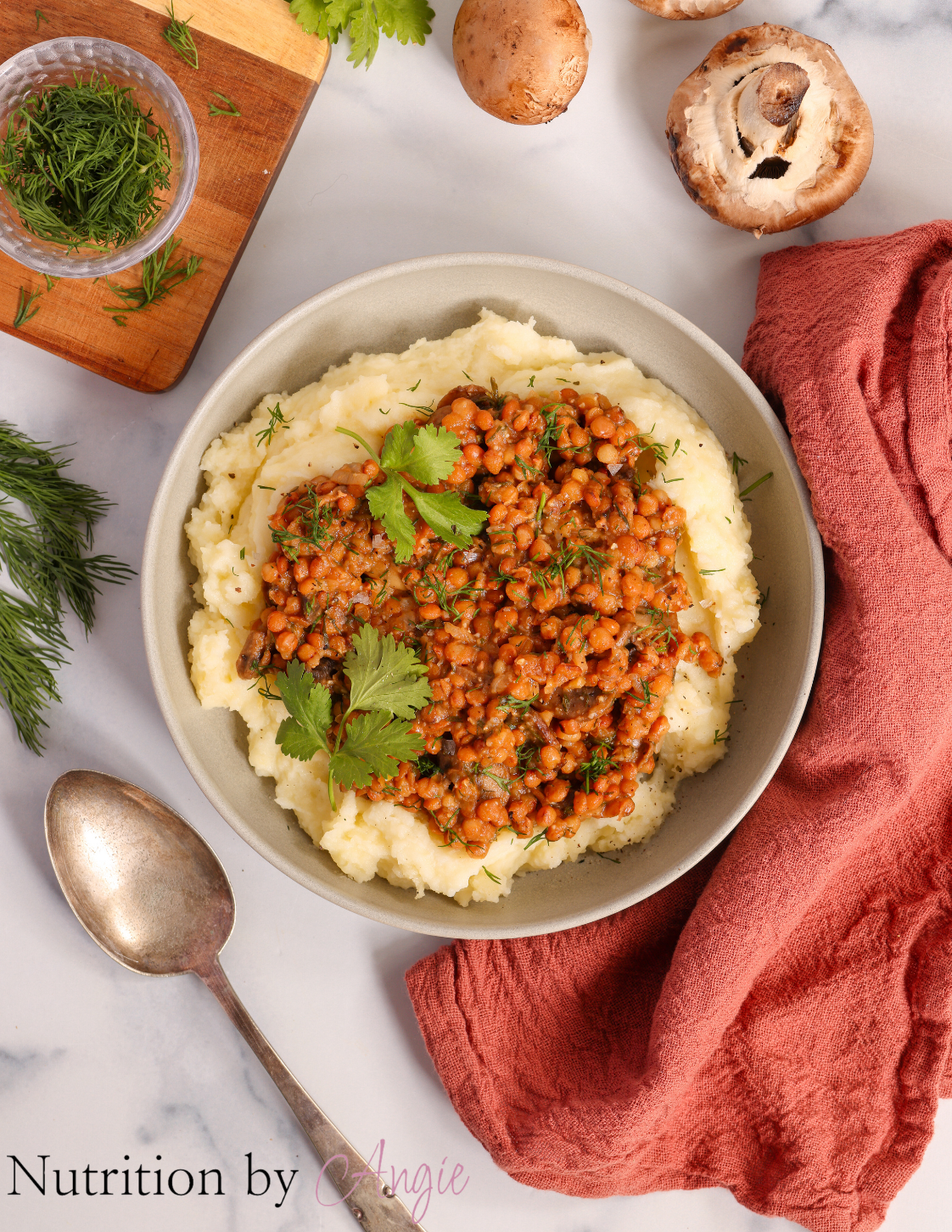
Lentil and Mushroom Stew with Thyme, Oregano and Creamy Mashed Potatoes
Vegan • Plant-Based • Fibre-Rich • Source of Plant Protein • Dairy-Free with Suitable Ingredients • Comfort Food • Budget-Friendly • Meal-Prep Friendly • Hearty Vegan Dinner
This recipe contains wheat (gluten) from the all-purpose flour. Vegetable stock may contain celery, wheat, soy or other allergens, depending on the brand. If serving with mashed potatoes, check that they are prepared without dairy ingredients to keep the complete meal vegan. Use certified gluten-free flour and suitable vegetable stock if required.
Introduction
This Lentil and Mushroom Stew with Thyme, Oregano and Creamy Mashed Potatoes is a warming, satisfying and nourishing vegan meal that combines tender lentils, savoury mushrooms, sweet onions and fragrant herbs in a rich vegetable gravy.
With its hearty texture, earthy flavour and comforting aroma, this stew is an excellent plant-based alternative to traditional meat-based stews.
The combination of lentils and mushrooms creates a satisfying dish with plenty of savoury depth.
Lentils contribute plant-based protein, dietary fibre, folate, iron and other important minerals.
Mushrooms provide umami flavour, B vitamins, selenium and naturally occurring compounds such as ergothioneine.
Onions add sweetness and depth, while thyme, oregano, garlic powder and paprika create a warming, aromatic seasoning blend.
A small amount of all-purpose flour helps thicken the vegetable stock into a smooth, rich gravy.
The result is a comforting stew that pairs particularly well with creamy mashed potatoes.
Fresh dill and parsley add a bright herbal finish that balances the richness of the sauce.
One of the main nutritional highlights of this healthy vegan lentil and mushroom stew is its combination of legumes and vegetables.
Lentils are particularly valuable because they provide dietary fibre and plant-based protein.
They also contain folate, iron, potassium, magnesium and phosphorus.
Dietary fibre supports normal digestive function and contributes to feelings of fullness.
Lentils contain both soluble and insoluble fibre.
Soluble fibre can contribute to cholesterol management as part of a balanced dietary pattern, although the strength of evidence varies between fibre types and food sources.
Lentils also have a relatively low glycaemic impact compared with many refined carbohydrate foods.
Their combination of fibre, protein and slowly digested carbohydrates can help create a satisfying meal.
Mushrooms contribute a rich umami flavour without requiring meat.
They also provide important nutrients, including riboflavin, niacin, pantothenic acid and selenium.
Some mushrooms contain vitamin D when exposed to ultraviolet light, although the amount varies considerably.
Mushrooms are naturally low in saturated fat and contribute useful dietary variety.
The dried herbs and spices enhance flavour without requiring large amounts of salt.
Thyme and oregano provide aromatic plant compounds, while paprika contributes colour and a mild sweetness.
Garlic powder adds savoury depth.
Although herbs and spices contain naturally occurring plant compounds, the small amounts used in this recipe should primarily be appreciated for their flavour.
Vegetable stock brings the ingredients together and creates the base of the gravy.
Choosing a reduced-salt stock can help manage the sodium content of the dish.
This easy lentil and mushroom stew is particularly suitable for autumn and winter meals, although it can be enjoyed throughout the year.
It is also a practical recipe for busy weekdays because canned lentils are already cooked.
Using canned lentils reduces preparation time while still providing valuable nutrients.
The stew can be served with mashed potatoes, whole grains or additional vegetables.
For people following a vegan diet, this recipe provides a useful combination of legumes, vegetables and aromatic seasonings.
However, the exact protein content depends on the number of servings and any accompanying foods.
Pairing the stew with additional lentils, beans or another protein-rich ingredient can create a more substantial meal.
With its tender lentils, savoury mushrooms, fragrant herbs and rich vegetable gravy, this Lentil and Mushroom Stew is a delicious, comforting and nourishing vegan dinner.
Benefits of All the Ingredients
Yellow Onion
Yellow onion provides savoury depth and natural sweetness.
It belongs to the Allium family, alongside garlic, leeks, shallots and chives.
Onions contain dietary fibre, small amounts of vitamins and minerals, and naturally occurring sulphur compounds.
Yellow onion provides:
Dietary Fibre: Supports normal digestive function.
Vitamin C: Supports normal immune function.
Vitamin B6: Supports normal protein metabolism.
Folate: Contributes to normal cell division.
Potassium: Supports normal muscle function.
Quercetin: A naturally occurring flavonoid.
Sulphur Compounds: Contribute to its distinctive aroma.
Fructans: Fermentable carbohydrates found in onions.
Onion and Dietary Fibre
Onions provide dietary fibre.
Fibre supports normal bowel function and digestive health.
The onion used in this recipe contributes to the overall vegetable and fibre content of the stew.
Onion and Vitamin C
Onions contain vitamin C.
Vitamin C contributes to normal immune function and collagen formation.
Some vitamin C is lost during cooking.
Onion and Quercetin
Onions contain quercetin, a naturally occurring flavonoid.
Quercetin has been studied for its antioxidant properties.
However, ordinary onion consumption should not be considered a treatment for disease.
Onion and Sulphur Compounds
Onions contain naturally occurring sulphur compounds.
These contribute to their characteristic aroma and flavour.
Onion and Natural Sweetness
Onions become sweeter and more mellow when cooked.
Their natural sweetness balances the earthy flavour of mushrooms and lentils.
Onion and Digestive Tolerance
Onions contain fructans, which may cause digestive discomfort in people who are sensitive to FODMAPs.
Individual tolerance varies.
Why Onion Works Well
Yellow onion creates a savoury foundation.
It adds depth and sweetness to the stew.
Mushrooms
Mushrooms provide a rich, savoury flavour and satisfying texture.
They are fungi rather than vegetables in the botanical sense, although they are commonly grouped with vegetables in cooking.
Mushrooms are particularly valued for their umami flavour, B vitamins, minerals and naturally occurring compounds.
Mushrooms provide:
Riboflavin (Vitamin B2): Supports normal energy metabolism.
Niacin (Vitamin B3): Supports normal energy metabolism.
Pantothenic Acid (Vitamin B5): Supports normal energy metabolism.
Selenium: Supports normal thyroid function.
Copper: Supports normal iron transport.
Potassium: Supports normal muscle function.
Dietary Fibre: Supports normal digestive function.
Ergothioneine: A naturally occurring compound found in mushrooms.
Vitamin D: Present in meaningful amounts in some UV-exposed mushrooms.
Mushrooms and B Vitamins
Mushrooms provide several B vitamins.
These include riboflavin, niacin and pantothenic acid.
B vitamins contribute to normal energy metabolism.
Mushrooms and Selenium
Some mushrooms provide selenium.
Selenium contributes to normal thyroid function.
It also helps protect cells from oxidative stress.
The amount varies depending on the mushroom variety and growing conditions.
Mushrooms and Copper
Mushrooms provide copper.
Copper contributes to normal iron transport and connective tissue maintenance.
Mushrooms and Potassium
Potassium contributes to normal muscle function.
It also helps maintain normal blood pressure.
Mushrooms provide potassium as part of their mineral content.
Mushrooms and Ergothioneine
Mushrooms contain ergothioneine, a naturally occurring sulphur-containing compound.
Ergothioneine has been studied for its antioxidant properties.
However, ordinary mushroom consumption should not be considered a treatment for disease.
Mushrooms and Vitamin D
Some mushrooms contain vitamin D2 when exposed to ultraviolet light.
However, ordinary mushrooms may contain very little vitamin D unless they have been specifically UV-treated.
Checking the product label can help identify UV-exposed mushrooms.
Mushrooms and Dietary Fibre
Mushrooms contain dietary fibre.
Their cell walls contain compounds such as beta-glucans and chitin.
These contribute to their texture and fibre content.
However, mushroom beta-glucans should not be assumed to have the same established LDL cholesterol-lowering effects as oat and barley beta-glucan.
Mushrooms and Umami Flavour
Mushrooms contain naturally occurring glutamate and other compounds that contribute to umami flavour.
This creates a rich, savoury taste.
Mushrooms and Heart-Conscious Nutrition
Mushrooms are naturally low in saturated fat.
They provide flavour and texture without requiring large amounts of added fat.
Mushrooms and Texture
Mushrooms become tender during cooking while retaining a satisfying bite.
They complement the soft lentils beautifully.
Why Mushrooms Work Well
Mushrooms provide earthy flavour, umami depth and texture.
They help create a hearty stew without meat.
Dried Thyme
Dried thyme provides a warm, earthy and slightly floral aroma.
It is a popular herb in soups, stews and savoury dishes.
Thyme contains naturally occurring aromatic compounds, including thymol and carvacrol.
Dried thyme provides:
Thymol: A naturally occurring aromatic compound.
Carvacrol: A naturally occurring plant compound.
Polyphenols: Contribute to dietary plant compound intake.
Small Amounts of Minerals: Depending on the quantity used.
Thyme and Aromatic Compounds
Thyme contains thymol and other aromatic compounds.
These contribute to its distinctive fragrance.
Thyme and Antioxidant Plant Compounds
Thyme contains naturally occurring polyphenols.
These have been studied for their antioxidant properties.
However, the teaspoon used in this recipe provides only a small nutritional contribution.
Thyme and Flavour
Thyme has an earthy, savoury flavour.
It complements mushrooms, lentils and onions.
Why Thyme Works Well
Thyme adds warmth and depth.
It helps create a traditional stew flavour.
Dried Oregano
Dried oregano provides a fragrant, slightly peppery flavour.
It is commonly used in Mediterranean-inspired cooking.
Oregano contains naturally occurring aromatic compounds, including carvacrol and thymol.
Dried oregano provides:
Carvacrol: A naturally occurring aromatic compound.
Thymol: Contributes to its distinctive aroma.
Polyphenols: Naturally occurring plant compounds.
Small Amounts of Minerals: Depending on the quantity used.
Oregano and Aromatic Compounds
Oregano contains carvacrol and thymol.
These contribute to its characteristic fragrance.
Oregano and Antioxidant Plant Compounds
Oregano contains naturally occurring polyphenols.
These have been studied for their antioxidant properties.
However, culinary amounts should primarily be appreciated for flavour.
Oregano and Flavour
Oregano adds a slightly peppery, herbal flavour.
It complements tomatoes, mushrooms, lentils and other savoury ingredients.
Why Oregano Works Well
Oregano adds aromatic complexity.
It complements thyme and paprika beautifully.
Garlic Powder
Garlic powder provides concentrated garlic flavour.
It is made from dehydrated garlic that has been ground into a fine powder.
Garlic powder contains naturally occurring compounds derived from garlic.
Garlic powder provides:
Organosulphur Compounds: Contribute to garlic flavour.
Small Amounts of Vitamin B6: Supports normal protein metabolism.
Small Amounts of Manganese: Contributes to normal metabolism.
Aromatic Compounds: Enhance savoury flavour.
Garlic Powder and Flavour
Garlic powder provides a rich savoury aroma.
It distributes evenly throughout the stew.
Garlic Powder and Sulphur Compounds
Garlic contains naturally occurring sulphur compounds.
Some of these compounds remain in dried garlic products, although processing changes their composition.
Garlic Powder and Nutritional Contribution
Garlic powder contains small amounts of vitamins and minerals.
However, the teaspoon used in this recipe does not provide a major nutritional contribution.
Garlic Powder and Sodium
Pure garlic powder does not normally contain added salt.
Garlic salt is a different product and contains sodium.
Checking the label can help avoid unnecessary added salt.
Why Garlic Powder Works Well
Garlic powder adds savoury depth.
It complements the onions, mushrooms and herbs.
Paprika
Paprika provides colour, mild sweetness and a warm flavour.
It is made from dried and ground peppers.
The flavour varies depending on whether sweet, hot or smoked paprika is used.
Paprika provides:
Carotenoids: Naturally occurring plant pigments.
Small Amounts of Vitamin A Precursors: Depending on the paprika variety.
Polyphenols: Naturally occurring plant compounds.
Aromatic Compounds: Contribute to flavour and fragrance.
Paprika and Carotenoids
Paprika contains carotenoids.
These pigments contribute to its red colour.
Some carotenoids can be converted into vitamin A.
Paprika and Antioxidant Plant Compounds
Paprika contains naturally occurring polyphenols and carotenoids.
These have been studied for their antioxidant properties.
However, the teaspoon used in this recipe provides a modest nutritional contribution.
Paprika and Flavour
Sweet paprika provides mild warmth and sweetness.
Smoked paprika creates a deeper, smoky flavour.
Paprika and Colour
Paprika adds a warm reddish colour to the gravy.
This makes the stew visually appealing.
Why Paprika Works Well
Paprika adds colour and warmth.
It complements the earthy mushrooms and savoury lentils.
All-Purpose Flour
All-purpose flour is used to thicken the stew.
It is typically made from refined wheat.
Flour helps create a smooth gravy by thickening the vegetable stock.
All-purpose flour provides:
Carbohydrates: Supply energy.
Small Amounts of Plant-Based Protein: Contribute to overall protein intake.
B Vitamins: Depending on enrichment and fortification.
Iron: Depending on fortification.
Starch: Helps thicken sauces and stews.
Flour and Carbohydrates
All-purpose flour provides carbohydrates.
Carbohydrates supply energy for everyday activities.
The two tablespoons used in this recipe contribute a relatively small amount.
Flour and Thickening
Wheat flour contains starch.
When heated with liquid, the starch granules absorb water and swell.
This thickens the vegetable stock into a gravy.
Flour and B Vitamins
Wheat flour may provide B vitamins.
The amount depends on the flour and any fortification.
Flour and Gluten
Conventional all-purpose wheat flour contains gluten.
People with coeliac disease should use a suitable gluten-free thickener.
Flour and Alternatives
Cornflour or another certified gluten-free thickener can be used if required.
The amount needed may differ from wheat flour.
Why Flour Works Well
Flour creates a rich, smooth gravy.
It helps the stew develop a comforting consistency.
Vegetable Stock
Vegetable stock provides the liquid base for the stew.
It helps combine the mushrooms, lentils, onions and herbs.
The nutritional composition depends on the ingredients and brand.
Vegetable stock may provide:
Water: Supports hydration.
Small Amounts of Minerals: Depending on the vegetables used.
Sodium: Often present in prepared stock.
Aromatic Plant Compounds: Depending on the vegetables and herbs included.
Vegetable Stock and Hydration
Vegetable stock is primarily water.
It contributes to the fluid content of the stew.
Vegetable Stock and Sodium
Prepared vegetable stock can contain substantial amounts of sodium.
Choosing reduced-salt stock can help lower sodium intake.
Vegetable Stock and Flavour
Vegetable stock provides savoury depth.
It enhances the flavour of mushrooms and lentils.
Vegetable Stock and Nutritional Variety
Homemade vegetable stock may contain small amounts of minerals and plant compounds.
However, the nutritional contribution varies considerably.
Vegetable Stock and Allergens
Some vegetable stocks contain celery, wheat, soy or other allergens.
Check the ingredient label carefully.
Why Vegetable Stock Works Well
Vegetable stock creates a flavourful gravy.
It brings the ingredients together into a comforting stew.
Canned Lentils
Lentils are the main legume ingredient in this recipe.
They provide plant-based protein, dietary fibre, folate, iron and other important nutrients.
Lentils belong to the legume family and are widely used in plant-based cooking.
Canned lentils are already cooked, making them convenient for quick meals.
Lentils provide:
Plant-Based Protein: Supports normal muscle maintenance.
Dietary Fibre: Supports normal digestive function.
Folate: Contributes to normal cell division.
Iron: Contributes to normal oxygen transport.
Potassium: Supports normal muscle function.
Magnesium: Supports normal muscle and nerve function.
Phosphorus: Supports healthy bones and teeth.
Zinc: Supports normal immune function.
Thiamin (Vitamin B1): Supports normal energy metabolism.
Complex Carbohydrates: Supply energy.
Lentils and Plant-Based Protein
Lentils provide plant-based protein.
Protein contributes to normal muscle maintenance, tissue repair and the production of enzymes and other important molecules.
The 310g of drained canned lentils used in this recipe contributes a useful amount of protein.
Lentils and Dietary Fibre
Lentils are a valuable source of dietary fibre.
Fibre supports normal bowel function and digestive health.
It also contributes to feelings of fullness.
Lentils and Soluble Fibre
Lentils contain soluble fibre.
Soluble fibre can contribute to cholesterol management as part of a balanced dietary pattern.
However, the cholesterol-lowering evidence is strongest for specific fibres such as oat and barley beta-glucan.
Lentils and Folate
Lentils are a valuable source of folate.
Folate contributes to normal cell division and red blood cell formation.
It is particularly important during pregnancy.
Lentils and Iron
Lentils provide non-haem iron.
Iron contributes to normal oxygen transport and normal energy metabolism.
Vitamin C-rich foods can help improve the absorption of non-haem iron.
Lentils and Potassium
Lentils provide potassium.
Potassium contributes to normal muscle function.
It also helps maintain normal blood pressure.
Lentils and Magnesium
Lentils contain magnesium.
Magnesium contributes to normal muscle and nerve function.
It also supports normal energy metabolism.
Lentils and Phosphorus
Phosphorus contributes to the maintenance of normal bones and teeth.
It also plays a role in energy metabolism.
Lentils and Zinc
Lentils provide zinc.
Zinc contributes to normal immune function and protein synthesis.
Lentils and Blood Glucose
Lentils contain fibre, protein and slowly digested carbohydrates.
These characteristics can help moderate the blood glucose response compared with some refined carbohydrate foods.
Individual responses vary.
Lentils and Satiety
Lentils contain protein and fibre.
These nutrients contribute to feelings of fullness.
Lentils and Heart-Conscious Nutrition
Lentils are naturally low in saturated fat.
They provide fibre and plant-based protein, making them a useful ingredient in a heart-conscious dietary pattern.
Lentils and Canned Convenience
Canned lentils are already cooked.
They are convenient and reduce preparation time.
Rinsing canned lentils can help reduce some of the sodium from the packing liquid.
Lentils and Digestive Tolerance
Lentils contain fermentable carbohydrates.
These may cause bloating or digestive discomfort in some people.
Rinsing canned lentils and introducing legumes gradually can improve tolerance.
Why Lentils Work Well
Lentils provide a hearty texture and savoury flavour.
They make the stew satisfying and nutritious.
Benefits of the Serving Ingredients
Fresh Dill
Fresh dill provides a bright, aromatic flavour.
It contains naturally occurring plant compounds and small amounts of vitamins and minerals.
Dill may provide:
Vitamin K: Supports normal blood clotting.
Vitamin C: Supports normal immune function.
Naturally Occurring Polyphenols: Contribute to dietary plant compound intake.
Aromatic Compounds: Provide its distinctive flavour.
Dill and Vitamin K
Dill contains vitamin K.
However, the amount provided by a small garnish is modest.
Dill and Aromatic Compounds
Dill contains naturally occurring aromatic compounds.
These contribute to its fresh, slightly grassy flavour.
Why Dill Works Well
Dill adds freshness.
It balances the rich mushroom gravy.
Fresh Parsley
Fresh parsley provides a bright herbal flavour and vibrant green colour.
It contains vitamin K, vitamin C and naturally occurring plant compounds.
Parsley may provide:
Vitamin K: Supports normal blood clotting.
Vitamin C: Supports normal immune function.
Folate: Contributes to normal cell division.
Carotenoids: Naturally occurring plant pigments.
Polyphenols: Contribute to dietary plant compound intake.
Parsley and Vitamin K
Parsley is rich in vitamin K by weight.
However, a small garnish provides a limited total amount.
Parsley and Vitamin C
Parsley contains vitamin C.
Vitamin C contributes to normal immune function and collagen formation.
Parsley and Antioxidant Plant Compounds
Parsley contains naturally occurring polyphenols.
These contribute to dietary plant compound intake.
Why Parsley Works Well
Parsley adds freshness and colour.
It complements the earthy mushrooms and lentils.
Mashed Potatoes
Mashed potatoes provide a comforting accompaniment.
They supply carbohydrates, potassium and some dietary fibre.
The nutritional composition depends on the potatoes and any added ingredients.
Mashed potatoes may provide:
Carbohydrates: Supply energy.
Potassium: Supports normal muscle function.
Vitamin C: Supports normal immune function.
Vitamin B6: Supports normal protein metabolism.
Dietary Fibre: Supports normal digestive function.
Small Amounts of Plant-Based Protein: Contribute to overall protein intake.
Mashed Potatoes and Carbohydrates
Potatoes provide carbohydrates.
Carbohydrates supply energy for everyday activities.
Mashed Potatoes and Potassium
Potatoes are a useful source of potassium.
Potassium contributes to normal muscle function and the maintenance of normal blood pressure.
Mashed Potatoes and Vitamin C
Potatoes contain vitamin C.
Some vitamin C is lost during cooking.
Mashed Potatoes and Dietary Fibre
Potatoes provide dietary fibre.
The amount depends partly on whether the skins are included.
Mashed Potatoes and Vegan Preparation
Traditional mashed potatoes may contain butter or milk.
To keep the meal vegan, use suitable plant-based ingredients.
Unsweetened soy milk or another suitable dairy-free alternative can provide creaminess.
Mashed Potatoes and Saturated Fat
The saturated fat content depends on the ingredients used.
Using unsaturated plant oils instead of butter can help improve the fat profile.
Why Mashed Potatoes Work Well
Mashed potatoes provide a creamy, comforting base.
They absorb the rich lentil and mushroom gravy beautifully.
Why Lentil and Mushroom Stew Makes a Nourishing Meal
Provides Plant-Based Protein
Lentils contribute protein that supports normal muscle maintenance.
Contains Dietary Fibre
Lentils, mushrooms and onions contribute fibre that supports digestive health.
Provides Folate
Lentils contribute folate, supporting normal cell division.
Contains Iron
Lentils provide non-haem iron, which supports normal oxygen transport.
Includes Important Minerals
Lentils and mushrooms contribute potassium, magnesium, phosphorus and selenium.
Provides B Vitamins
Mushrooms and lentils contribute vitamins involved in normal energy metabolism.
Contains Naturally Occurring Plant Compounds
Onions, mushrooms, herbs and spices contribute a variety of plant compounds.
Naturally Low in Saturated Fat
The stew ingredients are generally low in saturated fat, although this depends on any added cooking fats and accompaniments.
Works Well for Meal Preparation
The stew can be prepared ahead of time and stored in suitable portions.
Easy to Make More Substantial
Serving with mashed potatoes, whole grains or additional vegetables creates a satisfying meal.
Delicious Serving Suggestions
With Creamy Vegan Mashed Potatoes
Serve over mashed potatoes prepared with suitable plant-based ingredients.
The creamy potatoes complement the rich gravy beautifully.
With Brown Rice
Serve alongside brown rice for additional carbohydrates, fibre and magnesium.
With Whole-Grain Bread
Pair with whole-grain bread to absorb the savoury sauce.
With Steamed Green Beans
Serve with green beans for additional fibre, vitamin C and folate.
With Roasted Carrots
Add roasted carrots for natural sweetness and beta-carotene.
With Fresh Dill and Parsley
Finish with fresh herbs for a bright, aromatic contrast.
Tips for the Best Lentil and Mushroom Stew
Choose fresh mushrooms: They should be firm and free from excessive moisture.
Slice mushrooms evenly: This encourages consistent cooking.
Avoid overcrowding mushrooms: This helps them develop flavour.
Choose a fresh yellow onion: It provides the best sweetness and aroma.
Slice onion evenly: This helps it soften consistently.
Use good-quality dried thyme: Fresh, aromatic herbs provide the best flavour.
Choose oregano you enjoy: Its flavour varies between brands.
Use pure garlic powder: Avoid garlic salt if reducing sodium.
Choose sweet or smoked paprika: Both work well.
Measure flour accurately: Too much can make the gravy overly thick.
Use a suitable gluten-free thickener if required: Conventional flour contains gluten.
Choose reduced-salt vegetable stock: This can lower sodium intake.
Check stock allergens: Celery, wheat or soy may be present.
Drain canned lentils thoroughly: This helps control the consistency.
Rinse canned lentils if preferred: This can reduce some sodium.
Avoid overcooking canned lentils: They are already cooked.
Stir the gravy regularly: This helps prevent lumps.
Adjust the consistency with stock or water: Add more liquid if the stew becomes too thick.
Taste before adding salt: Stock and canned lentils may already contain sodium.
Use fresh dill and parsley: They add colour and freshness.
Add herbs near serving time: This helps preserve their flavour.
Prepare mashed potatoes with plant-based ingredients: This keeps the complete meal vegan.
Serve with additional vegetables: This increases nutritional variety.
Store leftovers in airtight containers: This helps preserve freshness.
Refrigerate promptly: Cool and refrigerate within two hours.
Consume refrigerated leftovers within approximately 3–4 days: Keep at 5°C or below.
Freeze in suitable portions: This makes the stew convenient for future meals.
Reheat thoroughly: Ensure the stew is piping hot before serving.
Add a little stock when reheating: This helps loosen the gravy.
Avoid repeated reheating: This helps maintain texture and food safety.
A Note on Lentils, Mushrooms and Cholesterol-Friendly Nutrition
This Lentil and Mushroom Stew combines legumes, mushrooms, onions, herbs and a savoury vegetable gravy.
Lentils are particularly valuable because they provide dietary fibre and plant-based protein.
Regularly including legumes as part of a balanced dietary pattern can support cardiovascular health.
Lentils contain soluble and insoluble fibre.
Soluble fibre can contribute to cholesterol management, although the strength of evidence varies between fibre types.
Lentils are also naturally low in saturated fat.
Replacing some meat-based meals with legume-based dishes can help reduce saturated fat intake, depending on the ingredients used.
Mushrooms provide savoury flavour and a satisfying texture.
They are naturally low in saturated fat and contribute B vitamins, minerals and naturally occurring compounds.
Onions provide additional flavour and dietary fibre.
Thyme, oregano, garlic powder and paprika enhance flavour without requiring large amounts of salt.
Vegetable stock can contribute substantial sodium, depending on the product.
Choosing reduced-salt stock can help manage sodium intake.
All-purpose flour thickens the gravy but provides relatively little fibre compared with whole-grain ingredients.
Serving the stew with whole grains or additional vegetables can increase dietary fibre intake.
Mashed potatoes provide carbohydrates and potassium.
Preparing them with unsaturated plant oils rather than butter can help improve the overall fat profile.
Adding fresh dill and parsley contributes flavour and dietary variety.
A balanced vegan dietary pattern that regularly includes vegetables, fruit, whole grains, legumes, nuts, seeds and unsaturated fats can support cardiovascular health and overall nutritional wellbeing.
With its tender lentils, savoury mushrooms, fragrant herbs and rich vegetable gravy, this Lentil and Mushroom Stew is a delicious, comforting and nourishing vegan dinner that can be enjoyed as part of a varied and balanced diet.