
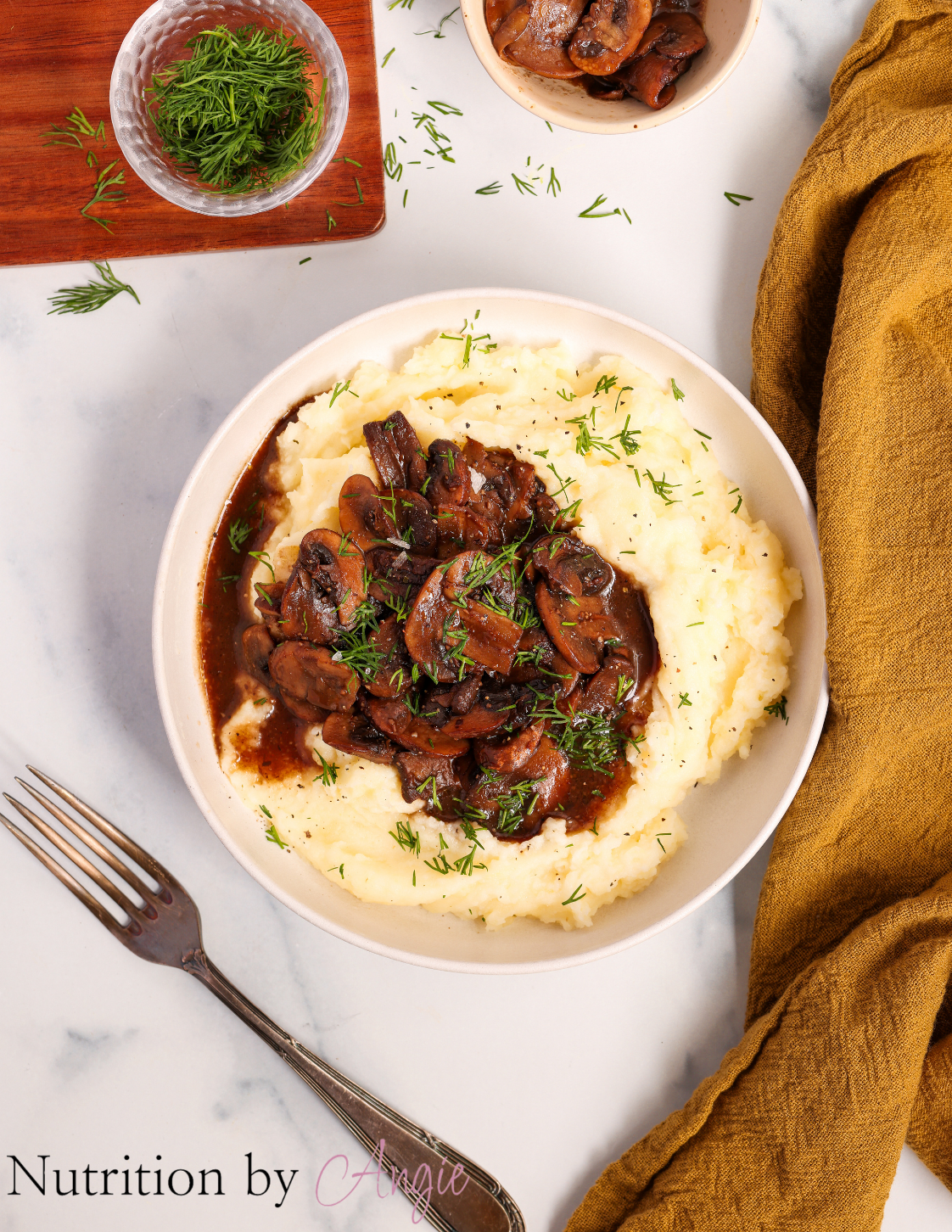
Tofu Mashed Potatoes with Balsamic Glazed Mushrooms and Fresh Dill
Vegan • Plant-Based • Dairy-Free • Comfort Food • Source of Plant Protein • Heart-Conscious • Easy Vegan Dinner • Creamy Mashed Potatoes • Mushroom Recipe • Meal-Prep Friendly
This recipe contains soy (silken tofu) and almonds (almond milk). Nutritional yeast, balsamic vinegar and packaged ingredients may contain additional allergens or traces of allergens depending on the brand. Check all ingredient labels carefully. The recipe is naturally free from wheat-based ingredients, but certified gluten-free products may be necessary for people with coeliac disease.
Introduction
This Tofu Mashed Potatoes with Balsamic Glazed Mushrooms and Fresh Dill is a delicious, comforting and nourishing vegan dish that combines fluffy potatoes, creamy silken tofu, savoury nutritional yeast and richly flavoured mushrooms.
The mashed potatoes are smooth, creamy and satisfying, while the balsamic glazed mushrooms provide a delicious contrast with their earthy flavour, tender texture and tangy sweetness.
Fresh dill adds a bright, aromatic finish that balances the richness of the potatoes and mushrooms.
Unlike traditional mashed potatoes, which are often prepared with butter, cream or milk, this recipe uses silken tofu and unsweetened almond milk to create a creamy texture.
Silken tofu contributes plant-based protein and gives the potatoes a smooth consistency without requiring dairy ingredients.
Nutritional yeast adds a savoury, cheese-like flavour that complements the mild potatoes.
Garlic powder provides warmth and depth, creating a comforting mash that pairs beautifully with the balsamic mushrooms.
One of the main nutritional highlights of this healthy vegan tofu mashed potato recipe is its combination of carbohydrates, plant-based protein and vegetables.
Potatoes provide carbohydrates, potassium, vitamin C and vitamin B6.
They are a useful source of energy and can form part of a balanced dietary pattern.
Silken tofu provides plant-based protein, including all nine essential amino acids.
It may also provide calcium, iron and magnesium, although the amounts vary depending on the tofu's coagulant and manufacturing process.
Nutritional yeast contributes savoury flavour and may provide B vitamins.
Some nutritional yeast products are fortified with vitamin B12, which is particularly relevant for people following a vegan diet.
However, vitamin B12 should only be claimed as a benefit when the nutritional yeast is fortified.
Unsweetened almond milk adds moisture and creaminess.
Its nutritional value depends on whether it has been fortified with calcium, vitamin D or vitamin B12.
The mushrooms contribute a rich umami flavour and provide B vitamins, minerals and naturally occurring compounds such as ergothioneine.
Balsamic vinegar adds acidity and sweetness, helping create a flavourful glaze without requiring a heavy sauce.
The combination of earthy mushrooms and tangy balsamic vinegar creates a delicious topping for the creamy potatoes.
Fresh dill provides a refreshing herbal note and a vibrant green finish.
This vegan mashed potatoes with glazed mushrooms is particularly suitable for autumn and winter meals, although it can be enjoyed throughout the year.
It works well as a comforting lunch, a light dinner or a side dish for a larger plant-based meal.
The recipe is also a useful option for people looking to include more soy-based foods in their diet.
Tofu provides protein and can replace some dairy-based ingredients in cooking.
For people interested in cholesterol-conscious nutrition, using tofu and unsweetened almond milk instead of butter and cream can help reduce saturated fat intake.
However, the exact nutritional profile depends on the tofu and almond milk products selected.
The dish provides carbohydrates, some plant-based protein and a variety of vitamins and minerals.
For a more substantial main meal, it can be paired with lentils, chickpeas, beans or additional vegetables.
With its creamy tofu mashed potatoes, savoury nutritional yeast, tangy balsamic mushrooms and fresh dill, this Tofu Mashed Potatoes with Glazed Mushrooms is a delicious, satisfying and nourishing vegan comfort food recipe.
Benefits of All the Ingredients
Potatoes
Potatoes are the main ingredient in the mashed potato base.
They are starchy vegetables that provide carbohydrates, potassium, vitamin C and vitamin B6.
Potatoes are naturally low in fat and can be part of a balanced dietary pattern.
Their nutritional composition depends on the variety, cooking method and whether the skins are included.
Potatoes provide:
Carbohydrates: Supply energy for everyday activities.
Potassium: Supports normal muscle function and blood pressure maintenance.
Vitamin C: Supports normal immune function and collagen formation.
Vitamin B6: Supports normal protein metabolism.
Dietary Fibre: Supports normal digestive function.
Magnesium: Supports normal muscle and nerve function.
Phosphorus: Supports healthy bones and teeth.
Small Amounts of Plant-Based Protein: Contribute to overall protein intake.
Naturally Occurring Polyphenols: Contribute to dietary plant compound intake.
Potatoes and Carbohydrates
Potatoes provide carbohydrates, primarily in the form of starch.
Carbohydrates are broken down during digestion into glucose, which can be used by the body's cells.
The 570g of potatoes used in this recipe provides a substantial carbohydrate contribution across the dish.
Potatoes and Energy
Carbohydrates are an important source of energy.
They support everyday activities and physical performance.
Potatoes can be included in a balanced meal alongside protein-rich foods, vegetables and suitable fats.
Potatoes and Potassium
Potatoes are a useful source of potassium.
Potassium contributes to normal muscle function and the maintenance of normal blood pressure.
The potassium content varies depending on the potato variety and cooking method.
Potatoes and Vitamin C
Potatoes contain vitamin C.
Vitamin C contributes to normal immune function and collagen formation.
It also helps protect cells from oxidative stress.
Some vitamin C is lost during peeling, boiling and other cooking processes.
Potatoes and Vitamin B6
Potatoes provide vitamin B6.
Vitamin B6 contributes to normal protein metabolism and nervous system function.
It also supports normal red blood cell formation.
Potatoes and Dietary Fibre
Potatoes contain dietary fibre.
Fibre supports normal digestive function and contributes to feelings of fullness.
Potato skins contain additional fibre, although this recipe uses peeled potatoes.
Potatoes and Magnesium
Potatoes contain magnesium.
Magnesium contributes to normal muscle and nerve function.
It also supports normal energy metabolism.
Potatoes and Phosphorus
Phosphorus contributes to the maintenance of normal bones and teeth.
It also plays a role in energy metabolism.
Potatoes and Resistant Starch
When cooked potatoes are cooled, some starch can become resistant starch.
Resistant starch is not fully digested in the small intestine and can be fermented by intestinal bacteria.
The amount depends on the potato variety, cooking method and cooling conditions.
Potatoes and Satiety
Potatoes can be satisfying because they contain carbohydrates, water and some fibre.
Pairing them with tofu and mushrooms creates a meal with a combination of textures and nutrients.
Potatoes and Heart-Conscious Nutrition
Potatoes are naturally low in saturated fat.
The overall fat profile of mashed potatoes depends largely on the ingredients added.
Using tofu and unsweetened almond milk instead of butter and cream can help reduce saturated fat intake.
Potatoes and Texture
Potatoes become soft and fluffy when cooked.
They create a smooth, comforting base for the tofu and nutritional yeast.
Why Potatoes Work Well
Potatoes have a mild flavour that complements garlic, nutritional yeast and balsamic mushrooms.
Their fluffy texture creates a satisfying contrast to the tender mushrooms.
Unsweetened Almond Milk
Unsweetened almond milk provides moisture and helps create a smooth mashed potato texture.
It is made from almonds and water, although commercial products may contain stabilisers, emulsifiers and added nutrients.
The nutritional composition varies considerably between brands.
Unsweetened almond milk may provide:
Small Amounts of Unsaturated Fats: Depending on the almond content.
Vitamin E: Present naturally in almonds, although amounts vary in almond milk.
Calcium: If fortified.
Vitamin D: If fortified.
Vitamin B12: If fortified.
Low Amounts of Sugar: When unsweetened.
Moisture: Helps create a creamy texture.
Almond Milk and Creaminess
Almond milk adds moisture to the mashed potatoes.
It helps create a smooth consistency without using dairy milk.
Almond Milk and Unsaturated Fats
Almonds contain predominantly unsaturated fats.
However, commercial almond milk often contains a relatively small amount of almonds.
Its contribution of unsaturated fats may therefore be modest.
Almond Milk and Calcium
Some almond milk products are fortified with calcium.
Calcium contributes to the maintenance of normal bones and teeth.
However, calcium should only be claimed as a benefit when the product is fortified.
Almond Milk and Vitamin D
Some almond milk products contain added vitamin D.
Vitamin D contributes to normal bone and immune function.
The amount depends on the product.
Almond Milk and Vitamin B12
Some almond milk products are fortified with vitamin B12.
Vitamin B12 contributes to normal nervous system function and red blood cell formation.
Unfortified almond milk should not be considered a reliable source.
Almond Milk and Sugar
Unsweetened almond milk generally contains little or no added sugar.
This makes it suitable for savoury dishes.
Almond Milk and Protein
Almond milk is usually relatively low in protein compared with dairy milk or soy milk.
The small amount used in this recipe contributes little protein.
Almond Milk and Food Allergies
Almonds are tree nuts.
People with almond allergies should avoid almond milk.
Why Almond Milk Works Well
Unsweetened almond milk adds moisture without introducing sweetness.
It helps create creamy mashed potatoes while keeping the dish dairy-free.
Silken Tofu
Silken tofu is one of the main ingredients in this recipe.
It is made from soybeans and has a smooth, delicate texture.
Unlike firm tofu, silken tofu has a high moisture content and blends easily into creamy dishes.
Silken tofu provides plant-based protein and may contribute calcium, iron and other minerals.
Silken tofu provides:
Complete Plant-Based Protein: Contains all nine essential amino acids.
Iron: Contributes to normal oxygen transport.
Calcium: Present in varying amounts depending on the coagulant.
Magnesium: Supports normal muscle and nerve function.
Phosphorus: Supports healthy bones and teeth.
Potassium: Supports normal muscle function.
Unsaturated Fats: Contribute to a heart-conscious dietary pattern.
Isoflavones: Naturally occurring compounds found in soybeans.
Small Amounts of B Vitamins: Support normal energy metabolism.
Silken Tofu and Complete Protein
Tofu provides complete plant-based protein.
It contains all nine essential amino acids.
Protein contributes to normal muscle maintenance, tissue repair and the production of enzymes and other important molecules.
The 225g of silken tofu used in this recipe adds protein to the mashed potatoes.
Silken Tofu and Muscle Health
Protein is essential for maintaining muscle mass.
It is particularly important during growth, recovery from physical activity and healthy ageing.
Tofu provides protein as part of a balanced plant-based diet.
Silken Tofu and Iron
Tofu contains non-haem iron.
Iron contributes to normal oxygen transport and normal energy metabolism.
Pairing plant-based iron sources with vitamin C-rich foods can help improve absorption.
Silken Tofu and Calcium
Some tofu products provide substantial amounts of calcium.
The calcium content depends on the coagulant used during production.
Calcium-set tofu can be a valuable source of calcium.
However, not all silken tofu products contain high amounts.
Checking the nutrition label is important.
Silken Tofu and Magnesium
Tofu contains magnesium.
Magnesium contributes to normal muscle and nerve function.
It also supports normal energy metabolism.
Silken Tofu and Phosphorus
Phosphorus contributes to the maintenance of normal bones and teeth.
It also plays a role in energy metabolism.
Silken Tofu and Unsaturated Fats
Soybeans contain predominantly unsaturated fats.
Tofu generally provides a favourable fat profile compared with many high-saturated-fat animal products.
Replacing saturated fats with unsaturated fats can help improve LDL cholesterol levels.
Silken Tofu and Isoflavones
Soybeans contain naturally occurring isoflavones.
These plant compounds have been studied for their potential effects on cardiovascular and other aspects of health.
However, tofu should not be considered a treatment for medical conditions.
Silken Tofu and Heart-Conscious Nutrition
Soy foods can be included in a cholesterol-conscious dietary pattern.
Replacing foods high in saturated fat with tofu may help improve the overall fat composition of meals.
Silken Tofu and Digestive Health
Tofu is generally lower in fibre than whole soybeans because some fibre is removed during processing.
However, it provides protein and other nutrients.
Silken Tofu and Texture
Silken tofu blends into a smooth, creamy consistency.
This makes it particularly suitable for mashed potatoes, sauces and desserts.
Silken Tofu and Food Allergies
Tofu is made from soybeans.
Soy is a major food allergen.
People with soy allergies should avoid tofu.
Why Silken Tofu Works Well
Silken tofu creates a creamy texture and adds plant-based protein.
Its mild flavour allows the potatoes, nutritional yeast and garlic to stand out.
Nutritional Yeast
Nutritional yeast provides a savoury, cheese-like flavour.
It is a deactivated yeast commonly used in vegan cooking.
Nutritional yeast may provide protein, fibre and B vitamins.
The nutritional composition depends on whether it is fortified.
Nutritional yeast may provide:
Plant-Based Protein: Contributes to overall protein intake.
B Vitamins: Support normal energy metabolism.
Vitamin B12: Only when fortified.
Thiamin (Vitamin B1): Supports normal energy metabolism.
Riboflavin (Vitamin B2): Supports normal energy metabolism.
Niacin (Vitamin B3): Supports normal energy metabolism.
Vitamin B6: Supports normal protein metabolism.
Dietary Fibre: Supports normal digestive function.
Small Amounts of Minerals: Depending on the product.
Nutritional Yeast and Savoury Flavour
Nutritional yeast provides a rich, savoury flavour.
It is often described as nutty or cheese-like.
This makes it particularly useful in dairy-free mashed potatoes.
Nutritional Yeast and Plant-Based Protein
Nutritional yeast provides plant-based protein.
Protein contributes to normal muscle maintenance and tissue repair.
The three tablespoons used in this recipe contribute some protein.
Nutritional Yeast and B Vitamins
Nutritional yeast can provide B vitamins.
These contribute to normal energy metabolism.
The exact amounts depend on the product.
Nutritional Yeast and Vitamin B12
Vitamin B12 is particularly important in vegan diets.
However, nutritional yeast only provides reliable vitamin B12 when it is fortified.
Checking the label is essential.
Nutritional Yeast and Thiamin
Thiamin contributes to normal energy metabolism.
It also supports normal nervous system function.
Nutritional Yeast and Riboflavin
Riboflavin contributes to normal energy metabolism.
It also helps protect cells from oxidative stress.
Nutritional Yeast and Niacin
Niacin contributes to normal energy metabolism.
It also supports normal nervous system function.
Nutritional Yeast and Dietary Fibre
Nutritional yeast contains some dietary fibre.
Fibre supports normal digestive function.
Nutritional Yeast and Sodium
Plain nutritional yeast is often relatively low in sodium.
However, flavoured products may contain added salt.
Checking the label can help identify a suitable option.
Why Nutritional Yeast Works Well
Nutritional yeast adds a savoury, cheese-like flavour.
It complements the creamy tofu and potatoes without using dairy cheese.
Garlic Powder
Garlic powder provides concentrated garlic flavour.
It is made from dehydrated garlic that has been ground into a fine powder.
Garlic powder contains naturally occurring compounds derived from garlic.
Garlic powder provides:
Organosulphur Compounds: Contribute to garlic flavour.
Small Amounts of Vitamin B6: Supports normal protein metabolism.
Small Amounts of Manganese: Contributes to normal metabolism.
Aromatic Compounds: Enhance savoury flavour.
Garlic Powder and Flavour
Garlic powder provides a rich savoury aroma.
It distributes evenly throughout the mashed potatoes.
Garlic Powder and Sulphur Compounds
Garlic contains naturally occurring sulphur compounds.
Some of these compounds remain in dried garlic products, although processing changes their composition.
Garlic Powder and Nutritional Contribution
Garlic powder contains small amounts of vitamins and minerals.
However, the quantity used in this recipe does not provide a major nutritional contribution.
Garlic Powder and Sodium
Pure garlic powder does not normally contain added salt.
Garlic salt is a different product and contains sodium.
Checking the label can help avoid unnecessary added salt.
Why Garlic Powder Works Well
Garlic powder adds savoury depth.
It complements the nutritional yeast and creamy tofu beautifully.
Mushrooms
Mushrooms provide a rich, earthy flavour and satisfying texture.
They are fungi rather than vegetables in the botanical sense, although they are commonly grouped with vegetables in cooking.
Mushrooms are particularly valued for their umami flavour, B vitamins, minerals and naturally occurring compounds.
Mushrooms provide:
Riboflavin (Vitamin B2): Supports normal energy metabolism.
Niacin (Vitamin B3): Supports normal energy metabolism.
Pantothenic Acid (Vitamin B5): Supports normal energy metabolism.
Selenium: Supports normal thyroid function.
Copper: Supports normal iron transport.
Potassium: Supports normal muscle function.
Dietary Fibre: Supports normal digestive function.
Ergothioneine: A naturally occurring compound found in mushrooms.
Vitamin D: Present in meaningful amounts in some UV-exposed mushrooms.
Mushrooms and B Vitamins
Mushrooms provide several B vitamins.
These include riboflavin, niacin and pantothenic acid.
B vitamins contribute to normal energy metabolism.
Mushrooms and Selenium
Some mushrooms provide selenium.
Selenium contributes to normal thyroid function.
It also helps protect cells from oxidative stress.
The amount varies depending on the mushroom variety and growing conditions.
Mushrooms and Copper
Mushrooms provide copper.
Copper contributes to normal iron transport and connective tissue maintenance.
Mushrooms and Potassium
Potassium contributes to normal muscle function.
It also helps maintain normal blood pressure.
Mushrooms provide potassium as part of their mineral content.
Mushrooms and Ergothioneine
Mushrooms contain ergothioneine, a naturally occurring sulphur-containing compound.
Ergothioneine has been studied for its antioxidant properties.
However, ordinary mushroom consumption should not be considered a treatment for disease.
Mushrooms and Vitamin D
Some mushrooms contain vitamin D2 when exposed to ultraviolet light.
However, ordinary mushrooms may contain very little vitamin D unless they have been specifically UV-treated.
Checking the product label can help identify UV-exposed mushrooms.
Mushrooms and Dietary Fibre
Mushrooms contain dietary fibre.
Their cell walls contain compounds such as beta-glucans and chitin.
These contribute to their texture and fibre content.
However, mushroom beta-glucans should not be assumed to have the same established LDL cholesterol-lowering effects as oat and barley beta-glucan.
Mushrooms and Umami Flavour
Mushrooms contain naturally occurring glutamate and other compounds that contribute to umami flavour.
This creates a rich, savoury taste.
Mushrooms and Heart-Conscious Nutrition
Mushrooms are naturally low in saturated fat.
They provide flavour and texture without requiring large amounts of added fat.
Mushrooms and Texture
Mushrooms become tender during cooking while retaining a satisfying bite.
They complement the smooth mashed potatoes beautifully.
Why Mushrooms Work Well
Mushrooms provide earthy flavour, umami depth and texture.
They create a delicious savoury topping.
Balsamic Vinegar
Balsamic vinegar provides acidity, sweetness and a rich flavour.
It is traditionally made from grape must and wine vinegar, although commercial products vary.
Balsamic vinegar contains organic acids and small amounts of naturally occurring plant compounds.
Balsamic vinegar provides:
Acetic Acid: Contributes to its characteristic acidity.
Naturally Occurring Polyphenols: Present in varying amounts.
Small Amounts of Carbohydrates: Depending on the product.
Aromatic Compounds: Contribute to its complex flavour.
Balsamic Vinegar and Acidity
Balsamic vinegar contains acetic acid.
This provides its characteristic tangy flavour.
The acidity balances the richness of the mashed potatoes.
Balsamic Vinegar and Polyphenols
Balsamic vinegar contains naturally occurring polyphenols derived from grapes.
The amounts vary depending on the product and production method.
Balsamic Vinegar and Sweetness
Balsamic vinegar has a naturally sweet flavour.
Some commercial products contain added sugar or concentrated grape must.
Checking the label can help identify the sugar content.
Balsamic Vinegar and Glazing
Balsamic vinegar can reduce during cooking.
This creates a concentrated, glossy coating for mushrooms.
Balsamic Vinegar and Sodium
Balsamic vinegar is generally low in sodium.
It adds flavour without requiring large amounts of salt.
Balsamic Vinegar and Digestive Tolerance
Acidic foods may cause discomfort in some people with reflux or sensitive digestion.
Individual tolerance varies.
Why Balsamic Vinegar Works Well
Balsamic vinegar provides tangy sweetness.
It complements the earthy mushrooms and creamy potatoes beautifully.
Benefits of the Serving Ingredient
Fresh Dill
Fresh dill provides a bright, aromatic flavour.
It contains naturally occurring plant compounds and small amounts of vitamins and minerals.
Dill may provide:
Vitamin K: Supports normal blood clotting.
Vitamin C: Supports normal immune function.
Naturally Occurring Polyphenols: Contribute to dietary plant compound intake.
Aromatic Compounds: Provide its distinctive flavour.
Dill and Vitamin K
Dill contains vitamin K.
However, the amount provided by a small garnish is modest.
Dill and Vitamin C
Dill contains vitamin C.
Vitamin C contributes to normal immune function and collagen formation.
A small garnish provides only a limited amount.
Dill and Aromatic Compounds
Dill contains naturally occurring aromatic compounds.
These contribute to its fresh, slightly grassy flavour.
Dill and Antioxidant Plant Compounds
Dill contains naturally occurring polyphenols.
These have been studied for their antioxidant properties.
However, ordinary culinary amounts should primarily be appreciated for flavour.
Why Fresh Dill Works Well
Fresh dill adds brightness and freshness.
It balances the rich balsamic mushrooms and creamy mashed potatoes.
Why Tofu Mashed Potatoes with Glazed Mushrooms Makes a Nourishing Meal
Provides Plant-Based Protein
Silken tofu and nutritional yeast contribute protein that supports normal muscle maintenance.
Contains Carbohydrates for Energy
Potatoes provide carbohydrates that support everyday activities.
Provides Potassium
Potatoes and mushrooms contribute potassium.
Contains B Vitamins
Mushrooms, potatoes and nutritional yeast contribute vitamins involved in normal energy metabolism.
Includes Iron
Tofu provides non-haem iron, supporting normal oxygen transport.
Contains Important Minerals
Tofu and mushrooms contribute minerals such as magnesium, phosphorus and copper.
Provides Naturally Occurring Plant Compounds
Mushrooms, garlic and dill contribute a variety of plant compounds.
Offers a Creamy Dairy-Free Texture
Silken tofu and almond milk create smooth mashed potatoes without dairy cream.
Includes Savoury Umami Flavour
Mushrooms and nutritional yeast provide rich savoury notes.
Easy to Make More Substantial
Serving with lentils, chickpeas or additional vegetables creates a more balanced meal.
Delicious Serving Suggestions
With Steamed Green Beans
Serve alongside steamed green beans for additional fibre, vitamin C and folate.
With Roasted Carrots
Add roasted carrots for natural sweetness and beta-carotene.
With Lentils
Serve with cooked lentils for extra plant-based protein, iron and dietary fibre.
With Sautéed Spinach
Pair with spinach for additional folate, vitamin K and plant compounds.
With Roasted Chickpeas
Add roasted chickpeas for extra protein, fibre and crunch.
With Fresh Dill and Lemon
Finish with fresh dill and a squeeze of lemon juice for a refreshing contrast.
Tips for the Best Tofu Mashed Potatoes with Glazed Mushrooms
Choose suitable potatoes: Floury varieties generally create a fluffy mash.
Peel potatoes evenly: This helps create a smooth texture.
Cut potatoes into similar-sized cubes: This encourages consistent cooking.
Avoid overcooking potatoes: Excess water can make the mash watery.
Drain potatoes thoroughly: This helps prevent a loose texture.
Allow excess steam to escape: This can help create fluffier mashed potatoes.
Use silken tofu: Its smooth texture blends easily.
Blend tofu until smooth if preferred: This helps prevent lumps.
Choose unsweetened almond milk: Sweetened varieties are unsuitable for savoury mash.
Check almond milk fortification: Calcium and vitamin B12 content vary.
Add almond milk gradually: This helps control the consistency.
Use good-quality nutritional yeast: Its flavour varies between brands.
Choose fortified nutritional yeast if preferred: It may provide vitamin B12.
Use pure garlic powder: Avoid garlic salt if reducing sodium.
Adjust garlic powder to taste: A little can provide plenty of flavour.
Avoid overmixing potatoes: Excessive mixing can create a gluey texture.
Choose fresh mushrooms: They should be firm and free from excessive moisture.
Slice mushrooms evenly: This encourages consistent cooking.
Avoid overcrowding mushrooms: This helps them develop flavour.
Use good-quality balsamic vinegar: Its sweetness and acidity affect the glaze.
Check balsamic vinegar ingredients: Some products contain added sugar.
Allow the balsamic glaze to reduce gently: This concentrates the flavour.
Avoid burning the glaze: Reduced vinegar can become bitter if overheated.
Use fresh dill: It adds the best flavour.
Add dill just before serving: This helps preserve its aroma.
Serve with legumes for extra protein: Lentils or chickpeas make the meal more substantial.
Store leftovers in airtight containers: This helps preserve freshness.
Refrigerate promptly: Cool and refrigerate within two hours.
Consume refrigerated leftovers within approximately 3–4 days: Keep at 5°C or below.
Reheat thoroughly: Ensure the potatoes and mushrooms are piping hot before serving.
Add a little almond milk when reheating: This helps restore the creamy texture.
Avoid repeated reheating: This helps maintain texture and food safety.
A Note on Tofu, Potatoes and Cholesterol-Friendly Nutrition
This Tofu Mashed Potatoes with Glazed Mushrooms combines potatoes, silken tofu, almond milk, nutritional yeast and mushrooms.
Potatoes are naturally low in saturated fat.
They provide carbohydrates, potassium, vitamin C and vitamin B6.
The overall fat profile of mashed potatoes depends largely on the ingredients added.
Traditional mashed potatoes often contain butter, cream or full-fat milk.
Using silken tofu and unsweetened almond milk instead can help reduce saturated fat intake.
Silken tofu provides complete plant-based protein.
Soy foods can be included in a cholesterol-conscious dietary pattern.
Replacing foods high in saturated fat with soy-based alternatives may help improve the overall fat composition of meals.
Tofu also provides iron and other minerals.
The calcium content varies depending on the coagulant used.
Nutritional yeast adds savoury flavour without requiring dairy cheese.
Fortified nutritional yeast may provide vitamin B12, which is particularly important in vegan diets.
However, unfortified nutritional yeast should not be relied upon as a vitamin B12 source.
Mushrooms provide savoury flavour and a satisfying texture.
They are naturally low in saturated fat and contribute B vitamins, minerals and naturally occurring compounds.
Balsamic vinegar adds acidity and sweetness without requiring a heavy sauce.
However, some balsamic products contain added sugar.
Fresh dill adds aromatic flavour and dietary variety.
For people following a cholesterol-conscious dietary pattern, replacing saturated fats with unsaturated fats can help improve LDL cholesterol levels.
This recipe is naturally low in saturated fat when prepared with suitable tofu and almond milk products and without added butter or coconut-based ingredients.
However, it may not provide enough protein to serve as a complete main meal for everyone.
Adding lentils, chickpeas, beans or another protein-rich food can create a more substantial and balanced meal.
A varied vegan dietary pattern that regularly includes vegetables, fruit, whole grains, legumes, nuts, seeds and unsaturated fats can support cardiovascular health and overall nutritional wellbeing.
With its creamy tofu mashed potatoes, savoury nutritional yeast, tangy balsamic mushrooms and fresh dill, this Tofu Mashed Potatoes with Glazed Mushrooms is a delicious, comforting and nourishing vegan dish that can be enjoyed as part of a varied and balanced diet.