
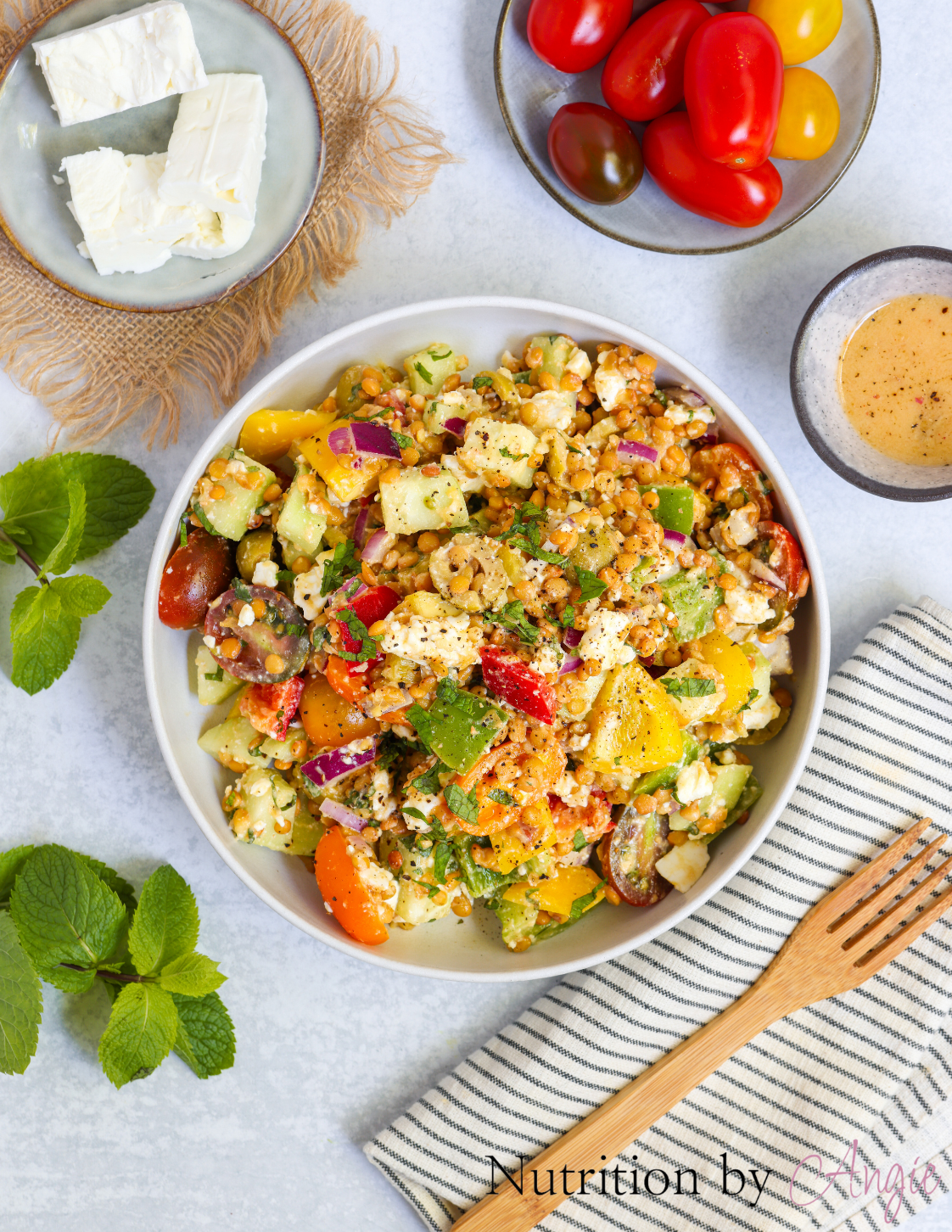
Vegan Greek-Style Lentil Salad
Vegan • Vegetarian • Plant-Based • Dairy-Free • Mediterranean-Inspired • Fibre-Rich • Plant Protein • Gluten-Free with Suitable Ingredients • Whole-Food Focused
Use vegan feta cheese and a plant-based vinaigrette to keep this recipe completely vegan. For a gluten-free version, check the labels of the lentils, vegan feta and vinaigrette.
Introduction
This Vegan Greek-Style Lentil Salad is a colourful, refreshing and nourishing Mediterranean-inspired dish made with tender brown lentils, savoury olives, juicy cherry tomatoes, crunchy bell peppers, red onion, cucumber, fresh mint and creamy vegan feta cheese, all brought together with a delicious vinaigrette.
Combining the fresh flavours of a traditional Greek salad with the satisfying texture of lentils, this recipe creates a wonderful balance of plant-based protein, dietary fibre, colourful vegetables and Mediterranean flavours.
Brown lentils provide the hearty foundation of the salad. Their mild, earthy flavour complements the salty olives, sweet tomatoes and crisp vegetables beautifully.
Cherry tomatoes add juicy sweetness and naturally occurring antioxidants, while bell peppers contribute vibrant colour and vitamin C.
Red onion provides a distinctive savoury flavour, cucumber adds freshness and hydration, and fresh mint brings a wonderfully aromatic finish.
Vegan feta cheese creates the familiar creamy, tangy element associated with Greek-style salads, while the vinaigrette brings all the ingredients together.
One of the main nutritional highlights of this vegan Greek lentil salad is its generous combination of legumes and vegetables.
Lentils are naturally rich in dietary fibre and provide plant-based protein, folate, iron, potassium and other important minerals.
Their soluble fibre is particularly valuable in a cholesterol-conscious dietary pattern because it can contribute to maintaining healthy blood cholesterol levels.
Olives provide predominantly monounsaturated fats, particularly oleic acid, which is also found in olive oil.
Tomatoes, peppers, onion, cucumber and mint contribute a variety of vitamins, minerals and naturally occurring plant compounds.
Together, these ingredients create a satisfying, refreshing salad that fits beautifully into a Mediterranean-style or whole-food-focused vegan diet.
This easy Mediterranean lentil salad is particularly convenient because it uses canned brown lentils, reducing preparation time while still providing the nutritional benefits of legumes.
It is ideal for a quick lunch, a light dinner, a summer gathering or a make-ahead meal.
The salad can also be served alongside roasted vegetables, whole grains or other plant-based dishes for a more substantial meal.
For anyone interested in plant-based eating and cholesterol-friendly nutrition, this recipe is a delicious way to include more legumes, vegetables and unsaturated fats in everyday meals.
With its bright colours, fresh Mediterranean flavours and satisfying combination of textures, this Greek-Style Lentil Salad with Vegan Feta is a wonderful addition to a balanced vegan recipe collection.
Benefits of All the Ingredients
Brown Lentils
Brown lentils are the main ingredient in this salad and provide its satisfying, hearty texture.
Lentils belong to the legume family and have been an important part of traditional Mediterranean and Middle Eastern diets for thousands of years.
They are particularly valued for their combination of plant-based protein, dietary fibre, complex carbohydrates and essential minerals.
Brown lentils provide:
Plant-Based Protein: Supports normal muscle maintenance and tissue repair.
Dietary Fibre: Supports digestive health and normal bowel function.
Soluble Fibre: Contributes to a cholesterol-conscious dietary pattern.
Folate (Vitamin B9): Supports normal cell division and red blood cell formation.
Iron: Contributes to normal oxygen transport.
Potassium: Supports normal muscle function and blood pressure regulation.
Magnesium: Supports normal muscle and nerve function.
Phosphorus: Supports healthy bones and teeth.
Zinc: Supports normal immune function.
Polyphenols: Naturally occurring plant compounds.
Lentils and Cholesterol
Lentils are particularly valuable in a heart-conscious dietary pattern because they contain dietary fibre, including soluble fibre.
Soluble fibre can help reduce cholesterol absorption and contribute to lower LDL cholesterol levels when consumed regularly as part of a balanced diet.
Lentils are also naturally low in saturated fat.
Replacing some saturated-fat-rich foods with legumes can improve the overall nutritional quality of the diet.
Regular consumption of lentils, beans, chickpeas and other legumes is associated with favourable cardiovascular health outcomes.
Lentils and Plant-Based Protein
Lentils provide a useful amount of plant-based protein.
Protein contributes to normal muscle maintenance, tissue repair and many essential biological processes.
The 480g of drained lentils used in this recipe provides a substantial amount of protein across the entire salad.
Although lentils contain all essential amino acids, their amino acid proportions differ from those of some animal proteins.
Eating a variety of protein-rich plant foods throughout the day helps support adequate essential amino acid intake.
Lentils and Digestive Health
Lentils contain both soluble and insoluble dietary fibre.
Soluble fibre can be fermented by intestinal bacteria, producing short-chain fatty acids.
These compounds play important roles in normal intestinal function.
Insoluble fibre contributes to normal bowel movements.
Including legumes regularly can help increase overall fibre intake and support a diverse plant-based diet.
Lentils and Blood Glucose
Lentils contain carbohydrates alongside fibre and protein.
Their structure and fibre content contribute to a relatively gradual digestion of carbohydrates compared with many refined carbohydrate foods.
This makes lentils a useful component of balanced meals.
Lentils and Iron
Lentils provide non-haem iron, the type of iron found in plant foods.
Iron contributes to normal oxygen transport and helps reduce tiredness and fatigue when intake is adequate.
The vitamin C from bell peppers and tomatoes can help improve the absorption of non-haem iron from lentils.
Why Canned Lentils Work Well
Canned lentils are convenient and ready to use.
They retain much of the nutritional value of cooked lentils, including protein and fibre.
Draining and rinsing canned lentils can reduce some of the sodium from the canning liquid.
Olives
Olives provide the distinctive savoury flavour associated with Mediterranean cuisine.
They are the fruit of the olive tree and contain predominantly monounsaturated fats.
Olives also provide naturally occurring polyphenols and small amounts of minerals.
Olives contain:
Monounsaturated Fats: Particularly oleic acid.
Vitamin E: Helps protect cells from oxidative stress.
Polyphenols: Naturally occurring plant compounds.
Small Amounts of Iron: Contributes to normal oxygen transport.
Dietary Fibre: Supports normal digestive function.
Olives and Heart Health
Olives contain oleic acid, a monounsaturated fatty acid also found in olive oil.
Replacing saturated fats with unsaturated fats can help improve blood cholesterol levels.
Olives are therefore a useful ingredient in a Mediterranean-style dietary pattern.
Olives and Polyphenols
Olives contain naturally occurring phenolic compounds.
These compounds have been studied for their antioxidant properties.
The exact amounts depend on the olive variety and processing method.
Why Olives Work Well in This Salad
Olives provide a rich, savoury flavour that complements the mild taste of lentils.
Their texture contrasts beautifully with crisp cucumber and bell peppers.
Green or black olives can be used depending on personal preference.
Cherry Tomatoes
Cherry tomatoes add natural sweetness, freshness and vibrant colour.
They are a useful source of vitamin C and carotenoids, particularly lycopene.
Cherry tomatoes provide:
Vitamin C: Supports normal immune function and collagen formation.
Lycopene: A naturally occurring carotenoid pigment.
Potassium: Supports normal muscle function.
Folate: Contributes to normal cell division.
Dietary Fibre: Supports normal digestive function.
Beta-Carotene: Can be converted into vitamin A.
Tomatoes and Lycopene
Lycopene is the red pigment found in tomatoes.
It belongs to the carotenoid family and has been studied for its antioxidant properties and potential relationship with cardiovascular health.
Including tomatoes regularly contributes to dietary variety and carotenoid intake.
Tomatoes and Vitamin C
Tomatoes provide vitamin C, which supports normal immune function and collagen formation.
Vitamin C also helps improve the absorption of non-haem iron from lentils.
Why Cherry Tomatoes Work Well
Cherry tomatoes provide bursts of juicy sweetness that balance the savoury olives and tangy vinaigrette.
Halving them helps distribute their flavour throughout the salad.
Bell Peppers
Bell peppers add crunch, sweetness and vibrant colour.
They are particularly rich in vitamin C and provide several carotenoids.
Bell peppers contain:
Vitamin C: Supports normal immune function and collagen formation.
Beta-Carotene: Can be converted into vitamin A.
Vitamin B6: Supports normal energy metabolism.
Folate: Contributes to normal cell division.
Potassium: Supports normal muscle function.
Dietary Fibre: Supports normal digestive function.
Bell Peppers and Vitamin C
Bell peppers are among the richer vegetable sources of vitamin C.
Vitamin C helps protect cells from oxidative stress and supports normal immune function.
It also improves the absorption of non-haem iron from lentils.
This makes bell peppers a particularly useful ingredient in plant-based meals.
Bell Peppers and Eye Health
Red, orange and yellow bell peppers contain carotenoids, including beta-carotene.
Beta-carotene can be converted into vitamin A, which supports normal vision.
Why Bell Peppers Work Well in Salads
Bell peppers provide a crisp texture and natural sweetness.
Using different colours creates a visually appealing salad and contributes a variety of plant pigments.
Red Onion
Red onion provides a distinctive savoury flavour and beautiful purple colour.
It belongs to the Allium family, alongside garlic, leeks and chives.
Red onion contains naturally occurring sulphur compounds and flavonoids.
Red onion provides:
Quercetin: A naturally occurring flavonoid.
Anthocyanins: Pigments found in its purple outer layers.
Vitamin C: Supports normal immune function.
Small Amounts of Dietary Fibre: Supports normal digestion.
Organosulphur Compounds: Contribute to its characteristic flavour.
Red Onion and Plant Compounds
Red onion contains quercetin, a flavonoid studied for its antioxidant properties.
It also contains anthocyanins, which contribute to its purple colour.
Including different types of vegetables helps provide a wider variety of plant compounds.
Red Onion and Digestive Health
Onions contain fructans, a type of fermentable carbohydrate.
These can be used by certain intestinal bacteria.
Individual tolerance varies, particularly among people with sensitive digestion.
Why Red Onion Works Well
Red onion provides a savoury contrast to the sweet tomatoes and bell peppers.
Finely dicing it helps distribute the flavour evenly.
Cucumber
Cucumber adds freshness, crunch and hydration.
It has a high water content and a mild flavour.
Cucumber provides:
Water: Contributes to normal hydration.
Vitamin K: Supports normal blood clotting.
Potassium: Supports normal muscle function.
Small Amounts of Vitamin C: Supports normal immune function.
Dietary Fibre: Particularly when the skin is retained.
Cucumber and Hydration
Cucumber contains a high proportion of water.
Including water-rich vegetables contributes to overall fluid intake.
Cucumber and Digestive Health
Cucumber provides a small amount of dietary fibre.
Keeping the skin on, when suitable, increases the fibre contribution.
Why Cucumber Works Well
Cucumber provides a refreshing contrast to the rich olives and creamy vegan feta.
Its crisp texture makes the salad particularly enjoyable during warmer weather.
Fresh Mint Leaves
Fresh mint adds a refreshing aroma and distinctive Mediterranean flavour.
Mint contains naturally occurring aromatic compounds, including menthol and other plant substances.
Mint provides:
Aromatic Plant Compounds: Contribute to its refreshing flavour.
Small Amounts of Vitamin A Precursors: Including carotenoids.
Small Amounts of Folate: Supports normal cell division.
Polyphenols: Naturally occurring plant compounds.
Mint and Digestive Traditions
Mint has a long history of culinary use.
Certain peppermint preparations have been studied for digestive symptoms, although the small amount of fresh mint used in a salad should be appreciated primarily for its flavour.
Mint and Antioxidant Compounds
Mint contains naturally occurring phenolic compounds.
Including fresh herbs contributes to dietary variety.
Why Mint Works Well in Greek-Style Salads
Mint provides a fresh, cooling flavour that complements lentils, cucumber, tomatoes and olives.
It also balances the richness of vegan feta and vinaigrette.
Vegan Feta Cheese
Vegan feta provides a creamy, tangy element inspired by traditional Greek feta cheese.
Plant-based feta alternatives vary considerably in their ingredients.
Some are made from coconut oil and starch, while others use nuts, soybeans or fermented plant ingredients.
Their nutritional profiles therefore differ.
Vegan Feta and Plant-Based Eating
Vegan feta allows people following dairy-free or vegan diets to enjoy the familiar flavour and texture of feta-style cheese.
It adds richness and a pleasant contrast to the fresh vegetables.
Choosing a Nutritionally Balanced Vegan Feta
For a whole-food-focused approach, consider vegan feta made from ingredients such as tofu, almonds or cashews, depending on dietary needs.
Soy-based versions may provide more protein, while nut-based versions can contribute unsaturated fats.
Coconut-oil-based versions often have a creamy texture but may contain more saturated fat.
Comparing labels helps identify a product that suits individual nutritional goals.
Vegan Feta and Cholesterol-Conscious Nutrition
A vegan feta made primarily from soy or unsaturated-fat-rich nuts can be a useful option in a cholesterol-conscious diet.
The fat composition depends on the ingredients used.
For people aiming to reduce saturated fat intake, choosing a lower-saturated-fat variety is particularly helpful.
Why Vegan Feta Works Well
Vegan feta provides a creamy, tangy contrast to the lentils, olives and crunchy vegetables.
Its savoury flavour helps create the familiar character of a Greek-style salad.
Vinaigrette
Vinaigrette brings the ingredients together and adds a delicious balance of acidity and richness.
Traditional vinaigrette is commonly made from olive oil and vinegar or lemon juice.
Homemade and store-bought varieties may also contain herbs, mustard, garlic or other seasonings.
Olive Oil and Heart Health
An olive-oil-based vinaigrette provides predominantly monounsaturated fats.
Olive oil is a central component of the Mediterranean dietary pattern.
Replacing saturated fats with unsaturated fats can help improve blood cholesterol levels.
Extra virgin olive oil also contains naturally occurring polyphenols.
Vinegar and Flavour
Vinegar provides acidity that balances the rich flavour of olives and vegan feta.
It helps brighten the taste of lentils and fresh vegetables.
Vinaigrette and Nutrient Absorption
The fat in an olive-oil-based vinaigrette can help the body absorb fat-soluble carotenoids from vegetables.
This is particularly useful in salads containing tomatoes and colourful bell peppers.
Choosing a Vinaigrette
For a Mediterranean-inspired version, a homemade vinaigrette made with extra virgin olive oil, lemon juice or vinegar, herbs and mustard works beautifully.
A suitable store-bought vinaigrette is also convenient.
Choose a vegan, gluten-free product where required.
Why Greek-Style Lentil Salad Makes a Nourishing Vegan Meal
Provides Plant-Based Protein
Brown lentils contribute protein that supports normal muscle maintenance.
Contains Cholesterol-Friendly Fibre
Lentils provide soluble fibre that can contribute to maintaining healthy blood cholesterol levels.
Includes Heart-Friendly Unsaturated Fats
Olives and olive-oil-based vinaigrette provide predominantly monounsaturated fats.
Provides a Variety of Colourful Vegetables
Tomatoes, peppers, onion and cucumber contribute vitamins, minerals and plant compounds.
Supports Plant-Based Iron Intake
Lentils provide iron, while vitamin C from peppers and tomatoes helps improve its absorption.
Contains Naturally Occurring Antioxidant Compounds
Tomatoes provide lycopene, red onion contributes quercetin and olives contain polyphenols.
Offers Fresh Mediterranean Flavours
Mint, olives, tomatoes and vinaigrette create a refreshing combination.
Works Well for Meal Preparation
The ingredients can be prepared ahead of time and combined when needed.
Fits into a Whole-Food-Focused Vegan Diet
Legumes, vegetables, herbs and unsaturated fats are valuable components of a balanced plant-based dietary pattern.
Delicious Serving Suggestions
With Whole-Grain Gluten-Free Bread
Serve alongside gluten-free whole-grain bread for a satisfying Mediterranean-inspired lunch.
With Quinoa
Add cooked quinoa for additional plant-based protein, fibre and minerals.
With Roasted Vegetables
Serve with roasted courgette, aubergine or cauliflower for a colourful meal.
In Lettuce Wraps
Spoon the lentil salad into large lettuce leaves for a refreshing lunch.
With Hummus
Pair with homemade hummus for additional legumes, protein and fibre.
As a Mediterranean Meal-Prep Bowl
Serve with brown rice, quinoa or another whole grain for a convenient make-ahead meal.
Tips for the Best Greek-Style Lentil Salad
Use good-quality brown lentils: They should be tender while still holding their shape.
Drain canned lentils thoroughly: This helps maintain the salad's texture.
Rinse lentils if preferred: Rinsing can reduce some of the sodium from the canning liquid.
Choose olives you enjoy: Green or black olives both work well.
Use pitted olives: This makes the salad easier to eat.
Halve cherry tomatoes: This distributes their juices and flavour.
Choose colourful bell peppers: Different colours add visual appeal.
Dice red onion finely: This creates a more balanced flavour.
Use fresh cucumber: It provides the best crunch.
Keep cucumber skin on if preferred: The skin contributes additional fibre.
Use fresh mint: Fresh leaves provide the brightest flavour.
Chop mint shortly before serving: This helps preserve its aroma.
Choose a suitable vegan feta: Soy- or nut-based options can provide different nutritional benefits.
Compare saturated fat values: This is useful when choosing vegan feta for a cholesterol-conscious diet.
Use an olive-oil-based vinaigrette: It complements the Mediterranean flavours.
Add vinaigrette gradually: Adjust the amount to suit your preferred consistency and flavour.
Combine gently: This helps keep the lentils and vegetables intact.
Refrigerate promptly: Store leftovers in an airtight container and enjoy within approximately 3–4 days, following the storage guidance for the vegan feta and dressing.
Store the vinaigrette separately for meal preparation: This helps preserve the vegetables' crisp texture.
Clearly identify allergens: Vegan feta and vinaigrette may contain soy, nuts, mustard or other allergens.
A Note on Lentils, Mediterranean Nutrition and Cholesterol
This Greek-Style Lentil Salad combines several important components of a heart-conscious plant-based dietary pattern.
Brown lentils provide dietary fibre, plant-based protein, folate, iron and other essential nutrients.
Their soluble fibre is particularly valuable for cholesterol management because it can contribute to reducing LDL cholesterol when included regularly as part of a balanced diet.
Olives and an olive-oil-based vinaigrette provide predominantly monounsaturated fats.
Replacing saturated fats with unsaturated fats is an established dietary strategy for improving blood cholesterol levels.
The colourful vegetables contribute vitamin C, carotenoids, polyphenols and dietary fibre.
These nutrients and plant compounds support normal body functions and contribute to the nutritional diversity of the meal.
The choice of vegan feta also allows the recipe to be adapted to individual preferences.
Soy-based or nut-based alternatives can provide useful plant-based nutrients, while comparing saturated fat and sodium values helps support a cholesterol-conscious approach.
A Mediterranean-style dietary pattern emphasises vegetables, legumes, whole grains, fruit, nuts, seeds and predominantly unsaturated fats.
This salad brings many of those ingredients together in one fresh, satisfying dish.
It also demonstrates how a vegan meal can provide flavour, texture and nutritional variety without relying on animal-derived ingredients.
With its tender lentils, colourful vegetables, savoury olives, fresh mint and creamy vegan feta, this Greek-Style Lentil Salad is a delicious, nourishing and versatile addition to a balanced plant-based diet.