
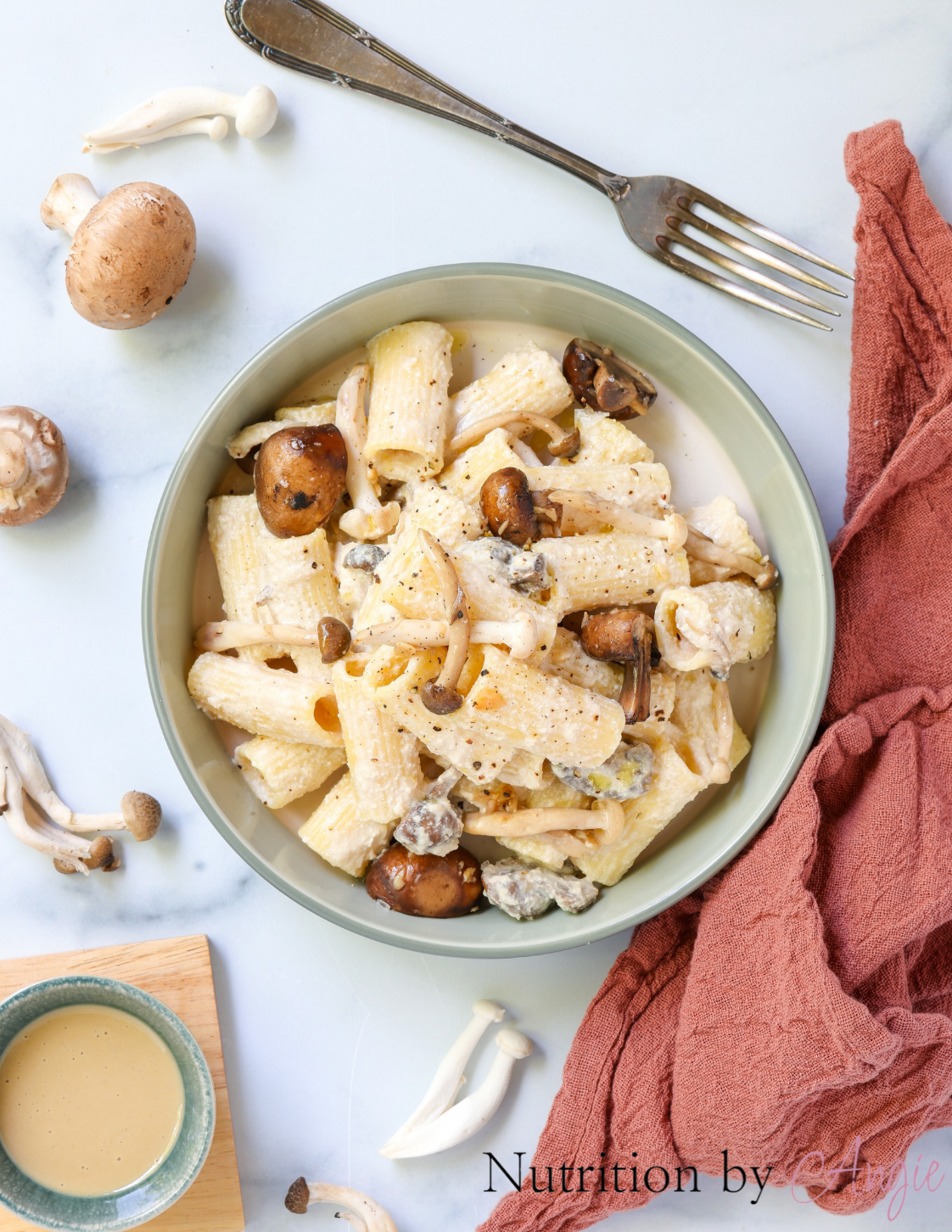
Creamy 5-Ingredient Mushroom Pasta with Garlic and Tahini
Plant-Based • Dairy-Free with Suitable Ingredients • Mediterranean-Inspired • Creamy Pasta • Easy Dinner • Family-Friendly • Comfort Food • Meal-Prep Friendly
This recipe contains sesame from the tahini and may contain wheat and gluten, depending on the pasta chosen. Some plant-based milks and creams contain soy, oats or nuts. Check ingredient labels carefully if preparing the dish for someone with food allergies or intolerances.
Introduction
This Creamy 5-Ingredient Mushroom Pasta with Garlic and Tahini is a delicious, comforting and satisfying meal made with tender pasta, aromatic garlic, savoury mixed mushrooms, creamy plant-based milk or cream and rich tahini.
With just five main ingredients, this simple mushroom pasta creates a beautifully creamy sauce without requiring traditional dairy cream or cheese.
The combination of earthy mushrooms, fragrant garlic and smooth tahini produces a rich, savoury flavour that complements the pasta perfectly.
Plant-based milk or cream helps create a silky sauce, while tahini adds a delicate nutty flavour and a satisfying richness.
One of the main nutritional highlights of this easy creamy mushroom pasta is its combination of mushrooms and sesame-based tahini.
Mushrooms provide B vitamins, minerals and naturally occurring compounds such as ergothioneine.
Tahini, which is made from ground sesame seeds, contributes predominantly unsaturated fats, plant-based protein, dietary fibre and minerals.
Together, these ingredients create a delicious sauce with more nutritional variety than a sauce made entirely from cream.
The pasta provides carbohydrates for energy, while garlic adds aromatic depth and naturally occurring sulphur compounds.
The exact nutritional profile of the dish depends partly on the type of pasta and plant-based milk or cream selected.
Whole-wheat pasta generally provides more dietary fibre than refined white pasta.
Chickpea or lentil pasta can provide additional protein and fibre, while suitable gluten-free pasta allows the recipe to be adapted for people who need to avoid gluten.
Unsweetened fortified soy milk can contribute protein, calcium and vitamin B12, depending on the product.
Oat milk provides a mild flavour, while plant-based cooking creams create a richer sauce.
For a cholesterol-conscious variation, choosing a plant-based milk or cream that is lower in saturated fat can be helpful.
Tahini is particularly valuable because sesame seeds contain unsaturated fats, minerals and naturally occurring lignans.
Replacing saturated fats with unsaturated fats can help improve LDL cholesterol levels.
The mushrooms add savoury depth and a satisfying texture, helping create a rich-tasting dish without relying on meat.
Mixed mushrooms can also provide a wider variety of flavours and textures than using a single variety.
Button mushrooms are mild and tender, chestnut mushrooms have a deeper earthy flavour, and oyster mushrooms offer a delicate texture.
Shiitake mushrooms provide a particularly savoury flavour that complements garlic and tahini.
This 5-Ingredient Mushroom Pasta is an excellent option for busy evenings when a satisfying meal is needed without a long ingredient list.
It is also versatile and can be enjoyed as a simple main course or served alongside a fresh salad, roasted vegetables or additional protein-rich ingredients.
For anyone interested in balanced eating, the recipe provides an opportunity to combine whole grains, vegetables and unsaturated fats in one comforting dish.
With its tender pasta, savoury mushrooms, fragrant garlic and rich tahini sauce, this Creamy Mushroom Pasta is a delicious addition to everyday cooking.
Benefits of All the Ingredients
Pasta of Choice
Pasta provides the carbohydrate foundation of this recipe.
It is a versatile ingredient that pairs beautifully with creamy sauces, vegetables and aromatic seasonings.
Traditional pasta is commonly made from durum wheat semolina, while alternative varieties may be made from whole wheat, rice, maize, chickpeas, lentils or other ingredients.
The nutritional composition depends on the type selected.
Pasta may provide:
Carbohydrates: Supply energy for everyday activities.
Plant-Based Protein: Contributes to overall protein intake.
Dietary Fibre: Particularly in whole-wheat and legume-based varieties.
B Vitamins: Depending on the grain and enrichment.
Iron: Particularly in enriched wheat pasta and some legume varieties.
Magnesium: Higher amounts in many whole-grain varieties.
Phosphorus: Supports normal bone maintenance.
Complex Carbohydrates: Contribute to a satisfying meal.
Pasta and Energy
Carbohydrates are an important source of energy.
During digestion, carbohydrates are broken down into glucose, which can be used by the body's cells.
Pasta provides carbohydrates that support everyday activities and normal bodily functions.
Pasta and Balanced Meals
Pasta can be part of a balanced dietary pattern.
Combining it with vegetables, protein-containing foods and unsaturated fats creates a more nutritionally varied meal.
In this recipe, mushrooms provide additional vitamins and minerals, while tahini contributes protein and unsaturated fats.
Whole-Wheat Pasta and Dietary Fibre
Whole-wheat pasta generally contains more dietary fibre than refined white pasta.
Fibre supports normal digestive function and contributes to feelings of fullness.
Whole grains also provide vitamins, minerals and naturally occurring plant compounds.
Pasta and Plant-Based Protein
Wheat pasta contains plant-based protein.
The amount varies between products.
Chickpea and lentil pasta generally provide more protein than traditional refined wheat pasta.
These alternatives can be useful for people who want to increase the protein content of a meal.
Pasta and B Vitamins
Wheat pasta provides B vitamins, although the amounts depend on the flour and whether it has been enriched.
B vitamins contribute to normal energy metabolism and other essential functions.
Pasta and Iron
Some pasta varieties provide iron.
Iron contributes to normal oxygen transport and helps reduce tiredness and fatigue when intake is adequate.
The amount varies depending on the type of pasta.
Pasta and Satiety
Pasta provides carbohydrates that contribute to a satisfying meal.
Combining pasta with fibre-rich vegetables and protein-containing ingredients can help create a more balanced eating experience.
Choosing the Best Pasta
Traditional wheat pasta creates a familiar texture.
Whole-wheat pasta provides additional fibre.
Chickpea or lentil pasta can increase protein and fibre.
Certified gluten-free pasta is suitable for people who need to avoid gluten, provided all other ingredients are also appropriate.
Why Pasta Works Well with Mushroom Sauce
Pasta absorbs the flavour of the creamy tahini sauce.
Its mild taste allows the garlic and mushrooms to stand out.
Shapes such as penne, fusilli and rigatoni hold creamy sauces particularly well, while spaghetti and linguine create a more traditional pasta dish.
Garlic
Garlic provides the aromatic foundation of this mushroom pasta.
It belongs to the Allium family, alongside onions, leeks and spring onions.
Garlic is valued for its distinctive savoury flavour and naturally occurring sulphur compounds.
Garlic provides:
Organosulphur Compounds: Contribute to its characteristic aroma.
Vitamin B6: Supports normal energy metabolism.
Manganese: Contributes to normal metabolism.
Vitamin C: Supports normal immune function.
Small Amounts of Dietary Fibre: Supports normal digestive function.
Naturally Occurring Plant Compounds: Contribute to flavour and dietary variety.
Garlic and Sulphur Compounds
When garlic is chopped or crushed, naturally occurring enzymes help form compounds such as allicin.
These compounds contribute to garlic's characteristic aroma.
Garlic and its sulphur-containing compounds have been studied for their potential relationship with cardiovascular health.
However, the amount used in ordinary cooking should primarily be appreciated for its flavour rather than considered a therapeutic dose.
Garlic and Antioxidant Plant Compounds
Garlic contains naturally occurring compounds that have been investigated for antioxidant properties.
Including garlic regularly contributes to the variety of plant foods and flavours in the diet.
Garlic and Savoury Flavour
Garlic enhances the earthy flavour of mushrooms.
Its aromatic qualities complement the rich, nutty taste of tahini.
Garlic and Digestive Tolerance
Garlic contains fructans, a type of fermentable carbohydrate.
These can contribute to digestive symptoms in some people, particularly those who are sensitive to FODMAPs.
Individual tolerance varies.
Why Garlic Works Well
The four cloves of garlic create a rich, aromatic flavour.
Finely minced garlic distributes evenly throughout the sauce and complements the mushrooms beautifully.
Mixed Mushrooms
Mixed mushrooms are one of the main nutritional and flavour highlights of this recipe.
They provide a rich, savoury taste and a satisfying texture.
Mushrooms are fungi rather than vegetables in the botanical sense, but they are commonly included within vegetable-rich dietary patterns.
Different varieties offer slightly different nutritional profiles.
Mixed mushrooms may provide:
Riboflavin (Vitamin B2): Supports normal energy metabolism.
Niacin (Vitamin B3): Supports normal nervous system function.
Pantothenic Acid (Vitamin B5): Contributes to normal energy metabolism.
Copper: Supports normal iron transport.
Selenium: Supports normal thyroid function.
Potassium: Supports normal muscle function.
Phosphorus: Supports healthy bones and teeth.
Dietary Fibre: Supports normal digestive function.
Ergothioneine: A naturally occurring antioxidant compound.
Beta-Glucans: Types of polysaccharides found in fungal cell walls.
Vitamin D: In mushrooms exposed to ultraviolet light.
Mushrooms and B Vitamins
Mushrooms provide several B vitamins, particularly riboflavin, niacin and pantothenic acid.
These vitamins contribute to normal energy metabolism.
They help the body use nutrients from food and support essential biological functions.
Mushrooms and Riboflavin
Riboflavin, also known as vitamin B2, contributes to normal energy metabolism.
It also helps protect cells from oxidative stress.
Mushrooms are a useful dietary source of riboflavin.
Mushrooms and Niacin
Niacin contributes to normal nervous system function and energy metabolism.
Mushrooms provide niacin alongside other foods such as poultry, fish and whole grains.
Mushrooms and Selenium
Selenium is an essential mineral involved in normal thyroid function and antioxidant defence.
The selenium content of mushrooms varies depending on the species and growing conditions.
Mushrooms and Copper
Copper contributes to normal iron transport and the maintenance of normal connective tissues.
Mushrooms can provide copper as part of their mineral content.
Mushrooms and Potassium
Potassium supports normal muscle function and the maintenance of normal blood pressure.
Mushrooms contribute potassium alongside other foods such as beans, potatoes and vegetables.
Mushrooms and Ergothioneine
Mushrooms contain ergothioneine, a naturally occurring compound with antioxidant properties.
Ergothioneine has attracted scientific interest because of its potential role in protecting cells from oxidative stress.
However, research is ongoing, and mushroom consumption should not be considered a treatment for disease.
Mushrooms and Beta-Glucans
Mushrooms contain beta-glucans in their cell walls.
These are structurally different from the oat beta-glucans associated with established cholesterol-lowering effects.
Mushroom beta-glucans have been studied for their biological properties, particularly their interactions with the immune system.
Mushrooms and Vitamin D
Mushrooms can provide vitamin D2 when exposed to ultraviolet light.
However, the vitamin D content of ordinary mushrooms varies considerably.
Mushrooms that have not been exposed to UV light may contain very little vitamin D.
Checking product information can help identify varieties specifically marketed as vitamin D-enriched.
Mushrooms and Digestive Health
Mushrooms contain dietary fibre and other complex carbohydrates.
These contribute to digestive health and dietary variety.
Some mushroom varieties also contain polyols that may cause digestive symptoms in sensitive individuals.
Mushrooms and Heart-Conscious Nutrition
Mushrooms are naturally low in saturated fat.
They provide savoury flavour, vitamins and minerals without requiring large amounts of meat or cheese.
Including mushrooms regularly can contribute to a vegetable-rich dietary pattern.
Mixed Mushroom Varieties
Different mushrooms provide different flavours and textures.
Button mushrooms have a mild flavour and tender texture.
Chestnut mushrooms offer a deeper, earthier taste.
Oyster mushrooms provide a delicate texture.
Shiitake mushrooms have a rich, savoury flavour.
Using a mixture creates a more complex and satisfying pasta dish.
Why Mushrooms Work Well with Tahini
Mushrooms develop a rich, savoury flavour when cooked.
Their earthy taste complements the nutty richness of tahini.
The creamy sauce coats the mushrooms beautifully, creating a comforting texture.
Plant-Based Milk or Plant-Based Cream
Plant-based milk or cream creates the smooth, creamy sauce in this recipe.
The nutritional composition varies considerably depending on the product.
Common options include soy milk, oat milk, almond milk and plant-based cooking creams.
Plant-based milk or cream may provide:
Protein: Particularly in soy-based varieties.
Calcium: When fortified.
Vitamin B12: When fortified.
Vitamin D: When fortified.
Unsaturated Fats: Depending on the ingredients.
Carbohydrates: Particularly in oat-based varieties.
Fat: Especially in cooking creams.
Plant-Based Milk and Creamy Texture
Plant-based milk helps create a smooth sauce.
Plant-based cooking cream generally produces a richer, thicker consistency.
The choice depends on personal preference and the desired texture.
Soy Milk and Protein
Unsweetened soy milk is often one of the higher-protein plant-based milk options.
Soy protein contains all nine essential amino acids.
Choosing soy milk can increase the protein contribution of the sauce compared with some other plant-based milks.
Oat Milk and Flavour
Oat milk has a mild, slightly sweet flavour.
It can work well in creamy pasta sauces.
Its carbohydrate and fibre content varies depending on the product and processing method.
Almond Milk and Lightness
Unsweetened almond milk generally has a mild flavour and a lighter consistency.
It may provide relatively little protein unless specifically formulated otherwise.
Plant-Based Cream and Richness
Plant-based cooking creams create a richer sauce.
Some products are made with oats, soy or vegetable oils, while others use coconut-based ingredients.
Their saturated fat content can vary significantly.
Fortified Plant-Based Milk and Calcium
Some plant-based milks are fortified with calcium.
Calcium contributes to normal bone and tooth maintenance.
However, not all products contain added calcium.
Checking the nutrition label is important.
Fortified Plant-Based Milk and Vitamin B12
Some plant-based milks contain added vitamin B12.
Vitamin B12 contributes to normal nervous system function and red blood cell formation.
Unfortified plant-based milks should not be assumed to provide meaningful amounts.
Plant-Based Milk and Vitamin D
Some plant-based milks are fortified with vitamin D.
Vitamin D supports normal bone maintenance and immune function.
The amount varies between products.
Choosing Unsweetened Products
Unsweetened plant-based milk is generally the best choice for savoury pasta.
Sweetened or vanilla-flavoured products can affect the flavour of the sauce.
Plant-Based Cream and Cholesterol-Conscious Nutrition
Plant-based products are not automatically low in saturated fat.
Coconut-based creams may contain substantial amounts of saturated fat.
Soy- or oat-based products made with unsaturated oils may provide a more favourable fat profile.
Checking the nutrition label can help identify a suitable option.
Why Plant-Based Milk Works Well
Plant-based milk or cream combines with tahini to create a rich, silky sauce.
It softens the strong sesame flavour and helps the sauce coat the pasta evenly.
Tahini
Tahini is the ingredient that gives this mushroom pasta its distinctive creamy richness.
It is made from ground sesame seeds and is widely used in Mediterranean and Middle Eastern cooking.
Tahini provides a combination of unsaturated fats, plant-based protein, minerals and naturally occurring plant compounds.
Tahini provides:
Unsaturated Fats: Contribute to a heart-conscious dietary pattern.
Plant-Based Protein: Supports normal muscle maintenance.
Calcium: Supports healthy bones and teeth.
Copper: Supports normal iron transport.
Magnesium: Supports normal muscle and nerve function.
Phosphorus: Supports bone maintenance.
Iron: Contributes to normal oxygen transport.
Zinc: Supports normal immune function.
Dietary Fibre: Supports normal digestive function.
Sesamin and Sesamolin: Naturally occurring sesame lignans.
Tahini and Unsaturated Fats
Tahini contains predominantly unsaturated fats.
These include both monounsaturated and polyunsaturated fatty acids.
Replacing saturated fats with unsaturated fats can help improve LDL cholesterol levels.
This makes tahini a useful ingredient in a heart-conscious dietary pattern.
Tahini and Plant-Based Protein
Tahini provides plant-based protein.
Protein contributes to normal muscle maintenance and tissue repair.
The four tablespoons of tahini used in this recipe add protein alongside the pasta and mushrooms.
Tahini and Calcium
Sesame seeds can provide calcium.
Calcium contributes to normal bone and tooth maintenance.
The calcium content of tahini varies depending on whether the sesame seeds are hulled or unhulled.
Tahini made from unhulled sesame seeds generally contains more calcium.
Tahini and Copper
Tahini provides copper.
Copper contributes to normal iron transport and the maintenance of normal connective tissues.
It also supports normal energy metabolism.
Tahini and Magnesium
Magnesium contributes to normal muscle and nerve function.
It also supports normal energy metabolism and bone maintenance.
Tahini provides magnesium alongside other nuts, seeds and whole grains.
Tahini and Iron
Tahini contains non-haem iron.
Iron contributes to normal oxygen transport.
Serving this pasta with vitamin C-rich vegetables, such as peppers or tomatoes, can help improve the absorption of non-haem iron.
Tahini and Sesame Lignans
Sesame seeds contain naturally occurring lignans, including sesamin and sesamolin.
These compounds have been studied for their antioxidant properties and potential relationship with lipid metabolism.
However, ordinary dietary amounts should not be considered a treatment for high cholesterol.
Tahini and Digestive Health
Tahini contains dietary fibre.
Fibre contributes to normal bowel function and supports digestive health.
Tahini and Satiety
Tahini contains fat, protein and some fibre.
These nutrients can contribute to feelings of fullness.
Its rich texture also makes the pasta particularly satisfying.
Tahini and Food Allergies
Tahini is made from sesame seeds.
Sesame is a recognised food allergen and can cause serious reactions in sensitive individuals.
People with sesame allergy should avoid tahini and use a suitable alternative.
Why Tahini Works Well in Mushroom Pasta
Tahini creates a rich, creamy sauce without requiring dairy cream.
Its nutty flavour complements the earthy mushrooms and aromatic garlic.
When combined with plant-based milk, it creates a smooth sauce that coats the pasta beautifully.
Why 5-Ingredient Mushroom Pasta Makes a Nourishing Meal
Provides Carbohydrates for Energy
Pasta supplies carbohydrates that support everyday activities.
Contains Nutrient-Rich Mushrooms
Mushrooms contribute B vitamins, minerals and naturally occurring compounds such as ergothioneine.
Includes Plant-Based Protein
Tahini, pasta and some plant-based milk varieties contribute protein.
Provides Unsaturated Fats
Tahini contains predominantly unsaturated fats.
Contains Important Minerals
Tahini and mushrooms contribute copper, magnesium, phosphorus and other minerals.
Offers Dietary Fibre
Whole-wheat pasta, mushrooms and tahini contribute fibre.
Includes Aromatic Plant Compounds
Garlic provides naturally occurring sulphur compounds.
Creates a Creamy Sauce Without Dairy Cream
Plant-based milk and tahini create a rich, smooth texture.
Works Well for Busy Evenings
The recipe uses just five main ingredients.
Easy to Customise
Different pasta varieties and plant-based milks can be selected according to preference.
Delicious Serving Suggestions
With Fresh Rocket
Serve with a handful of fresh rocket for a peppery flavour and additional vitamin K and folate.
With Roasted Cherry Tomatoes
Add roasted cherry tomatoes for natural sweetness, vitamin C and lycopene.
The acidity of tomatoes balances the creamy tahini sauce.
With Steamed Broccoli
Serve alongside steamed broccoli for additional fibre, vitamin C and folate.
With Fresh Lemon
Finish with a squeeze of fresh lemon juice for brightness.
The acidity complements the mushrooms and tahini.
With Toasted Pumpkin Seeds
Sprinkle with toasted pumpkin seeds for extra crunch, magnesium, zinc and plant-based protein.
With a Mixed Green Salad
Serve alongside a fresh salad made with lettuce, cucumber and tomatoes for additional vegetables and dietary variety.
Tips for the Best 5-Ingredient Mushroom Pasta
Choose your preferred pasta: Traditional wheat, whole-wheat or legume-based pasta all work well.
Use whole-wheat pasta for additional fibre: It generally contains more fibre than refined white pasta.
Choose chickpea or lentil pasta for extra protein: These varieties can increase the protein content.
Use certified gluten-free pasta when required: Check all other packaged ingredients.
Cook pasta until just tender: This helps preserve its texture when combined with the sauce.
Reserve a little pasta cooking water: It can help adjust the consistency of the sauce.
Choose fresh mushrooms: They provide the best flavour and texture.
Use a mixture of mushroom varieties: This creates a more complex flavour.
Slice mushrooms evenly: This encourages consistent cooking.
Avoid overcrowding the pan: Mushrooms release moisture and brown better with sufficient space.
Allow mushrooms to develop colour: Browning enhances their savoury flavour.
Use fresh garlic: It provides a stronger aromatic flavour than dried garlic powder.
Mince garlic finely: This helps distribute it evenly throughout the sauce.
Avoid burning the garlic: Burned garlic can taste bitter.
Choose unsweetened plant-based milk: Sweetened varieties can affect the savoury flavour.
Check plant-based cream labels: Some products contain significant amounts of saturated fat.
Use a good-quality tahini: Smooth tahini creates the creamiest sauce.
Stir tahini before measuring: Natural sesame oils can separate during storage.
Adjust the sauce consistency: Add plant-based milk or pasta water gradually if needed.
Avoid boiling the tahini sauce aggressively: Gentle heating helps preserve a smooth texture.
Taste before adding salt: Some packaged products may already contain sodium.
Serve with vegetables: Rocket, broccoli or tomatoes add colour and nutrients.
Add fresh lemon if preferred: It balances the richness of tahini.
Refrigerate leftovers promptly: Store in an airtight container and consume within approximately 2–3 days.
Reheat gently: Add a little water or plant-based milk if the sauce has thickened.
Check allergens carefully: Tahini contains sesame, and pasta or plant-based milk may contain wheat, soy, oats or nuts.
A Note on Mushrooms, Tahini and Cholesterol-Friendly Nutrition
This 5-Ingredient Mushroom Pasta combines carbohydrates from pasta with mushrooms, garlic and a creamy tahini-based sauce.
Mushrooms are naturally low in saturated fat and provide B vitamins, minerals and naturally occurring compounds such as ergothioneine.
Their rich, savoury flavour helps create a satisfying meal without requiring large amounts of meat or cheese.
Tahini provides predominantly unsaturated fats.
Replacing saturated fats with unsaturated fats can help improve LDL cholesterol levels.
Sesame seeds also provide plant-based protein, minerals and naturally occurring lignans.
The choice of plant-based milk or cream is particularly relevant to the saturated fat content of this dish.
Some coconut-based cooking creams contain substantial amounts of saturated fat.
For people aiming to lower LDL cholesterol, choosing an unsweetened soy- or oat-based product with a lower saturated fat content may be beneficial.
Whole-wheat pasta can increase the fibre content of the meal.
Dietary fibre supports normal digestive function, while soluble fibre from foods such as oats, barley, beans and lentils can help lower LDL cholesterol when consumed regularly.
Chickpea or lentil pasta can also increase the protein and fibre content.
Garlic adds aromatic flavour and naturally occurring sulphur compounds.
Serving the pasta with vegetables such as broccoli, tomatoes or rocket can increase the variety of vitamins, minerals and plant compounds.
A balanced dietary pattern that regularly includes vegetables, fruit, whole grains, legumes, nuts, seeds and unsaturated fats can support cardiovascular health and overall nutritional wellbeing.
With its tender pasta, savoury mushrooms, aromatic garlic and rich tahini sauce, this Creamy 5-Ingredient Mushroom Pasta is a delicious, comforting and satisfying meal that can be enjoyed as part of a varied and balanced diet.