
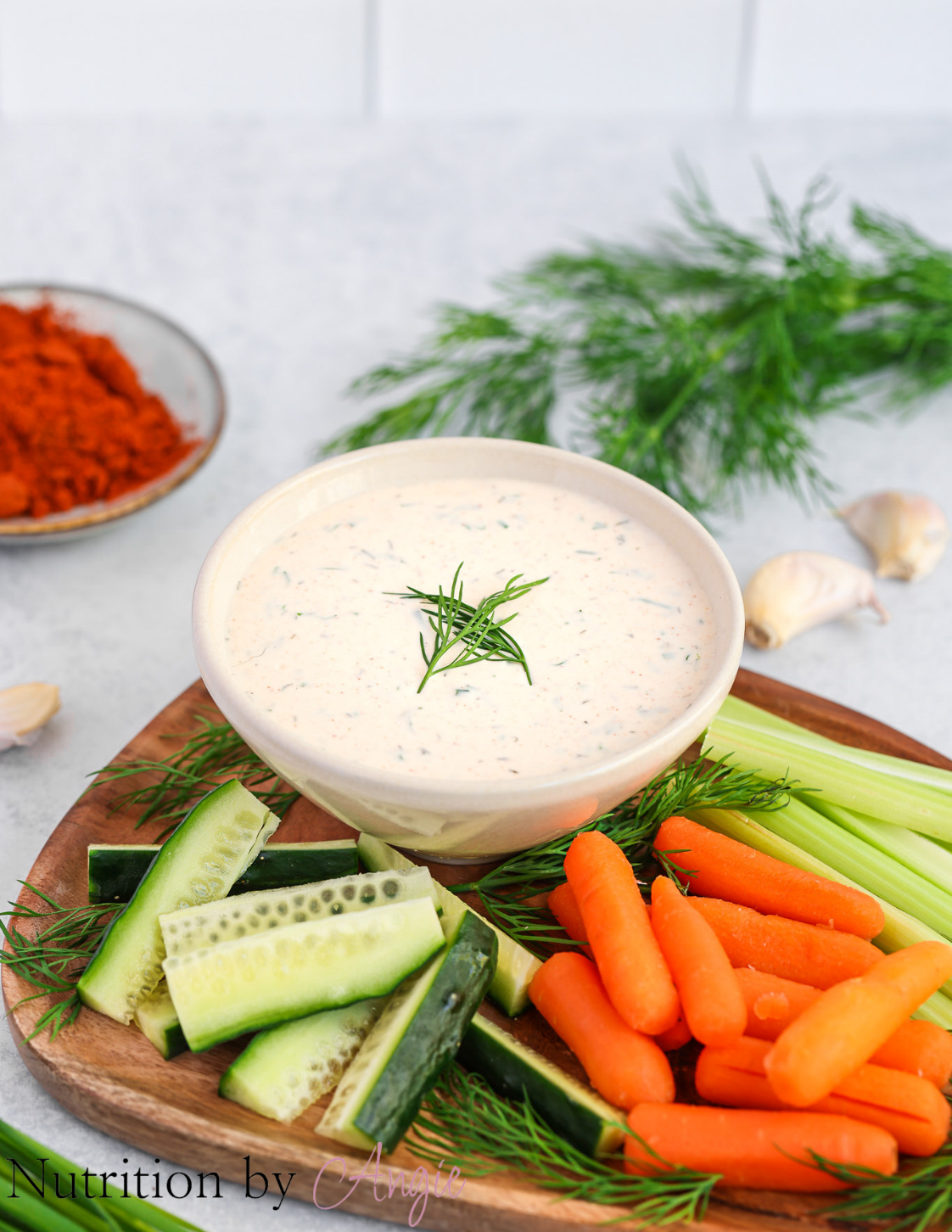
Creamy Vegan Ranch
Vegan • Vegetarian • Plant-Based • Dairy-Free • Egg-Free • No Added Sugar in the Recipe • Gluten-Free When Using Suitable Ingredients
Choose certified gluten-free vegan mayonnaise and unsweetened almond milk if preparing this dressing for someone with coeliac disease. Check the mayonnaise ingredients for added sugar, allergens and saturated fat.
Introduction
This Creamy Vegan Ranch is a deliciously smooth, rich and herb-packed dressing made with unsweetened almond milk, vegan mayonnaise, fresh parsley, chives, garlic, fresh and dried dill, and a gentle touch of cayenne pepper.
Inspired by classic American ranch dressing, this dairy-free version delivers a creamy texture and fresh, savoury flavour without requiring buttermilk, sour cream or eggs.
The combination of fresh herbs and garlic creates a wonderfully aromatic dressing, while the cayenne pepper adds a subtle warmth that balances the richness of the mayonnaise.
Unsweetened almond milk helps create a lighter, more pourable consistency, making this vegan ranch suitable for salads, vegetable bowls, wraps and dipping.
Fresh parsley provides a clean, slightly peppery flavour, while chives add a delicate onion-like taste.
Fresh and dried dill work together to create the distinctive herbal flavour commonly associated with traditional ranch dressing.
Garlic contributes depth and savouriness, making the dressing particularly delicious with roasted vegetables, baked potatoes, sandwiches and fresh vegetable sticks.
One of the main advantages of homemade vegan ranch is the ability to choose the ingredients and adjust the flavour to suit individual preferences.
Unlike traditional ranch dressing, which commonly contains dairy products and egg-based mayonnaise, this recipe can be prepared entirely from plant-based ingredients.
However, the nutritional composition depends considerably on the type of vegan mayonnaise used.
Some vegan mayonnaise products are made primarily with rapeseed, sunflower or other vegetable oils that contain predominantly unsaturated fats.
Others may contain coconut oil or palm-based fats, which can contribute considerably more saturated fat.
For anyone following a cholesterol-conscious dietary pattern, choosing a vegan mayonnaise made with predominantly unsaturated oils is particularly important.
Although this dressing contains fresh herbs and garlic, it is primarily a mayonnaise-based sauce and should not be considered a significant source of vegetables, fibre or protein.
Nevertheless, it can be a flavourful addition to a balanced whole-food-focused diet, particularly when it encourages greater enjoyment of vegetables, salads and other nutritious meals.
This easy homemade Creamy Vegan Ranch is ideal for preparing ahead of time and storing in the refrigerator for convenient use throughout the week.
Benefits of All the Ingredients
Unsweetened Almond Milk
Unsweetened almond milk provides the liquid base that helps thin the vegan mayonnaise into a smooth, pourable dressing.
It has a mild flavour that allows the fresh herbs, garlic and dill to remain prominent.
Commercial almond milk is generally made by blending almonds with water and filtering the mixture.
Depending on the brand, it may also contain added vitamins, minerals, stabilisers or emulsifiers.
Unsweetened almond milk may provide:
Water: Contributes to the dressing's consistency.
Small Amounts of Unsaturated Fat: Derived from almonds.
Vitamin E: Naturally present in almonds, although amounts in almond milk vary.
Calcium: If the product is fortified.
Vitamin D: If fortified.
Vitamin B12: If fortified.
Almond Milk and Heart Health
Unsweetened almond milk is generally low in saturated fat.
This can make it a useful alternative to some dairy-based ingredients that contain more saturated fat.
However, the amount of almonds in commercial almond milk is often relatively small.
Therefore, almond milk does not provide the same amounts of fibre, protein or healthy fats as whole almonds.
Almond Milk and Calcium
Some almond milk products are fortified with calcium.
Fortified varieties can contribute to daily calcium intake, particularly for people following dairy-free diets.
However, not all almond milk products contain added calcium.
Always check the nutritional label.
Why Unsweetened Almond Milk Works Best
Unsweetened almond milk provides a mild flavour without adding unnecessary sweetness.
Sweetened or vanilla-flavoured almond milk may create an unpleasant flavour in savoury dressings.
For this recipe, choose plain, unsweetened almond milk.
Almond Allergy
Almonds are tree nuts.
Almond milk is unsuitable for anyone with an almond allergy.
For a nut-free variation, unsweetened soy milk or another suitable plant-based milk may be used, although the flavour and consistency may change.
Vegan Mayonnaise
Vegan mayonnaise provides the rich, creamy texture that makes this dressing resemble traditional ranch.
Unlike conventional mayonnaise, vegan mayonnaise does not contain eggs.
It is generally made from vegetable oil, water, an acidic ingredient and emulsifiers or stabilisers.
The exact ingredients vary considerably between brands.
Vegan Mayonnaise and Unsaturated Fats
Many vegan mayonnaise products use rapeseed oil, sunflower oil or other vegetable oils.
These oils generally contain predominantly unsaturated fatty acids.
Replacing saturated fats with unsaturated fats can help improve blood cholesterol levels.
However, not every vegan mayonnaise has the same nutritional profile.
Some products contain coconut oil or palm-based fats, which can increase saturated fat content.
For a heart-conscious choice, compare the saturated fat values on the nutrition labels.
Is Vegan Mayonnaise Healthier Than Regular Mayonnaise?
Vegan mayonnaise is not automatically healthier than conventional mayonnaise.
Both products can be energy-dense because they often contain substantial amounts of oil.
The main nutritional differences depend on the ingredients, particularly the type of fat used.
Some conventional mayonnaise products are already relatively low in saturated fat because they are made with unsaturated vegetable oils.
Vegan mayonnaise is useful for people avoiding eggs or animal-derived ingredients, but its nutritional quality should be assessed individually.
Vegan Mayonnaise and Energy Density
The 300g of vegan mayonnaise used in this recipe contributes most of the dressing's energy and fat.
The exact amount depends on the brand.
Although the dressing is intended to be divided into several servings, portion size remains important.
Using a moderate amount can add flavour and richness without overwhelming the meal.
Vegan Mayonnaise and Sodium
Commercial mayonnaise may contain substantial amounts of sodium.
For people managing blood pressure, comparing sodium values between products can be helpful.
This recipe does not require additional salt, although the mayonnaise may already provide a considerable amount.
Choosing the Best Vegan Mayonnaise
For a more heart-conscious version, look for a vegan mayonnaise that:
Uses predominantly unsaturated vegetable oils.
Contains relatively little saturated fat.
Has a moderate sodium content.
Contains no unnecessary added sugar, where possible.
Is clearly labelled gluten-free when required.
Fresh Parsley
Fresh parsley adds a clean, slightly peppery flavour and a beautiful green colour.
It is a leafy herb commonly used in Mediterranean and European cooking.
Parsley contains several vitamins, minerals and naturally occurring plant compounds.
It provides:
Vitamin K: Supports normal blood clotting.
Vitamin C: Supports normal immune function.
Beta-Carotene: Can be converted into vitamin A.
Folate: Contributes to normal cell division.
Flavonoids: Naturally occurring plant compounds.
Parsley and Vitamin K
Parsley is particularly rich in vitamin K by weight.
Vitamin K is essential for normal blood clotting and contributes to normal bone maintenance.
However, this recipe contains only 7g of parsley, distributed across the entire dressing.
Therefore, the amount consumed per serving is relatively small.
People taking warfarin should maintain a consistent intake of vitamin K rather than making sudden dietary changes.
Parsley and Antioxidant Compounds
Parsley contains naturally occurring flavonoids, including apigenin.
These compounds have been studied for their antioxidant properties.
However, the small quantity used in this dressing should not be expected to provide therapeutic effects.
Why Fresh Parsley Works Well in Ranch
Parsley provides freshness and helps balance the richness of the vegan mayonnaise.
Its mild flavour complements garlic, chives and dill without overpowering them.
Fresh Chives
Chives provide a delicate onion-like flavour.
They belong to the Allium family, alongside onions, garlic and leeks.
Chives contain naturally occurring sulphur compounds that contribute to their characteristic aroma.
They also provide small amounts of vitamins and minerals.
Chives and Plant Compounds
Chives contain organosulphur compounds and flavonoids.
These have been studied for various biological properties.
However, the 7g used in this recipe contributes only modest amounts of nutrients.
Their primary role is flavour.
Chives and Vitamin K
Like many green herbs, chives contain vitamin K.
Vitamin K contributes to normal blood clotting and bone maintenance.
However, the amount per serving of dressing is relatively small.
Why Chives Work Well in Ranch
Chives provide a gentle onion flavour without the stronger taste of raw onion.
They complement garlic and dill particularly well.
Finely chopping the chives helps distribute their flavour evenly throughout the dressing.
Fresh Garlic
Garlic provides a bold, savoury flavour that gives this vegan ranch additional depth.
It belongs to the Allium family and contains naturally occurring sulphur-containing compounds.
Fresh garlic provides:
Organosulphur Compounds: Including compounds formed when garlic is crushed or minced.
Small Amounts of Vitamin B6: Supports normal energy metabolism.
Small Amounts of Manganese: Contributes to normal metabolism.
Small Amounts of Vitamin C: Supports normal immune function.
Garlic and Allicin
When garlic is chopped or minced, an enzyme called alliinase helps convert alliin into allicin.
Allicin is a reactive sulphur-containing compound associated with garlic's distinctive aroma.
It is relatively unstable and can transform into other sulphur compounds.
Garlic and Cardiovascular Health
Garlic and garlic-derived supplements have been investigated for possible effects on blood pressure and cholesterol.
Some studies have reported modest benefits from particular preparations.
However, the evidence varies depending on the dose and product used.
The two garlic cloves distributed across this dressing should not be expected to produce a clinically meaningful cholesterol-lowering effect.
Garlic and Digestive Sensitivity
Garlic contains fructans, a type of fermentable carbohydrate.
People with irritable bowel syndrome or sensitivity to FODMAPs may experience bloating, gas or abdominal discomfort after eating garlic.
For a milder version, reduce the amount or use a suitable garlic-infused oil in place of fresh garlic.
Fresh Dill
Fresh dill provides the distinctive herbal flavour associated with ranch dressing.
It has a fresh, slightly grassy and mildly citrus-like aroma.
Dill contains naturally occurring aromatic compounds, including carvone and limonene.
It also provides small amounts of vitamins and minerals.
Dill and Plant Compounds
Dill contains essential oils and flavonoids that have been studied for their antioxidant properties.
However, the 4g of fresh dill used in this recipe contributes negligible amounts of essential nutrients per serving.
Its main contribution is flavour.
Why Fresh Dill Is Important
Fresh dill provides a bright, refreshing taste that balances the richness of vegan mayonnaise.
It complements parsley, chives and garlic.
The combination creates a fresh, savoury dressing suitable for salads and vegetables.
Dried Dill
Dried dill provides a more concentrated herbal flavour than fresh dill.
Drying removes much of the water from the herb, concentrating its flavour compounds.
However, some delicate aromatic compounds may change or be lost during drying.
Why Use Both Fresh and Dried Dill?
Fresh dill contributes a bright, delicate flavour.
Dried dill adds a deeper, more concentrated herbal note.
Using both creates a more rounded flavour profile.
Dried Dill and Nutritional Value
Dried dill contains small amounts of minerals and naturally occurring plant compounds.
However, the one teaspoon used in this recipe is too small to make a meaningful contribution to overall nutrient intake.
Its primary purpose is flavour.
Choosing Dried Dill
Choose dried dill without added salt or unnecessary flavourings.
Store it in an airtight container away from heat and direct sunlight.
Dried herbs gradually lose flavour during storage, so fresher products generally provide a stronger aroma.
Cayenne Pepper
Cayenne pepper adds a gentle spicy warmth to the dressing.
It is made from dried, ground chilli peppers.
Its characteristic heat comes primarily from capsaicinoids, including capsaicin.
Cayenne Pepper and Capsaicin
Capsaicin activates sensory receptors associated with the perception of heat.
It has been studied for various biological effects.
However, the quarter teaspoon used in this recipe should be considered a flavouring rather than a significant source of nutrients.
Cayenne Pepper and Digestive Sensitivity
Spicy foods may aggravate heartburn, reflux or digestive discomfort in some people.
For a milder ranch dressing, reduce or omit the cayenne pepper.
Why Cayenne Works Well in Ranch
Cayenne adds subtle warmth that contrasts with the creamy mayonnaise and refreshing herbs.
A small amount can enhance the overall flavour without making the dressing excessively spicy.
Why Creamy Vegan Ranch Can Be a Useful Addition to Balanced Meals
Provides a Dairy-Free Alternative
This dressing offers a creamy alternative to traditional ranch without requiring buttermilk or sour cream.
Contains Fresh Herbs
Parsley, chives and dill contribute fresh flavour and naturally occurring plant compounds.
Can Provide Predominantly Unsaturated Fats
Choosing a vegan mayonnaise made with rapeseed or another unsaturated-fat-rich oil can create a more favourable fatty acid profile.
Contains No Eggs
Vegan mayonnaise provides a creamy texture without egg ingredients.
Can Encourage Vegetable Consumption
A flavourful dressing can make salads and raw vegetables more enjoyable.
Allows Control Over Ingredients
Homemade preparation makes it easier to choose products with less saturated fat, sodium or added sugar.
Offers Versatile Flavour
The combination of garlic, dill, chives and parsley works well with many savoury meals.
Can Be Prepared Ahead of Time
The dressing is convenient for meal preparation and everyday use.
Can Be Made Gluten-Free
Using suitable gluten-free packaged ingredients makes this recipe appropriate for people following a gluten-free diet.
Delicious Serving Suggestions
With Fresh Vegetable Sticks
Serve as a dip for carrots, cucumber, celery, peppers and radishes.
This creates a refreshing snack that combines crunchy vegetables with a creamy dressing.
With Mediterranean Salads
Drizzle over lettuce, cucumber, tomatoes, red onion and fresh herbs.
The creamy texture complements the crisp vegetables.
With Roasted Potatoes
Use as a dip for roasted baby potatoes or homemade potato wedges.
The fresh dill and garlic pair particularly well with potatoes.
With Grilled Tofu
Serve alongside grilled or baked tofu with vegetables and whole grains.
This adds flavour to a meal containing plant-based protein.
In Gluten-Free Wraps
Use as a spread for gluten-free wraps filled with lettuce, cucumber, roasted vegetables and chickpeas.
With Roasted Vegetables
Drizzle over roasted cauliflower, broccoli, carrots or courgette.
The fresh herbs balance the sweetness of roasted vegetables.
Tips for the Best Creamy Vegan Ranch
Choose a good-quality vegan mayonnaise: Its flavour and fat composition determine much of the finished dressing.
Compare saturated fat values: Mayonnaise made with predominantly unsaturated oils is preferable for a cholesterol-conscious diet.
Use unsweetened almond milk: Avoid sweetened or vanilla-flavoured varieties.
Check for gluten: Choose suitable mayonnaise and almond milk if preparing the recipe for someone with coeliac disease.
Use fresh herbs: Fresh parsley, chives and dill provide the brightest flavour.
Wash herbs thoroughly: Remove soil and debris before chopping.
Dry herbs well: Excess water can affect the dressing's consistency.
Chop herbs finely: This distributes their flavour evenly.
Use fresh garlic: Minced garlic provides a stronger savoury flavour.
Adjust the garlic quantity: Reduce it if you prefer a milder dressing.
Use both fresh and dried dill: This creates a more rounded herbal flavour.
Adjust the cayenne pepper: Use less for a milder dressing.
Add almond milk gradually: This allows you to control the consistency.
Whisk thoroughly: Combine the ingredients until smooth and evenly mixed.
Allow the flavours to develop: Refrigerating briefly can help the herbs and garlic infuse the dressing.
Taste before adding salt: Vegan mayonnaise may already contain substantial sodium.
Store in an airtight container: Keep refrigerated and consume within approximately 3–4 days, or sooner if the mayonnaise label specifies.
Avoid prolonged room-temperature storage: Fresh herbs, garlic and plant milk make refrigeration important.
Stir before serving: The dressing may thicken or separate slightly during storage.
Clearly identify allergens: Almond milk contains tree nuts, and some vegan mayonnaise products may contain soy, mustard or other allergens.
A Note on Vegan Mayonnaise, Saturated Fat and Balanced Nutrition
This Creamy Vegan Ranch combines fresh herbs, garlic and plant-based ingredients to create a rich, flavourful alternative to traditional ranch dressing.
The parsley, chives and dill contribute freshness and naturally occurring plant compounds, while almond milk helps create a smooth consistency.
However, the nutritional composition is largely determined by the 300g of vegan mayonnaise used in the recipe.
Although vegan mayonnaise does not contain eggs or dairy, it is not automatically low in calories, saturated fat or sodium.
For a cholesterol-conscious dietary pattern, choosing mayonnaise made primarily with unsaturated oils, such as rapeseed oil, can be beneficial.
Replacing saturated fats with unsaturated fats is one established dietary strategy for improving blood cholesterol levels.
However, mayonnaise remains energy-dense, so moderate portions are appropriate.
For a lighter variation, part of the mayonnaise could be replaced with unsweetened plain soy yogurt.
This may reduce the overall fat content and provide additional protein, although the final flavour and texture will change.
The dressing is particularly useful when served with vegetables, legumes, whole grains and other fibre-rich foods.
These foods provide the dietary fibre, protein, vitamins and minerals that the dressing itself contains only in relatively small amounts.
A balanced Mediterranean-style or whole-food-focused diet is built around the overall combination of foods rather than any single ingredient.
With its creamy texture, fragrant herbs and savoury garlic flavour, this homemade Creamy Vegan Ranch is a versatile way to add flavour to salads, vegetables, wraps and other plant-based meals.