
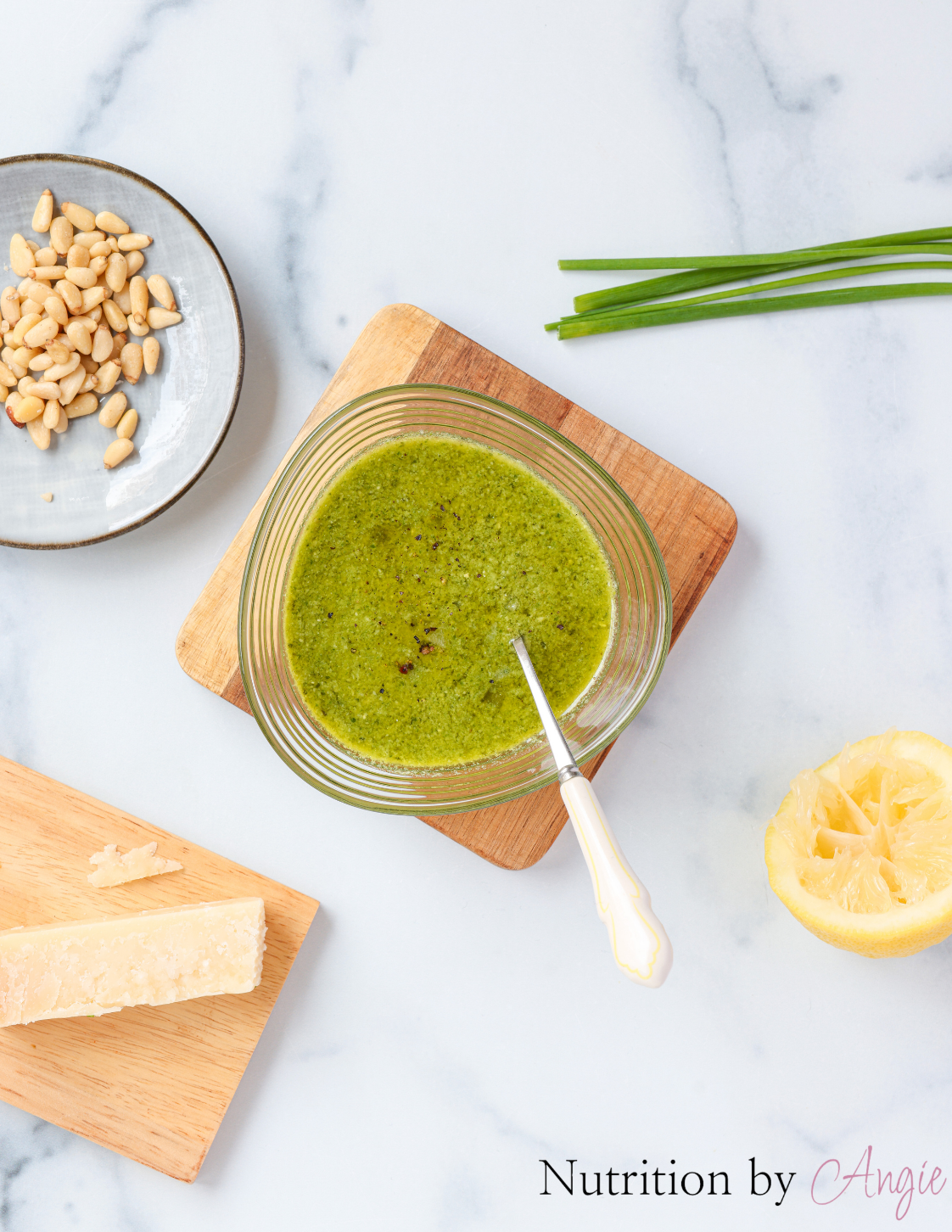
Green Pesto
Gluten-Free • Vegetarian • Vegan • Plant-Based Option • No Added Oil • No Added Sugar • Fresh Herb-Based • Whole-Food Focused
For a vegan and dairy-free pesto, use nutritional yeast instead of Parmesan cheese. Traditional Parmesan may contain animal rennet and is not necessarily vegetarian. Check packaged ingredients for gluten and allergens.
Introduction
This Green Pesto is a wonderfully fresh, aromatic and flavourful homemade sauce made with chives, basil, pine nuts, Parmesan cheese or nutritional yeast, and freshly squeezed lemon juice.
Unlike traditional basil pesto, which often contains substantial amounts of olive oil, this recipe relies on the natural fats from pine nuts to create richness without requiring additional oil.
The combination of fresh chives and basil gives this pesto its beautiful green colour and distinctive herbal flavour.
Chives provide a delicate onion-like taste, while basil contributes the sweet, peppery and slightly aromatic flavour associated with classic Italian pesto.
Pine nuts add a smooth, buttery richness and help create a creamy texture when blended with the herbs.
Parmesan cheese provides a savoury, salty flavour, while nutritional yeast offers a dairy-free alternative with a similarly savoury character.
Fresh lemon juice brings everything together by adding brightness and acidity, balancing the richness of the pine nuts and cheese.
One of the advantages of this easy homemade green pesto is its simple ingredient list.
It contains no added sugar, requires no additional cooking oil and can be prepared using just five ingredients.
The recipe also provides several valuable nutrients, including unsaturated fats from pine nuts, vitamin K from fresh herbs and vitamin C from lemon juice.
Pine nuts contribute plant-based protein, magnesium, manganese and other important minerals.
Fresh herbs contain naturally occurring plant compounds, including carotenoids and flavonoids, which contribute to dietary variety.
For anyone following a Mediterranean-style or whole-food-focused dietary pattern, homemade pesto is a convenient way to add flavour to vegetables, pasta, legumes, salads and grain bowls.
It can also help make simple, nutritious meals more enjoyable without relying on heavily processed sauces.
This Green Pesto can be adapted to different dietary preferences by choosing either Parmesan cheese or nutritional yeast.
The Parmesan version offers a traditional cheesy flavour, while the nutritional yeast version is suitable for vegan and dairy-free diets when all ingredients are appropriate.
Although pesto contains nutritious ingredients, pine nuts and Parmesan are energy-dense, and Parmesan contributes saturated fat and sodium.
For a cholesterol-conscious version, nutritional yeast is a useful alternative to cheese, particularly when the goal is to reduce saturated fat intake.
With its vibrant colour, refreshing lemon flavour and rich, nutty texture, this homemade green pesto is a versatile addition to everyday meals.
Benefits of All the Ingredients
Fresh Chives
Fresh chives are the main herb in this pesto, providing a delicate onion-like flavour and vibrant green colour.
They belong to the Allium family, alongside garlic, onions, leeks and shallots.
Chives contain naturally occurring sulphur-containing compounds that contribute to their characteristic aroma.
They also provide several vitamins, minerals and plant compounds.
Fresh chives contain:
Vitamin K: Supports normal blood clotting and bone maintenance.
Vitamin C: Supports normal immune function and collagen formation.
Beta-Carotene: Can be converted into vitamin A.
Folate: Contributes to normal cell division.
Potassium: Supports normal muscle function.
Flavonoids: Naturally occurring plant compounds.
Organosulphur Compounds: Contribute to their distinctive flavour.
Chives and Vitamin K
Chives contain vitamin K, an essential fat-soluble vitamin.
Vitamin K is required for normal blood clotting and contributes to the maintenance of normal bones.
The 50g of fresh chives used in this recipe provides a meaningful amount of vitamin K across the entire batch.
However, the amount consumed per serving depends on how the pesto is divided.
People taking warfarin should aim to maintain a consistent intake of vitamin K rather than making sudden changes to their consumption of green vegetables and herbs.
Chives and Antioxidant Compounds
Chives contain naturally occurring flavonoids and other plant compounds.
These have been studied for their antioxidant properties.
However, antioxidant activity observed in laboratory studies does not mean that chives prevent or treat disease.
Including fresh herbs regularly contributes to a varied intake of plant compounds.
Chives and Digestive Health
Chives contain small amounts of dietary fibre.
They also belong to the Allium family, whose members contain fermentable carbohydrates.
Although chives are often tolerated in smaller portions, individual digestive responses vary.
People with sensitive digestion may prefer to start with a small serving of pesto.
Why Chives Work Well in Pesto
Chives provide a mild onion flavour without the stronger taste of raw onion or garlic.
They complement basil, lemon juice and pine nuts particularly well.
Their delicate flavour creates a fresh, savoury pesto suitable for pasta, vegetables and sandwiches.
Fresh Basil
Fresh basil is one of the most recognisable ingredients in traditional pesto.
It provides a sweet, peppery and slightly floral aroma.
Basil belongs to the mint family and contains naturally occurring aromatic compounds that contribute to its distinctive flavour.
Fresh basil provides:
Vitamin K: Supports normal blood clotting.
Beta-Carotene: Can be converted into vitamin A.
Vitamin C: Supports normal immune function.
Manganese: Contributes to normal metabolism.
Flavonoids: Naturally occurring plant compounds.
Aromatic Compounds: Including linalool and eugenol, depending on the variety.
Basil and Vitamin K
Basil contains vitamin K, which contributes to normal blood clotting and bone maintenance.
Although this recipe uses 25g of basil, the amount per serving depends on how the pesto is divided.
Basil and Plant Compounds
Basil contains naturally occurring phenolic compounds and essential oils.
These compounds have been investigated for their antioxidant and other biological properties.
However, ordinary culinary amounts of basil should not be considered therapeutic.
Its primary benefits in this recipe are flavour, dietary variety and the contribution of small amounts of micronutrients.
Basil and Eye Health
Basil contains carotenoids, including beta-carotene.
The body can convert beta-carotene into vitamin A.
Vitamin A contributes to normal vision and immune function.
However, basil is generally consumed in relatively small quantities, so it should complement rather than replace larger servings of carotenoid-rich vegetables.
Why Fresh Basil Is Important
Fresh basil provides the characteristic flavour associated with pesto.
Its slightly sweet and peppery taste balances the mild onion flavour of chives.
For the best result, use fresh basil leaves rather than dried basil.
Dried basil has a different flavour profile and will not produce the same vibrant green texture.
Pine Nuts
Pine nuts provide the rich, buttery texture that makes this pesto creamy and satisfying.
Despite their name, pine nuts are edible seeds harvested from certain species of pine trees.
They are particularly valued for their unsaturated fat content and important minerals.
Pine nuts provide:
Monounsaturated Fats: Contribute to a heart-conscious dietary pattern.
Polyunsaturated Fats: Provide essential fatty acids.
Plant-Based Protein: Supports normal muscle maintenance.
Magnesium: Supports normal muscle and nerve function.
Manganese: Contributes to normal metabolism.
Copper: Supports normal iron transport.
Phosphorus: Supports healthy bones and teeth.
Zinc: Supports normal immune function.
Vitamin E: Helps protect cells from oxidative stress.
Pine Nuts and Heart Health
Pine nuts contain predominantly unsaturated fats.
Replacing saturated fats with unsaturated fats can help improve blood cholesterol levels.
This makes pine nuts a useful ingredient in a Mediterranean-style dietary pattern.
However, pine nuts are energy-dense because of their high fat content.
The 35g used in this recipe contributes a substantial amount of energy to the entire batch.
Moderate portions are therefore appropriate.
Pine Nuts and Plant-Based Protein
Pine nuts provide plant-based protein.
Protein is essential for maintaining muscles, repairing tissues and supporting normal body functions.
Although pine nuts contribute protein, they are not as concentrated a protein source as legumes, tofu or other protein-rich foods.
For a balanced meal, pesto can be served with chickpeas, lentils, beans or tofu.
Pine Nuts and Magnesium
Magnesium is involved in hundreds of biochemical reactions in the body.
It supports normal muscle and nerve function, energy metabolism and electrolyte balance.
Pine nuts contribute magnesium alongside other nuts, seeds, legumes and whole grains.
Pine Nuts and Antioxidant Nutrients
Pine nuts contain vitamin E and naturally occurring plant compounds.
Vitamin E helps protect cells from oxidative stress.
However, the overall nutritional value of pine nuts comes from their combination of unsaturated fats, minerals and other nutrients.
Why Pine Nuts Create a Creamy Pesto
Pine nuts have a naturally soft, buttery texture.
When blended with fresh herbs and lemon juice, they help create a smooth paste.
Their natural oils provide richness without requiring additional olive oil.
Pine Nut Allergy
Pine nuts can cause allergic reactions in susceptible individuals.
Anyone with a known pine nut allergy should avoid this recipe.
Cross-reactivity with other nuts and seeds varies, so people with severe allergies should follow individual medical advice.
Parmesan Cheese or Nutritional Yeast
This recipe allows you to choose between Parmesan cheese and nutritional yeast.
Both ingredients provide a savoury flavour, but their nutritional profiles are quite different.
Option 1: Parmesan Cheese
Parmesan cheese is a hard, aged cheese traditionally made from cow's milk.
It has a rich, salty and savoury flavour.
Parmesan provides:
Protein: Supports normal muscle maintenance.
Calcium: Supports healthy bones and teeth.
Phosphorus: Supports normal bone maintenance.
Vitamin B12: Supports normal red blood cell formation.
Zinc: Supports normal immune function.
Saturated Fat: Contributes to the cheese's rich texture.
Sodium: Contributes to its salty flavour.
Parmesan and Protein
Parmesan is a concentrated source of protein because much of its moisture is removed during ageing.
The 30g used in this recipe contributes protein to the entire batch.
However, the amount per serving depends on portion size.
Parmesan and Calcium
Parmesan provides calcium, an essential mineral involved in maintaining healthy bones and teeth.
Calcium also contributes to normal muscle function.
Although Parmesan is a useful source of calcium, it also contains saturated fat and sodium.
Parmesan and Cholesterol
Parmesan contains saturated fat.
Consuming excessive amounts of saturated fat can raise LDL cholesterol in many people.
For people following a cholesterol-conscious dietary pattern, portion size and overall saturated fat intake remain important.
Using nutritional yeast instead of Parmesan can reduce the saturated fat content of this pesto.
Is Parmesan Vegetarian?
Traditional Parmigiano Reggiano is made using animal rennet and is not vegetarian.
For a vegetarian version, choose a suitable hard cheese made with microbial or vegetarian rennet.
For a vegan version, use nutritional yeast.
Option 2: Nutritional Yeast
Nutritional yeast is a deactivated yeast commonly used in vegan cooking.
It has a savoury, slightly cheesy and nutty flavour.
Nutritional yeast can provide:
Plant-Based Protein: Supports normal muscle maintenance.
B Vitamins: Amounts depend on the product.
Vitamin B12: Only when fortified.
Small Amounts of Dietary Fibre: Supports normal digestive function.
Minerals: Including zinc and selenium in varying amounts.
Nutritional Yeast and Vitamin B12
Some nutritional yeast products are fortified with vitamin B12.
Vitamin B12 supports normal red blood cell formation and nervous system function.
However, not all nutritional yeast contains vitamin B12.
For people following vegan diets, it is important to choose a reliable fortified source or supplement as appropriate.
Nutritional Yeast and Heart Health
Nutritional yeast is generally low in saturated fat.
Replacing Parmesan with nutritional yeast can reduce the saturated fat content of the pesto.
However, nutritional yeast does not provide the same amount of calcium as Parmesan unless specifically fortified.
Nutritional Yeast and Flavour
Nutritional yeast provides a savoury, umami-rich flavour.
It complements basil, chives, pine nuts and lemon juice.
Because its texture and flavour differ from Parmesan, the final pesto may be slightly different.
Fresh Lemon Juice
Fresh lemon juice provides the refreshing acidity that balances the richness of pine nuts and Parmesan or nutritional yeast.
It also helps brighten the herbal flavours.
Lemon juice contains:
Vitamin C: Supports normal immune function and collagen formation.
Citric Acid: Provides its characteristic sour flavour.
Small Amounts of Potassium: Supports normal muscle function.
Citrus Flavonoids: Naturally occurring plant compounds.
Lemon Juice and Vitamin C
Vitamin C is an essential water-soluble vitamin.
It supports normal immune function, collagen formation and the protection of cells from oxidative stress.
The two tablespoons of lemon juice used in this recipe provide some vitamin C, although the amount per serving is relatively small.
Lemon Juice and Iron Absorption
Vitamin C helps improve the absorption of non-haem iron from plant foods.
Pine nuts and fresh herbs contain small amounts of non-haem iron.
Adding lemon juice provides vitamin C alongside these ingredients.
Lemon Juice and Flavour Balance
Pine nuts and Parmesan provide richness.
Lemon juice balances this richness with refreshing acidity.
It also helps prevent the pesto from tasting too heavy.
Lemon Juice and Colour
The acidity of lemon juice may help slow some enzymatic browning reactions.
However, fresh herbs can still lose their vibrant green colour during storage.
For the best appearance, prepare the pesto shortly before serving or store it carefully in the refrigerator.
Why Green Pesto Makes a Nourishing Addition to Meals
Contains Fresh Herbs
Chives and basil provide flavour, vitamin K and naturally occurring plant compounds.
Provides Predominantly Unsaturated Fats
Pine nuts contribute monounsaturated and polyunsaturated fats.
Contains Plant-Based Protein
Pine nuts and nutritional yeast contribute protein, while Parmesan provides additional protein in the cheese version.
Provides Important Minerals
Pine nuts contribute magnesium, manganese, copper and phosphorus.
Can Be Made Without Dairy
Using nutritional yeast instead of Parmesan creates a vegan and dairy-free pesto.
Requires No Added Oil
The natural fats in pine nuts provide richness without requiring additional olive oil.
Contains No Added Sugar
The recipe uses fresh herbs, lemon juice and savoury ingredients for flavour.
Complements Fibre-Rich Foods
Pesto pairs well with vegetables, legumes and whole grains.
Can Support a Mediterranean-Style Dietary Pattern
Fresh herbs, nuts and predominantly unsaturated fats are useful components of a varied Mediterranean-style diet.
Delicious Serving Suggestions
With Gluten-Free Pasta
Toss the pesto through cooked gluten-free pasta.
For additional fibre and protein, choose a pasta made from chickpeas, lentils or whole-grain gluten-free ingredients.
With Roasted Vegetables
Drizzle over roasted courgette, aubergine, broccoli, cauliflower or carrots.
The fresh herbs and lemon complement the natural sweetness of roasted vegetables.
With Chickpea or Lentil Bowls
Add a spoonful to bowls containing chickpeas, lentils, quinoa and fresh vegetables.
This creates a satisfying combination of fibre, protein and unsaturated fats.
As a Sandwich Spread
Use the pesto as a spread for gluten-free sandwiches or wraps.
It pairs well with cucumber, roasted peppers, leafy greens and tofu.
With Baked Potatoes
Serve over baked potatoes or sweet potatoes for a fresh, savoury topping.
Tips for the Best Green Pesto
Use fresh chives: Choose bright green chives without signs of wilting.
Use fresh basil: Fresh leaves provide the best flavour and colour.
Wash herbs thoroughly: Remove soil and debris before blending.
Dry herbs well: Excess water can affect the texture.
Choose plain pine nuts: Avoid heavily salted or flavoured varieties.
Toast pine nuts lightly if preferred: Gentle toasting can enhance their nutty flavour, but allow them to cool before blending.
Avoid overheating pine nuts: They can burn quickly.
Use freshly squeezed lemon juice: It provides the brightest flavour.
Choose suitable Parmesan: Use vegetarian-rennet cheese when preparing a vegetarian version.
Use nutritional yeast for a vegan version: It provides a savoury alternative without dairy.
Check nutritional yeast fortification: Vitamin B12 is present only when added.
Blend gradually: This helps control the texture.
Avoid excessive blending: Prolonged blending can warm the herbs and affect their colour.
Adjust the consistency: Add a small amount of cold water if a thinner pesto is preferred.
Taste before adding salt: Parmesan may already provide substantial sodium.
Use immediately for the freshest flavour: Fresh herbs taste best shortly after preparation.
Store in an airtight container: Refrigerate promptly and use within approximately 2–3 days.
Freeze in small portions: This makes it easier to use only the amount needed.
Prevent gluten cross-contact: Use suitable packaged ingredients and clean preparation equipment.
Clearly identify allergens: The Parmesan version contains milk, while pine nuts may cause allergic reactions.
A Note on Pesto, Unsaturated Fats and Cholesterol
This Green Pesto combines fresh herbs, pine nuts and lemon juice to create a flavourful sauce without requiring additional oil or sugar.
Chives and basil provide naturally occurring plant compounds and vitamin K, while pine nuts contribute predominantly unsaturated fats, plant-based protein and important minerals.
From a heart-health perspective, pine nuts are a useful ingredient because their fatty acid profile is rich in unsaturated fats.
Replacing saturated fats with unsaturated fats can help improve blood cholesterol levels.
However, the choice between Parmesan cheese and nutritional yeast can make a meaningful difference to the nutritional composition.
Vegan Parmesan provides protein and calcium but also contributes saturated fat and sodium.
Nutritional yeast generally contains much less saturated fat and can therefore be a useful alternative for people aiming to reduce their saturated fat intake.
For a cholesterol-conscious version, the nutritional yeast option is particularly suitable, especially when paired with fibre-rich foods such as legumes, vegetables and whole grains.
Although this pesto contains nutritious ingredients, pine nuts are energy-dense, so portion size remains important.
The overall dietary pattern is more important than any individual sauce or ingredient.
A balanced Mediterranean-style diet that includes vegetables, fruit, legumes, whole grains, nuts, seeds and predominantly unsaturated fats can support cardiovascular health.
With its vibrant green colour, refreshing lemon flavour and rich, nutty texture, this homemade Green Pesto is a delicious and versatile way to add fresh herbs and flavour to everyday meals.