
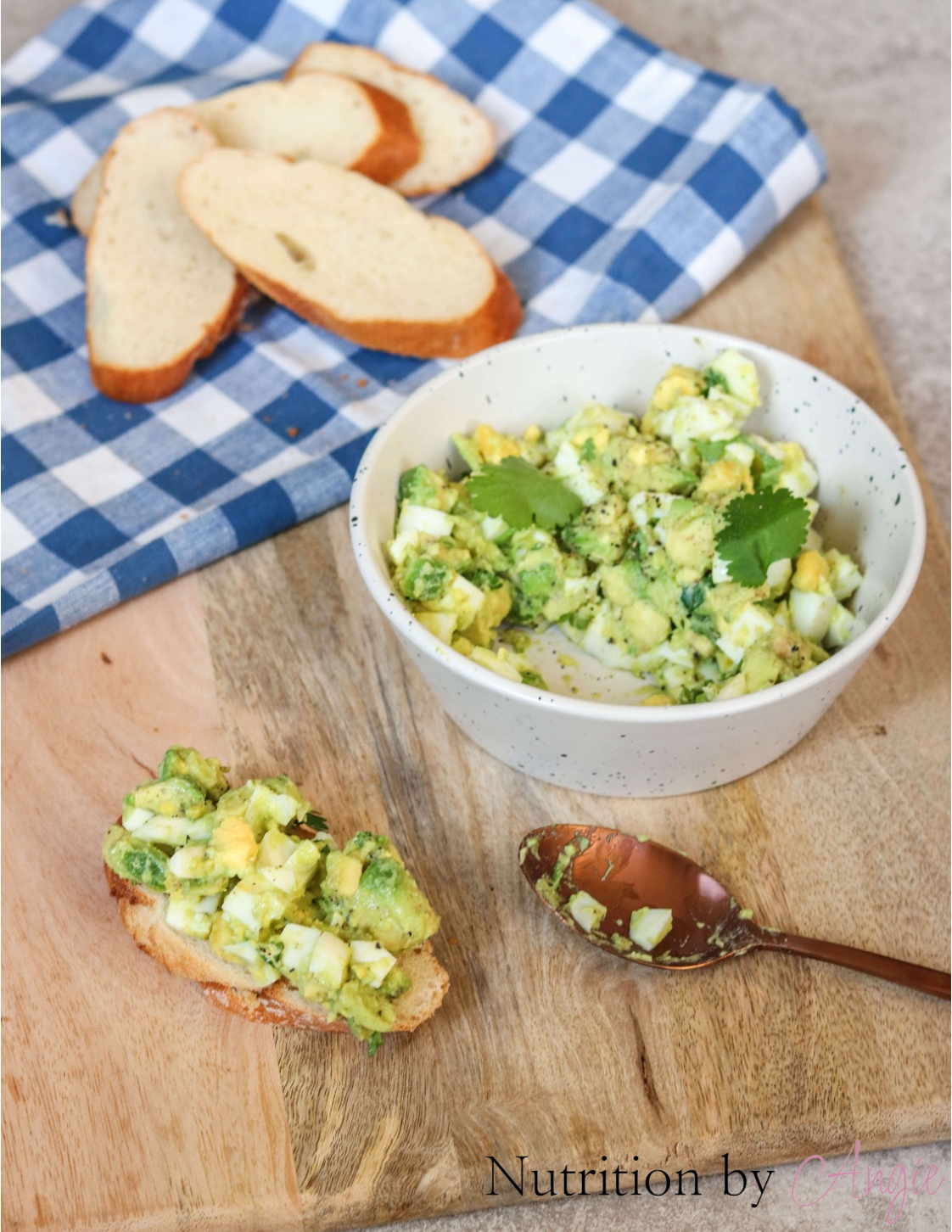
Egg and Avocado Filling with Lemon, Garlic and Fresh Coriander
Vegetarian • Pescatarian-Friendly • Naturally Dairy-Free • Gluten-Free with Suitable Accompaniments • Protein-Rich Ingredients • Source of Unsaturated Fats • Healthy Sandwich Filling • Easy Lunch Idea • Avocado and Egg Salad • Meal-Prep Friendly
Allergen information: This recipe contains eggs. The filling itself does not contain wheat, milk, nuts or soy as listed, but check any accompanying bread, wraps or crackers for additional allergens. If gluten-free preparation is required, use certified gluten-free accompaniments and avoid cross-contact.
Introduction
This Egg and Avocado Filling with Lemon, Garlic and Fresh Coriander is a creamy, fresh and satisfying combination of boiled eggs, ripe avocado, aromatic garlic, lemon juice, olive oil and chopped coriander.
It offers a delicious alternative to traditional mayonnaise-based egg fillings, using avocado to provide a naturally creamy texture.
The combination of soft boiled eggs and ripe avocado creates a rich, smooth filling, while fresh lemon juice adds brightness and balances the richness.
Minced garlic provides a savoury note, and fresh coriander contributes a distinctive herbal flavour.
A teaspoon of olive oil adds a little extra richness and helps create a smooth consistency.
This healthy egg and avocado sandwich filling is particularly suitable for people following vegetarian or pescatarian dietary patterns.
It contains eggs but no meat or fish.
The recipe can be enjoyed in sandwiches, wraps, on toast, with crackers or as part of a larger salad.
One of the main nutritional highlights of this filling is its combination of protein and predominantly unsaturated fats.
Eggs provide high-quality protein containing all nine essential amino acids.
They also contain choline, vitamin B12, selenium, iodine and other important nutrients.
Avocado contributes monounsaturated fats, dietary fibre, potassium, folate and vitamin E.
Olive oil provides additional monounsaturated fats, particularly oleic acid.
Together, these ingredients create a satisfying combination of nutrients.
The three boiled eggs provide a substantial amount of protein across the recipe.
Protein contributes to normal muscle maintenance and tissue repair.
It also contributes to feelings of fullness.
Eggs are particularly valuable because they provide a complete amino acid profile.
They also contain choline, an essential nutrient involved in normal liver function and lipid metabolism.
Vitamin B12 is another important nutrient found in eggs.
Vitamin B12 contributes to normal nervous system function and red blood cell formation.
This can be particularly useful for people following vegetarian dietary patterns.
Avocado provides a creamy texture without requiring mayonnaise.
It is rich in monounsaturated fats and contains dietary fibre.
Replacing saturated fats with unsaturated fats can help improve LDL cholesterol levels.
However, avocado and olive oil are energy-dense, so portion size remains relevant.
The lemon juice adds a refreshing citrus flavour.
It also contains a small amount of vitamin C.
Vitamin C contributes to normal immune function and collagen formation.
However, the teaspoon used in this recipe provides only a modest nutritional contribution.
Fresh garlic adds savoury flavour and contains naturally occurring sulphur compounds.
These compounds have been studied for their biological properties.
However, the small garlic clove used in this recipe should primarily be appreciated for flavour rather than considered a therapeutic ingredient.
Fresh coriander contributes a bright herbal flavour.
It also contains small amounts of vitamin K, vitamin C and naturally occurring plant compounds.
The quantity used provides some nutritional variety, although it is not a major source of micronutrients.
This egg and avocado salad filling is convenient for preparing quick lunches.
It can be served with wholegrain bread for additional dietary fibre.
It also works well with rye crackers, wholegrain wraps or fresh salad vegetables.
For people following a cholesterol-conscious dietary pattern, the combination of eggs and avocado deserves a balanced perspective.
Eggs contain dietary cholesterol.
However, the effect of dietary cholesterol on blood cholesterol varies between individuals.
Saturated fat intake is generally a more important dietary factor influencing LDL cholesterol levels.
Avocado and olive oil provide predominantly unsaturated fats.
Including these fats in place of saturated fats can support a heart-conscious dietary pattern.
Nevertheless, people with specific cholesterol concerns or medical conditions may benefit from personalised dietary advice.
The filling is best enjoyed fresh because avocado can brown after exposure to air.
Lemon juice can help slow this process, although it does not prevent browning completely.
Because the recipe contains cooked eggs, it should be refrigerated promptly and handled carefully.
With its creamy avocado, tender boiled eggs, refreshing lemon, aromatic garlic and fresh coriander, this Egg and Avocado Filling is a delicious, satisfying and nourishing option for vegetarian and pescatarian meals.
Benefits of All the Ingredients
Boiled Eggs
Eggs are a nutrient-dense food that provides high-quality protein, vitamins, minerals and essential nutrients.
They contain all nine essential amino acids.
Eggs are particularly valuable in vegetarian diets because they provide vitamin B12, choline and other nutrients that can be more challenging to obtain from plant foods alone.
Boiled eggs provide:
High-Quality Protein: Supports normal muscle maintenance.
Essential Amino Acids: Required for normal protein synthesis.
Choline: Supports normal liver function and lipid metabolism.
Vitamin B12: Supports normal nervous system function.
Vitamin D: Contributes to normal bone and immune function.
Vitamin A: Supports normal vision and immune function.
Riboflavin (Vitamin B2): Supports normal energy metabolism.
Selenium: Supports normal thyroid function.
Iodine: Supports normal thyroid hormone production.
Phosphorus: Supports healthy bones and teeth.
Lutein and Zeaxanthin: Naturally occurring carotenoids found in egg yolks.
Eggs and High-Quality Protein
Eggs provide high-quality protein.
Protein contributes to normal muscle maintenance and tissue repair.
The three eggs used in this recipe provide a useful amount of protein across the filling.
Eggs and Essential Amino Acids
Eggs contain all nine essential amino acids.
These amino acids are required for normal protein synthesis.
The body cannot produce essential amino acids, so they must be obtained through the diet.
Eggs and Muscle Maintenance
Protein contributes to the maintenance of normal muscle mass.
Adequate protein intake is important throughout adulthood.
It is particularly relevant for people who exercise regularly and older adults.
Eggs and Choline
Eggs are a valuable source of choline.
Choline contributes to normal liver function and lipid metabolism.
It is also important for normal cell membrane function.
Eggs and Vitamin B12
Eggs provide vitamin B12.
Vitamin B12 contributes to normal nervous system function and red blood cell formation.
It is particularly relevant in vegetarian dietary patterns.
Eggs and Vitamin D
Egg yolks contain vitamin D.
Vitamin D contributes to normal bone and immune function.
However, the amount varies depending on the eggs and production methods.
Eggs and Vitamin A
Eggs contain vitamin A.
Vitamin A contributes to normal vision and immune function.
It also supports normal skin and mucous membranes.
Eggs and Riboflavin
Eggs provide riboflavin, also known as vitamin B2.
Riboflavin contributes to normal energy metabolism.
It also helps protect cells from oxidative stress.
Eggs and Selenium
Eggs contain selenium.
Selenium contributes to normal thyroid function.
It also helps protect cells from oxidative stress.
Eggs and Iodine
Eggs provide iodine.
Iodine contributes to normal thyroid hormone production and cognitive function.
The amount varies depending on the hens' feed.
Eggs and Phosphorus
Eggs contain phosphorus.
Phosphorus contributes to the maintenance of normal bones and teeth.
It also plays a role in energy metabolism.
Eggs and Lutein
Egg yolks contain lutein.
Lutein is a naturally occurring carotenoid.
It contributes to the carotenoid content of the diet.
Eggs and Zeaxanthin
Egg yolks also contain zeaxanthin.
Zeaxanthin is found in the macula of the eye.
Dietary intake has been studied in relation to eye health.
However, eggs should not be considered a treatment for eye disease.
Eggs and Dietary Cholesterol
Egg yolks contain dietary cholesterol.
The relationship between dietary cholesterol and blood cholesterol is complex.
Individual responses vary.
For many people, saturated fat intake has a greater influence on LDL cholesterol than dietary cholesterol alone.
Eggs and Satiety
Eggs provide protein and fat.
These nutrients can contribute to feelings of fullness.
Eggs and Food Safety
Eggs should be cooked and handled hygienically.
Hard-boiled eggs should be refrigerated promptly after cooling.
Why Boiled Eggs Work Well
Boiled eggs provide protein and a soft texture.
They combine beautifully with creamy avocado and fresh herbs.
Garlic
Garlic provides a distinctive savoury flavour.
It belongs to the allium family, alongside onions, leeks and chives.
Garlic contains naturally occurring sulphur compounds.
Garlic provides:
Organosulphur Compounds: Contribute to its characteristic flavour.
Allicin-Related Compounds: Form when garlic is crushed or chopped.
Vitamin B6: Supports normal protein metabolism.
Manganese: Contributes to normal metabolism.
Vitamin C: Supports normal immune function.
Naturally Occurring Polyphenols: Contribute to dietary plant compound intake.
Garlic and Organosulphur Compounds
Garlic contains naturally occurring sulphur compounds.
These contribute to its distinctive aroma and flavour.
Garlic and Allicin
When garlic is chopped or crushed, compounds can react to form allicin.
Allicin has been studied for its biological properties.
However, it is unstable and changes during food preparation.
Garlic and Vitamin B6
Garlic contains vitamin B6.
Vitamin B6 contributes to normal protein metabolism.
The small clove used in this recipe provides only a modest amount.
Garlic and Manganese
Garlic contains manganese.
Manganese contributes to normal metabolism and bone maintenance.
Garlic and Vitamin C
Garlic contains vitamin C.
However, the small quantity used in this filling does not provide a significant contribution.
Garlic and Antioxidant Plant Compounds
Garlic contains naturally occurring plant compounds.
These have been studied for their antioxidant properties.
However, ordinary culinary garlic should not be considered a treatment for disease.
Garlic and Flavour
Garlic provides savoury depth.
It balances the richness of the avocado and eggs.
Garlic and Digestive Tolerance
Garlic contains fructans, a type of fermentable carbohydrate.
These can cause digestive discomfort in people sensitive to FODMAPs.
Why Garlic Works Well
Garlic adds savoury flavour.
It complements the creamy avocado and fresh lemon beautifully.
Avocado
Avocado is a creamy fruit rich in predominantly monounsaturated fats.
It also provides dietary fibre, potassium, folate and vitamin E.
Avocado is particularly useful in vegetarian and pescatarian meals because it adds richness without requiring dairy-based sauces.
Avocado provides:
Monounsaturated Fats: Contribute to a favourable dietary fat profile.
Dietary Fibre: Supports normal digestive function.
Potassium: Supports normal muscle function.
Folate: Supports normal cell division.
Vitamin E: Helps protect cells from oxidative stress.
Vitamin K: Supports normal blood clotting.
Vitamin B6: Supports normal protein metabolism.
Vitamin C: Supports normal immune function.
Magnesium: Supports normal muscle and nerve function.
Lutein: A naturally occurring carotenoid.
Avocado and Monounsaturated Fats
Avocado is rich in monounsaturated fats.
These fats are predominantly present as oleic acid.
Replacing saturated fats with unsaturated fats can help improve LDL cholesterol levels.
Avocado and Dietary Fibre
Avocado provides dietary fibre.
Fibre supports normal digestive function.
It also contributes to feelings of fullness.
Avocado and Soluble Fibre
Avocado contains both soluble and insoluble fibre.
Soluble fibre can contribute to cholesterol management as part of a balanced diet.
However, the amount consumed depends on portion size.
Avocado and Potassium
Avocado provides potassium.
Potassium contributes to normal muscle function and the maintenance of normal blood pressure.
Avocado and Folate
Avocado contains folate.
Folate contributes to normal cell division and red blood cell formation.
Avocado and Vitamin E
Avocado provides vitamin E.
Vitamin E helps protect cells from oxidative stress.
Avocado and Vitamin K
Avocado contains vitamin K.
Vitamin K contributes to normal blood clotting and bone maintenance.
People taking vitamin K-antagonist anticoagulants should maintain a consistent vitamin K intake and follow medical advice.
Avocado and Vitamin B6
Avocado provides vitamin B6.
Vitamin B6 contributes to normal protein metabolism and nervous system function.
Avocado and Vitamin C
Avocado contains vitamin C.
Vitamin C contributes to normal immune function and collagen formation.
Avocado and Magnesium
Avocado provides magnesium.
Magnesium contributes to normal muscle and nerve function.
Avocado and Lutein
Avocado contains lutein.
Lutein is a naturally occurring carotenoid.
It contributes to dietary carotenoid intake.
Avocado and Satiety
Avocado provides fat and fibre.
These nutrients can contribute to feelings of fullness.
Avocado and Energy Density
Avocado is relatively energy-dense compared with many other fruits.
Portion size is relevant when considering overall energy intake.
Avocado and Texture
Avocado provides a smooth, creamy texture.
It can replace mayonnaise in some sandwich fillings.
Avocado and Browning
Avocado contains enzymes that contribute to browning when exposed to oxygen.
Lemon juice can help slow this process.
Why Avocado Works Well
Avocado provides creaminess and richness.
It creates a smooth filling without requiring mayonnaise.
Lemon Juice
Lemon juice provides acidity and freshness.
It contains vitamin C and naturally occurring citrus compounds.
The recipe uses one teaspoon of lemon juice.
Lemon juice provides:
Vitamin C: Supports normal immune function.
Citric Acid: Contributes to its refreshing acidity.
Small Amounts of Flavonoids: Naturally occurring plant compounds.
Water: Contributes moisture.
Bright Flavour: Balances rich ingredients.
Lemon Juice and Vitamin C
Lemon juice contains vitamin C.
Vitamin C contributes to normal immune function and collagen formation.
However, one teaspoon provides only a small amount.
Lemon Juice and Collagen Formation
Vitamin C is required for normal collagen formation.
Collagen is an important structural protein found in skin, blood vessels and connective tissues.
Lemon Juice and Citric Acid
Lemon juice contains citric acid.
This gives it its characteristic tart flavour.
Lemon Juice and Flavour Balance
Acidity helps balance rich ingredients.
It complements the creamy avocado and eggs.
Lemon Juice and Avocado Browning
Lemon juice can help slow avocado browning.
However, it does not prevent oxidation completely.
Lemon Juice and Sodium
Lemon juice adds flavour without contributing significant sodium.
This can be useful when preparing meals with reduced salt.
Why Lemon Juice Works Well
Lemon juice adds freshness.
It balances the rich avocado and egg flavours.
Olive Oil
Olive oil provides richness and a smooth texture.
It is particularly valued for its monounsaturated fat content.
Extra virgin olive oil also contains naturally occurring polyphenols.
Olive oil provides:
Monounsaturated Fats: Predominantly oleic acid.
Vitamin E: Helps protect cells from oxidative stress.
Vitamin K: Supports normal blood clotting.
Polyphenols: Particularly in extra virgin olive oil.
Fat: Supplies energy.
Olive Oil and Monounsaturated Fats
Olive oil is rich in monounsaturated fats.
These fats are predominantly present as oleic acid.
Replacing saturated fats with unsaturated fats can help improve LDL cholesterol levels.
Olive Oil and Oleic Acid
Oleic acid is the main fatty acid in olive oil.
It contributes to olive oil's favourable fatty acid profile.
Olive Oil and Vitamin E
Olive oil contains vitamin E.
Vitamin E helps protect cells from oxidative stress.
However, the teaspoon used in this recipe provides a modest amount.
Olive Oil and Vitamin K
Olive oil contains vitamin K.
Vitamin K contributes to normal blood clotting.
Olive Oil and Polyphenols
Extra virgin olive oil contains naturally occurring polyphenols.
These have been studied for their antioxidant properties.
The amount varies depending on the oil.
Olive Oil and Heart-Conscious Nutrition
Olive oil is a useful alternative to fats rich in saturated fatty acids.
Including unsaturated fats as part of a balanced diet can support cardiovascular health.
Olive Oil and Energy Density
Olive oil is energy-dense.
The teaspoon used in this recipe provides additional fat and energy.
Olive Oil and Flavour
Olive oil adds richness and a subtle fruity flavour.
It complements the avocado and lemon.
Why Olive Oil Works Well
Olive oil adds smoothness and richness.
It complements the avocado and helps create a creamy filling.
Fresh Coriander Leaves
Fresh coriander provides a bright, herbal flavour.
It is also known as cilantro.
Coriander leaves contain small amounts of vitamins, minerals and naturally occurring plant compounds.
Fresh coriander provides:
Vitamin K: Supports normal blood clotting.
Vitamin C: Supports normal immune function.
Vitamin A Precursors: Contribute to normal vision.
Folate: Supports normal cell division.
Naturally Occurring Polyphenols: Contribute to dietary plant compound intake.
Aromatic Compounds: Provide its distinctive flavour.
Coriander and Vitamin K
Coriander leaves contain vitamin K.
Vitamin K contributes to normal blood clotting and bone maintenance.
However, the quantity used in this recipe provides a limited contribution.
Coriander and Vitamin C
Coriander contains vitamin C.
Vitamin C contributes to normal immune function and collagen formation.
Coriander and Vitamin A Precursors
Coriander leaves contain carotenoids.
The body can convert some carotenoids into vitamin A.
Vitamin A contributes to normal vision and immune function.
Coriander and Folate
Coriander contains folate.
Folate contributes to normal cell division.
Coriander and Polyphenols
Coriander contains naturally occurring polyphenols.
These contribute to dietary plant compound intake.
Coriander and Aromatic Compounds
Coriander contains aromatic compounds that create its distinctive flavour.
Some people perceive coriander as having a soapy taste due to genetic differences in smell perception.
Coriander and Freshness
Fresh coriander adds brightness.
It complements the creamy avocado and eggs.
Coriander and Food Safety
Fresh herbs should be washed thoroughly before use.
They should be stored appropriately to maintain freshness.
Why Coriander Works Well
Coriander adds a fresh herbal flavour.
It balances the richness of the avocado and eggs.
Why Egg and Avocado Filling Makes a Nourishing Meal Component
Provides High-Quality Protein
Eggs contain all nine essential amino acids.
Contains Monounsaturated Fats
Avocado and olive oil provide predominantly monounsaturated fats.
Provides Dietary Fibre
Avocado contributes fibre that supports normal digestive function.
Contains Choline
Eggs provide choline, supporting normal liver function and lipid metabolism.
Provides Vitamin B12
Eggs contribute vitamin B12, supporting normal nervous system function.
Contains Potassium
Avocado provides potassium.
Includes Vitamin E
Avocado and olive oil contribute vitamin E.
Contains Folate
Avocado provides folate.
Offers a Creamy Texture Without Mayonnaise
Avocado creates a naturally smooth consistency.
Works Well in Vegetarian and Pescatarian Meals
The filling contains eggs but no meat or fish.
Delicious Serving Suggestions
In a Wholegrain Sandwich
Serve between slices of wholegrain bread for additional carbohydrates and dietary fibre.
On Rye Toast
Spread over toasted rye bread for a satisfying breakfast or lunch.
In a Wholegrain Wrap
Add lettuce, cucumber and tomato for a fresh wrap.
With Crispbread
Serve with rye or wholegrain crispbread for a crunchy snack.
In Lettuce Cups
Spoon into crisp lettuce leaves for a lighter serving option.
Alongside a Fresh Salad
Pair with cherry tomatoes, rocket, cucumber and roasted peppers for additional vegetables.
Tips for the Best Egg and Avocado Filling
Choose fresh eggs: Check their date and storage guidance.
Boil eggs thoroughly: Hard-boiled eggs provide a firm texture for the filling.
Cool eggs promptly: This helps maintain food safety.
Peel eggs carefully: Remove all shell fragments.
Chop eggs evenly: This creates a consistent texture.
Choose a ripe avocado: It should yield slightly to gentle pressure.
Avoid overripe avocado: Brown or damaged flesh can affect flavour and texture.
Mash avocado to your preferred consistency: Smooth or slightly chunky both work well.
Use fresh garlic: It provides the best flavour.
Mince garlic finely: This prevents large, sharp-tasting pieces.
Adjust garlic to taste: Raw garlic can be strong.
Use fresh lemon juice: It provides the best flavour.
Add lemon juice promptly: This can help slow avocado browning.
Choose good-quality olive oil: Extra virgin olive oil provides a distinctive flavour.
Measure olive oil accurately: Avocado already contributes substantial fat.
Use fresh coriander: It provides the best aroma.
Wash coriander thoroughly: This helps remove dirt and residues.
Chop coriander finely: This distributes its flavour evenly.
Avoid overmixing: This helps preserve some texture.
Taste before adding seasoning: The ingredients already provide plenty of flavour.
Serve immediately when possible: Avocado is best enjoyed fresh.
Use an airtight container for storage: This helps limit exposure to air.
Press food-safe wrap against the surface if storing: This can help reduce browning.
Refrigerate promptly: Keep the filling at 5°C or below.
Consume within approximately 24 hours for best quality: Avocado texture and colour deteriorate quickly.
Do not leave at room temperature for more than two hours: Cooked eggs require careful handling.
Avoid freezing the finished filling: Avocado and egg texture may deteriorate.
Prepare bread or wraps separately: This helps prevent sogginess.
Choose wholegrain accompaniments: These generally provide more fibre.
Add fresh vegetables: Lettuce, cucumber and tomato increase nutritional variety.
Use suitable portions: This helps balance energy intake.
Check individual dietary needs: Eggs are an allergen and contain dietary cholesterol.
A Note on Eggs, Avocado and Cholesterol-Friendly Nutrition
This Egg and Avocado Filling combines eggs, avocado, olive oil, lemon juice, garlic and fresh coriander.
Eggs provide high-quality protein, choline, vitamin B12 and other essential nutrients.
They are particularly useful in vegetarian dietary patterns because they provide nutrients that may be less abundant in some plant-based foods.
However, eggs contain dietary cholesterol.
The relationship between dietary cholesterol and blood cholesterol is complex.
Individual responses vary, and some people are more sensitive to dietary cholesterol than others.
For many people, saturated fat intake has a greater influence on LDL cholesterol than dietary cholesterol alone.
Avocado provides predominantly monounsaturated fats.
These fats can contribute to a favourable dietary fat profile.
Replacing saturated fats with unsaturated fats can help improve LDL cholesterol levels.
Avocado also provides dietary fibre.
Fibre supports normal digestive function and can contribute to cholesterol management as part of a balanced diet.
Olive oil provides additional monounsaturated fats.
It is a useful alternative to fats rich in saturated fatty acids.
However, avocado and olive oil are energy-dense.
Portion size remains relevant when considering overall energy intake.
Fresh lemon juice adds acidity and flavour.
Garlic and coriander provide aromatic compounds and small amounts of micronutrients.
However, their quantities in this recipe are modest.
For people following a cholesterol-conscious dietary pattern, the overall balance of foods is important.
Regular consumption of vegetables, fruit, whole grains, legumes, nuts, seeds and unsaturated fats can support cardiovascular health.
Eggs can be included in many balanced dietary patterns, although people with elevated LDL cholesterol, familial hypercholesterolaemia or other specific medical concerns may benefit from personalised advice about egg intake.
Serving this filling with wholegrain bread and vegetables can provide additional dietary fibre and nutritional variety.
The combination of protein, fibre and unsaturated fats makes it a satisfying meal component.
With its creamy avocado, tender boiled eggs, refreshing lemon, aromatic garlic and fresh coriander, this Egg and Avocado Filling is a delicious and nourishing option for vegetarian and pescatarian meals.