
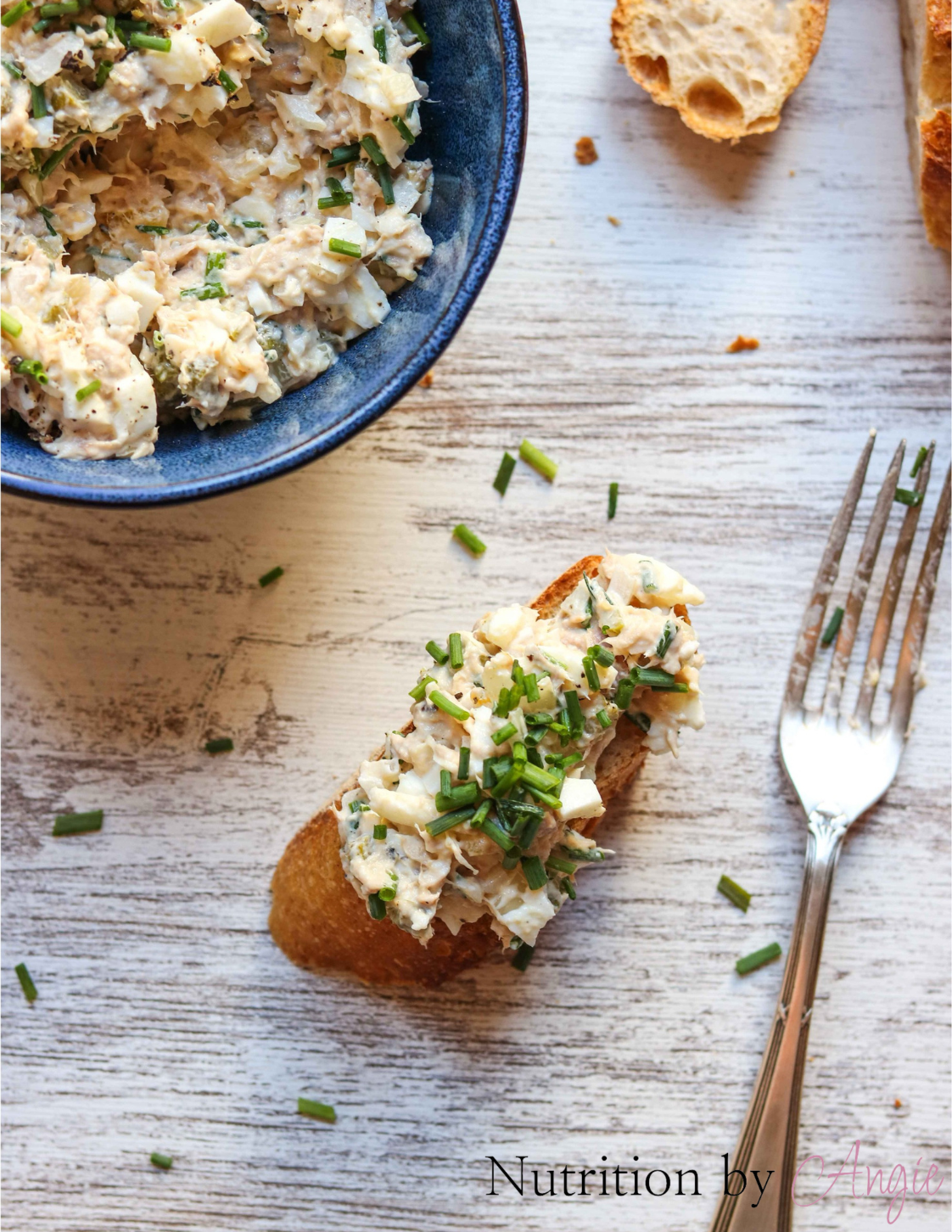
Egg and Smoked Mackerel Paste with Gherkins, Chives and Creamy Yoghurt Dressing
Pescatarian • High-Protein Ingredients • Source of Marine Omega-3 Fatty Acids • Vitamin B12-Rich Ingredients • Smoked Mackerel Spread • Egg and Fish Sandwich Filling • Easy Pescatarian Lunch • Savoury Breakfast Spread • Make-Ahead Meal Idea
Allergen information: This recipe contains fish (smoked mackerel), eggs and milk (natural yoghurt). Mayonnaise usually contains eggs and may contain mustard. Pickled gherkins may contain mustard, sulphites or other additives, depending on the brand. Check packaged ingredients carefully. The paste itself does not require gluten-containing ingredients, but cross-contact and any bread or crackers served alongside it should be considered.
Introduction
This Egg and Smoked Mackerel Paste with Gherkins, Chives and Creamy Yoghurt Dressing is a rich, savoury and satisfying pescatarian spread made with hard-boiled eggs, smoked mackerel, finely chopped onion, pickled gherkins, mayonnaise, natural yoghurt and fresh chives.
It combines the distinctive smoky flavour of mackerel with the mild richness of boiled eggs and a creamy dressing.
The chopped gherkins add a refreshing tang, while the onion provides a little sharpness and texture.
Fresh chives introduce a delicate onion-like flavour that complements the fish without overpowering it.
Mayonnaise adds richness and helps bring the ingredients together.
Natural yoghurt contributes creaminess and a gentle acidity, balancing the stronger flavours of the smoked mackerel.
The result is a flavourful smoked mackerel and egg spread that works beautifully on wholegrain toast, rye bread, crackers or crispbread.
It can also be served as a sandwich filling, spooned into lettuce cups or enjoyed alongside a fresh vegetable salad.
One of the main nutritional highlights of this recipe is its combination of high-quality protein and marine omega-3 fatty acids.
Smoked mackerel is an oily fish that provides protein, vitamin B12, selenium and the long-chain omega-3 fatty acids EPA and DHA.
These omega-3 fatty acids are particularly important because they are found in relatively few foods.
Eggs provide additional high-quality protein, choline, vitamin B12 and other essential nutrients.
Together, the four eggs and 200g of smoked mackerel contribute a substantial amount of protein across the recipe.
Protein supports normal muscle maintenance and tissue repair.
It also contributes to feelings of fullness, making this paste a satisfying option for breakfast, lunch or a savoury snack.
Mackerel is especially valuable in pescatarian dietary patterns because it provides marine omega-3 fatty acids.
EPA and DHA contribute to normal heart function when consumed in sufficient amounts.
DHA also contributes to the maintenance of normal brain function and vision.
However, the nutritional benefits of mackerel should be considered alongside its sodium content.
Smoked fish can contain substantial amounts of salt because salting is commonly used during processing.
The exact sodium content varies between products.
For people managing blood pressure or sodium intake, checking the nutrition label is particularly useful.
The pickled gherkins may also contribute sodium.
Mayonnaise and some natural yoghurts contain additional sodium, although amounts vary.
This makes it sensible to taste the paste before adding any extra salt.
The eggs provide several nutrients that complement those found in fish.
They contain choline, which contributes to normal liver function and lipid metabolism.
Eggs also provide vitamin B12, selenium and iodine.
These nutrients support normal nervous system function, thyroid function and other essential processes.
Natural yoghurt contributes protein and calcium.
Calcium supports the maintenance of normal bones and teeth.
The amount of calcium depends on the yoghurt used.
Plain natural yoghurt is generally preferable to sweetened varieties for a savoury recipe.
The onion and chives add flavour and small amounts of naturally occurring plant compounds.
Pickled gherkins provide acidity and crunch.
Although these vegetables and herbs are used in relatively small quantities, they make an important contribution to the overall flavour.
This egg and smoked mackerel sandwich filling is particularly convenient for preparing ahead of time.
It can be stored in the refrigerator and used for quick meals.
However, because it contains cooked eggs, smoked fish, mayonnaise and yoghurt, careful refrigeration is essential.
The paste should be kept at 5°C or below and consumed promptly.
For the best quality and food safety, it is sensible to prepare only the amount needed for the next day or two, particularly when using ready-to-eat smoked fish.
The recipe is also versatile.
It can be served with wholegrain bread for additional fibre, or paired with cucumber, tomatoes and leafy greens for a lighter meal.
For a more substantial lunch, it works well with boiled potatoes, rye bread or a wholegrain wrap.
With its smoky mackerel, tender eggs, tangy gherkins, creamy dressing and fresh chives, this Egg and Smoked Mackerel Paste is a delicious and nourishing pescatarian option.
Benefits of All the Ingredients
Hard-Boiled Eggs
Eggs are a nutrient-dense food that provides high-quality protein, vitamins, minerals and essential nutrients.
They contain all nine essential amino acids.
Eggs are particularly useful in vegetarian and pescatarian diets because they provide vitamin B12, choline and other nutrients.
Hard-boiled eggs provide:
High-Quality Protein: Supports normal muscle maintenance.
Essential Amino Acids: Required for normal protein synthesis.
Choline: Supports normal liver function and lipid metabolism.
Vitamin B12: Supports normal nervous system function.
Vitamin D: Contributes to normal bone and immune function.
Vitamin A: Supports normal vision and immune function.
Riboflavin (Vitamin B2): Supports normal energy metabolism.
Selenium: Supports normal thyroid function.
Iodine: Supports normal thyroid hormone production.
Phosphorus: Supports healthy bones and teeth.
Lutein and Zeaxanthin: Naturally occurring carotenoids found in egg yolks.
Eggs and High-Quality Protein
Eggs provide high-quality protein.
Protein contributes to normal muscle maintenance and tissue repair.
The four eggs used in this recipe provide a substantial protein contribution across the paste.
Eggs and Essential Amino Acids
Eggs contain all nine essential amino acids.
These amino acids are required for normal protein synthesis.
The body cannot produce essential amino acids, so they must be obtained through the diet.
Eggs and Muscle Maintenance
Protein contributes to the maintenance of normal muscle mass.
Adequate protein intake is important throughout adulthood.
It is particularly relevant for people who exercise regularly and older adults.
Eggs and Choline
Eggs are a valuable source of choline.
Choline contributes to normal liver function and lipid metabolism.
It is also important for normal cell membrane function.
Eggs and Vitamin B12
Eggs provide vitamin B12.
Vitamin B12 contributes to normal nervous system function and red blood cell formation.
Eggs and Vitamin D
Egg yolks contain vitamin D.
Vitamin D contributes to normal bone and immune function.
The amount varies depending on the eggs and production methods.
Eggs and Vitamin A
Eggs contain vitamin A.
Vitamin A contributes to normal vision and immune function.
Eggs and Riboflavin
Eggs provide riboflavin, also known as vitamin B2.
Riboflavin contributes to normal energy metabolism.
Eggs and Selenium
Eggs contain selenium.
Selenium contributes to normal thyroid function and helps protect cells from oxidative stress.
Eggs and Iodine
Eggs provide iodine.
Iodine contributes to normal thyroid hormone production.
The amount varies depending on the hens' feed.
Eggs and Phosphorus
Eggs contain phosphorus.
Phosphorus contributes to the maintenance of normal bones and teeth.
Eggs and Lutein
Egg yolks contain lutein.
Lutein is a naturally occurring carotenoid.
It contributes to dietary carotenoid intake.
Eggs and Zeaxanthin
Egg yolks also contain zeaxanthin.
Zeaxanthin is found in the macula of the eye.
Dietary intake has been studied in relation to eye health.
Eggs and Dietary Cholesterol
Egg yolks contain dietary cholesterol.
The effect of dietary cholesterol on blood cholesterol varies between individuals.
For many people, saturated fat intake has a greater influence on LDL cholesterol than dietary cholesterol alone.
Eggs and Satiety
Eggs provide protein and fat.
These nutrients can contribute to feelings of fullness.
Eggs and Food Safety
Hard-boiled eggs should be handled hygienically.
They should be cooled and refrigerated promptly.
Why Hard-Boiled Eggs Work Well
Hard-boiled eggs provide protein and a soft texture.
They complement the smoky mackerel and creamy dressing beautifully.
Smoked Mackerel
Smoked mackerel is an oily fish with a rich, distinctive flavour.
It provides high-quality protein, marine omega-3 fatty acids, vitamin B12, selenium and other important nutrients.
Smoked mackerel provides:
High-Quality Protein: Supports normal muscle maintenance.
EPA and DHA Omega-3 Fatty Acids: Contribute to normal heart function.
Vitamin B12: Supports normal nervous system function.
Vitamin D: Supports normal bone and immune function.
Selenium: Supports normal thyroid function.
Iodine: Supports normal thyroid hormone production.
Phosphorus: Supports healthy bones and teeth.
Niacin (Vitamin B3): Supports normal energy metabolism.
Vitamin B6: Supports normal protein metabolism.
Potassium: Supports normal muscle function.
Smoked Mackerel and High-Quality Protein
Smoked mackerel provides high-quality protein.
Protein contributes to normal muscle maintenance and tissue repair.
The 200g used in this recipe provides a substantial protein contribution across the paste.
Smoked Mackerel and Omega-3 Fatty Acids
Mackerel is an oily fish rich in EPA and DHA.
These are long-chain omega-3 fatty acids.
EPA and DHA contribute to normal heart function when consumed in sufficient amounts.
Smoked Mackerel and EPA
EPA is a long-chain omega-3 fatty acid.
It contributes to the omega-3 content of oily fish.
EPA has been studied for its role in cardiovascular health.
Smoked Mackerel and DHA
DHA is a long-chain omega-3 fatty acid.
DHA contributes to the maintenance of normal brain function and vision when consumed in sufficient amounts.
Smoked Mackerel and Vitamin B12
Smoked mackerel is a valuable source of vitamin B12.
Vitamin B12 contributes to normal nervous system function and red blood cell formation.
Smoked Mackerel and Vitamin D
Mackerel contains vitamin D.
Vitamin D contributes to normal bone and immune function.
The amount varies depending on the fish and processing methods.
Smoked Mackerel and Selenium
Mackerel provides selenium.
Selenium contributes to normal thyroid function and helps protect cells from oxidative stress.
Smoked Mackerel and Iodine
Mackerel provides iodine.
Iodine contributes to normal thyroid hormone production.
The amount varies depending on the fish and its environment.
Smoked Mackerel and Phosphorus
Mackerel contains phosphorus.
Phosphorus contributes to the maintenance of normal bones and teeth.
Smoked Mackerel and Niacin
Mackerel provides niacin, also known as vitamin B3.
Niacin contributes to normal energy metabolism.
Smoked Mackerel and Vitamin B6
Mackerel contains vitamin B6.
Vitamin B6 contributes to normal protein metabolism.
Smoked Mackerel and Potassium
Mackerel provides potassium.
Potassium contributes to normal muscle function.
Smoked Mackerel and Saturated Fat
Mackerel contains a mixture of fatty acids.
Although it is relatively high in total fat, it provides valuable unsaturated fats, including EPA and DHA.
Its nutritional profile differs from foods high in saturated fat.
Smoked Mackerel and Sodium
Smoked mackerel can contain substantial sodium.
The amount depends on the salting and smoking process.
Checking the nutrition label can help manage sodium intake.
Smoked Mackerel and Smoking
Smoking is used to preserve fish and develop flavour.
However, smoked foods can contain compounds formed during processing.
Smoked fish is best enjoyed as part of a varied diet rather than relied upon as the only fish source.
Smoked Mackerel and Mercury
Mercury levels vary between fish species.
Atlantic mackerel is generally considered a lower-mercury oily fish.
However, king mackerel is a different species and can contain much higher mercury levels.
Checking the species is particularly relevant during pregnancy.
Smoked Mackerel and Food Safety
Ready-to-eat smoked fish requires careful handling.
Cold-smoked fish may present a higher risk of Listeria contamination.
Pregnant people, older adults and those with weakened immune systems should follow local food safety guidance.
Why Smoked Mackerel Works Well
Smoked mackerel provides rich flavour, protein and marine omega-3 fatty acids.
It creates a satisfying savoury base for the paste.
Onion
Onion provides a sharp, slightly sweet flavour.
It belongs to the allium family.
Onions contain naturally occurring sulphur compounds and flavonoids.
Onion provides:
Quercetin: A naturally occurring flavonoid.
Sulphur Compounds: Contribute to onion flavour.
Vitamin C: Supports normal immune function.
Dietary Fibre: Supports normal digestive function.
Folate: Supports normal cell division.
Potassium: Supports normal muscle function.
Onion and Quercetin
Onions contain quercetin.
Quercetin is a naturally occurring flavonoid.
It has been studied for its antioxidant properties.
Onion and Sulphur Compounds
Onions contain sulphur compounds.
These contribute to their distinctive flavour and aroma.
Onion and Vitamin C
Onions contain vitamin C.
Vitamin C contributes to normal immune function and collagen formation.
Onion and Dietary Fibre
Onions contain dietary fibre.
Fibre supports normal digestive function.
Onion and Folate
Onions contain folate.
Folate contributes to normal cell division.
Onion and Potassium
Onions provide potassium.
Potassium contributes to normal muscle function.
Onion and Digestive Tolerance
Onions contain fructans, a type of fermentable carbohydrate.
These can cause digestive discomfort in people sensitive to FODMAPs.
Onion and Flavour
Finely chopped onion adds sharpness.
It balances the richness of the eggs and smoked fish.
Why Onion Works Well
Onion adds crunch and savoury flavour.
It complements the creamy dressing and tangy gherkins.
Pickled Gherkins
Pickled gherkins are small cucumbers preserved in vinegar or brine.
They provide acidity, crunch and a distinctive tangy flavour.
Their nutritional composition depends on the pickling liquid and added ingredients.
Pickled gherkins may provide:
Water: Contributes moisture.
Small Amounts of Dietary Fibre: Supports normal digestive function.
Vitamin K: Supports normal blood clotting.
Sodium: Often present in substantial amounts.
Acetic Acid: Contributes to their tangy flavour.
Gherkins and Hydration
Gherkins contain water.
This contributes to their crisp texture.
Gherkins and Dietary Fibre
Gherkins contain small amounts of dietary fibre.
Fibre supports normal digestive function.
Gherkins and Vitamin K
Cucumbers contain vitamin K.
Vitamin K contributes to normal blood clotting.
However, the amount provided by four small gherkins is modest.
Gherkins and Sodium
Pickled gherkins can contain substantial sodium.
The amount depends on the brine.
Checking the label can help manage sodium intake.
Gherkins and Acetic Acid
Vinegar-pickled gherkins contain acetic acid.
This gives them their characteristic tangy flavour.
Gherkins and Fermentation
Not all pickled gherkins are fermented.
Vinegar-pickled products do not necessarily contain live beneficial bacteria.
Gherkins and Added Sugar
Some pickled gherkins contain added sugar.
The amount varies between products.
Gherkins and Flavour
Gherkins provide acidity and crunch.
They balance the rich smoked mackerel and eggs.
Why Pickled Gherkins Work Well
Pickled gherkins add tanginess and texture.
They create a refreshing contrast to the creamy paste.
Mayonnaise
Mayonnaise provides richness and a creamy texture.
It is typically made from oil, egg yolk and an acidic ingredient.
The nutritional composition varies between brands.
Mayonnaise may provide:
Fat: Supplies energy.
Unsaturated Fatty Acids: Depending on the oil used.
Vitamin E: Depending on the oil used.
Vitamin K: Depending on the oil used.
Sodium: Depending on seasoning.
Creamy Texture: Helps bind ingredients.
Mayonnaise and Dietary Fat
Mayonnaise provides dietary fat.
Fat supplies energy and contributes to the texture of the paste.
Mayonnaise and Unsaturated Fats
Mayonnaise made with oils such as rapeseed or sunflower oil can provide unsaturated fats.
Replacing saturated fats with unsaturated fats can help improve LDL cholesterol levels.
Mayonnaise and Saturated Fat
The saturated fat content depends on the oil used.
Checking the nutrition label can help identify a suitable product.
Mayonnaise and Vitamin E
Some vegetable oils contain vitamin E.
Vitamin E helps protect cells from oxidative stress.
Mayonnaise and Vitamin K
Some oils contain vitamin K.
Vitamin K contributes to normal blood clotting.
Mayonnaise and Sodium
Commercial mayonnaise may contain added salt.
The amount varies between brands.
Mayonnaise and Added Sugar
Some mayonnaise products contain added sugar.
Checking the label can help identify the amount.
Mayonnaise and Energy Density
Mayonnaise is energy-dense because of its fat content.
The two tablespoons used in this recipe contribute additional energy.
Mayonnaise and Allergens
Traditional mayonnaise contains eggs.
Some products also contain mustard.
Mayonnaise and Food Safety
Commercial mayonnaise is generally made with pasteurised ingredients and acidified for safety.
Homemade mayonnaise requires careful handling, particularly if raw eggs are used.
Why Mayonnaise Works Well
Mayonnaise provides creaminess and richness.
It helps bind the eggs and smoked mackerel together.
Natural Yoghurt
Natural yoghurt provides creaminess and a gentle tang.
It is made by fermenting milk with bacterial cultures.
Natural yoghurt provides protein, calcium and other nutrients.
Natural yoghurt provides:
Protein: Supports normal muscle maintenance.
Calcium: Supports healthy bones and teeth.
Vitamin B12: Supports normal nervous system function.
Riboflavin (Vitamin B2): Supports normal energy metabolism.
Phosphorus: Supports healthy bones and teeth.
Iodine: Depending on the milk source.
Live Cultures: In products containing viable cultures.
Yoghurt and Protein
Natural yoghurt provides protein.
Protein contributes to normal muscle maintenance and tissue repair.
The amount depends on the yoghurt type.
Yoghurt and Calcium
Natural yoghurt provides calcium.
Calcium contributes to the maintenance of normal bones and teeth.
Yoghurt and Vitamin B12
Natural yoghurt contains vitamin B12.
Vitamin B12 contributes to normal nervous system function and red blood cell formation.
Yoghurt and Riboflavin
Natural yoghurt provides riboflavin.
Riboflavin contributes to normal energy metabolism.
Yoghurt and Phosphorus
Natural yoghurt contains phosphorus.
Phosphorus contributes to the maintenance of normal bones and teeth.
Yoghurt and Iodine
Dairy yoghurt may provide iodine.
The amount varies depending on the milk source and production methods.
Yoghurt and Live Cultures
Some natural yoghurts contain live bacterial cultures.
These cultures are involved in fermentation.
However, not all yoghurts contain sufficient live cultures to support specific probiotic claims.
Yoghurt and Lactose
Natural yoghurt contains lactose.
Some people with lactose intolerance can tolerate yoghurt better than milk, but tolerance varies.
Yoghurt and Saturated Fat
Full-fat dairy yoghurt contains saturated fat.
Lower-fat natural yoghurt generally contains less saturated fat.
Yoghurt and Added Sugar
Plain natural yoghurt generally contains no added sugar.
Flavoured varieties may contain added sugar.
Yoghurt and Texture
Natural yoghurt adds creaminess and acidity.
It balances the richness of the mayonnaise and smoked fish.
Why Natural Yoghurt Works Well
Natural yoghurt provides a creamy, tangy texture.
It helps lighten the richness of the mayonnaise.
Fresh Chives
Fresh chives provide a delicate onion-like flavour.
They belong to the allium family.
Chives contain naturally occurring sulphur compounds and small amounts of vitamins and minerals.
Chives provide:
Vitamin K: Supports normal blood clotting.
Vitamin C: Supports normal immune function.
Folate: Supports normal cell division.
Naturally Occurring Sulphur Compounds: Contribute to flavour.
Polyphenols: Naturally occurring plant compounds.
Chives and Vitamin K
Chives contain vitamin K.
Vitamin K contributes to normal blood clotting and bone maintenance.
Chives and Vitamin C
Chives contain vitamin C.
Vitamin C contributes to normal immune function and collagen formation.
Chives and Folate
Chives contain folate.
Folate contributes to normal cell division.
Chives and Sulphur Compounds
Chives contain naturally occurring sulphur compounds.
These contribute to their mild onion flavour.
Chives and Polyphenols
Chives contain naturally occurring polyphenols.
These contribute to dietary plant compound intake.
Chives and Freshness
Fresh chives provide a mild, herbal flavour.
They complement the stronger flavours of smoked mackerel and onion.
Chives and Food Safety
Fresh herbs should be washed thoroughly before use.
They should be stored appropriately to maintain freshness.
Why Chives Work Well
Chives add freshness and delicate savoury flavour.
They enhance the creamy smoked mackerel paste.
Why Egg and Smoked Mackerel Paste Makes a Nourishing Meal Component
Provides High-Quality Protein
Eggs and smoked mackerel contain all nine essential amino acids.
Contains Marine Omega-3 Fatty Acids
Smoked mackerel provides EPA and DHA.
Provides Vitamin B12
Eggs, mackerel and yoghurt contribute vitamin B12.
Contains Vitamin D
Eggs and mackerel provide vitamin D.
Provides Choline
Eggs contribute choline, supporting normal liver function and lipid metabolism.
Contains Selenium
Eggs and mackerel provide selenium.
Provides Iodine
Eggs, mackerel and yoghurt can contribute iodine.
Contains Calcium
Natural yoghurt contributes calcium.
Offers a Satisfying Combination of Flavours
Smoky fish, creamy eggs and tangy gherkins create a balanced savoury taste.
Works Well for Pescatarian Meals
The paste provides fish, eggs and dairy without meat.
Delicious Serving Suggestions
On Wholegrain Toast
Spread over wholegrain toast for a satisfying breakfast or lunch.
With Rye Bread
Serve with rye bread for additional dietary fibre and a hearty flavour.
In a Wholegrain Sandwich
Use as a filling with lettuce, cucumber and tomato.
With Crispbread
Serve with rye or wholegrain crispbread for a crunchy snack.
In Lettuce Cups
Spoon into crisp lettuce leaves for a lighter serving option.
Alongside a Fresh Salad
Pair with rocket, cherry tomatoes, cucumber and roasted peppers for additional vegetables.
Tips for the Best Egg and Smoked Mackerel Paste
Choose good-quality smoked mackerel: Its flavour is central to the recipe.
Check the mackerel species: Atlantic mackerel is different from king mackerel.
Check smoked mackerel sodium: Salt content varies between products.
Remove all visible bones: Even boneless fillets may contain small bones.
Flake the mackerel carefully: This helps create an even texture.
Choose fresh eggs: Check their date and storage guidance.
Hard-boil eggs thoroughly: This creates a firm texture.
Cool eggs promptly: This helps maintain food safety.
Peel eggs carefully: Remove all shell fragments.
Chop eggs evenly: This creates a consistent paste.
Choose a small fresh onion: It provides a balanced flavour.
Chop onion finely: This prevents large, sharp-tasting pieces.
Choose crisp pickled gherkins: They provide the best texture.
Chop gherkins finely: This distributes their flavour evenly.
Check gherkin sodium: Some products contain substantial salt.
Choose suitable mayonnaise: Check the oil, sugar and sodium content.
Use plain natural yoghurt: Avoid sweetened varieties.
Choose lower-fat yoghurt if preferred: This can reduce saturated fat.
Wash chives thoroughly: This helps remove dirt and residues.
Chop chives finely: This distributes their flavour evenly.
Avoid overmixing: This helps preserve some texture.
Taste before adding salt: Smoked mackerel and gherkins may already provide plenty.
Serve chilled: This helps maintain freshness.
Use an airtight container for storage: This helps preserve quality.
Refrigerate promptly: Keep the paste at 5°C or below.
Consume within 1–2 days for best quality and safety: Follow the shortest storage guidance on the smoked fish packaging.
Do not leave at room temperature for more than two hours: The paste contains perishable ingredients.
Avoid freezing the finished paste: Egg and yoghurt textures may deteriorate.
Prepare bread separately: This helps prevent sogginess.
Choose wholegrain accompaniments: These generally provide more fibre.
Add fresh vegetables: Lettuce, cucumber and tomato increase nutritional variety.
Use suitable portions: This helps balance energy and sodium intake.
Follow pregnancy and food safety guidance: Ready-to-eat smoked fish may require additional precautions.
A Note on Smoked Mackerel, Omega-3 and Cholesterol-Friendly Nutrition
This Egg and Smoked Mackerel Paste combines eggs, oily fish, mayonnaise, natural yoghurt, onion, gherkins and fresh chives.
Smoked mackerel is particularly valuable because it provides marine omega-3 fatty acids.
EPA and DHA contribute to normal heart function when consumed in sufficient amounts.
DHA also contributes to the maintenance of normal brain function and vision.
Regular consumption of oily fish can contribute to a heart-conscious dietary pattern.
However, smoked mackerel can contain substantial sodium.
High sodium intake can contribute to elevated blood pressure.
Choosing lower-salt foods across the rest of the diet can help balance sodium intake.
Eggs provide high-quality protein, choline, vitamin B12 and other essential nutrients.
However, egg yolks contain dietary cholesterol.
The relationship between dietary cholesterol and blood cholesterol is complex.
Individual responses vary.
For many people, saturated fat intake has a greater influence on LDL cholesterol than dietary cholesterol alone.
Mayonnaise provides fat and energy.
Its nutritional profile depends on the oils used.
Mayonnaise made with oils rich in unsaturated fats can contribute to a favourable dietary fat profile.
Natural yoghurt provides protein and calcium.
Choosing lower-fat natural yoghurt can reduce saturated fat intake.
Onion, gherkins and chives provide flavour and small amounts of naturally occurring plant compounds.
However, gherkins may contribute additional sodium.
For people following a cholesterol-conscious dietary pattern, the overall balance of foods is important.
Regular consumption of vegetables, fruit, whole grains, legumes, nuts, seeds, unsaturated fats and suitable fish can support cardiovascular health.
Serving this paste with wholegrain bread and fresh vegetables can provide additional dietary fibre and nutritional variety.
The combination of protein, marine omega-3 fatty acids and essential nutrients makes it a satisfying meal component.
With its rich smoked mackerel, tender boiled eggs, tangy gherkins, creamy yoghurt dressing and fresh chives, this Egg and Smoked Mackerel Paste is a delicious and nourishing pescatarian option best enjoyed as part of a varied and balanced diet.