
Loaded Hummus Breakfast Bowl
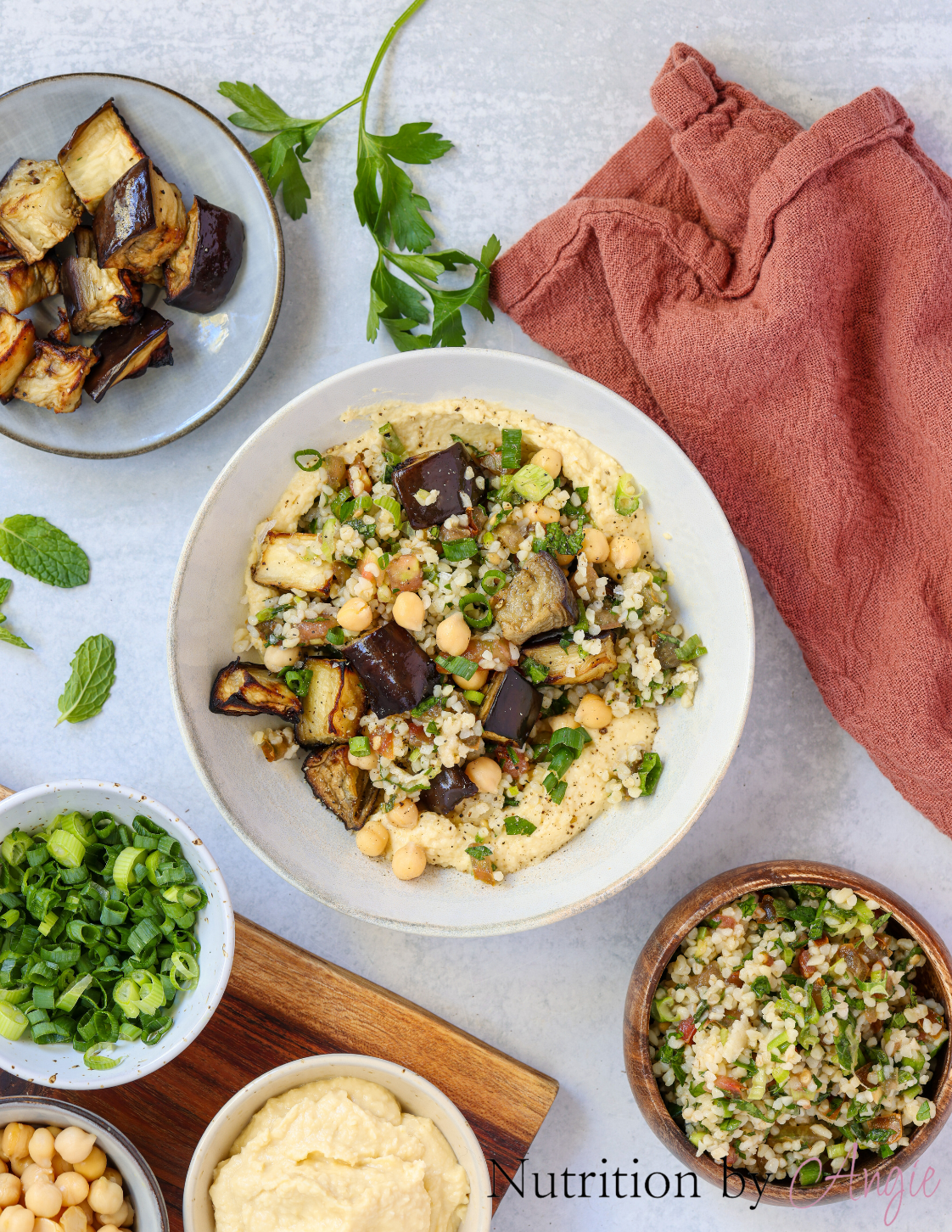
Loaded Hummus Breakfast Bowl
Gluten-Free • Vegan • Vegetarian • Plant-Based • Dairy-Free • High-Fibre • Whole-Food Focused
Introduction
This Loaded Hummus Breakfast Bowl is a savoury, nourishing plant-based breakfast made with creamy hummus, roasted eggplant, chickpeas and fresh gluten-free tabbouleh.
Hummus and chickpeas provide plant-based protein and fibre, while roasted eggplant adds a soft, satisfying texture and additional vegetables to the meal. A fresh tabbouleh-style salad brings herbs, vegetables and brightness to balance the creamy hummus.
Naturally vegan, vegetarian and dairy-free, this bowl can also be an excellent gluten-free vegan or gluten-free vegetarian breakfast when prepared with certified gluten-free hummus and gluten-free tabbouleh made without traditional bulgur wheat.
Benefits of All the Ingredients
Classic Hummus
Hummus provides the creamy foundation of this breakfast bowl.
Traditional hummus is primarily made from chickpeas and tahini, often combined with lemon juice, garlic and olive oil.
Chickpeas provide plant-based protein and dietary fibre, while tahini contributes predominantly unsaturated fats, additional protein and minerals such as copper, magnesium and phosphorus.
This combination makes hummus a useful ingredient for creating a more substantial plant-based breakfast.
Hummus is often naturally gluten-free, but commercial varieties can contain additional flavourings or experience cross-contact during production. Choose hummus specifically labelled gluten-free when preparing the bowl for someone with coeliac disease.
Roasted Eggplant
Roasted eggplant adds a soft texture and mild savoury flavour that pairs particularly well with hummus.
Eggplant provides dietary fibre, manganese and potassium, alongside various naturally occurring plant compounds.
The purple skin contains pigments known as anthocyanins, including nasunin.
Roasting concentrates the flavour and creates a tender texture without requiring complicated ingredients.
Eggplant is naturally gluten-free, vegan and well suited to whole-food-focused gluten-free meals.
Chickpeas
Adding whole chickpeas alongside the hummus provides extra texture while increasing the amount of legumes in the bowl.
Chickpeas provide plant-based protein, dietary fibre and complex carbohydrates.
They also contribute several important micronutrients, including folate, iron, magnesium, phosphorus, potassium and manganese.
Their combination of protein and fibre makes chickpeas particularly valuable in gluten-free vegan and vegetarian meals.
Plain chickpeas are naturally gluten-free. If using canned chickpeas, draining and rinsing them can remove some of the sodium from the canning liquid.
Gluten-Free Tabbouleh Salad
Tabbouleh provides freshness, herbs and contrasting texture to balance the creamy hummus and roasted eggplant.
Traditional tabbouleh is usually made with bulgur wheat and is therefore not gluten-free.
For this gluten-free breakfast bowl, use a tabbouleh made without bulgur. Quinoa is an excellent gluten-free substitute and also contributes plant-based protein, fibre, magnesium, phosphorus and manganese.
A typical tabbouleh-style salad also contains ingredients such as parsley, tomato, lemon and sometimes mint, which provide vitamin C, vitamin K, folate and a variety of naturally occurring plant compounds.
For someone with coeliac disease, use quinoa specifically labelled gluten-free and make sure the tabbouleh is prepared separately from traditional wheat-based tabbouleh to prevent cross-contact.