
Vegan Oatmeal Cookies
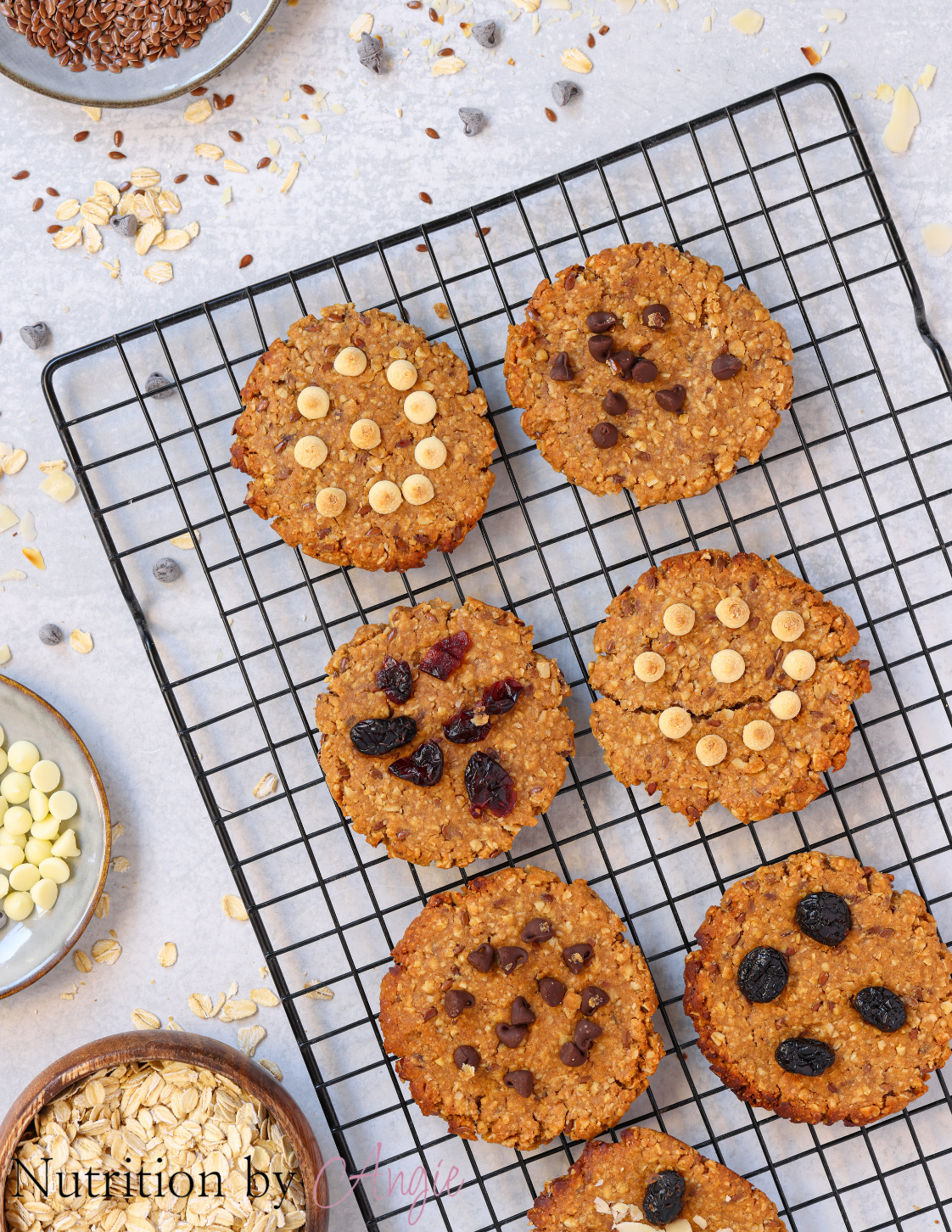
Vegan Oatmeal Cookies
Gluten-Free • Vegan • Vegetarian • Plant-Based • Dairy-Free • Egg-Free • High-Fibre • Whole-Food Focused
Introduction
These Vegan Oatmeal Cookies are a simple, nourishing homemade treat made with rolled oats, flaxseeds, peanut butter and maple syrup. With just five main ingredients, they offer a delicious combination of nutty flavours, natural sweetness and a satisfyingly chewy texture.
Rolled oats provide complex carbohydrates and dietary fibre, while peanut butter contributes plant-based protein and predominantly unsaturated fats. Flaxseeds add additional fibre and plant-based omega-3 fatty acids, making these cookies a more nutrient-dense alternative to many conventional biscuits made primarily with refined flour.
Naturally vegan, vegetarian, dairy-free and egg-free, these cookies can also be a delicious gluten-free vegan snack or gluten-free vegetarian treat when prepared with certified gluten-free oats and appropriately labelled ingredients.
Optional toppings such as dairy-free chocolate chips, almonds, raisins or seeds allow you to customise the cookies with additional flavours, textures and nutrients.
Benefits of All the Ingredients
Rolled Oats
Rolled oats form the foundation of these cookies, providing structure, texture and a naturally mild flavour.
Oats contain complex carbohydrates, plant-based protein and dietary fibre, including a soluble fibre called beta-glucan.
Beta-glucan is particularly well studied for its ability to help lower LDL cholesterol when consumed in sufficient amounts as part of a balanced diet.
Oats also provide several important nutrients, including:
Manganese: Supports normal metabolism and antioxidant enzyme function.
Magnesium: Contributes to normal muscle and nerve function.
Phosphorus: Supports healthy bones and energy metabolism.
Thiamine (Vitamin B1): Helps the body release energy from food.
Iron: Contributes to normal oxygen transport.
Although oats are naturally free from wheat, barley and rye gluten, conventional oats are frequently exposed to gluten-containing grains during growing and processing.
For a gluten-free oatmeal cookie recipe, always choose oats specifically labelled or certified gluten-free. Some people with coeliac disease may also react to oat avenin, even in uncontaminated oats.
Whole Flaxseeds
Flaxseeds contribute valuable nutrients and help create a more substantial cookie.
They are particularly rich in alpha-linolenic acid (ALA), an essential plant-based omega-3 fatty acid.
Flaxseeds also provide dietary fibre, plant-based protein, magnesium and naturally occurring compounds called lignans.
Whole flaxseeds can pass through the digestive system without being fully broken down, meaning some nutrients may be less accessible.
For better nutrient availability and improved binding, lightly grinding the flaxseeds before using them is beneficial. When combined with moisture, ground flaxseed develops a gel-like texture that can help hold egg-free baked goods together.
Flaxseeds are naturally gluten-free, although gluten-free-labelled products are preferable when cross-contact is a concern.
Peanut Butter
Peanut butter adds richness, a creamy texture and a delicious nutty flavour while helping bind the cookie ingredients together.
Peanuts provide plant-based protein and predominantly unsaturated fats, alongside several important micronutrients.
These include:
Vitamin E: Contributes to protecting cells from oxidative stress.
Magnesium: Supports normal muscle and nerve function.
Niacin (Vitamin B3): Supports normal energy metabolism.
Phosphorus: Contributes to healthy bones and teeth.
Copper: Supports normal iron transport and connective tissue maintenance.
For a more whole-food-focused recipe, choose natural peanut butter made from 100% peanuts, without unnecessary added sugar or hydrogenated oils.
Pure peanut butter is naturally gluten-free, but check the label when preparing cookies for someone with coeliac disease.
Maple Syrup
Maple syrup provides sweetness and helps bring the cookie dough together.
Pure maple syrup contains small amounts of minerals, including manganese and riboflavin, alongside naturally occurring plant compounds.
However, maple syrup is still primarily a source of added sugar, so its main purpose in this recipe is sweetness, flavour and texture.
Choosing pure maple syrup rather than artificially flavoured pancake syrup keeps the ingredient list simple.
Pure maple syrup is naturally gluten-free and vegan.
Baking Soda
Baking soda helps create a lighter cookie texture.
Also known as sodium bicarbonate, it reacts with acidic ingredients and heat to release carbon dioxide, which can contribute to the structure and spread of baked goods.
Baking soda does not provide meaningful nutritional benefits in the small quantity used, but it serves an important functional role.
Pure baking soda is naturally gluten-free.
Benefits of the Optional Toppings
Dairy-Free Chocolate Chips
Dairy-free chocolate chips add a rich chocolate flavour and a little extra sweetness.
Chocolate made with cocoa contains naturally occurring polyphenols, including flavanols, alongside minerals such as magnesium, copper and iron.
The nutritional composition varies depending on the cocoa percentage and added ingredients.
Choose chocolate chips specifically labelled vegan, dairy-free and gluten-free when preparing these cookies for strict dietary requirements.
Vegan White Chocolate
Vegan white chocolate adds a creamy, sweet flavour that contrasts with the nutty oats and peanut butter.
Unlike dark chocolate, white chocolate generally contains little or no non-fat cocoa solids, so it does not provide the same concentration of cocoa polyphenols.
Many vegan white chocolates contain cocoa butter, sugar and plant-based milk ingredients.
Because some varieties contain oat-based ingredients or other potential sources of gluten cross-contact, choose a product specifically labelled gluten-free.
Slivered Almonds
Slivered almonds add crunch and additional nutrients.
Almonds provide monounsaturated fats, plant-based protein, dietary fibre, vitamin E, magnesium and manganese.
Their delicate nutty flavour pairs particularly well with oats, peanut butter and chocolate.
Almonds are naturally gluten-free, but products processed alongside gluten-containing ingredients should be checked.
Raisins
Raisins provide natural sweetness and a soft, chewy texture.
They contain dietary fibre, potassium and small amounts of iron, alongside naturally occurring polyphenols.
Because raisins are dried grapes, their natural sugars are concentrated. A small amount can provide plenty of sweetness without requiring additional syrup.
Plain raisins are naturally gluten-free.
Nuts and Seeds of Choice
Additional nuts and seeds allow you to customise the cookies while increasing their nutritional variety.
Depending on the varieties chosen, they can contribute plant-based protein, dietary fibre, unsaturated fats and minerals such as magnesium, zinc, copper and phosphorus.
Some particularly nourishing choices include:
Pumpkin seeds: Provide magnesium, zinc, iron and plant-based protein.
Sunflower seeds: Rich in vitamin E, magnesium and copper.
Chia seeds: Provide fibre, plant-based omega-3 fatty acids and minerals.
Walnuts: Supply polyunsaturated fats, including ALA omega-3.
Chopped almonds: Contribute vitamin E, fibre and monounsaturated fats.
Choose plain, unsalted varieties where possible and check gluten-free labelling when cross-contact is a concern.