
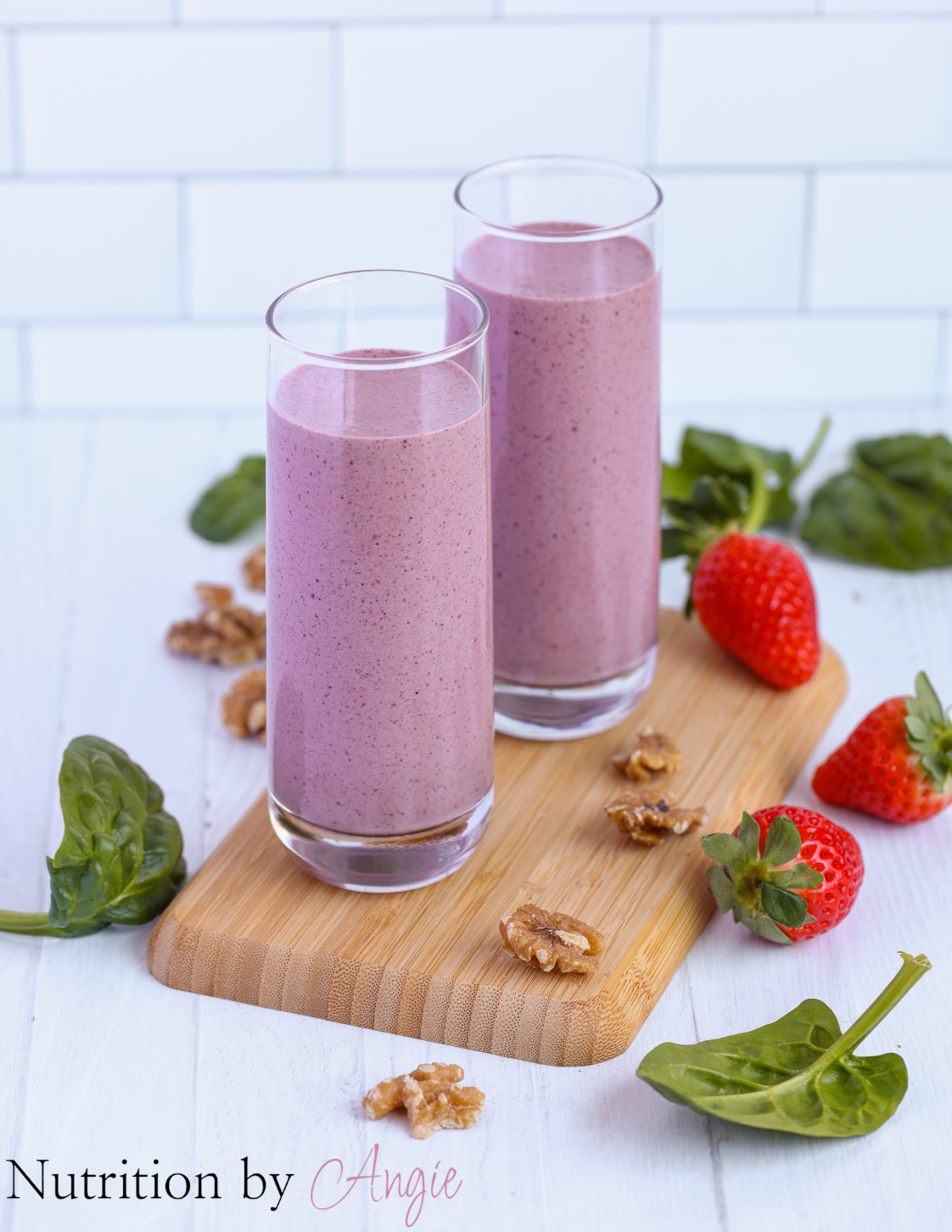
Very Berry Super Smoothie
Gluten-Free • Vegan • Vegetarian • Plant-Based • Dairy-Free • Egg-Free • High-Protein • Fibre-Rich • Omega-3 Rich • No-Cook • Whole-Food Focused
Use certified gluten-free, vegan protein powder and plain dairy-free yogurt. The exact protein, calcium and sugar content will depend on the products selected.
Introduction
This Very Berry Super Smoothie is a deliciously creamy, refreshing and nutrient-rich smoothie made with mixed berries, plant-based vanilla protein powder, ground flaxseed, walnuts, plain plant-based yogurt and baby spinach.
Combining colourful berries with leafy greens, plant-based protein and nutrient-dense seeds and nuts, this smoothie offers a convenient way to enjoy a variety of nutritious ingredients in one satisfying drink.
Mixed berries provide natural sweetness, vibrant colour and beneficial plant compounds, particularly anthocyanins, which are responsible for the deep red, blue and purple colours of many berries.
Ground flaxseed and walnuts contribute plant-based omega-3 fatty acids, particularly alpha-linolenic acid (ALA), alongside dietary fibre and unsaturated fats.
Baby spinach adds folate, vitamin K, carotenoids and important minerals, while its mild flavour blends easily with the berries and vanilla.
Plant-based vanilla protein powder increases the protein content, making this smoothie particularly useful as a convenient breakfast, post-exercise snack or protein-rich addition to a balanced diet.
Plain plant-based yogurt creates a smooth, creamy consistency and may provide additional protein, calcium and live bacterial cultures, depending on the variety used.
Unlike many commercially prepared smoothies that rely heavily on fruit juice, syrups or added sugar, this gluten-free vegan berry smoothie uses whole berries for flavour and sweetness.
The combination of protein, fibre and unsaturated fats can also make it more satisfying than a smoothie prepared from fruit juice alone.
Although this smoothie contains several nutritious ingredients, the nutritional composition depends on the protein powder and yogurt selected. Unsweetened soy yogurt generally provides more protein than many coconut-based or almond-based alternatives.
This Very Berry Super Smoothie is ideal for busy mornings, a refreshing afternoon snack or anyone looking to include more berries, leafy greens, seeds and nuts in their daily diet.
Benefits of All the Ingredients
Plant-Based Vanilla Protein Powder
Plant-based vanilla protein powder provides a substantial source of protein and contributes a smooth, sweet vanilla flavour.
Depending on the product, it may be made from pea protein, soy protein, brown rice protein, hemp protein or a combination of different plant proteins.
Protein is essential for normal growth, tissue repair and muscle maintenance.
A typical 30g serving of plant-based protein powder may provide approximately 18–25g of protein, although the exact amount varies between brands.
Plant-based protein powder may provide:
Protein: Supports normal muscle maintenance and tissue repair.
Essential Amino Acids: Required for normal protein synthesis.
Iron: Present in varying amounts depending on the protein source.
Magnesium: Found in some plant protein powders.
Other Vitamins and Minerals: Depending on the ingredients and fortification.
Why Protein Matters in Smoothies
A smoothie made primarily from fruit and vegetables may contain relatively little protein.
Adding protein powder increases the overall protein content and can make the smoothie more substantial.
Protein contributes to normal muscle maintenance and supports the body's ongoing tissue repair processes.
It can also contribute to satiety, although the effect depends on the overall composition of the meal.
Plant-Based Protein and Amino Acids
Different plant proteins contain different proportions of essential amino acids.
Soy protein is considered a complete protein because it contains all nine essential amino acids in useful proportions.
Pea protein provides a good amount of lysine but is relatively lower in methionine.
Brown rice protein is relatively lower in lysine.
Some protein powders combine different plant protein sources to create a more balanced amino acid profile.
A varied plant-based diet can provide all essential amino acids without needing to combine specific proteins at every meal.
Choosing a High-Quality Plant-Based Protein Powder
Choose a protein powder with a clear ingredient list and a suitable protein content.
Some products contain added sugar, artificial sweeteners, flavourings or thickeners.
For a whole-food-focused recipe, consider a protein powder with minimal unnecessary additives.
For people with coeliac disease, choose a product that is clearly labelled gluten-free.
Also check that the powder is suitable for vegans, as some vanilla protein powders contain whey, casein or other dairy-derived ingredients.
Mixed Berries
Mixed berries provide the vibrant colour, refreshing flavour and natural sweetness of this smoothie.
Depending on the mixture, they may include blueberries, strawberries, raspberries, blackberries or other berries.
Berries are particularly valued for their dietary fibre, vitamin C and naturally occurring polyphenols.
They provide:
Vitamin C: Supports normal immune function and collagen formation.
Dietary Fibre: Supports normal digestive function.
Manganese: Contributes to normal metabolism.
Anthocyanins: Naturally occurring plant pigments with antioxidant properties.
Other Polyphenols: Plant compounds studied for their potential roles in long-term health.
Potassium: Supports normal muscle function.
The exact nutrient composition depends on the berries used.
Berries and Antioxidants
Many berries contain anthocyanins, which are responsible for their red, blue and purple colours.
These compounds have been studied for their antioxidant properties and potential effects on cardiovascular and metabolic health.
However, antioxidant activity observed in laboratory studies does not mean that eating berries will prevent or treat disease.
Including a variety of berries contributes to a diverse intake of naturally occurring plant compounds.
Berries and Digestive Health
Berries contain dietary fibre, which supports normal bowel function.
Raspberries and blackberries are particularly rich in fibre compared with many other fruits.
Their seeds also contribute to the overall fibre content.
Fresh Versus Frozen Berries
Both fresh and frozen berries can provide valuable nutrients.
Frozen berries are often frozen shortly after harvesting, making them a convenient option throughout the year.
For this smoothie, frozen berries also help create a thicker, colder texture.
Food safety consideration: In Ireland, the Food Safety Authority of Ireland advises boiling imported frozen berries for one minute before consumption because of the risk of contamination with viruses such as hepatitis A. Allow them to cool before using them in a smoothie. Fresh berries should be washed thoroughly.
Ground Flaxseed
Ground flaxseed is one of the most nutrient-dense ingredients in this smoothie.
Flaxseeds are particularly rich in alpha-linolenic acid (ALA), an essential plant-based omega-3 fatty acid.
They also provide dietary fibre, plant-based protein and naturally occurring lignans.
Ground flaxseed contains:
Alpha-Linolenic Acid (ALA): An essential omega-3 fatty acid.
Dietary Fibre: Supports normal digestive function.
Plant-Based Protein: Supports normal muscle maintenance.
Magnesium: Supports normal muscle and nerve function.
Thiamin (Vitamin B1): Contributes to normal energy metabolism.
Manganese: Contributes to normal metabolism.
Phosphorus: Supports healthy bones and teeth.
Lignans: Naturally occurring plant compounds studied for their antioxidant properties.
Flaxseed and Omega-3 Fatty Acids
ALA is an essential fatty acid, meaning the body cannot produce it and must obtain it from food.
The body can convert some ALA into the longer-chain omega-3 fatty acids EPA and DHA, but this conversion is generally limited.
Ground flaxseed is therefore a useful source of plant-based omega-3 fats, although it is not nutritionally identical to direct sources of EPA and DHA.
Flaxseed and Digestive Health
Flaxseed contains both soluble and insoluble dietary fibre.
Soluble fibre absorbs water and can contribute to a feeling of fullness.
Insoluble fibre supports normal bowel function.
Flaxseed also contains mucilage, a gel-forming type of soluble fibre.
Why Ground Flaxseed Is Preferable
Whole flaxseeds can pass through the digestive system without being fully broken down.
Grinding flaxseed makes its nutrients more accessible for digestion and absorption.
For the best quality, store ground flaxseed in an airtight container in the refrigerator or freezer to help protect its unsaturated fats from oxidation.
Walnuts
Walnuts provide a rich, nutty flavour and valuable nutrients.
They are particularly well known for their content of polyunsaturated fats and plant-based omega-3 alpha-linolenic acid.
Walnuts provide:
Alpha-Linolenic Acid: An essential plant-based omega-3 fatty acid.
Polyunsaturated Fats: Provide essential fatty acids.
Plant-Based Protein: Supports normal muscle maintenance.
Dietary Fibre: Supports normal digestive function.
Copper: Supports normal iron transport.
Manganese: Contributes to normal metabolism.
Magnesium: Supports normal muscle and nerve function.
Phosphorus: Supports healthy bones and teeth.
Walnuts also contain naturally occurring polyphenols, including ellagitannins.
Walnuts and Heart Health
Walnuts contain predominantly unsaturated fats.
Replacing foods high in saturated fat with foods rich in unsaturated fats can help maintain healthy blood cholesterol levels.
Regular consumption of nuts as part of a balanced dietary pattern is associated with cardiovascular benefits.
However, walnuts are energy-dense, so moderate portions are appropriate.
Walnuts and Omega-3 Fatty Acids
Walnuts are one of the richer commonly eaten nut sources of ALA.
Combining walnuts with ground flaxseed increases the plant-based omega-3 content of this smoothie.
However, ALA should not be confused with EPA and DHA, which are found directly in certain marine foods and algae-based products.
Why Walnuts Work Well in Smoothies
Walnuts add a mild nutty flavour and contribute to a creamy texture when blended thoroughly.
They also provide fat and protein, which can make the smoothie more satisfying.
Allergen consideration: Walnuts are tree nuts and are unsuitable for anyone with a walnut allergy.
Plain Plant-Based Yogurt
Plain plant-based yogurt provides the creamy base that gives this smoothie its smooth consistency.
It can be made from soybeans, almonds, oats, coconut or other plant-based ingredients.
The nutritional composition varies considerably depending on the type of yogurt selected.
Soy Yogurt
Unsweetened soy yogurt generally provides more protein than many other plant-based yogurt alternatives.
Soy protein contains all nine essential amino acids.
Fortified soy yogurt may also provide calcium, vitamin D and vitamin B12.
Almond Yogurt
Almond-based yogurt has a mild, nutty flavour.
However, it generally contains less protein than soy yogurt unless specifically fortified or formulated.
Coconut Yogurt
Coconut-based yogurt can provide a rich, creamy texture.
However, many coconut yogurts contain substantial amounts of saturated fat and relatively little protein.
For a heart-conscious dietary pattern, unsweetened soy yogurt is often a more suitable choice.
Benefits of Fortified Plant-Based Yogurt
Depending on the brand, fortified plant-based yogurt may provide:
Calcium: Supports healthy bones and teeth.
Vitamin D: Supports normal calcium absorption.
Vitamin B12: Supports normal red blood cell formation and nervous system function.
Protein: Particularly when soy-based.
Live Bacterial Cultures: Present in some fermented varieties.
Plant-Based Yogurt and Gut Health
Some plant-based yogurts contain live bacterial cultures used during fermentation.
These cultures may include Lactobacillus and Streptococcus species.
However, not all products contain live cultures at the time of consumption, and not all cultures have demonstrated probiotic benefits.
For a yogurt containing live cultures, check the packaging.
Choosing a Nourishing Plant-Based Yogurt
Choose plain, unsweetened plant-based yogurt where possible.
Some flavoured varieties contain substantial amounts of added sugar.
For a more protein-rich smoothie, unsweetened soy yogurt is a practical option.
For people with coeliac disease, choose a yogurt that is clearly labelled gluten-free where appropriate.
Baby Spinach
Baby spinach adds a vibrant green colour and valuable nutrients without overpowering the berry flavour.
It is a mild-tasting leafy vegetable that blends easily into smoothies.
Spinach provides folate, vitamin K, beta-carotene, lutein and several minerals.
It contains:
Vitamin K: Supports normal blood clotting and bone maintenance.
Folate: Contributes to normal cell division.
Beta-Carotene: Can be converted into vitamin A.
Vitamin C: Supports normal immune function.
Iron: Contributes to normal oxygen transport.
Magnesium: Supports normal muscle and nerve function.
Potassium: Supports normal muscle function.
Lutein and Zeaxanthin: Carotenoids that accumulate in the retina.
Spinach and Eye Health
Spinach contains lutein and zeaxanthin.
These carotenoids are found in the macula of the eye and contribute to its normal function.
Including leafy green vegetables regularly provides these compounds as part of a balanced diet.
Spinach and Plant-Based Iron
Spinach contains non-haem iron.
However, it also contains oxalates, which can reduce the absorption of certain minerals.
Vitamin C can help improve the absorption of non-haem iron from plant foods.
The mixed berries in this smoothie contribute vitamin C, particularly when strawberries or raspberries are included.
Spinach and Oxalates
Spinach naturally contains oxalates.
For most healthy people, moderate amounts can be included in a balanced diet.
However, people with certain types of kidney stones or those advised to follow a low-oxalate diet may need to limit spinach intake.
Baby spinach is naturally gluten-free, vegan and dairy-free.
Why Very Berry Super Smoothie Makes a Nourishing Drink
Provides a Substantial Amount of Plant-Based Protein
The 30g serving of protein powder contributes meaningful protein, making this smoothie suitable as a protein-rich snack.
Contains Plant-Based Omega-3 Fatty Acids
Ground flaxseed and walnuts provide alpha-linolenic acid, an essential omega-3 fatty acid.
Provides Dietary Fibre
Berries, flaxseed, walnuts and spinach contribute fibre, supporting normal digestive function.
Rich in Naturally Occurring Plant Compounds
Mixed berries provide anthocyanins and other polyphenols.
Contains Heart-Friendly Unsaturated Fats
Walnuts and flaxseed provide predominantly unsaturated fats.
Provides Important Vitamins and Minerals
Spinach, berries, walnuts and flaxseed contribute folate, vitamin K, magnesium, manganese and other nutrients.
Can Provide Calcium and Vitamin B12
Fortified plant-based yogurt may contribute calcium, vitamin D and vitamin B12.
Naturally Dairy-Free and Egg-Free
The recipe can be prepared without dairy products or eggs.
Suitable for Gluten-Free Diets
Using suitable packaged ingredients makes the smoothie appropriate for gluten-free diets.
Delicious Serving Suggestions
With Extra Fresh Blueberries
Add fresh blueberries for additional fruit, fibre and natural sweetness.
With Chia Seeds
A teaspoon of chia seeds provides extra fibre and plant-based omega-3 fatty acids.
With Fresh Strawberries
Strawberries add a refreshing flavour and vitamin C.
With a Sprinkle of Cinnamon
A little cinnamon adds warmth and flavour without requiring additional sugar.
As a Smoothie Bowl
Use a thicker plant-based yogurt to create a spoonable consistency and top with fresh fruit.
With Gluten-Free Granola
Serve alongside a small portion of gluten-free granola for additional carbohydrates and crunch.
Tips for the Best Very Berry Super Smoothie
Choose a high-quality plant-based protein powder: Look for a product with a clear ingredient list and suitable protein content.
Check that the protein powder is gluten-free: This is particularly important for people with coeliac disease.
Use mixed berries: Combining different berries provides a variety of flavours and plant compounds.
Follow frozen berry safety guidance: Boil imported frozen berries for one minute before use, then cool.
Use ground flaxseed: Its nutrients are more accessible than those in whole flaxseeds.
Store ground flaxseed correctly: Keep refrigerated or frozen in an airtight container.
Choose plain walnuts: Avoid varieties coated in sugar or unnecessary oils.
Use unsweetened plant-based yogurt: This helps avoid unnecessary added sugar.
Consider soy yogurt: It generally provides more protein than coconut or almond yogurt.
Choose fortified yogurt where possible: It may provide calcium, vitamin D and vitamin B12.
Wash baby spinach thoroughly: Use fresh leaves that are free from spoilage.
Blend thoroughly: This helps create a smooth texture and distribute the flaxseed and walnuts evenly.
Adjust the consistency: Add a little water or unsweetened plant-based milk if the smoothie is too thick.
Drink freshly prepared: The smoothie generally has the best texture immediately after blending.
Refrigerate leftovers promptly: Store in a sealed container and consume within approximately 24 hours for best quality.
Consider walnut allergies: Use a suitable alternative if necessary.
Prevent gluten cross-contact: Use clean blenders, utensils and preparation surfaces when preparing the smoothie for someone with coeliac disease.
A Note on Protein, Omega-3 and Balanced Nutrition
This Very Berry Super Smoothie combines protein-rich ingredients, berries, leafy greens, nuts and seeds in a convenient drink.
The plant-based protein powder provides a substantial amount of protein, while walnuts and ground flaxseed contribute essential omega-3 alpha-linolenic acid.
Mixed berries provide dietary fibre and naturally occurring anthocyanins, while spinach contributes folate, vitamin K and carotenoids.
Plain plant-based yogurt adds creaminess, although its nutritional contribution depends on whether it is made from soy, almonds, oats or coconut.
For a more balanced protein and saturated fat profile, unsweetened fortified soy yogurt is often a particularly suitable choice.
The combination of protein, fibre and unsaturated fats makes this smoothie a satisfying option for breakfast or a snack.
Enjoyed as part of a varied, whole-food-focused diet, this gluten-free vegan Very Berry Super Smoothie provides a convenient way to include a range of nutritious plant foods in your daily routine.