
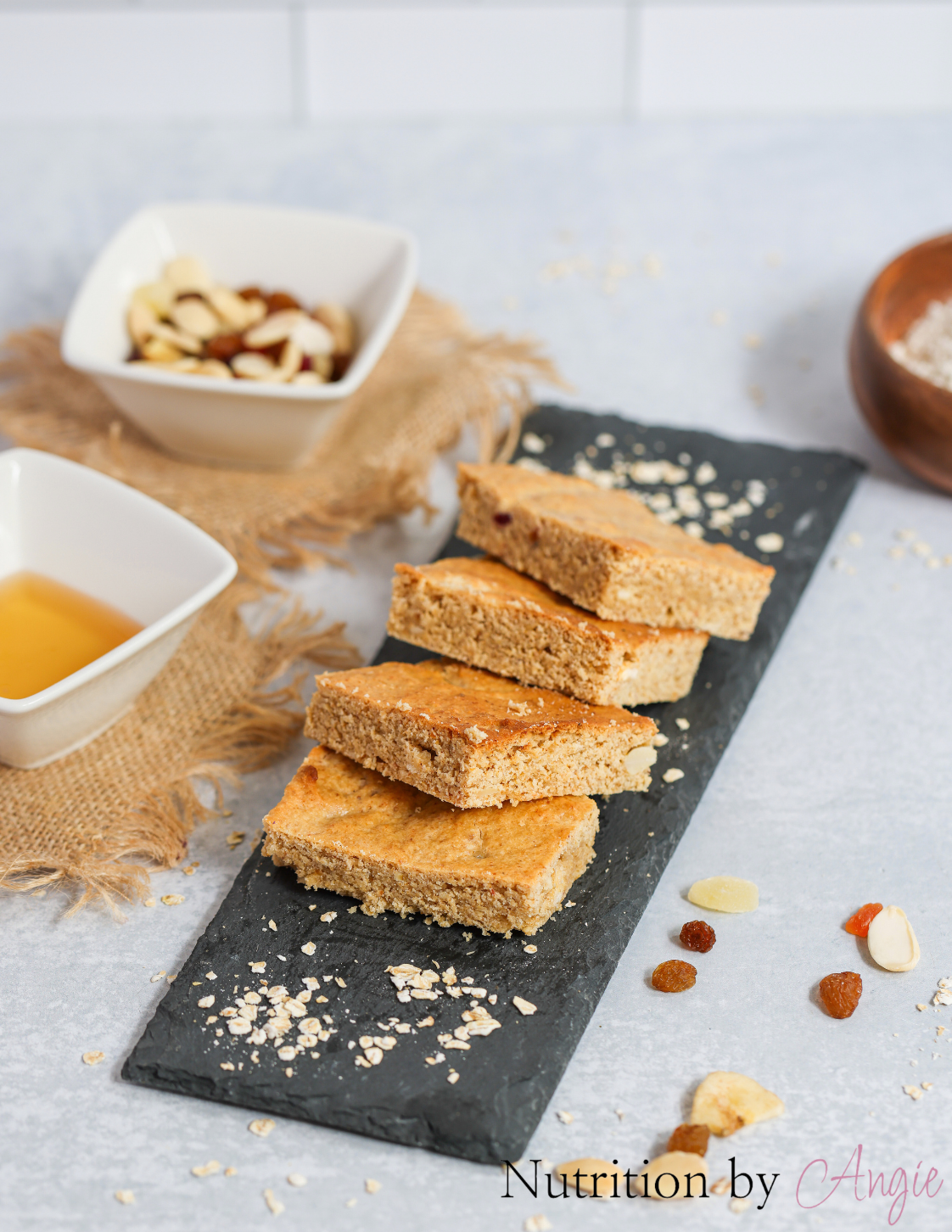
Homemade Fruit and Nut Flapjacks
Vegetarian • Egg-Free • Fibre-Containing • Whole-Grain Oats • Naturally Sweetened with Maple Syrup • Homemade Baking
For a gluten-free version, use certified gluten-free porridge oats and gluten-free self-raising flour. Conventional self-raising flour contains wheat and is not gluten-free. This recipe contains butter and may contain tree nuts or peanuts, depending on the dried fruit and nut mixture.
Introduction
These Homemade Fruit and Nut Flapjacks are deliciously chewy, buttery and naturally fruity oat bars made with just five simple ingredients: unsalted butter, mixed dried fruit and nuts, porridge oats, self-raising flour and maple syrup.
Combining the comforting flavour of traditional British and Irish flapjacks with the sweetness of dried fruit and the crunch of nuts, these homemade bars are perfect for an afternoon snack, a lunchbox treat or something sweet to enjoy with a cup of tea.
Porridge oats form the heart of this recipe, providing whole-grain carbohydrates, dietary fibre and important minerals, including manganese, magnesium and phosphorus.
One of the most valuable nutritional components of oats is beta-glucan, a type of soluble fibre associated with cholesterol-lowering benefits when consumed in sufficient amounts.
Mixed dried fruit adds natural sweetness, chewy texture and a variety of nutrients, while nuts contribute predominantly unsaturated fats, plant-based protein and minerals.
Maple syrup provides a distinctive caramel-like sweetness that complements the oats and dried fruit.
Butter creates the rich flavour and tender texture traditionally associated with homemade flapjacks, while self-raising flour helps bind the ingredients and gives the finished bars a slightly softer, more cake-like consistency.
These easy homemade fruit and nut flapjacks are convenient for preparing ahead of time and can be portioned into individual bars.
They are particularly useful for anyone who enjoys homemade baking and prefers to prepare snacks using familiar ingredients.
Although this recipe contains nutritious whole-food ingredients, it is important to recognise that butter and maple syrup contribute substantial amounts of saturated fat and added sugar.
Dried fruit also contains concentrated natural sugars, while nuts are energy-dense.
Therefore, these flapjacks are best enjoyed as a sweet snack or occasional treat rather than considered a low-sugar or low-calorie breakfast bar.
For anyone following a whole-food-focused dietary pattern, homemade flapjacks can still have a place alongside a varied diet rich in vegetables, fruit, legumes, whole grains, nuts and seeds.
Benefits of All the Ingredients
Unsalted Butter
Unsalted butter provides the rich, comforting flavour associated with traditional flapjacks.
It also helps bind the oats, flour, dried fruit and nuts together, creating a tender texture.
Butter is made from the fat component of milk and contains a mixture of saturated and unsaturated fatty acids.
It provides:
Fat: Supplies energy and contributes to texture.
Vitamin A: Supports normal vision and immune function.
Small Amounts of Vitamin E: Helps protect cells from oxidative stress.
Small Amounts of Vitamin K: Supports normal blood clotting.
Butter and Flapjack Texture
Butter contributes richness and tenderness to baked goods.
When combined with maple syrup, it helps coat the oats and other ingredients.
This creates the characteristic chewy texture associated with traditional flapjacks.
Butter and Saturated Fat
Butter contains a substantial proportion of saturated fat.
Consuming too much saturated fat can raise LDL cholesterol in many people.
Replacing saturated fats with unsaturated fats is an established dietary strategy for improving blood cholesterol levels.
The 100g of butter used in this recipe contributes a significant amount of saturated fat to the entire batch.
Although the butter is divided across several flapjacks, portion size remains important.
Can Butter Be Replaced?
For a lower-saturated-fat variation, a suitable unsaturated-fat-rich oil or soft baking spread may be used.
Rapeseed oil is particularly useful because it contains predominantly unsaturated fats and has a relatively mild flavour.
However, replacing butter may change the texture and binding properties of the flapjacks.
A tested substitution is preferable to changing the ingredients without adjusting the recipe.
Why Use Unsalted Butter?
Unsalted butter allows greater control over the salt content of baked goods.
It also provides a consistent flavour.
Allergen consideration: Butter contains milk and is unsuitable for people with a milk allergy or those following a dairy-free diet.
Mixed Dried Fruit and Nuts
Mixed dried fruit and nuts add sweetness, flavour, texture and valuable nutrients.
The exact nutritional composition depends on the ingredients used.
Common dried fruits include raisins, sultanas, cranberries, apricots, dates and figs.
Nut mixtures may contain almonds, walnuts, hazelnuts, cashews or other varieties.
Together, dried fruit and nuts contribute dietary fibre, plant-based protein, unsaturated fats and several vitamins and minerals.
Benefits of Dried Fruit
Dried fruit is made by removing much of the water from fresh fruit.
This concentrates its natural sugars, fibre and certain minerals.
Depending on the varieties used, dried fruit may provide:
Dietary Fibre: Supports normal digestive function.
Potassium: Supports normal muscle function.
Copper: Supports normal iron transport.
Iron: Present in varying amounts.
Polyphenols: Naturally occurring plant compounds.
Carbohydrates: Supply energy for everyday activities.
Dried Fruit and Digestive Health
Dried fruit contains dietary fibre that supports normal bowel function.
Some dried fruits, particularly prunes, also contain sorbitol, which can influence bowel movements.
However, eating large quantities of dried fruit may cause bloating or digestive discomfort in some people.
Dried Fruit and Natural Sugar
Dried fruit contains concentrated naturally occurring sugars.
Although these sugars are accompanied by fibre and other nutrients, dried fruit remains relatively high in carbohydrates and energy.
Some commercial dried fruit mixtures also contain added sugar.
For a whole-food-focused recipe, choose unsweetened dried fruit where possible.
Benefits of Nuts
Nuts provide predominantly unsaturated fats, plant-based protein and important minerals.
Depending on the varieties used, nuts may provide:
Monounsaturated Fats: Support a heart-conscious dietary pattern when replacing saturated fats.
Polyunsaturated Fats: Provide essential fatty acids.
Plant-Based Protein: Supports normal muscle maintenance.
Dietary Fibre: Supports normal digestive function.
Vitamin E: Particularly abundant in almonds and hazelnuts.
Magnesium: Supports normal muscle and nerve function.
Copper: Supports normal iron transport.
Phosphorus: Supports healthy bones and teeth.
Nuts and Heart Health
Regular consumption of nuts as part of a balanced dietary pattern is associated with cardiovascular benefits.
Nuts contain predominantly unsaturated fats, which can help improve the overall fatty acid profile of the diet when replacing saturated fats.
Walnuts also provide alpha-linolenic acid, an essential plant-based omega-3 fatty acid.
However, nuts are energy-dense, so moderate portions are appropriate.
Choosing the Best Fruit and Nut Mixture
For this recipe, choose a mixture containing unsweetened dried fruit and plain, unsalted nuts.
Avoid mixtures coated in sugar, chocolate or unnecessary oils if you want to keep the ingredients simple.
Allergen consideration: Mixed nuts may contain tree nuts or peanuts. Always check the ingredient list.
Porridge Oats
Porridge oats provide the whole-grain foundation of these flapjacks.
They are made from oat groats that have been steamed, rolled or otherwise processed into flakes.
Oats are particularly valued for their dietary fibre, beta-glucan, complex carbohydrates and important minerals.
They provide:
Complex Carbohydrates: Supply energy for everyday activities.
Dietary Fibre: Supports normal digestive function.
Beta-Glucan: A soluble fibre associated with cholesterol-lowering effects.
Plant-Based Protein: Supports normal muscle maintenance.
Magnesium: Supports normal muscle and nerve function.
Manganese: Contributes to normal metabolism.
Phosphorus: Supports healthy bones and teeth.
Iron: Contributes to normal oxygen transport.
Zinc: Supports normal immune function.
Thiamin (Vitamin B1): Supports normal energy metabolism.
Oats and Cholesterol
Oats contain beta-glucan, a type of soluble fibre.
A daily intake of approximately 3g of oat beta-glucan has been shown to help lower blood cholesterol.
The 100g of oats used in this recipe may provide approximately 3–5g of beta-glucan across the entire batch, depending on the oats.
However, this amount is divided between all the flapjacks.
Therefore, a single flapjack should not be expected to provide the full daily amount associated with cholesterol reduction.
Including oats regularly as part of a balanced diet can contribute to overall beta-glucan intake.
Oats and Digestive Health
Oats contain both soluble and insoluble dietary fibre.
Soluble fibre absorbs water and contributes to the texture of oat-based foods.
It can also be fermented by certain intestinal bacteria, producing short-chain fatty acids.
These compounds play important roles in normal intestinal function.
Insoluble fibre supports normal bowel movements.
Oats and Blood Glucose
Oats provide carbohydrates alongside fibre and protein.
Their beta-glucan content can influence the rate of digestion and absorption of carbohydrates.
However, the overall blood glucose response depends on the type of oats, portion size and other ingredients.
In this recipe, the maple syrup and dried fruit contribute substantial amounts of sugar.
Therefore, these flapjacks should not automatically be considered low-glycaemic simply because they contain oats.
Are Oats Gluten-Free?
Oats are naturally free from wheat, barley and rye gluten.
However, they are frequently contaminated with gluten-containing grains during growing, harvesting or processing.
For people with coeliac disease, certified gluten-free oats are essential.
Some people with coeliac disease also react to avenin, a protein naturally present in oats.
Anyone advised to avoid oats should not consume them, even when they are certified gluten-free.
Self-Raising Flour
Self-raising flour provides structure and helps bind the flapjack ingredients together.
It is generally made from flour combined with raising agents.
Conventional self-raising flour is made from wheat and contains gluten.
Why Self-Raising Flour Is Used
Flour helps hold the ingredients together and creates a slightly softer, more cake-like texture.
The raising agents may also contribute to a lighter consistency.
This makes the finished bars somewhat different from traditional flapjacks made primarily from oats, butter and syrup.
Refined Flour and Nutrition
Conventional white self-raising flour provides carbohydrates and some protein.
However, refining removes much of the bran and germ, reducing the amount of fibre and certain nutrients.
Whole-grain flour generally provides more fibre and minerals.
Choosing Gluten-Free Self-Raising Flour
For a gluten-free version, use a certified gluten-free self-raising flour blend.
These blends may contain rice flour, maize flour, potato starch, tapioca starch or other gluten-free ingredients.
Some also contain xanthan gum or another binder.
The nutritional composition varies between brands.
Is Gluten-Free Flour Healthier?
Gluten-free flour is essential for people with coeliac disease or other medically indicated gluten restrictions.
However, gluten-free flour is not automatically more nutritious than wheat flour.
Some gluten-free blends contain substantial amounts of refined starch and relatively little fibre.
For a more whole-grain-focused variation, consider a gluten-free flour blend containing sorghum, buckwheat or brown rice flour, provided it performs well in the recipe.
Maple Syrup
Maple syrup provides sweetness and helps bind the flapjack ingredients together.
It is made by collecting sap from maple trees and heating it to remove much of the water.
Maple syrup contains primarily sucrose, with smaller amounts of other sugars.
It also contains small quantities of minerals and naturally occurring plant compounds.
Maple Syrup and Minerals
Maple syrup contains:
Manganese: Contributes to normal metabolism.
Riboflavin (Vitamin B2): Supports normal energy metabolism.
Small Amounts of Zinc: Supports normal immune function.
Small Amounts of Potassium: Supports normal muscle function.
However, maple syrup should not be relied upon as a meaningful source of essential nutrients.
Its primary nutritional contribution is sugar and energy.
Is Maple Syrup Healthier Than White Sugar?
Maple syrup is often promoted as a natural alternative to refined sugar.
Although it contains small amounts of minerals and plant compounds, it remains an added sugar.
It provides substantial amounts of digestible carbohydrates and energy.
The fact that a sweetener is natural does not automatically make it healthier.
Maple Syrup and Blood Glucose
Maple syrup contains sugars that can raise blood glucose levels.
Its effect depends on the amount consumed and the overall composition of the meal.
The 100g of maple syrup used in this recipe contributes a substantial amount of added sugar across the batch.
Why Maple Syrup Works Well in Flapjacks
Maple syrup has a distinctive caramel-like flavour that complements oats, dried fruit and nuts.
Its liquid consistency also helps coat the ingredients and bind them together during baking.
For a less sweet variation, the amount may be reduced, although substantial changes can affect the texture and structure.
Why Homemade Fruit and Nut Flapjacks Can Be Enjoyed as Part of a Balanced Diet
Contain Whole-Grain Oats
Porridge oats provide carbohydrates, dietary fibre and important minerals.
Provide Soluble Fibre
Oats contain beta-glucan, which contributes to cholesterol-lowering benefits when consumed in sufficient amounts.
Contain Nutrient-Dense Nuts
Nuts provide unsaturated fats, plant-based protein and minerals.
Include Dried Fruit
Dried fruit contributes fibre, potassium and naturally occurring plant compounds.
Provide a Variety of Textures
Chewy oats, soft dried fruit and crunchy nuts create a satisfying combination.
Can Be Prepared at Home
Homemade baking allows you to control the ingredients and portion sizes.
Can Be Adapted for Gluten-Free Diets
Using certified gluten-free oats and gluten-free self-raising flour makes the recipe suitable for many people following a gluten-free diet.
Are Convenient for Meal Preparation
Flapjacks can be prepared in advance and portioned into individual bars.
Can Fit into a Balanced Dietary Pattern
These bars can be enjoyed as an occasional sweet snack alongside a varied diet.
Delicious Serving Suggestions
With Fresh Berries
Serve a flapjack alongside strawberries, blueberries or raspberries for additional fruit, fibre and vitamin C.
With Plain Greek Yogurt
Pair with unsweetened Greek yogurt for additional protein.
For a dairy-free alternative, choose unsweetened fortified soy yogurt.
With Fresh Apple Slices
Apple slices provide a refreshing contrast to the sweet, chewy flapjacks.
With a Cup of Tea
Enjoy a homemade flapjack alongside black tea, herbal tea or coffee.
With Unsweetened Plant-Based Yogurt
Serve with plain soy yogurt and fresh fruit for a more substantial snack.
With a Sprinkle of Cinnamon
Add a little cinnamon for extra warmth and flavour without additional sugar.
Tips for the Best Homemade Fruit and Nut Flapjacks
Choose good-quality oats: Porridge oats provide the traditional chewy texture.
Use certified gluten-free oats when required: This is essential for people with coeliac disease who tolerate oats.
Choose suitable gluten-free flour: Conventional self-raising flour contains wheat.
Use unsalted butter: It provides a consistent flavour.
Measure the butter accurately: Too much can make the flapjacks greasy.
Choose unsweetened dried fruit: Avoid mixtures with unnecessary added sugar.
Use plain, unsalted nuts: This helps keep the ingredients simple.
Chop large dried fruit pieces: This distributes them more evenly.
Chop nuts to your preferred texture: Smaller pieces create a more uniform bar.
Use pure maple syrup: Avoid maple-flavoured syrups containing additional ingredients.
Mix thoroughly: Ensure the oats and flour are evenly coated.
Press the mixture firmly into the tin: This helps the flapjacks hold together.
Line the baking tin: Baking parchment makes removal easier.
Avoid overbaking: Flapjacks can become hard and dry if baked for too long.
Allow to cool before slicing: Cooling helps the bars firm up.
Use a sharp knife: This creates cleaner portions.
Store in an airtight container: Keep refrigerated and enjoy within approximately 4–5 days for best quality.
Freeze individual portions: Wrap well and freeze for up to approximately 2–3 months for best quality.
Prevent gluten cross-contact: Use clean utensils, baking tins and preparation surfaces.
Clearly identify allergens: The recipe contains milk and may contain tree nuts or peanuts.
A Note on Oats, Added Sugar and Heart Health
These Homemade Fruit and Nut Flapjacks combine whole-grain oats, dried fruit and nuts with traditional baking ingredients to create a sweet, chewy snack.
Oats provide beta-glucan, a type of soluble fibre associated with cholesterol-lowering benefits when consumed in sufficient amounts.
Nuts contribute predominantly unsaturated fats, while dried fruit provides fibre, potassium and natural sweetness.
However, the recipe also contains 100g of butter and 100g of maple syrup, making it relatively high in saturated fat and added sugar.
Although maple syrup is a natural sweetener, it still contributes substantial amounts of sugar and should not be considered nutritionally equivalent to whole fruit.
Butter provides saturated fat, which can raise LDL cholesterol when consumed in excess.
For a more cholesterol-conscious variation, consider replacing some or all of the butter with a suitable unsaturated-fat-rich baking ingredient and reducing the maple syrup where the recipe's texture allows.
Using a whole-grain gluten-free flour blend may also increase the fibre content.
The most important consideration is the overall dietary pattern rather than a single homemade snack.
A balanced diet that regularly includes vegetables, fruit, legumes, whole grains, nuts, seeds and predominantly unsaturated fats can support long-term cardiovascular health.
Enjoyed in moderate portions, these Homemade Fruit and Nut Flapjacks are a comforting and convenient treat that combines traditional baking flavours with nutritious ingredients such as oats, dried fruit and nuts.