
Blueberry Oat Breakfast Bars
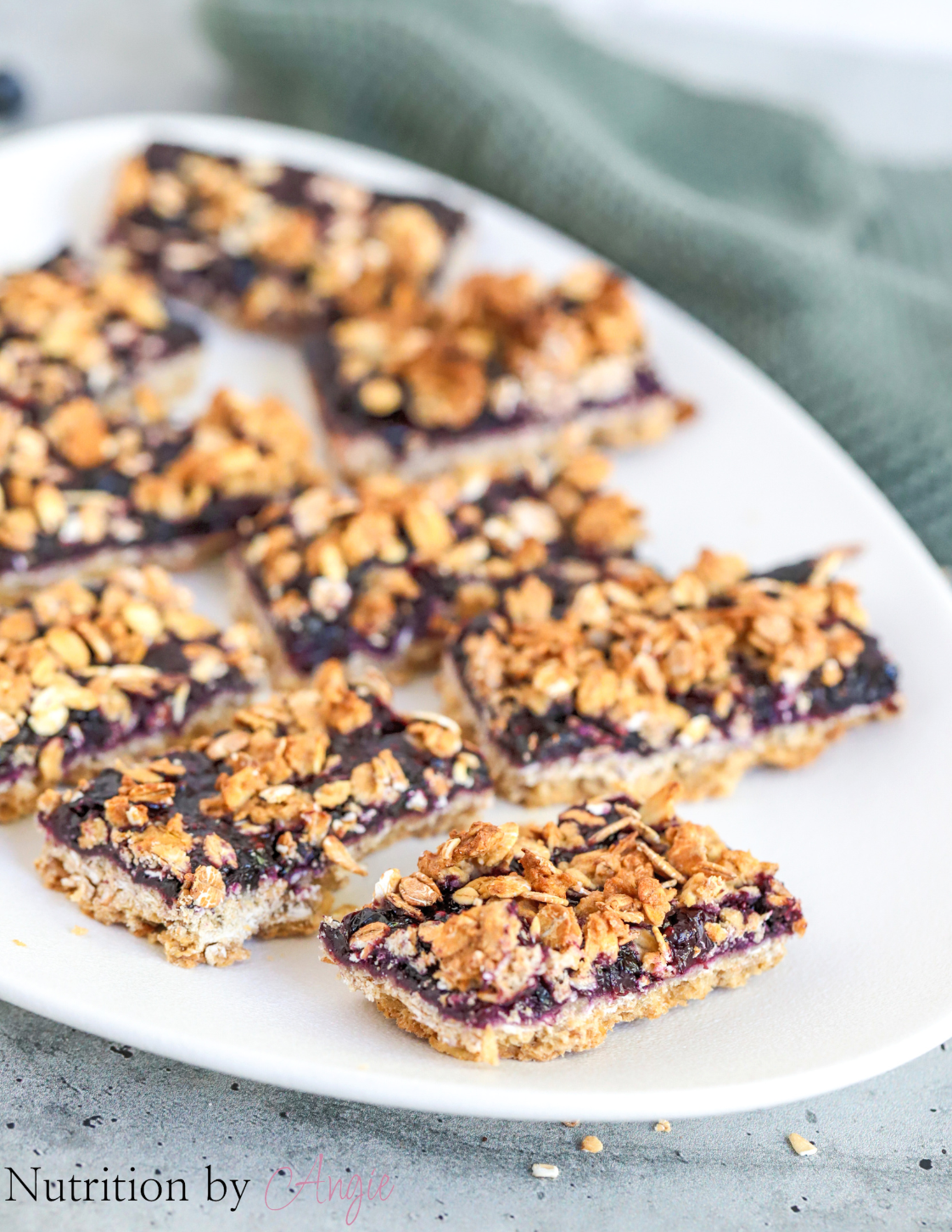
Blueberry Oat Breakfast Bars
Gluten-Free • Vegan • Vegetarian • Plant-Based • Dairy-Free • Egg-Free • High-Fibre • Whole-Grain • Whole-Food Focused
Introduction
These Blueberry Oat Breakfast Bars are a delicious combination of a golden oat base and a naturally thickened blueberry chia jam filling. Made with wholesome oats, juicy blueberries, chia seeds, maple syrup and a touch of lemon, they offer a wonderful balance of fruity sweetness, satisfying texture and nourishing ingredients.
The base combines oat flour and certified gluten-free rolled oats to create a slightly crumbly, tender texture. Maple syrup adds sweetness, while melted coconut oil helps bind the ingredients together. A hint of vanilla and sea salt enhances the flavour of the oats.
The homemade blueberry filling is prepared with fresh or frozen blueberries, chia seeds, lemon juice, lemon zest and maple syrup. As the blueberries soften, they release their natural juices, while the chia seeds absorb moisture and create a thick, jam-like consistency without the need for commercial pectin.
Oats provide complex carbohydrates, dietary fibre, plant-based protein and important minerals, including magnesium, manganese and phosphorus. They are also a source of beta-glucan, a soluble fibre associated with maintaining healthy cholesterol levels.
Blueberries contribute vitamin C, manganese and naturally occurring anthocyanins, while chia seeds provide additional fibre and plant-based omega-3 fatty acids.
These gluten-free vegan blueberry oat bars are ideal for breakfast, lunchboxes, afternoon snacks or a homemade treat alongside a cup of tea.
Although they contain nutritious whole-food ingredients, the maple syrup contributes added sugar and the coconut oil contributes saturated fat. They are best enjoyed as part of a varied, balanced diet.
Benefits of the Base Ingredients
Oat Flour
Oat flour provides the soft, slightly tender structure of these breakfast bars.
Made from finely ground oats, it retains many of the nutritional properties of whole-grain oats.
Oat flour provides:
Complex Carbohydrates: Supply energy for everyday activities.
Dietary Fibre: Supports normal digestive function.
Beta-Glucan: A soluble fibre associated with lowering blood cholesterol when consumed in sufficient amounts.
Plant-Based Protein: Contributes to normal muscle maintenance.
Magnesium: Supports normal muscle and nerve function.
Manganese: Contributes to normal metabolism.
Phosphorus: Supports healthy bones and teeth.
Thiamine (Vitamin B1): Contributes to normal energy metabolism.
Iron: Supports normal oxygen transport.
Unlike many refined gluten-free flours, whole-grain oat flour contains naturally occurring fibre and a range of minerals.
Its mild flavour works particularly well with fruit fillings.
Gluten-free consideration: Although the rolled oats in this recipe are specified as certified gluten-free, the oat flour must also be certified gluten-free. Conventional oat flour may contain gluten through cross-contact with wheat, barley or rye.
You can also prepare homemade oat flour by blending certified gluten-free rolled oats into a fine powder.
Certified Gluten-Free Rolled Oats
Rolled oats add texture, structure and a pleasant chewiness to the bars.
They are a whole grain and provide complex carbohydrates, dietary fibre and plant-based protein.
Oats are particularly well known for containing beta-glucan, a type of soluble fibre.
Regular consumption of approximately 3g of oat beta-glucan daily has been shown to help lower blood cholesterol as part of a balanced diet.
The oat flour and rolled oats in this recipe contribute towards that amount, although the beta-glucan content per bar depends on the number of servings.
Rolled oats also provide magnesium, phosphorus, manganese, iron and zinc.
Why Certified Gluten-Free Oats Matter
Oats do not naturally contain wheat gluten, but conventional oats can become contaminated with wheat, barley or rye during growing, harvesting or processing.
For people with coeliac disease, certified gluten-free oats are essential.
However, a small proportion of people with coeliac disease may react to avenin, a protein naturally found in oats, even when the oats are certified gluten-free.
Anyone who experiences symptoms after eating gluten-free oats should discuss this with their healthcare professional.
Maple Syrup
Maple syrup adds sweetness and helps bind the oat base together.
Pure maple syrup is produced by concentrating the sap of maple trees.
It contains small amounts of manganese and naturally occurring phenolic compounds.
However, maple syrup is still an added sugar, despite coming from a natural source.
This recipe uses maple syrup in both the base and the blueberry filling, so it contributes meaningfully to the overall sugar content.
Choose 100% pure maple syrup rather than maple-flavoured pancake syrup.
Pure maple syrup is naturally gluten-free and vegan.
Coconut Oil
Melted coconut oil helps bind the oat flour and rolled oats together, contributing to the bars' tender, crumbly texture.
Coconut oil is extracted from coconut flesh and contains predominantly saturated fatty acids.
It is particularly rich in lauric acid, alongside smaller amounts of other saturated fatty acids.
Although coconut oil is plant-based, it contains considerably more saturated fat than oils such as olive or rapeseed oil.
Replacing saturated fats with unsaturated fats is generally recommended for maintaining healthy blood cholesterol levels.
The coconut oil in this recipe contributes texture and richness rather than significant amounts of vitamins or minerals.
Because the recipe uses 80ml, the saturated fat contribution is worth considering, particularly for people monitoring their LDL cholesterol.
Coconut oil is naturally gluten-free, vegan and dairy-free.
Sea Salt
A small amount of sea salt enhances the natural sweetness of the oats and blueberries.
It helps balance the flavours and prevents the bars from tasting overly sweet.
Sea salt consists primarily of sodium chloride.
Although it may contain trace minerals, these amounts are generally too small to provide meaningful nutritional benefits.
Using a small amount is sufficient to enhance the flavour without contributing excessive sodium.
Vanilla Extract
Vanilla extract adds a delicate sweetness and aromatic flavour to the oat base.
Its characteristic aroma comes primarily from vanillin, a naturally occurring compound found in vanilla beans.
Vanilla complements the maple syrup and blueberries without requiring additional sugar.
The small amount used contributes flavour rather than significant nutritional benefits.
Choose pure vanilla extract and check the label for gluten-containing additives when preparing the bars for someone with coeliac disease.
Benefits of the Blueberry Chia Jam Filling
Blueberries
Blueberries provide the vibrant colour, fruity sweetness and nutritional foundation of the jam filling.
They are particularly well known for containing anthocyanins, naturally occurring plant pigments responsible for their deep-blue and purple colour.
Blueberries provide several important nutrients:
Vitamin C: Supports normal immune function and collagen formation.
Vitamin K: Contributes to normal blood clotting and bone maintenance.
Manganese: Supports normal metabolism.
Dietary Fibre: Contributes to normal digestive function.
Potassium: Supports normal muscle function.
Blueberries also contain naturally occurring polyphenols, including anthocyanins, flavonols and phenolic acids.
These compounds have been studied for their antioxidant properties.
Fresh or Frozen Blueberries?
Both fresh and frozen blueberries work beautifully in this recipe.
Fresh blueberries provide a lovely fruity flavour, while frozen blueberries soften readily when heated and release their juices.
Frozen blueberries can retain much of their nutritional value and are often more affordable outside the growing season.
Blueberries are naturally gluten-free, vegan and dairy-free.
Maple Syrup in the Jam
Maple syrup balances the natural tartness of the blueberries and lemon juice.
The three tablespoons used in the filling provide sweetness across the entire batch.
However, maple syrup remains an added sugar.
If the blueberries are particularly sweet, the amount can be reduced according to taste.
Using ripe, naturally sweet fruit can help reduce the need for additional sweeteners.
Fresh Lemon Juice
Lemon juice adds brightness and acidity to the blueberry filling.
It helps balance the sweetness of the maple syrup and enhances the natural fruit flavour.
Lemon juice provides vitamin C, which contributes to:
Normal immune function.
Collagen formation.
Protection of cells from oxidative stress.
Improved absorption of non-haem iron from plant foods.
The amount of vitamin C remaining in the finished bars will depend partly on the cooking process, as vitamin C is sensitive to heat.
Fresh lemon juice is naturally gluten-free, vegan and dairy-free.
Chia Seeds
Chia seeds naturally thicken the blueberry filling without the need for commercial pectin or gelatine.
When mixed with liquid, they absorb moisture and develop a gel-like coating.
Chia seeds are particularly rich in dietary fibre, plant-based omega-3 fatty acids and important minerals.
They provide:
Omega-3 Fatty Acids (ALA): Contribute essential plant-based fats.
Dietary Fibre: Supports normal digestive function.
Plant-Based Protein: Contributes to normal muscle maintenance.
Calcium: Supports healthy bones and teeth.
Magnesium: Contributes to normal muscle and nerve function.
Phosphorus: Supports healthy bones and teeth.
Manganese: Contributes to normal metabolism.
Chia seeds also contain naturally occurring phenolic compounds.
Their natural thickening ability makes them particularly useful in homemade fruit fillings, jams and gluten-free baking.
Chia seeds are naturally gluten-free, vegan and grain-free.
Fresh Lemon Zest
Lemon zest adds a bright, fragrant citrus aroma that complements the blueberries.
The outer yellow layer of lemon peel contains naturally occurring essential oils, including limonene, which contributes to its distinctive citrus fragrance.
Lemon zest also contains small amounts of flavonoids and other plant compounds.
Because this recipe uses only half a teaspoon, its primary contribution is flavour rather than substantial nutritional value.
Wash the lemon thoroughly before zesting and avoid the white pith underneath the peel, which can taste bitter.
Fresh lemon zest is naturally gluten-free and vegan.
Why These Blueberry Oat Breakfast Bars Make a Nourishing Choice
Made with Whole-Grain Oats
Oat flour and rolled oats provide whole-grain carbohydrates, fibre and important minerals.
Contains Cholesterol-Friendly Soluble Fibre
Oats contain beta-glucan, which can help lower cholesterol when consumed regularly in sufficient amounts.
Provides Plant-Based Omega-3 Fatty Acids
Chia seeds contribute alpha-linolenic acid (ALA), an essential omega-3 fatty acid.
Made with Real Blueberries
The filling contains real fruit, providing fibre and naturally occurring anthocyanins.
Egg-Free and Dairy-Free
The recipe contains no eggs or dairy ingredients, making it suitable for vegan and dairy-free diets.
Naturally Thickened Fruit Filling
Chia seeds create a jam-like consistency without commercial gelling agents.
Convenient for Meal Preparation
The bars can be prepared in advance, portioned and stored for breakfasts or snacks.
Delicious Serving Suggestions
Natural or Plant-Based Yogurt
Serve a blueberry oat bar alongside unsweetened yogurt.
Greek-style yogurt provides additional protein, while fortified plant-based alternatives may contribute calcium and vitamin B12.
Fresh Berries
Add a handful of blueberries, raspberries or strawberries for extra fruit, fibre and vitamin C.
Almond Butter
A small spoonful of natural almond butter provides additional vitamin E, magnesium and predominantly unsaturated fats.
A Glass of Milk
Pair with dairy milk or fortified unsweetened soy milk for additional protein and calcium.
Warm with a Spoonful of Yogurt
Gently warm a bar and serve with yogurt for a comforting breakfast or dessert.
Tips for the Best Blueberry Oat Breakfast Bars
Use certified gluten-free oat flour: The oat flour must be gluten-free as well as the rolled oats.
Make homemade oat flour if needed: Blend certified gluten-free rolled oats until finely ground.
Use fresh or frozen blueberries: Both work well, although frozen berries may release more liquid.
Allow the chia filling to thicken: The chia seeds need time to absorb the blueberry juices.
Avoid an overly wet filling: If necessary, cook the blueberries briefly to reduce excess moisture before adding the chia seeds.
Press the oat base firmly: This helps the bars hold together after baking.
Allow the bars to cool completely: Cutting them while warm may cause them to crumble.
Chill before slicing: Refrigerating the cooled bars can help create cleaner slices.
Adjust the sweetness: Reduce the maple syrup if the blueberries are naturally sweet.
Consider the saturated fat content: Coconut oil contributes substantial saturated fat, so portion size is worth considering.
Store correctly: Keep the bars refrigerated in an airtight container for approximately 3–4 days.
Freeze individual portions: Wrap the bars separately and freeze for longer storage.
Prevent gluten cross-contact: Use clean utensils, baking trays and preparation surfaces when preparing these bars for someone with coeliac disease.