
Chocolate Banana Porridge
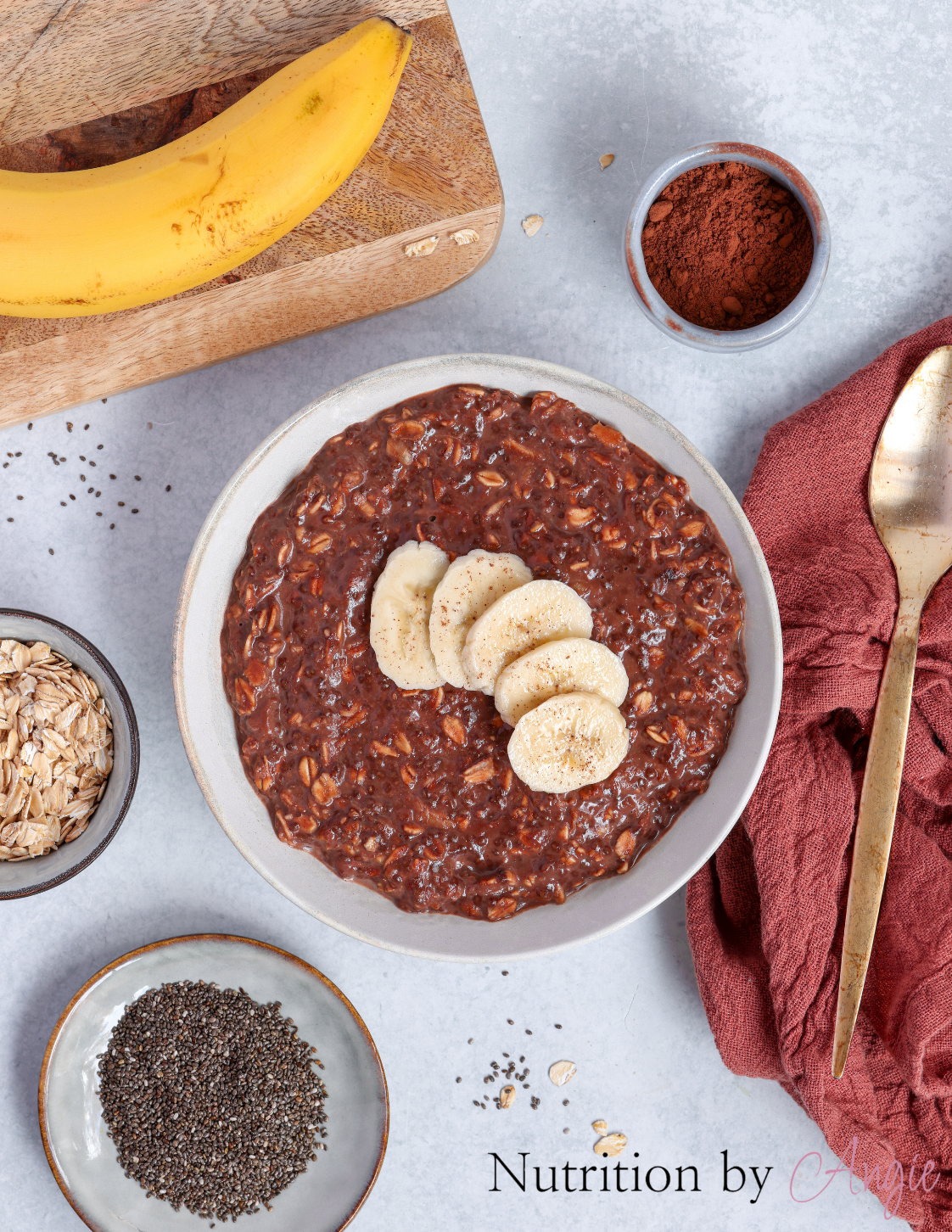
Chocolate Banana Porridge
Gluten-Free • Vegan (with Plant-Based Milk) • Vegetarian • Dairy-Free (with Plant-Based Milk) • Egg-Free • High-Fibre • Whole-Grain • Whole-Food Focused
Introduction
This Chocolate Banana Porridge is a deliciously creamy, comforting and nourishing breakfast that combines the rich flavour of chocolate with the natural sweetness of ripe banana. Made with certified gluten-free oats, milk, cocoa powder, chia seeds, cinnamon and a little stevia, it is a wonderful way to enjoy a chocolate-inspired breakfast while providing valuable nutrients.
Unlike many commercially prepared chocolate breakfast cereals, this homemade porridge is made with whole-grain oats, real cocoa and naturally sweet banana, allowing you to control the ingredients and sweetness.
Certified gluten-free oats provide complex carbohydrates, dietary fibre and important minerals, including magnesium, manganese and phosphorus. They are particularly well known for containing beta-glucan, a type of soluble fibre associated with maintaining healthy cholesterol levels.
Chia seeds contribute additional fibre, plant-based omega-3 fatty acids and minerals, while cocoa powder provides naturally occurring flavanols and a rich chocolate flavour.
Banana adds natural sweetness and a creamy texture, reducing the need for additional sweeteners. A touch of cinnamon brings warmth and complements the chocolate beautifully.
This gluten-free chocolate porridge can easily be made vegan and dairy-free by using unsweetened plant-based milk, such as almond, soy or certified gluten-free oat milk.
Perfect for busy mornings, colder days or whenever you are craving a comforting chocolate breakfast, this porridge offers a satisfying combination of fibre, whole grains and nourishing plant-based ingredients.
Benefits of All the Ingredients
Certified Gluten-Free Oats
Oats form the nutritious foundation of this chocolate banana porridge.
They are a whole grain that provides complex carbohydrates, dietary fibre, plant-based protein and important vitamins and minerals.
Oats are particularly rich in beta-glucan, a type of soluble fibre that has been extensively studied for its effects on cholesterol levels.
Their nutrients include:
Beta-Glucan Fibre: Helps lower or maintain normal blood cholesterol levels when consumed in sufficient amounts.
Complex Carbohydrates: Provide energy for everyday activities.
Plant-Based Protein: Contributes to normal muscle maintenance and tissue repair.
Manganese: Supports normal metabolism.
Magnesium: Contributes to normal muscle and nerve function.
Phosphorus: Supports healthy bones and teeth.
Thiamine (Vitamin B1): Contributes to normal energy metabolism.
Iron: Supports normal oxygen transport.
Zinc: Contributes to normal immune function.
Oats and Cholesterol
Oat beta-glucan has a recognised cholesterol-lowering effect when approximately 3g of oat beta-glucan is consumed daily as part of a balanced diet.
A 100g portion of dry oats typically provides several grams of beta-glucan, although the exact amount varies by product.
The soluble fibre forms a viscous gel in the digestive tract, which helps reduce cholesterol absorption and promotes the excretion of bile acids.
This makes oats a valuable component of a heart-conscious dietary pattern.
Why Certified Gluten-Free Oats Matter
Oats do not naturally contain wheat gluten, but conventional oats are frequently contaminated with wheat, barley or rye during growing, harvesting, transportation or processing.
For someone with coeliac disease, certified gluten-free oats are essential.
However, a small proportion of people with coeliac disease may react to avenin, a protein naturally found in oats, even when the oats are certified gluten-free.
Anyone with coeliac disease who experiences symptoms after eating gluten-free oats should discuss this with their healthcare professional.
Milk or Plant-Based Milk
Milk provides the liquid base that transforms oats into a creamy, comforting porridge.
The nutritional benefits depend on the type of milk chosen.
Dairy Milk
Dairy milk provides several important nutrients, including:
Complete Protein: Contains all nine essential amino acids.
Calcium: Supports healthy bones and teeth.
Vitamin B12: Contributes to normal nervous system function.
Riboflavin (Vitamin B2): Supports normal energy metabolism.
Phosphorus: Contributes to healthy bones and teeth.
Dairy milk also contains lactose, a naturally occurring milk sugar.
Unsweetened Soy Milk
Soy milk is an excellent plant-based alternative because it generally provides more protein than most almond, rice or oat drinks.
Fortified soy milk may also provide calcium, vitamin D and vitamin B12.
Soy protein contains all nine essential amino acids, making it a useful choice for vegan diets.
Unsweetened Almond Milk
Almond milk provides a mild, nutty flavour that complements chocolate and banana.
It is generally lower in protein than dairy or soy milk.
Fortified varieties may provide calcium, vitamin D and vitamin B12.
Gluten-Free Oat Milk
Oat milk provides a naturally creamy texture and a mild sweetness.
However, not all oat milk is gluten-free.
For people with coeliac disease, choose certified gluten-free oat milk.
For a vegan and dairy-free chocolate banana porridge, use an unsweetened plant-based milk that suits your nutritional needs.
Cocoa Powder
Cocoa powder gives this porridge its rich chocolate flavour without requiring chocolate bars or sweetened chocolate spreads.
Unsweetened cocoa powder is made from cocoa beans and contains naturally occurring polyphenols, particularly flavanols.
Cocoa also provides several important minerals:
Magnesium: Supports normal muscle and nerve function.
Iron: Contributes to normal oxygen transport.
Copper: Supports normal iron transport.
Manganese: Contributes to normal metabolism.
Phosphorus: Supports healthy bones and teeth.
Dietary Fibre: Contributes to digestive health.
Cocoa flavanols have been studied for their potential effects on vascular function, although the amount present varies considerably between cocoa products.
The processing method can influence the flavanol content, particularly when cocoa is alkalised.
For a whole-food-focused recipe, choose 100% unsweetened cocoa powder without added sugar.
Pure cocoa powder is naturally gluten-free, but flavoured cocoa mixes and drinking chocolate powders may contain additional ingredients.
Stevia Powder
Stevia provides sweetness without contributing significant sugar or calories when used in a purified, high-intensity sweetener form.
Stevia sweeteners are derived from compounds called steviol glycosides, found in the leaves of the Stevia rebaudianaplant.
Steviol glycosides are much sweeter than ordinary sugar, so only small amounts are needed.
Unlike sugar, purified stevia sweeteners do not significantly raise blood glucose levels.
However, the sweetness and concentration of stevia products vary considerably.
Some stevia powders contain additional ingredients, such as erythritol, maltodextrin or other bulking agents.
One teaspoon of concentrated pure stevia extract may be far too sweet, so always follow the manufacturer's recommended conversion and adjust according to taste.
Stevia contributes sweetness rather than meaningful amounts of vitamins or minerals.
For a more whole-food-focused approach, you can also reduce or omit the stevia and rely on the natural sweetness of the banana.
Chia Seeds
Chia seeds add extra fibre, healthy fats and a thicker consistency to the porridge.
They are particularly rich in alpha-linolenic acid (ALA), an essential plant-based omega-3 fatty acid.
Chia seeds provide:
Omega-3 Fatty Acids (ALA): Contribute essential polyunsaturated fats.
Dietary Fibre: Supports normal digestive function.
Plant-Based Protein: Contributes to normal muscle maintenance.
Calcium: Supports healthy bones and teeth.
Magnesium: Contributes to normal muscle and nerve function.
Phosphorus: Supports healthy bones and teeth.
Manganese: Contributes to normal metabolism.
Iron: Supports normal oxygen transport.
Chia seeds absorb liquid and form a gel-like coating, helping create a thicker, creamier porridge.
They also contain naturally occurring phenolic compounds.
The combination of oats and chia seeds makes this breakfast particularly rich in dietary fibre.
Chia seeds are naturally gluten-free, vegan and dairy-free.
Ground Cinnamon
Cinnamon adds warmth and a naturally sweet aroma that complements the cocoa and banana.
Its distinctive flavour comes primarily from cinnamaldehyde, a naturally occurring aromatic compound.
Cinnamon also contains polyphenols and other plant compounds.
Although cinnamon has been studied for its potential effects on glucose metabolism, evidence is inconsistent, and the small amount used in this recipe should primarily be considered a flavouring.
For frequent use, Ceylon cinnamon is often preferred because it generally contains less coumarin than Cassia cinnamon.
Pure ground cinnamon is naturally gluten-free, although packaged spices should be checked for possible cross-contact.
Banana
Banana provides natural sweetness, creaminess and valuable nutrients.
It is a source of potassium, vitamin B6, vitamin C and dietary fibre.
Bananas provide:
Potassium: Supports normal muscle function and healthy blood pressure.
Vitamin B6: Contributes to normal energy metabolism and nervous system function.
Vitamin C: Supports normal immune function.
Dietary Fibre: Supports normal digestive function.
Manganese: Contributes to normal metabolism.
Bananas also contain naturally occurring plant compounds, including phenolic compounds.
A ripe banana adds sweetness, helping reduce the need for additional sweeteners.
The banana can be sliced over the finished porridge or partly mashed into the oats during cooking for an even creamier texture.
Bananas are naturally gluten-free, vegan and dairy-free.
Why Chocolate Banana Porridge Makes a Nourishing Breakfast
Rich in Dietary Fibre
Certified gluten-free oats and chia seeds provide substantial dietary fibre, supporting normal digestive function.
Contains Cholesterol-Friendly Soluble Fibre
Oats provide beta-glucan, which can help lower cholesterol when consumed regularly in sufficient amounts.
Source of Plant-Based Omega-3 Fatty Acids
Chia seeds contribute ALA, an essential omega-3 fatty acid.
Provides Important Minerals
Oats, cocoa and chia seeds supply magnesium, iron, phosphorus and manganese.
Naturally Sweetened with Banana
Ripe banana provides sweetness, allowing the amount of additional sweetener to be adjusted.
Contains Whole-Grain Ingredients
Oats provide whole-grain carbohydrates and fibre.
Easy to Make Vegan and Dairy-Free
Using unsweetened plant-based milk makes this breakfast suitable for vegan and dairy-free diets.
Serving Suggestions
Fresh Berries
Top with blueberries, raspberries or strawberries for additional vitamin C, fibre and naturally occurring polyphenols.
Almond Butter
Add a small spoonful of natural almond butter for extra creaminess, vitamin E and unsaturated fats.
Chopped Walnuts
Walnuts add crunch and provide additional plant-based omega-3 fatty acids.
Extra Banana Slices
Add a few fresh banana slices for additional sweetness and texture.
Unsweetened Yogurt
A spoonful of natural or plant-based yogurt adds a creamy contrast to the warm chocolate porridge.
Tips for the Best Chocolate Banana Porridge
Use certified gluten-free oats: This is essential when preparing the porridge for someone with coeliac disease.
Choose unsweetened cocoa powder: Avoid sweetened drinking chocolate mixes.
Use ripe banana: The riper the banana, the sweeter the porridge will taste.
Adjust the stevia carefully: Sweetness varies significantly between products, especially concentrated extracts.
Stir regularly during cooking: This helps prevent the oats and cocoa from sticking to the saucepan.
Add more milk if needed: Chia seeds absorb liquid, so the porridge may thicken as it stands.
Choose unsweetened plant-based milk: This allows better control over the sweetness.
Add the banana at the end: Fresh slices provide texture, while mashed banana creates a creamier consistency.
Prepare ahead: Cooked porridge can be refrigerated in an airtight container for approximately 2–3 days and reheated thoroughly with a splash of milk.
Check ingredient labels: Cocoa powder, spices and plant-based milks should be suitable for a gluten-free diet when preparing food for someone with coeliac disease.