
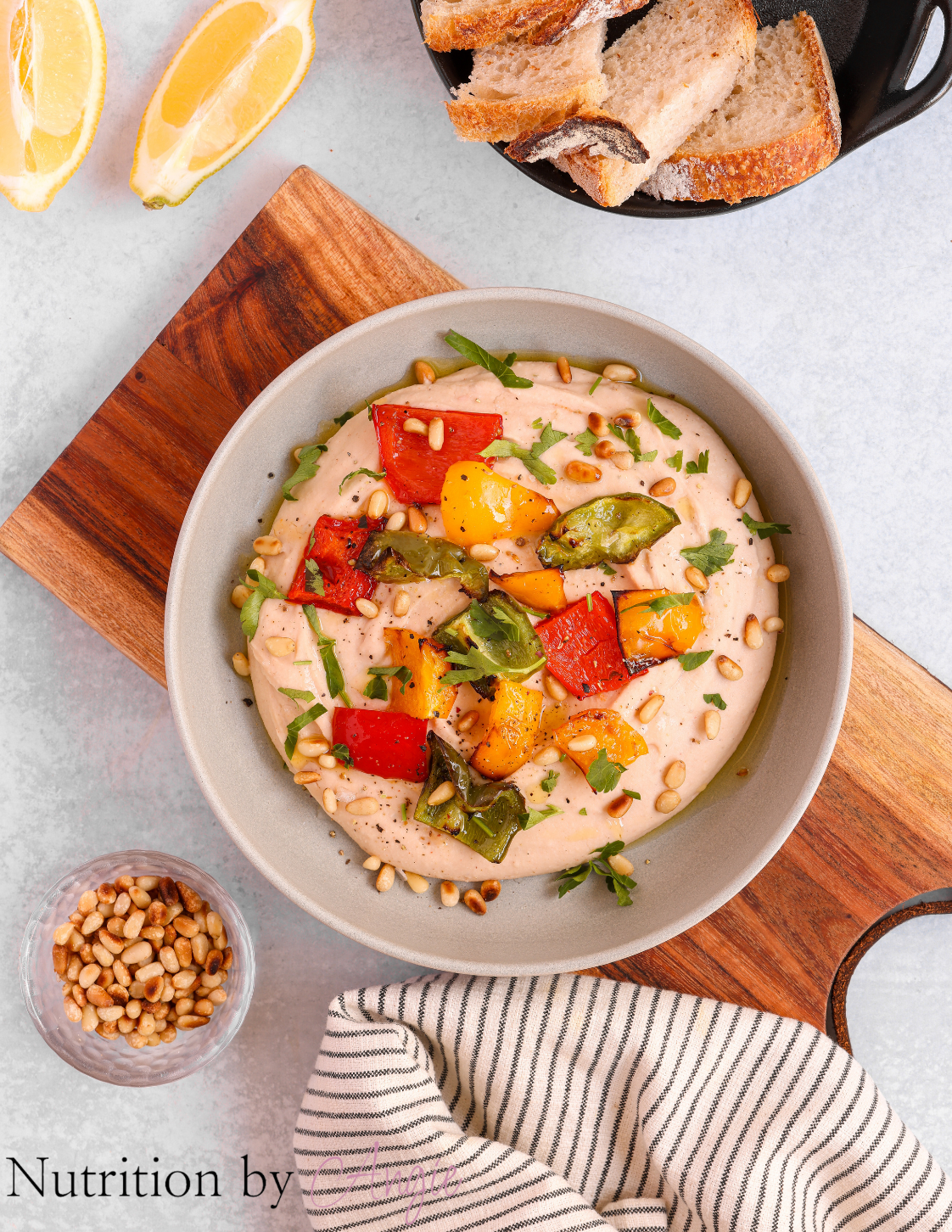
Cannellini Dip
Gluten-Free • Vegan • Vegetarian • Plant-Based • Dairy-Free • Egg-Free • High-Fibre • Protein-Rich • Whole-Food Focused
Introduction
This Cannellini Dip is a deliciously creamy, savoury and nourishing plant-based dip made with tender cannellini beans, aromatic garlic, rich tahini, smoky paprika and fresh lemon juice.
Finished with grilled mixed peppers, toasted pine nuts and fresh parsley, this Mediterranean-inspired white bean dip combines smooth, creamy textures with colourful vegetables, delicate crunch and fragrant herbs.
Cannellini beans provide plant-based protein, dietary fibre, folate, iron and magnesium, making them an excellent foundation for nutritious dips and spreads. Their naturally soft texture creates a creamy consistency without requiring dairy cream, cheese or mayonnaise.
Tahini adds a rich, nutty flavour while contributing unsaturated fats, calcium, magnesium and other important minerals. Garlic provides savoury depth, smoked paprika introduces gentle warmth, and lemon juice adds brightness.
The grilled peppers provide natural sweetness and vitamin C, while toasted pine nuts add a satisfying crunch and predominantly unsaturated fats. Fresh parsley completes the dip with a refreshing herbal flavour.
This gluten-free vegan cannellini bean dip is a wonderful alternative to traditional creamy dips and can be enjoyed with fresh vegetables, gluten-free crackers, homemade bread or as part of a Mediterranean-inspired meal.
It is particularly convenient for meal preparation, family gatherings, packed lunches or a nourishing afternoon snack.
Although this dip contains nutrient-rich whole-food ingredients, tahini and pine nuts are energy-dense, so portions can be adjusted according to individual needs.
Benefits of All the Ingredients
Cannellini Beans
Cannellini beans are the main ingredient in this creamy dip.
These mild-flavoured white beans belong to the legume family and are valued for their combination of plant-based protein, dietary fibre and complex carbohydrates.
They have a naturally soft, creamy texture that makes them particularly suitable for dips, spreads, soups and sauces.
Cannellini beans provide:
Plant-Based Protein: Supports normal muscle maintenance and tissue repair.
Dietary Fibre: Supports normal digestive function.
Folate: Contributes to normal cell division and red blood cell formation.
Iron: Supports normal oxygen transport.
Magnesium: Supports normal muscle and nerve function.
Potassium: Supports normal muscle function and healthy blood pressure.
Phosphorus: Supports healthy bones and teeth.
Zinc: Supports normal immune function.
Manganese: Contributes to normal metabolism.
Cannellini beans also contain resistant starch and fermentable carbohydrates that can be used by certain bacteria in the digestive system.
Cannellini Beans and Digestive Health
The fibre in cannellini beans supports normal bowel function and contributes to a varied dietary fibre intake.
Some of their carbohydrates are fermented by intestinal bacteria, producing short-chain fatty acids.
These compounds play important roles in normal intestinal function.
However, beans can cause bloating or gas in people who are sensitive to fermentable carbohydrates.
Starting with smaller portions and gradually increasing legume intake may help improve tolerance.
Cannellini Beans and Heart Health
Cannellini beans contain dietary fibre and relatively little saturated fat.
Including legumes regularly as part of a balanced dietary pattern can support cardiovascular health.
Replacing some foods high in saturated fat with legumes may also help improve the overall nutritional quality of meals.
Why Rinsing Canned Beans Matters
Draining and rinsing canned cannellini beans removes some of the sodium from the canning liquid.
It also removes excess liquid, helping create a thicker and creamier dip.
Plain canned cannellini beans are naturally gluten-free, although varieties containing additional sauces or seasonings should be checked.
Garlic
Garlic adds a rich, savoury flavour that complements the mild cannellini beans and nutty tahini.
It belongs to the allium vegetable family and contains naturally occurring organosulfur compounds.
When garlic is crushed or chopped, enzymatic reactions produce compounds such as allicin, which contribute to its characteristic aroma.
Garlic provides small amounts of:
Manganese: Supports normal metabolism.
Vitamin B6: Contributes to normal energy metabolism.
Vitamin C: Supports normal immune function.
Selenium: Contributes to normal thyroid function.
Garlic also contains naturally occurring fructans, which can be fermented by certain intestinal bacteria.
However, fructans may cause digestive discomfort in people who are sensitive to FODMAPs.
Why Crushed Garlic Works Well in Dips
Crushing garlic releases aromatic compounds that distribute throughout the dip.
Raw garlic provides a stronger flavour than cooked garlic.
For a milder dip, the garlic can be roasted before blending.
Garlic is naturally gluten-free, vegan and dairy-free.
Tahini
Tahini is a creamy paste made from ground sesame seeds.
It provides richness, a nutty flavour and a smooth texture that complements the cannellini beans.
Tahini contains predominantly unsaturated fats, plant-based protein, dietary fibre and several important minerals.
It provides:
Monounsaturated Fats: Contribute to a heart-conscious dietary pattern when replacing saturated fats.
Polyunsaturated Fats: Provide essential fatty acids.
Plant-Based Protein: Supports normal muscle maintenance.
Calcium: Supports healthy bones and teeth.
Magnesium: Supports normal muscle and nerve function.
Iron: Supports normal oxygen transport.
Copper: Supports normal iron transport.
Phosphorus: Supports healthy bones and teeth.
Zinc: Supports normal immune function.
The calcium content varies depending on whether the sesame seeds are hulled or unhulled.
Tahini also contains naturally occurring lignans, including sesamin and sesamolin.
Tahini and Heart Health
Tahini contains predominantly unsaturated fats.
Replacing saturated fats with unsaturated fats can help maintain healthy blood cholesterol levels.
Tahini also contributes magnesium and other nutrients that support a balanced dietary pattern.
However, tahini is energy-dense, so the amount used contributes meaningfully to the overall energy content of the dip.
Choosing a Nourishing Tahini
Choose tahini made from 100% sesame seeds without unnecessary added sugar or oils.
Natural tahini may separate during storage, so stir thoroughly before measuring.
Tahini is naturally gluten-free when made from plain sesame seeds, but packaged products should be checked for possible gluten cross-contact.
Allergen consideration: Sesame is one of the 14 allergens that must be declared on packaged foods in the EU.
Smoked Paprika
Smoked paprika provides a warm, smoky flavour that complements the creamy beans and tahini.
It is made from dried peppers that are smoked before grinding.
Paprika contains naturally occurring carotenoids, including capsanthin and beta-carotene, which contribute to its characteristic red colour.
It also contains small amounts of vitamin E and other plant compounds.
Because this recipe uses only one teaspoon, smoked paprika contributes primarily flavour rather than substantial quantities of vitamins or minerals.
Why Smoked Paprika Works Well in Bean Dips
Smoked paprika adds depth and complexity without requiring meat or smoked animal products.
Its rich flavour pairs particularly well with legumes, garlic, lemon and roasted vegetables.
Pure smoked paprika is naturally gluten-free, although commercial seasoning blends should be checked for gluten-containing additives or cross-contact.
Fresh Lemon Juice
Fresh lemon juice adds brightness and acidity, balancing the richness of the tahini.
It also enhances the mild flavour of the cannellini beans.
Lemon juice provides vitamin C, which contributes to:
Normal immune function.
Collagen formation.
Protection of cells from oxidative stress.
Improved absorption of non-haem iron from plant foods.
Lemon Juice and Plant-Based Iron
Cannellini beans and tahini both contain non-haem iron.
Vitamin C helps improve the absorption of non-haem iron when consumed as part of the same meal.
Adding lemon juice to bean-based dishes is therefore a useful way to combine complementary nutrients.
Fresh lemon juice is naturally gluten-free, vegan and dairy-free.
Benefits of the Garnish Ingredients
Grilled Mixed Peppers
Grilled mixed peppers add natural sweetness, colour and a soft texture.
Bell peppers are particularly rich in vitamin C, especially red varieties.
They also contain carotenoids and other naturally occurring plant compounds.
Depending on the colours used, grilled peppers provide:
Vitamin C: Supports normal immune function and collagen formation.
Beta-Carotene: Can be converted into vitamin A.
Vitamin B6: Supports normal energy metabolism.
Folate: Contributes to normal cell division.
Potassium: Supports normal muscle function.
Dietary Fibre: Supports normal digestive function.
Red peppers also contain capsanthin, a carotenoid responsible for much of their red colour.
Grilled Peppers and Flavour
Grilling peppers enhances their natural sweetness and creates a slightly smoky flavour.
This complements the smoked paprika in the dip.
Although some vitamin C is lost during cooking, grilled peppers still contribute valuable nutrients.
If using jarred grilled peppers, check the ingredients for added sugar, sodium and gluten-containing additives.
Toasted Pine Nuts
Pine nuts add a delicate crunch and rich, buttery flavour.
They are edible seeds harvested from certain pine trees.
Pine nuts contain predominantly unsaturated fats, plant-based protein and several important minerals.
They provide:
Monounsaturated Fats: Contribute to a heart-conscious dietary pattern when replacing saturated fats.
Polyunsaturated Fats: Provide essential fatty acids.
Magnesium: Supports normal muscle and nerve function.
Manganese: Contributes to normal metabolism.
Copper: Supports normal iron transport.
Zinc: Supports normal immune function.
Vitamin E: Helps protect cells from oxidative stress.
Pine nuts also contain naturally occurring phytosterols.
Why Toasting Pine Nuts Matters
Lightly toasting pine nuts enhances their nutty flavour and creates a crisp texture.
Because pine nuts contain a substantial amount of fat, they can burn quickly.
Toast gently and remove from the heat as soon as they become lightly golden.
Pine nuts are energy-dense, but the tablespoon used as a garnish adds flavour and texture without requiring a large quantity.
Fresh Parsley
Fresh parsley adds colour, freshness and a delicate herbal flavour.
It is particularly rich in vitamin K when consumed in meaningful quantities.
Parsley also contains naturally occurring flavonoids, including apigenin.
It provides small amounts of:
Vitamin K: Supports normal blood clotting and bone maintenance.
Vitamin C: Supports normal immune function.
Beta-Carotene: Can be converted into vitamin A.
Folate: Contributes to normal cell division.
Iron: Supports normal oxygen transport.
Because parsley is generally used as a garnish, its main contribution is flavour and freshness.
Fresh parsley is naturally gluten-free, vegan and dairy-free.
Why Cannellini Dip Makes a Nourishing Snack or Side Dish
Provides Plant-Based Protein
Cannellini beans and tahini contribute protein, making the dip more satisfying than many vegetable-based sauces.
Rich in Dietary Fibre
Cannellini beans provide fibre, supporting normal digestive function.
Contains Heart-Friendly Unsaturated Fats
Tahini and pine nuts provide predominantly unsaturated fats.
Provides Important Minerals
Cannellini beans, tahini and pine nuts contribute magnesium, iron, copper and other minerals.
Supports Plant-Based Iron Absorption
Vitamin C from lemon juice and grilled peppers helps improve the absorption of non-haem iron from beans and tahini.
Naturally Dairy-Free and Egg-Free
The dip creates a creamy texture without dairy cream, cheese or eggs.
Contains a Variety of Plant Foods
Beans, sesame seeds, garlic, peppers, pine nuts and parsley contribute different nutrients and naturally occurring plant compounds.
Suitable for Gluten-Free Diets
Using suitable packaged ingredients makes this dip appropriate for gluten-free diets.
Delicious Serving Suggestions
Fresh Vegetable Sticks
Serve with carrots, cucumber, celery or bell pepper sticks for additional crunch and vegetable variety.
Gluten-Free Crackers
Pair with wholegrain or seeded gluten-free crackers for a convenient snack.
Gluten-Free Sourdough Bread
Spread over toasted gluten-free sourdough bread for a satisfying breakfast or lunch.
Mediterranean-Inspired Bowls
Add a generous spoonful to a bowl containing quinoa, roasted vegetables and leafy greens.
Baked Sweet Potatoes
Serve alongside baked sweet potatoes for additional carbohydrates, fibre and beta-carotene.
Sandwiches and Wraps
Use as a creamy spread in gluten-free sandwiches or wraps with fresh vegetables.
Roasted Vegetables
Pair with roasted broccoli, courgette, carrots or cauliflower for a flavourful side dish.
Tips for the Best Cannellini Dip
Drain and rinse the cannellini beans: This removes excess canning liquid and can reduce some of the sodium.
Use good-quality tahini: Choose varieties made from 100% sesame seeds.
Stir the tahini before measuring: Natural oils may separate during storage.
Use fresh lemon juice: It provides a brighter flavour than bottled juice.
Adjust the lemon gradually: Add more if you prefer a tangier dip.
Crush the garlic thoroughly: This helps distribute its flavour throughout the mixture.
Roast the garlic for a milder taste: Roasted garlic provides a sweeter, less pungent flavour.
Choose pure smoked paprika: Check packaged products for gluten-containing additives.
Blend until smooth: A food processor or high-speed blender can create a creamy consistency.
Adjust the texture: Add a little cold water if the dip is too thick.
Use grilled peppers for garnish: They add colour and natural sweetness.
Toast pine nuts gently: They can burn quickly because of their fat content.
Add fresh parsley just before serving: This helps preserve its fresh flavour and colour.
Taste before adding salt: Canned beans and jarred peppers may already contain sodium.
Chill before serving: Refrigeration allows the flavours to develop.
Store in an airtight container: Refrigerate and enjoy within approximately 3–4 days.
Keep the garnish separate during storage: Add peppers, pine nuts and parsley shortly before serving for the best texture.
Check for sesame allergies: Tahini contains sesame and is unsuitable for anyone with a sesame allergy.
Prevent gluten cross-contact: Use clean utensils, preparation surfaces and equipment when preparing the dip for someone with coeliac disease.
A Note on Whole-Food Ingredients and Balanced Nutrition
This Cannellini Dip combines legumes, seeds, vegetables and fresh herbs to create a creamy spread without relying on dairy cream or highly processed ingredients.
Cannellini beans provide plant-based protein and dietary fibre, while tahini contributes minerals and predominantly unsaturated fats.
The grilled peppers, lemon juice and parsley add freshness and naturally occurring plant compounds.
Although tahini and pine nuts are energy-dense, they also provide valuable nutrients.
Enjoying this dip alongside fresh vegetables, wholegrain gluten-free crackers or other fibre-rich foods creates a satisfying snack or side dish that fits naturally into a varied, whole-food-focused eating pattern.