
Greek-Style Lentil Salad
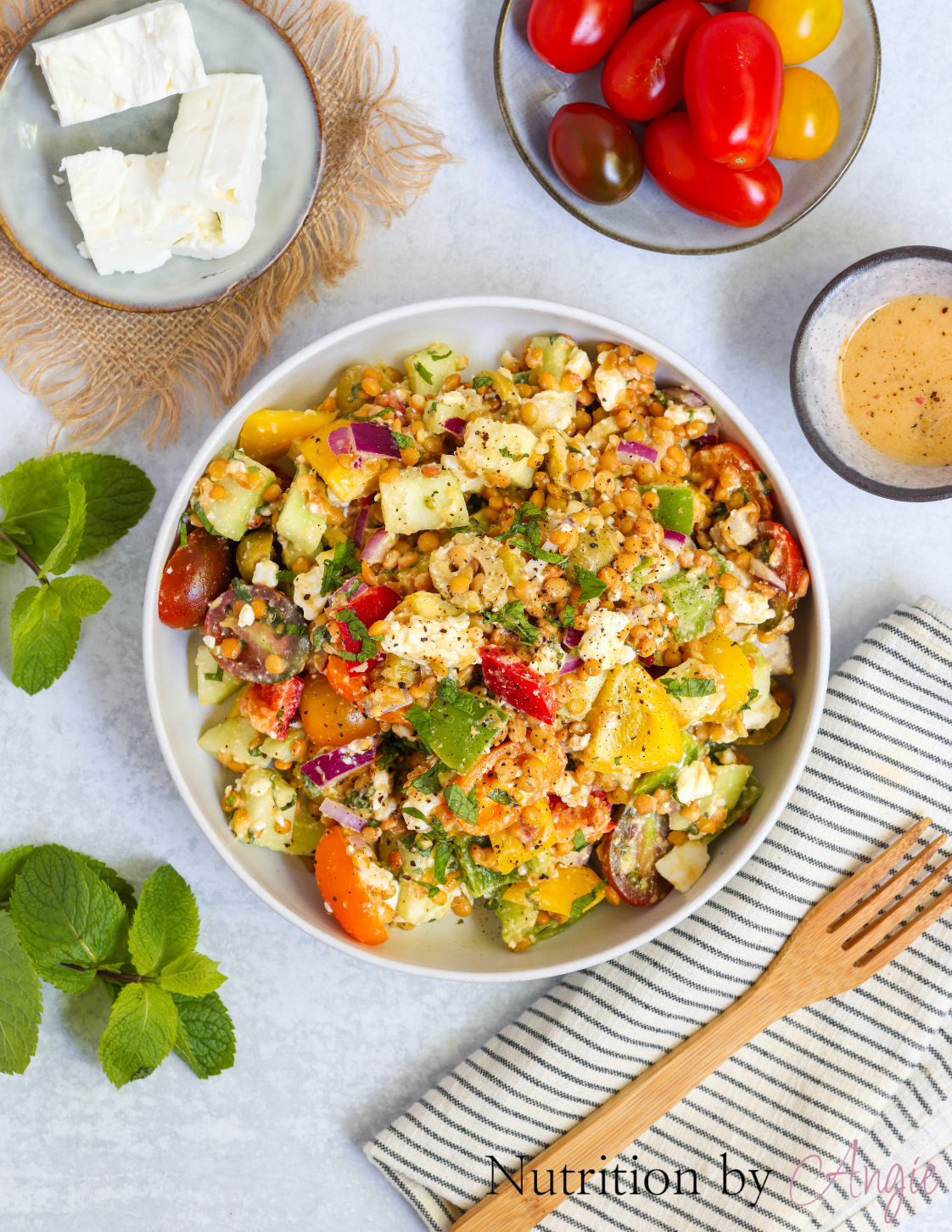
Greek-Style Lentil Salad
Gluten-Free • Vegetarian (with Vegetarian Feta) • High-Fibre • Protein-Rich • Mediterranean-Inspired • Whole-Food Focused
Introduction
This Greek-Style Lentil Salad is a colourful, refreshing and nourishing Mediterranean-inspired dish made with tender brown lentils, juicy cherry tomatoes, crunchy bell peppers, cucumber, red onion, olives, fresh mint and creamy feta cheese.
Combining the earthy flavour of lentils with crisp vegetables, salty olives and tangy feta, this salad offers a delicious balance of flavours and textures. A simple vinaigrette brings everything together, while fresh mint adds a fragrant, refreshing finish.
Brown lentils provide plant-based protein, dietary fibre, iron and folate, making them an excellent foundation for a satisfying salad. The colourful vegetables contribute vitamin C, potassium and naturally occurring plant compounds, while olives provide predominantly monounsaturated fats.
Feta cheese adds creaminess, protein and calcium, complementing the fresh Mediterranean ingredients.
This salad is an excellent choice for a gluten-free Mediterranean-style lunch or dinner, provided the lentils, feta and vinaigrette are suitable for a gluten-free diet.
It can also be made vegetarian by choosing feta produced with vegetarian-friendly rennet, as traditional Greek feta is commonly made using animal-derived rennet.
Perfect for meal preparation, summer lunches, family gatherings or a light dinner, this Greek-style lentil salad is both satisfying and easy to prepare.
Benefits of All the Ingredients
Brown Lentils
Brown lentils form the nutritious foundation of this salad.
They belong to the legume family and provide an excellent combination of plant-based protein, dietary fibre and complex carbohydrates.
Lentils also contain several important vitamins and minerals:
Folate: Supports normal cell division and red blood cell formation.
Iron: Contributes to normal oxygen transport.
Magnesium: Supports normal muscle and nerve function.
Potassium: Contributes to normal muscle function and healthy blood pressure.
Phosphorus: Supports healthy bones and teeth.
Zinc: Contributes to normal immune function.
Manganese: Supports normal metabolism.
Lentils also provide resistant starch and fermentable carbohydrates, which can be used by certain beneficial bacteria in the digestive system.
Their combination of protein and fibre makes them particularly useful for creating satisfying meals.
Brown lentils hold their shape well after cooking, making them ideal for salads.
Plain canned lentils are naturally gluten-free. However, lentils can experience cross-contact with gluten-containing grains during growing, harvesting or processing.
When preparing this salad for someone with coeliac disease, choose lentils with appropriate gluten-free labelling or reliable cross-contact information.
Olives
Olives provide the distinctive savoury, salty flavour associated with Mediterranean cuisine.
They are particularly rich in monounsaturated fats, including oleic acid, the same predominant fatty acid found in olive oil.
Olives also contain naturally occurring plant compounds, including polyphenols.
Depending on the variety and processing method, olives can provide small amounts of:
Vitamin E: Helps protect cells from oxidative stress.
Copper: Supports normal iron transport.
Iron: Contributes to normal oxygen transport.
Dietary fibre: Supports digestive function.
Olives are a traditional component of Mediterranean-style eating patterns.
However, olives preserved in brine can contain significant amounts of sodium.
Choosing lower-salt varieties or rinsing brined olives can help reduce their sodium contribution.
Plain olives are naturally gluten-free, but marinated or stuffed varieties should be checked for additional ingredients.
Cherry Tomatoes
Cherry tomatoes add natural sweetness, juiciness and vibrant colour.
They provide vitamin C, potassium and folate, alongside naturally occurring carotenoids.
Tomatoes are particularly well known for containing lycopene, a carotenoid responsible for their red colour.
Lycopene has antioxidant properties and is one of several beneficial plant compounds found in tomatoes.
Cherry tomatoes also contain dietary fibre and contribute to the salad's overall vegetable intake.
Their natural acidity balances the richness of the feta and olives.
Fresh cherry tomatoes are naturally gluten-free.
Bell Peppers
Bell peppers provide crunch, sweetness and a generous amount of vitamin C.
They are particularly valuable in plant-based meals because vitamin C helps improve the absorption of non-haem ironfrom foods such as lentils.
Bell peppers also provide:
Vitamin B6: Supports normal energy metabolism.
Folate: Contributes to normal cell division.
Dietary fibre: Supports digestive health.
Carotenoids: Naturally occurring plant pigments.
Red, yellow and orange bell peppers generally contain more carotenoids than green varieties, although all colours can contribute valuable nutrients.
Using different coloured peppers increases the visual appeal and variety of the salad.
Bell peppers are naturally gluten-free, vegan and dairy-free.
Red Onion
Red onion adds a sharp, slightly sweet flavour that complements the lentils, olives and feta.
It contains naturally occurring plant compounds, including quercetin, a flavonoid with antioxidant properties.
Red onion also provides small amounts of vitamin C, folate and potassium.
Like garlic and other allium vegetables, onions contain organosulfur compounds that contribute to their distinctive flavour.
Raw red onion adds a pleasant crunch to salads.
For a milder flavour, finely diced red onion can be soaked briefly in cold water before adding it to the salad.
Fresh red onion is naturally gluten-free.
Cucumber
Cucumber provides freshness, crunch and a cooling contrast to the salty feta and olives.
Because cucumber has a high water content, it contributes to the fluid content of the meal.
It also provides small amounts of:
Vitamin K: Contributes to normal blood clotting and bone maintenance.
Potassium: Supports normal muscle function.
Vitamin C: Supports normal immune function.
Dietary fibre: Supports digestive health, particularly when the skin is retained.
Cucumber contains naturally occurring plant compounds, including flavonoids.
Leaving the skin on, when suitable, helps retain some of its fibre and micronutrients.
Fresh cucumber is naturally gluten-free.
Fresh Mint
Fresh mint adds a refreshing herbal flavour that complements the Mediterranean-inspired ingredients.
It contains naturally occurring aromatic compounds, including menthol, which contributes to its characteristic cooling sensation.
Mint also provides small amounts of vitamin A precursors, folate and other micronutrients.
Fresh herbs contain various polyphenols, although the amount used in a salad generally contributes more flavour than substantial quantities of vitamins or minerals.
Mint is naturally gluten-free and adds freshness without requiring additional salt.
Feta Cheese
Feta cheese adds a creamy, tangy and slightly salty flavour.
Traditionally made from sheep's milk or a combination of sheep's and goat's milk, feta provides several important nutrients.
These include:
Protein: Supports normal muscle maintenance and tissue repair.
Calcium: Contributes to healthy bones and teeth.
Phosphorus: Supports healthy bones and teeth.
Vitamin B12: Supports normal nervous system function and red blood cell formation.
Riboflavin (vitamin B2): Contributes to normal energy metabolism.
Feta can be a useful source of calcium and protein in a Mediterranean-style diet.
However, it also contains saturated fat and can be relatively high in sodium.
Because this recipe includes both feta and olives, the overall salt content may be substantial.
Vegetarian consideration: Traditional feta is commonly produced using animal-derived rennet. For a vegetarian version, choose a suitable feta-style cheese made with microbial or vegetarian rennet.
Feta cheese is naturally gluten-free when plain, although flavoured or processed products should be checked.
Vinaigrette
Vinaigrette brings the ingredients together and adds a tangy, savoury finish.
A traditional vinaigrette usually combines oil with vinegar or lemon juice, alongside herbs and seasonings.
The nutritional benefits depend on the ingredients used.
Extra-Virgin Olive Oil
A homemade vinaigrette made with extra-virgin olive oil provides predominantly monounsaturated fats, particularly oleic acid.
Extra-virgin olive oil also contains naturally occurring polyphenols and vitamin E.
Including a little olive oil with vegetables can help improve the absorption of fat-soluble carotenoids.
Vinegar or Lemon Juice
Vinegar provides acidity, while lemon juice adds freshness and vitamin C.
Herbs and Spices
Oregano, garlic, black pepper and other herbs can enhance the flavour without requiring excessive salt.
For a gluten-free salad, choose a vinaigrette made with gluten-free ingredients.
Some commercial dressings contain wheat-based thickeners, malt vinegar or other gluten-containing ingredients.
A homemade vinaigrette using extra-virgin olive oil, lemon juice, gluten-free vinegar and herbs is a simple alternative.
Why This Greek-Style Lentil Salad Makes a Nourishing Meal
Plant-Based Protein and Fibre
Brown lentils provide protein and dietary fibre, contributing to a satisfying meal.
Mediterranean-Inspired Ingredients
Olives, vegetables, herbs, legumes and olive oil-based dressings are characteristic of Mediterranean-style eating patterns.
Rich in Vegetable Variety
Tomatoes, bell peppers, cucumber, red onion and mint contribute a range of vitamins, minerals and plant compounds.
Source of Calcium
Feta cheese provides calcium, supporting normal bone maintenance.
Supports Plant-Based Iron Absorption
Vitamin C from the bell peppers and tomatoes can help improve the absorption of non-haem iron from lentils.
Naturally Gluten-Free Ingredients
The salad can be made entirely with gluten-free ingredients, making it suitable for people with coeliac disease when products are carefully selected and cross-contact is avoided.
Tips for the Best Greek-Style Lentil Salad
Drain and rinse the lentils: This removes excess canning liquid and can reduce some of the sodium.
Choose gluten-free lentils: Check packaging for possible cross-contact with wheat, barley or rye.
Use colourful bell peppers: A mixture of red, yellow and orange peppers adds sweetness and visual appeal.
Choose vegetarian-friendly feta when needed: Traditional feta may contain animal-derived rennet.
Consider the sodium content: Olives, feta and commercial vinaigrettes can all contribute salt.
Make a homemade vinaigrette: Extra-virgin olive oil, lemon juice, gluten-free vinegar and oregano work beautifully together.
Add the fresh mint shortly before serving: This helps preserve its fresh aroma.
Allow the flavours to develop: Refrigerating the salad briefly before serving allows the lentils to absorb the dressing.
Store correctly: Keep refrigerated in an airtight container and enjoy within approximately 2–3 days.
Prevent gluten cross-contact: Use clean utensils, chopping boards and preparation surfaces when preparing the salad for someone with coeliac disease.