
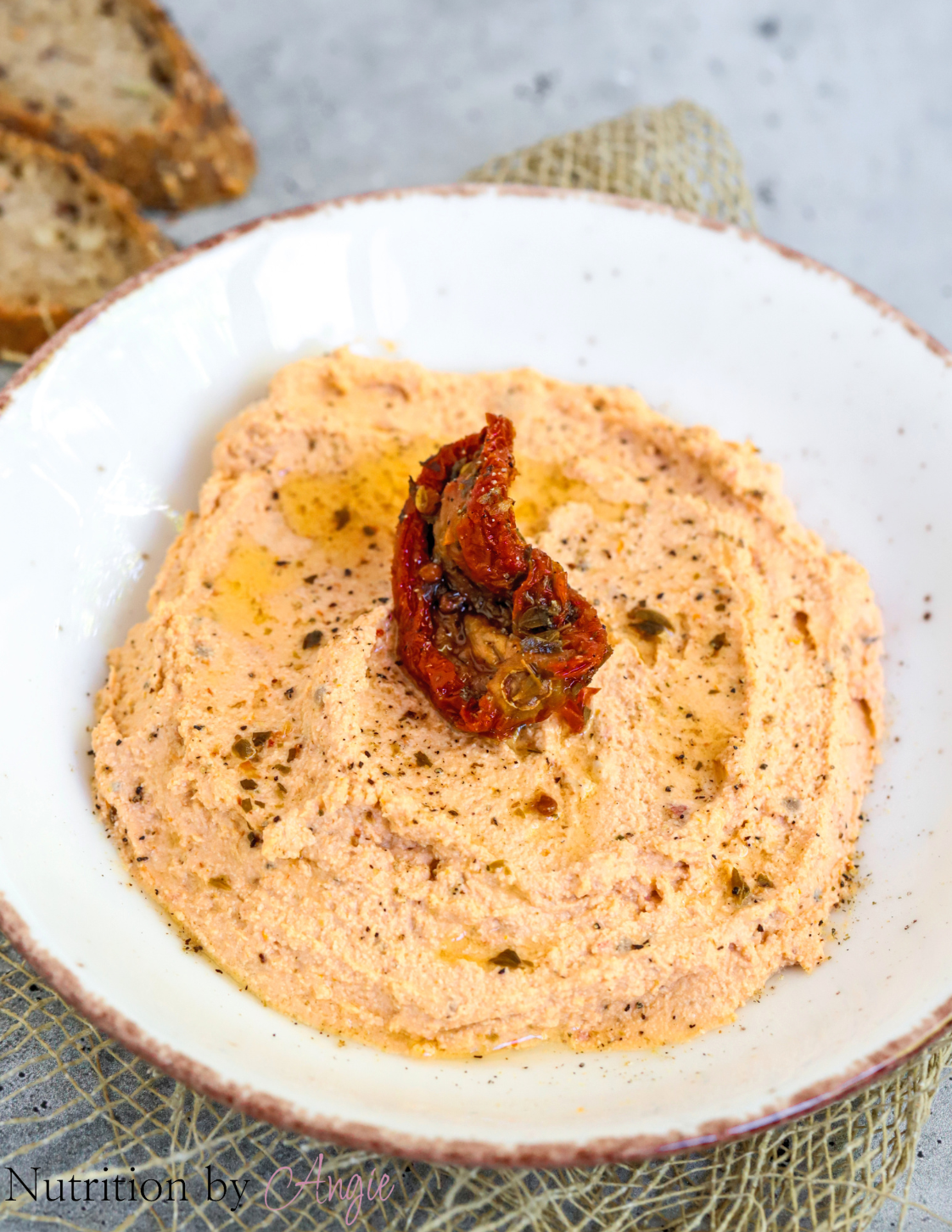
Tofu ‘Cheese’ Spread
Gluten-Free • Vegan • Vegetarian • Plant-Based • Dairy-Free • Egg-Free • Protein-Rich • No-Bake • Whole-Food Focused
Use plain gluten-free tofu, pure tahini and gluten-free labelled sun-dried tomatoes to keep this recipe suitable for people with coeliac disease.
Introduction
This Tofu ‘Cheese’ Spread is a deliciously creamy, savoury and tangy plant-based alternative to traditional cheese spreads. Made with firm tofu, fresh lemon juice, tahini, extra virgin olive oil and flavourful sun-dried tomatoes, it combines simple ingredients to create a rich, Mediterranean-inspired spread.
The smooth texture of tofu and tahini creates a creamy base, while lemon juice adds the tangy flavour often associated with soft cheeses. Extra virgin olive oil contributes richness, and sun-dried tomatoes provide an intensely savoury, slightly sweet finish.
Unlike many commercial vegan cheese alternatives that rely heavily on coconut oil and refined starches, this homemade spread uses tofu, sesame seeds and olive oil as its main sources of protein and fat.
Firm tofu provides complete plant-based protein, meaning it contains all nine essential amino acids. Tahini contributes unsaturated fats, calcium, magnesium and copper, while extra virgin olive oil provides predominantly monounsaturated fats and naturally occurring polyphenols.
Sun-dried tomatoes are particularly well known for their lycopene content, a naturally occurring carotenoid responsible for their deep red colour.
This gluten-free vegan tofu cheese spread is a versatile addition to sandwiches, wraps, crackers, vegetable platters and homemade bread.
It is also ideal for preparing ahead of time, making it a convenient option for quick lunches, snacks or appetisers.
Although this spread contains nutrient-rich ingredients, tahini and olive oil are energy-dense. The recipe also includes a teaspoon of salt and sun-dried tomatoes, which may already contain sodium, so portion sizes and seasoning can be adjusted according to individual preferences.
Benefits of All the Ingredients
Firm Tofu
Firm tofu provides the creamy, protein-rich foundation of this spread.
Made from soybeans, tofu is a versatile plant-based food that can be used in both sweet and savoury recipes.
It has a mild flavour and a texture that becomes smooth when blended with liquid ingredients.
Tofu provides complete plant-based protein, meaning it contains all nine essential amino acids.
Firm tofu contains:
Complete Plant-Based Protein: Supports normal muscle maintenance and tissue repair.
Iron: Contributes to normal oxygen transport.
Calcium: Supports healthy bones and teeth when calcium-set tofu is used.
Magnesium: Supports normal muscle and nerve function.
Phosphorus: Supports healthy bones and teeth.
Potassium: Supports normal muscle function.
Zinc: Supports normal immune function.
Tofu also contains naturally occurring soy isoflavones, including genistein and daidzein.
These compounds have been studied for their potential effects on cardiovascular and bone health.
Why Tofu Makes a Good Cheese Alternative
Many traditional cheese spreads contain substantial amounts of saturated fat.
Plain tofu generally contains less saturated fat than full-fat dairy cheese and provides a useful source of plant-based protein.
Its mild flavour allows it to absorb the tanginess of lemon juice and the savoury flavour of sun-dried tomatoes.
Blending tofu with tahini and olive oil creates a creamy consistency without requiring dairy cream or cheese.
Tofu and Calcium
The calcium content of tofu depends on how it is produced.
Tofu made with calcium sulfate can provide substantial amounts of calcium.
Other varieties may contain considerably less.
For a calcium-rich version, choose calcium-set tofu and check the nutritional information on the packaging.
Choosing Gluten-Free Tofu
Plain tofu made from soybeans, water and coagulants is naturally gluten-free.
However, flavoured or marinated tofu may contain wheat-based soy sauce or other gluten-containing ingredients.
For people with coeliac disease, choose plain tofu that is clearly labelled gluten-free where possible.
Fresh Lemon Juice
Fresh lemon juice provides the tangy flavour that gives this spread its cheese-like character.
The acidity helps balance the richness of the tahini and olive oil while complementing the savoury sun-dried tomatoes.
Lemon juice provides vitamin C, which contributes to:
Normal immune function.
Collagen formation.
Protection of cells from oxidative stress.
Improved absorption of non-haem iron from plant foods.
Lemon Juice and Plant-Based Iron
Tofu and tahini both contain non-haem iron, the form of iron found in plant foods.
Vitamin C can help improve the absorption of non-haem iron when consumed as part of the same meal.
This makes lemon juice a useful addition to plant-based recipes.
Why Lemon Juice Works Well in Vegan Cheese Spreads
Traditional soft cheeses often have a mildly acidic flavour.
Lemon juice provides a similar tanginess without requiring dairy ingredients or fermentation.
The amount used in this recipe creates a distinctly lemony spread.
For a milder flavour, the lemon juice can be added gradually and adjusted to taste.
Fresh lemon juice is naturally gluten-free, vegan and dairy-free.
Tahini
Tahini is a smooth paste made from ground sesame seeds.
It has a rich, nutty flavour and a creamy texture that works particularly well in plant-based sauces, dressings and spreads.
Tahini provides unsaturated fats, plant-based protein, dietary fibre and several important minerals.
It contains:
Monounsaturated Fats: Contribute to a heart-conscious dietary pattern when replacing saturated fats.
Polyunsaturated Fats: Provide essential fatty acids.
Plant-Based Protein: Supports normal muscle maintenance.
Calcium: Supports healthy bones and teeth.
Magnesium: Supports normal muscle and nerve function.
Iron: Contributes to normal oxygen transport.
Copper: Supports normal iron transport.
Phosphorus: Supports healthy bones and teeth.
Zinc: Supports normal immune function.
The calcium content varies depending on whether the sesame seeds are hulled or unhulled.
Tahini also contains naturally occurring lignans, including sesamin and sesamolin.
Tahini and Heart Health
Tahini contains predominantly unsaturated fats.
Replacing saturated fats with unsaturated fats can help maintain healthy blood cholesterol levels.
Tahini also provides magnesium and other nutrients that contribute to a balanced dietary pattern.
However, tahini is energy-dense, so moderate amounts are sufficient to create a rich spread.
Tahini and Creamy Texture
Tahini helps create a smooth, creamy consistency when blended with tofu and lemon juice.
Its nutty flavour also complements the concentrated tomato flavour.
Natural tahini may separate during storage, so stir thoroughly before measuring.
Choosing a Nourishing Tahini
Choose tahini made from 100% sesame seeds, without unnecessary added sugar or oils.
Tahini is naturally gluten-free when made from plain sesame seeds, but packaged products should be checked for cross-contact.
Allergen consideration: Sesame is one of the 14 allergens that must be declared on packaged foods in the EU.
Extra Virgin Olive Oil
Extra virgin olive oil contributes richness and helps create a smooth, spreadable texture.
It is particularly rich in monounsaturated fatty acids, especially oleic acid.
Extra virgin olive oil also contains naturally occurring phenolic compounds and vitamin E.
It provides:
Monounsaturated Fats: Support a heart-conscious dietary pattern when replacing saturated fats.
Vitamin E: Helps protect cells from oxidative stress.
Phenolic Compounds: Naturally occurring plant substances with antioxidant properties.
Olive Oil and Heart Health
Replacing foods high in saturated fat with foods rich in unsaturated fats can help maintain healthy blood cholesterol levels.
Extra virgin olive oil is a common component of Mediterranean-style dietary patterns.
It can be particularly useful in homemade vegan spreads as an alternative to coconut oil or palm fat.
Why Extra Virgin Olive Oil Works Well in This Recipe
Extra virgin olive oil provides a smooth texture and a slightly fruity flavour.
It also helps distribute the flavours of the lemon juice, tahini and sun-dried tomatoes.
Because olive oil is energy-dense, the three tablespoons used contribute a meaningful amount of energy to the recipe.
For a lighter spread, some of the olive oil can be replaced with a small amount of water, although the texture and richness will change.
Extra virgin olive oil is naturally gluten-free, vegan and dairy-free.
Salt
Salt enhances the natural flavours of the tofu, tahini and sun-dried tomatoes.
It contains sodium, an essential mineral involved in normal fluid balance, nerve signalling and muscle function.
However, excessive sodium intake can contribute to high blood pressure.
A Note About the Salt Content
This recipe contains one teaspoon of salt, in addition to the sodium that may already be present in the sun-dried tomatoes.
Depending on the type of salt and the number of servings, this may make the spread relatively high in sodium.
For a lower-sodium version, start with a smaller amount of salt and adjust to taste.
Lemon juice and sun-dried tomatoes already provide substantial flavour, so less salt may be needed.
Sea salt does not provide meaningful nutritional advantages over regular table salt.
Sun-Dried Tomatoes
Sun-dried tomatoes provide the rich, savoury flavour that makes this spread particularly delicious.
They are made by removing much of the water from ripe tomatoes, concentrating their natural flavour.
Sun-dried tomatoes contain lycopene, a naturally occurring carotenoid responsible for their deep red colour.
They also provide:
Lycopene: A naturally occurring carotenoid with antioxidant properties.
Potassium: Supports normal muscle function.
Dietary Fibre: Supports normal digestive function.
Iron: Contributes to normal oxygen transport.
Copper: Supports normal iron transport.
Naturally Occurring Polyphenols: Plant compounds studied for their antioxidant properties.
Lycopene and Tomato-Based Foods
Lycopene has been studied for its antioxidant properties and potential role in long-term health.
Processing and heating tomatoes can make lycopene more accessible for absorption.
Because lycopene is fat-soluble, consuming tomato products alongside dietary fat may improve its absorption.
The tahini and olive oil in this recipe provide fat alongside the sun-dried tomatoes.
Choosing Sun-Dried Tomatoes
Sun-dried tomatoes are available dried or packed in oil.
Oil-packed varieties are generally softer and easier to blend into spreads.
However, the nutritional profile depends on the type of oil and the amount of added salt.
Choose varieties packed in olive oil or another predominantly unsaturated oil where possible.
Sun-dried tomatoes can contain substantial amounts of sodium, particularly when preserved with salt.
For people with coeliac disease, check the packaging for gluten-containing additives or cross-contact warnings.
Why Tofu ‘Cheese’ Spread Makes a Nourishing Alternative
Provides Complete Plant-Based Protein
Tofu contains all nine essential amino acids, making it a useful protein source for vegan and vegetarian diets.
Contains Heart-Friendly Unsaturated Fats
Tahini and extra virgin olive oil provide predominantly unsaturated fats.
Can Be Lower in Saturated Fat Than Traditional Cheese Spreads
Using tofu, tahini and olive oil instead of full-fat dairy cheese can reduce saturated fat, depending on the products and proportions used.
Provides Important Minerals
Tofu and tahini contribute calcium, iron, magnesium and phosphorus.
Contains Naturally Occurring Lycopene
Sun-dried tomatoes provide lycopene, a carotenoid studied for its antioxidant properties.
Supports Plant-Based Iron Absorption
Vitamin C from lemon juice helps improve the absorption of non-haem iron from tofu and tahini.
Naturally Dairy-Free and Egg-Free
The recipe creates a creamy, cheese-like spread without using dairy products or eggs.
Suitable for Gluten-Free Diets
Using suitable packaged ingredients makes this spread appropriate for gluten-free diets.
Delicious Serving Suggestions
Gluten-Free Sourdough Bread
Spread over toasted gluten-free sourdough bread for a satisfying breakfast or lunch.
Fresh Vegetable Sticks
Serve as a dip with cucumber, carrots, celery or bell pepper sticks.
Gluten-Free Crackers
Pair with wholegrain or seeded gluten-free crackers for a convenient snack.
Sandwiches and Wraps
Use as a creamy filling in gluten-free sandwiches or wraps with lettuce and fresh vegetables.
Baked Sweet Potatoes
Add a spoonful to baked sweet potatoes for extra plant-based protein and flavour.
Mediterranean-Inspired Bowls
Serve alongside cooked quinoa, chickpeas, roasted vegetables and leafy greens.
Stuffed Bell Peppers
Use as a savoury filling for fresh or roasted bell peppers.
Tips for the Best Tofu ‘Cheese’ Spread
Choose firm tofu: It creates a thick, spreadable texture.
Drain the tofu thoroughly: Removing excess water prevents the spread from becoming too thin.
Use calcium-set tofu where possible: It may provide additional calcium.
Choose fresh lemon juice: It provides a brighter, fresher flavour.
Adjust the lemon gradually: The 75g used creates a distinctly tangy spread.
Use natural tahini: Choose varieties made from 100% sesame seeds.
Stir the tahini before measuring: Natural oils may separate during storage.
Choose extra virgin olive oil: It provides a rich flavour and predominantly monounsaturated fats.
Consider reducing the olive oil: Replace some with water if a lighter texture is preferred.
Use good-quality sun-dried tomatoes: They provide much of the spread's savoury flavour.
Drain oil-packed tomatoes: This helps control the overall oil content.
Blend until smooth: A food processor or high-speed blender can create a creamy consistency.
Leave some tomato pieces if preferred: This creates a more textured spread.
Taste before adding all the salt: Sun-dried tomatoes may already contain substantial sodium.
Chill before serving: Refrigeration helps the flavours develop and the texture firm slightly.
Store in an airtight container: Keep refrigerated and enjoy within approximately 3–4 days.
Avoid leaving the spread at room temperature for extended periods: Tofu-based spreads should be kept chilled.
Check for sesame and soy allergies: The recipe contains both allergens.
Prevent gluten cross-contact: Use clean utensils, preparation surfaces and equipment when preparing the spread for someone with coeliac disease.
A Note on Whole-Food Ingredients and Saturated Fat
This Tofu ‘Cheese’ Spread is a useful example of how a creamy, savoury spread can be prepared without traditional dairy cheese or coconut oil-based vegan cheese alternatives.
Tofu provides plant-based protein, tahini contributes minerals and unsaturated fats, and extra virgin olive oil adds richness.
These ingredients can create a more protein-rich alternative to some commercial vegan cheese spreads made primarily from starch and saturated fat.
However, the spread is still energy-dense because of the tahini and olive oil, and its sodium content depends on the amount of salt and the sun-dried tomatoes used.
For a balanced approach, enjoy it alongside fibre-rich gluten-free bread, fresh vegetables or other whole-food ingredients.