
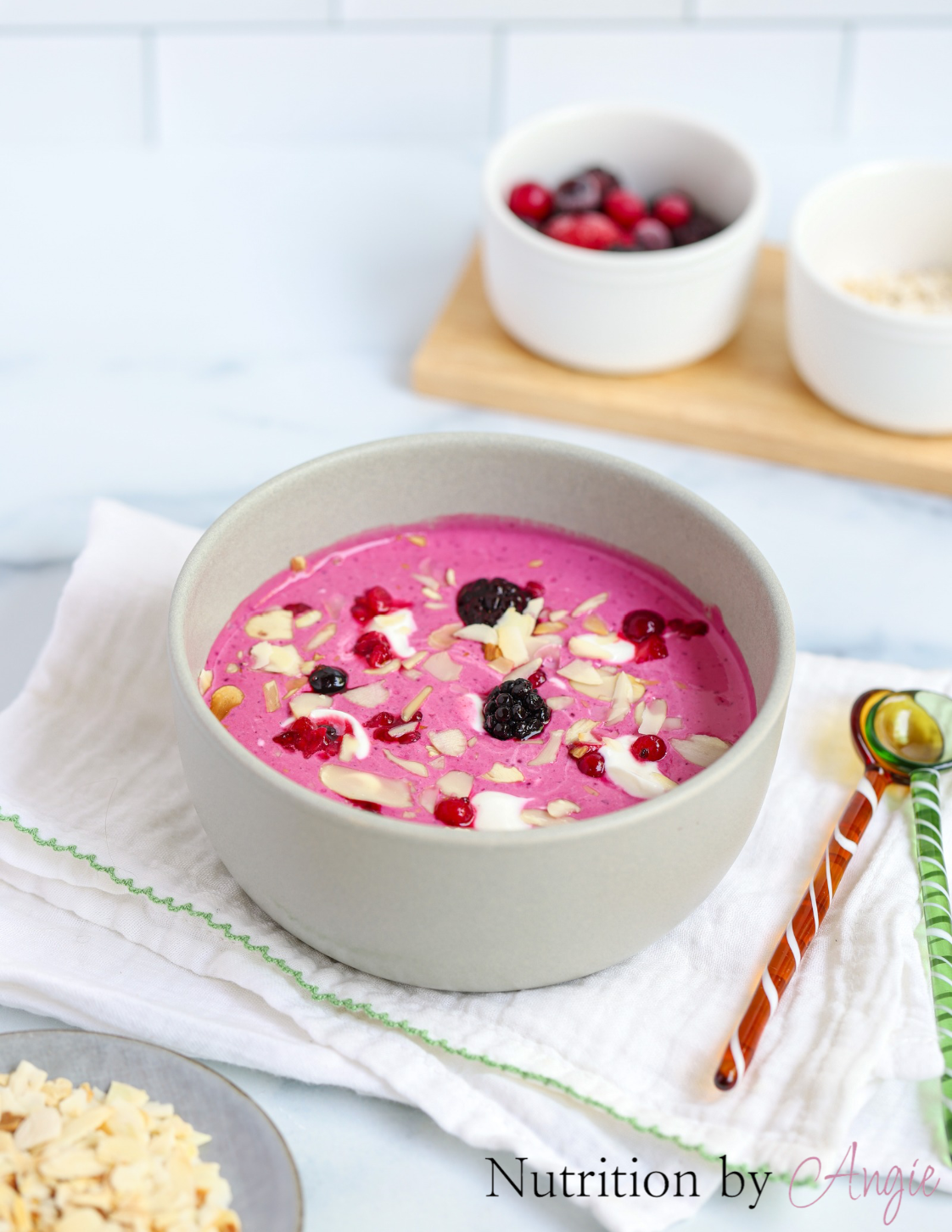
Breakfast Bowl with Roasted Almonds, Summer Berries and Beetroot
Breakfast Bowl with Roasted Almonds • Healthy Breakfast Bowl • Greek Yoghurt Breakfast • Berry and Beetroot Bowl • Gluten-Free Porridge Oats • High-Protein Breakfast Ingredients • Almond Breakfast Bowl • Fibre-Rich Breakfast Ideas • Easy Homemade Breakfast
Allergen information: This recipe contains milk from Greek yoghurt and tree nuts (almonds). Use certified gluten-free oats if preparing the bowl for someone with coeliac disease, and check all packaged ingredients for potential allergens or cross-contact.
Introduction
This Breakfast Bowl with Roasted Almonds is a colourful, creamy and satisfying breakfast made with Greek yoghurt, frozen summer fruit, cooked beetroot, gluten-free porridge oats and toasted flaked almonds.
It combines the natural sweetness of berries with the earthy flavour of beetroot, the creaminess of Greek yoghurt and the delicate crunch of roasted almonds.
The result is a delicious breakfast bowl with a beautiful pink colour and a variety of textures.
Greek yoghurt provides high-quality protein and calcium, while oats contribute complex carbohydrates and dietary fibre.
Summer berries add vitamin C, fibre and naturally occurring plant compounds.
Cooked beetroot provides folate, potassium and dietary nitrates, while almonds contribute vitamin E, unsaturated fats and plant-based protein.
Together, these ingredients create a breakfast containing protein, fibre, carbohydrates, healthy fats, vitamins and minerals.
This bowl is ideal for a refreshing breakfast, a post-exercise meal or a nutritious brunch.
It can also be adapted to suit different dietary preferences by choosing a suitable yoghurt alternative.
For those following a vegan diet, an unsweetened fortified soya yoghurt is a useful option because it can provide protein and calcium, depending on the product.
Benefits of All the Ingredients
Flaked Almonds
Flaked almonds add a delicate crunch and a naturally nutty flavour.
Lightly roasting them enhances their aroma and creates a crisp texture.
Key nutritional benefits:
Vitamin E: Helps protect cells from oxidative stress.
Monounsaturated Fats: Can support healthier LDL cholesterol levels when replacing saturated fats.
Plant-Based Protein: Contributes to normal muscle maintenance.
Dietary Fibre: Supports digestive health.
Magnesium: Contributes to normal muscle function.
Calcium: Supports healthy bones and teeth.
Riboflavin: Contributes to normal energy metabolism.
Almonds are energy-dense, but they provide valuable nutrients and can be part of a balanced diet.
Roasting improves their flavour without requiring added sugar.
Frozen Summer Fruit
Frozen summer fruit typically includes a mixture of berries such as strawberries, raspberries, blackberries and redcurrants.
The exact nutritional composition depends on the fruits included.
Key nutritional benefits:
Vitamin C: Supports normal immune function and collagen formation.
Dietary Fibre: Supports digestive health.
Anthocyanins: Naturally occurring pigments found in many berries.
Polyphenols: Plant compounds that contribute to dietary variety.
Manganese: Supports normal energy metabolism.
Natural Sweetness: Adds flavour without requiring added sugar.
Frozen berries can be a convenient and nutritious alternative to fresh berries.
Freezing helps preserve many nutrients, although some vitamin C may be lost during processing and storage.
Food safety note: Frozen berries should be boiled for at least one minute before eating, following Irish food safety guidance, because they can occasionally carry viruses. Allow them to cool before adding them to the breakfast bowl.
Cooked Beetroot
Cooked beetroot gives this breakfast bowl its vibrant colour and subtle earthy sweetness.
Key nutritional benefits:
Folate: Contributes to normal cell division.
Dietary Fibre: Supports digestive health.
Potassium: Supports normal muscle function.
Manganese: Contributes to normal energy metabolism.
Dietary Nitrates: Naturally occurring compounds that the body can convert into nitric oxide.
Betalains: Natural pigments responsible for beetroot's distinctive colour.
Beetroot's dietary nitrates have been studied for their potential effects on blood pressure and exercise performance.
However, the amount consumed and individual responses vary, so beetroot should not be considered a treatment for high blood pressure.
Choose plain cooked beetroot rather than beetroot preserved in sweetened vinegar for the best flavour in this bowl.
Gluten-Free Porridge Oats
Porridge oats provide complex carbohydrates and dietary fibre.
Key nutritional benefits:
Complex Carbohydrates: Provide energy for daily activities.
Beta-Glucan: A soluble fibre associated with cholesterol management when consumed in sufficient amounts.
Dietary Fibre: Supports normal digestive function.
Manganese: Contributes to normal energy metabolism.
Magnesium: Supports normal muscle function.
Thiamin: Contributes to normal energy metabolism.
Plant-Based Protein: Contributes to daily protein intake.
Oats provide a satisfying base and help create a thicker texture.
Certified gluten-free oats are important for people who need to avoid gluten cross-contact.
Some people with coeliac disease may also be sensitive to avenin, the protein naturally found in oats.
Greek Yoghurt
Greek yoghurt creates the creamy base of this breakfast bowl.
It also contributes protein and important minerals.
Key nutritional benefits:
High-Quality Protein: Supports normal muscle maintenance and tissue repair.
Calcium: Contributes to healthy bones and teeth.
Vitamin B12: Supports normal nervous system function.
Phosphorus: Supports bone health.
Riboflavin: Contributes to normal energy metabolism.
Iodine: Supports normal thyroid function.
Plain Greek yoghurt is a useful choice because it provides creaminess without added sugar.
Lower-fat Greek yoghurt can be used if reducing saturated fat intake is a priority.
For a vegan version, choose an unsweetened plant-based yoghurt, ideally fortified with calcium and vitamin B12.
Why This Breakfast Bowl with Roasted Almonds Is a Nourishing Choice
Provides High-Quality Protein: Greek yoghurt contributes protein that supports normal muscle maintenance.
Contains Dietary Fibre: Oats, berries, beetroot and almonds contribute fibre.
Source of Calcium: Greek yoghurt provides calcium for healthy bones and teeth.
Contains Beta-Glucan: Oats provide soluble fibre associated with cholesterol management.
Provides Vitamin E: Almonds contribute vitamin E, which helps protect cells from oxidative stress.
Contains Naturally Occurring Plant Compounds: Berries and beetroot provide colourful plant pigments and polyphenols.
Provides Unsaturated Fats: Almonds contain predominantly unsaturated fats.
Naturally Sweet: Fruit and beetroot add sweetness without requiring added sugar.
Customisable: Different yoghurt and fruit options can suit individual preferences.
Convenient for Breakfast: The ingredients can be prepared in advance for a quick morning meal.
Delicious Serving Suggestions
With Extra Fresh Berries
Top with fresh strawberries, raspberries or blueberries for additional colour and fibre.
With a Sprinkle of Cinnamon
Add ground cinnamon to complement the sweetness of the berries and beetroot.
With Chia Seeds
Sprinkle with chia seeds for additional fibre and plant-based omega-3 fatty acids.
With Sliced Banana
Add banana for extra natural sweetness and carbohydrates.
With Unsweetened Coconut Flakes
Finish with coconut flakes for a contrasting texture.
With a Spoonful of Nut Butter
Add unsweetened almond or peanut butter for a richer breakfast with additional unsaturated fats and protein.
Tips for the Best Breakfast Bowl with Roasted Almonds
Choose plain Greek yoghurt: This helps avoid unnecessary added sugar.
Use lower-fat Greek yoghurt if preferred: This can reduce saturated fat intake.
Choose a thick yoghurt: It creates a creamy, satisfying texture.
Use fortified plant-based yoghurt for a vegan version: Check protein and calcium content.
Choose certified gluten-free oats if required: Ordinary oats may contain gluten through cross-contact.
Use plain porridge oats: Avoid flavoured varieties with added sugar.
Cook oats if a softer texture is preferred: This can make the bowl easier to eat.
Allow cooked oats to cool: This prevents the yoghurt from becoming warm.
Use ready-cooked plain beetroot: This saves preparation time.
Avoid pickled beetroot: Vinegar can overpower the fruit flavours.
Chop beetroot into small pieces: This helps it blend more evenly.
Blend beetroot with yoghurt if desired: This creates a smooth pink base.
Use unsweetened frozen fruit: Check for added sugar.
Boil frozen berries before eating: Follow food safety guidance and cool them before serving.
Use fresh berries as an alternative: Wash thoroughly before eating.
Roast flaked almonds gently: They can burn quickly.
Use a dry frying pan: Almonds can be toasted without added oil.
Stir almonds frequently: This helps prevent burning.
Allow almonds to cool: This preserves their crunch.
Add almonds just before serving: This prevents them from becoming soft.
Taste before adding sweetener: Fruit and beetroot provide natural sweetness.
Avoid unnecessary added sugar: Plain yoghurt and fruit are flavourful on their own.
Adjust the consistency: Add a little milk or water if the mixture is too thick.
Serve chilled: This creates a refreshing breakfast.
Prepare components separately: This helps preserve texture.
Store yoghurt and fruit mixtures in the refrigerator: Keep at 5°C or below.
Consume prepared bowls within approximately 24 hours: Freshly assembled bowls generally have the best texture.
Keep toasted almonds in an airtight container: This helps maintain crispness.
Use moderate portions of nuts: Almonds are nutrient-dense but energy-dense.
Pair with additional fruit if desired: This increases dietary variety.
A Note on Oats, Almonds and Cholesterol-Friendly Nutrition
This Breakfast Bowl with Roasted Almonds combines oats, almonds, fruit, beetroot and Greek yoghurt.
Oats provide beta-glucan, a soluble fibre that can help lower blood cholesterol when consumed regularly in sufficient amounts.
A daily intake of approximately 3 grams of oat beta-glucan has been associated with cholesterol-lowering benefits.
However, an individual serving of this breakfast bowl may not provide that amount on its own.
Almonds contain predominantly unsaturated fats, dietary fibre and vitamin E.
Replacing saturated fats with unsaturated fats can help improve LDL cholesterol levels.
Greek yoghurt provides protein and calcium.
Choosing lower-fat Greek yoghurt can help moderate saturated fat intake.
Berries contribute dietary fibre and naturally occurring plant compounds.
Beetroot provides folate, potassium and dietary nitrates.
Together, these ingredients can contribute to a varied, nutrient-rich breakfast.
For people managing cholesterol, the overall dietary pattern remains important.
A diet rich in vegetables, fruit, whole grains, legumes, nuts, seeds and unsaturated fats can support cardiovascular health.
This breakfast bowl can be part of that pattern when enjoyed in suitable portions.
Final Thoughts
This Breakfast Bowl with Roasted Almonds, Summer Berries and Beetroot is a colourful, creamy and satisfying way to start the day.
Combining protein-rich Greek yoghurt, fibre-containing oats, naturally sweet berries, nutritious beetroot and crunchy roasted almonds, it provides a delicious mix of flavours and textures.
Naturally vegetarian and gluten-free when suitable ingredients are used, it can also be made vegan by replacing Greek yoghurt with a fortified plant-based alternative.
Enjoy as part of a varied and balanced diet for a refreshing, nourishing breakfast.