
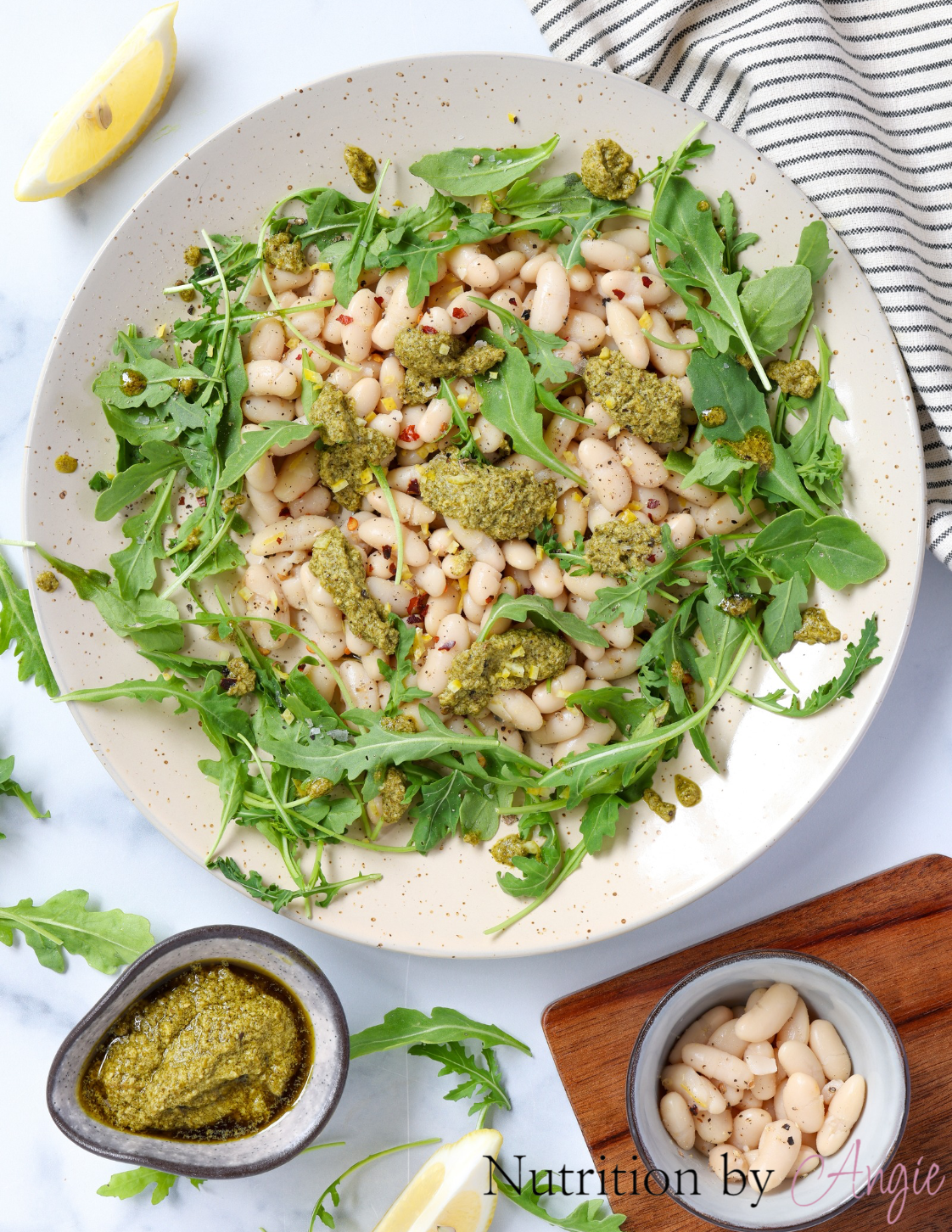
Butter Bean and Pesto Breakfast Bowl with Lemon and Rocket
Plant-Protein Rich • High-Fibre • Mediterranean-Inspired • Quick and Easy Breakfast • Heart-Conscious • Meal-Prep Friendly • Naturally Gluten-Free with Suitable Pesto
Traditional basil pesto commonly contains Parmesan or another hard cheese and pine nuts. Check the ingredients of homemade or store-bought pesto for milk, nuts and other allergens. The recipe is dairy-free only when made with dairy-free pesto.
Introduction
This Butter Bean and Pesto Breakfast Bowl with Lemon and Rocket is a fresh, satisfying and nourishing savoury breakfast made with creamy butter beans, fragrant pesto, zesty lemon and peppery rocket.
Inspired by the simple, flavourful ingredients of Mediterranean cooking, this breakfast bowl combines plant-based protein, dietary fibre, aromatic herbs and refreshing citrus in one delicious meal.
The butter beans provide a creamy texture and a substantial nutritional foundation, while pesto adds a rich, herbaceous flavour.
Fresh lemon juice brings brightness and acidity, and lemon zest contributes a wonderfully fragrant citrus aroma.
Rocket adds freshness, a delicate peppery taste and valuable vitamins and naturally occurring plant compounds.
One of the main nutritional highlights of this healthy butter bean breakfast bowl is its generous amount of dietary fibre.
Butter beans belong to the legume family and are particularly valued for their combination of plant-based protein, complex carbohydrates and fibre.
They provide both soluble and insoluble fibre, which support digestive health and contribute to a balanced dietary pattern.
Soluble fibre is especially relevant to cholesterol-conscious eating because it can help reduce LDL cholesterol levels when consumed regularly as part of a balanced diet.
Butter beans also provide important minerals such as iron, magnesium, potassium and phosphorus, alongside folate and other B vitamins.
Their naturally creamy texture makes them particularly suitable for savoury breakfast bowls, salads and Mediterranean-inspired dishes.
Pesto contributes a delicious combination of herbs, oil and other ingredients.
Traditional basil pesto commonly contains basil, olive oil, pine nuts, garlic and Parmesan cheese.
Depending on the recipe, it can provide unsaturated fats, aromatic plant compounds and small amounts of vitamins and minerals.
Olive oil is particularly valued for its monounsaturated fat content.
Replacing saturated fats with unsaturated fats can help improve blood cholesterol levels.
Fresh lemon contributes vitamin C, which supports normal immune function and collagen formation.
Vitamin C also helps improve the absorption of non-haem iron from plant foods such as butter beans.
This makes lemon a particularly useful addition to a bean-based meal.
Rocket, also known as arugula, belongs to the cruciferous vegetable family.
It contains vitamin K, folate, carotenoids and naturally occurring glucosinolates.
Its peppery flavour balances the richness of the pesto and the creamy texture of the butter beans.
This Mediterranean butter bean breakfast bowl is a convenient option for anyone who prefers savoury breakfasts.
It provides a satisfying alternative to more traditional breakfast choices while offering a combination of protein, fibre and colourful plant foods.
The recipe is also suitable for lunch, a light dinner or a nourishing side dish.
For a more substantial meal, it can be served with whole-grain toast, avocado, tomatoes or a poached egg.
With its creamy beans, fragrant pesto, bright lemon and fresh rocket, this Butter Bean and Pesto Breakfast Bowl is a delicious way to enjoy a simple, nutritious and flavourful meal.
Benefits of All the Ingredients
Butter Beans
Butter beans are the main ingredient in this breakfast bowl.
Also known as lima beans, they belong to the legume family and are valued for their creamy texture, mild flavour and nutritional benefits.
Butter beans provide a combination of plant-based protein, complex carbohydrates, dietary fibre, vitamins and minerals.
Butter beans provide:
Plant-Based Protein: Supports normal muscle maintenance and tissue repair.
Dietary Fibre: Supports normal digestive function.
Soluble Fibre: Contributes to a cholesterol-conscious dietary pattern.
Complex Carbohydrates: Provide energy.
Folate: Supports normal cell division.
Iron: Contributes to normal oxygen transport.
Magnesium: Supports normal muscle and nerve function.
Potassium: Supports normal muscle function and blood pressure regulation.
Phosphorus: Supports healthy bones and teeth.
Manganese: Contributes to normal metabolism.
Zinc: Supports normal immune function.
Butter Beans and Plant-Based Protein
Butter beans provide plant-based protein.
Protein is essential for normal muscle maintenance, tissue repair and the production of enzymes and other important molecules.
Although butter beans contain protein, their amino acid profile differs from that of animal proteins.
Combining legumes with a variety of other protein-containing foods throughout the day helps support an adequate intake of essential amino acids.
The 500g of drained butter beans used in this recipe provides a substantial amount of plant-based protein across the entire bowl.
The exact amount per serving depends on how the recipe is divided.
Butter Beans and Dietary Fibre
Butter beans are an excellent source of dietary fibre.
They contain both soluble and insoluble fibre.
Soluble fibre absorbs water and forms a gel-like substance during digestion.
Insoluble fibre helps support normal bowel movements.
Including fibre-rich foods regularly is important for digestive health.
Butter Beans and Cholesterol
One of the most valuable nutritional benefits of butter beans is their soluble fibre content.
Soluble fibre can help reduce cholesterol absorption and contribute to lower LDL cholesterol levels.
Regularly including beans, lentils and other legumes is a useful dietary strategy for supporting healthy blood cholesterol levels.
Butter beans are also naturally low in saturated fat.
This makes them a valuable ingredient in a heart-conscious dietary pattern.
Butter Beans and Digestive Health
Butter beans contain fermentable carbohydrates and dietary fibre.
Certain intestinal bacteria can use these compounds during fermentation.
This process produces short-chain fatty acids, which contribute to normal intestinal function.
Individual digestive tolerance varies, particularly among people who are not accustomed to eating legumes regularly.
Butter Beans and Blood Glucose
Butter beans contain carbohydrates alongside fibre and protein.
Their fibre-rich structure contributes to a more gradual digestion of carbohydrates compared with many refined carbohydrate foods.
This makes them a useful ingredient in balanced meals.
Butter Beans and Folate
Butter beans provide folate, an essential B vitamin.
Folate contributes to normal cell division and red blood cell formation.
It is particularly important during periods of growth and pregnancy.
Butter Beans and Iron
Butter beans provide non-haem iron.
Iron contributes to normal oxygen transport and helps reduce tiredness and fatigue when intake is adequate.
Non-haem iron is generally less readily absorbed than haem iron from animal foods.
However, vitamin C can help improve its absorption.
The lemon juice in this recipe provides a useful source of vitamin C alongside the beans.
Butter Beans and Magnesium
Magnesium is an essential mineral involved in normal muscle and nerve function.
It also contributes to normal energy metabolism and bone maintenance.
Butter beans provide magnesium alongside other foods such as nuts, seeds and whole grains.
Butter Beans and Potassium
Potassium contributes to normal muscle function and the maintenance of normal blood pressure.
Butter beans are a useful plant-based source of potassium.
Butter Beans and Satiety
The combination of protein, fibre and complex carbohydrates makes butter beans particularly satisfying.
Protein and fibre can contribute to feelings of fullness.
This makes butter beans a useful ingredient in a nourishing breakfast or lunch.
Why Butter Beans Work Well in a Breakfast Bowl
Butter beans have a soft, creamy texture and a mild flavour.
They absorb the flavour of pesto and lemon beautifully.
Their texture also provides a satisfying contrast to the fresh, peppery rocket.
Lemon Zest and Juice
Fresh lemon adds brightness, freshness and a delicious citrus aroma.
Both the zest and juice contribute flavour, while the juice provides vitamin C.
Lemon provides:
Vitamin C: Supports normal immune function and collagen formation.
Citric Acid: Contributes to its refreshing acidity.
Flavonoids: Naturally occurring plant compounds.
Small Amounts of Potassium: Supports normal muscle function.
Aromatic Oils: Particularly concentrated in the zest.
Lemon and Vitamin C
Lemon juice provides vitamin C.
Vitamin C contributes to normal immune function, collagen formation and the protection of cells from oxidative stress.
It also supports normal wound healing.
Lemon and Iron Absorption
Vitamin C helps improve the absorption of non-haem iron from plant foods.
Butter beans contain non-haem iron.
Adding lemon juice to the beans can help improve the availability of this iron during digestion.
This is one of the particularly useful nutritional combinations in this recipe.
Lemon and Antioxidant Plant Compounds
Lemons contain naturally occurring flavonoids.
These compounds have been studied for their antioxidant properties.
Lemon zest also contains aromatic oils and plant compounds.
Lemon Zest and Flavour
Lemon zest contains fragrant essential oils.
These contribute a bright citrus aroma without adding significant liquid.
Using both zest and juice creates a more complex lemon flavour.
Lemon and Heart-Conscious Nutrition
Lemon adds freshness and acidity without requiring large amounts of salt.
It can be a useful ingredient for enhancing the flavour of vegetables, beans and salads.
Why Lemon Works Well
Lemon balances the richness of pesto and the creamy texture of butter beans.
Its bright flavour makes the breakfast bowl taste fresh and vibrant.
Pesto
Pesto provides the rich, fragrant flavour that brings this breakfast bowl together.
Traditional basil pesto is commonly made with basil, olive oil, pine nuts, garlic and Parmesan cheese.
However, the exact ingredients depend on whether the pesto is homemade or store-bought.
Pesto may provide:
Monounsaturated Fats: Particularly when made with olive oil.
Vitamin E: From olive oil and nuts.
Vitamin K: From basil and other leafy herbs.
Calcium: From Parmesan or other hard cheese.
Plant-Based Protein: From nuts and seeds.
Aromatic Plant Compounds: From basil and garlic.
Polyphenols: Naturally occurring compounds found in herbs and olive oil.
Pesto and Unsaturated Fats
Pesto commonly contains olive oil.
Olive oil is rich in monounsaturated fatty acids, particularly oleic acid.
Replacing saturated fats with unsaturated fats can help improve LDL cholesterol levels.
This makes olive oil a useful ingredient in a heart-conscious dietary pattern.
Pesto and Basil
Basil provides the distinctive herbaceous flavour of traditional pesto.
It contains naturally occurring aromatic compounds and polyphenols.
Fresh basil also provides vitamin K, although the amount contributed by pesto depends on the recipe and serving size.
Pesto and Olive Oil
Olive oil is a central ingredient in Mediterranean-style dietary patterns.
It provides predominantly monounsaturated fats and naturally occurring phenolic compounds.
Extra virgin olive oil is particularly valued for its polyphenol content.
Pesto and Pine Nuts
Traditional pesto often contains pine nuts.
Pine nuts provide unsaturated fats, plant-based protein, magnesium, manganese and vitamin E.
They also contribute a rich, creamy texture.
Pesto and Garlic
Garlic adds savoury depth.
It contains naturally occurring sulphur compounds that contribute to its characteristic aroma.
Pesto and Parmesan
Traditional pesto commonly contains Parmesan or another hard cheese.
Parmesan provides protein and calcium.
It also contributes saturated fat and sodium, so the amount used can be considered when managing overall dietary intake.
Choosing Store-Bought Pesto
Store-bought pesto varies considerably between brands.
Some products contain olive oil, while others use sunflower oil or other vegetable oils.
The amounts of basil, nuts, cheese and salt also vary.
Checking the ingredient list and nutrition label can help identify a product that suits individual preferences.
Pesto and Cholesterol-Conscious Eating
Pesto can be a useful source of unsaturated fats, particularly when made with olive oil and nuts.
However, traditional varieties may also contain saturated fat from cheese.
Choosing a pesto with a higher proportion of unsaturated fats can be beneficial for a cholesterol-conscious dietary pattern.
Why Pesto Works Well with Butter Beans
Pesto coats the butter beans beautifully.
Its rich, herbaceous flavour complements their mild taste and creamy texture.
The lemon juice adds freshness and balances the richness of the sauce.
Rocket (Arugula)
Rocket adds freshness, colour and a distinctive peppery flavour.
It belongs to the cruciferous vegetable family, alongside broccoli, kale, cabbage and Brussels sprouts.
Rocket is particularly valued for its vitamin K, folate and naturally occurring plant compounds.
Rocket provides:
Vitamin K: Supports normal blood clotting and bone maintenance.
Folate: Contributes to normal cell division.
Vitamin C: Supports normal immune function.
Beta-Carotene: Can be converted into vitamin A.
Calcium: Supports normal bone maintenance.
Potassium: Supports normal muscle function.
Glucosinolates: Naturally occurring compounds found in cruciferous vegetables.
Dietary Fibre: Supports normal digestive function.
Naturally Occurring Nitrates: Found in many leafy vegetables.
Rocket and Vitamin K
Rocket provides vitamin K.
Vitamin K contributes to normal blood clotting and the maintenance of normal bones.
Leafy green vegetables are important dietary sources of this vitamin.
People taking warfarin should aim for a consistent vitamin K intake rather than making sudden changes.
Rocket and Folate
Rocket contributes folate.
Folate supports normal cell division and red blood cell formation.
It is particularly important during periods of growth and pregnancy.
Rocket and Carotenoids
Rocket contains beta-carotene and other naturally occurring carotenoids.
Beta-carotene can be converted into vitamin A.
Vitamin A supports normal vision and immune function.
Rocket and Glucosinolates
Rocket belongs to the cruciferous vegetable family.
Cruciferous vegetables contain glucosinolates, which can be converted into other compounds when the plant is chopped or chewed.
These substances have been studied for their biological properties.
Rocket and Naturally Occurring Nitrates
Rocket contains naturally occurring dietary nitrates.
The body can convert some dietary nitrate into nitric oxide through a series of biological processes.
Nitric oxide is involved in normal blood vessel function.
Research has investigated the potential relationship between nitrate-rich vegetables and cardiovascular health.
Rocket and Digestive Health
Rocket provides dietary fibre.
Although the 30g used in this recipe is a relatively small portion, it contributes to the overall variety of vegetables and fibre-containing foods in the meal.
Rocket and Heart-Conscious Nutrition
Rocket is naturally low in saturated fat and provides vitamins, minerals and plant compounds.
It is a valuable ingredient in vegetable-rich dietary patterns.
Why Rocket Works Well
Rocket has a peppery flavour that contrasts beautifully with creamy butter beans.
Its fresh texture balances the richness of pesto.
The lemon enhances its bright, slightly bitter notes.
Why Butter Bean and Pesto Breakfast Bowl Makes a Nourishing Meal
Provides Plant-Based Protein
Butter beans contribute protein that supports normal muscle maintenance.
Rich in Dietary Fibre
Butter beans provide soluble and insoluble fibre that supports digestive health.
Supports Cholesterol-Conscious Eating
The soluble fibre in butter beans can contribute to lowering LDL cholesterol.
Provides Important Minerals
Butter beans contribute iron, magnesium, potassium and phosphorus.
Contains Vitamin C
Lemon provides vitamin C, which supports normal immune function.
Supports Plant Iron Absorption
Vitamin C from lemon helps improve the absorption of non-haem iron from butter beans.
Includes Unsaturated Fats
Pesto made with olive oil and nuts can provide heart-conscious unsaturated fats.
Contains Leafy Greens
Rocket contributes vitamin K, folate and naturally occurring plant compounds.
Offers Mediterranean-Inspired Flavours
Pesto, lemon and rocket create a fresh, aromatic combination.
Works Well for Breakfast or Lunch
The bowl is satisfying, versatile and convenient for busy days.
Delicious Serving Suggestions
With Whole-Grain Sourdough Toast
Serve alongside whole-grain sourdough bread for additional carbohydrates and dietary fibre.
The bread is particularly delicious with the creamy beans and pesto.
With Fresh Cherry Tomatoes
Add halved cherry tomatoes for extra colour, vitamin C and lycopene.
Their natural sweetness complements the lemon and rocket.
With Avocado
Serve with sliced avocado for additional fibre, potassium and monounsaturated fats.
With a Poached Egg
Add a poached egg for extra complete protein, choline and vitamin B12.
This creates a more substantial breakfast.
With Roasted Mushrooms
Serve alongside roasted mushrooms for additional B vitamins, minerals and savoury flavour.
With Extra Fresh Herbs
Finish with fresh basil, parsley or coriander for additional aroma and freshness.
Tips for the Best Butter Bean and Pesto Breakfast Bowl
Choose good-quality butter beans: Their creamy texture is central to the recipe.
Drain the beans thoroughly: This prevents the bowl from becoming watery.
Rinse canned beans if preferred: This can reduce some of the sodium from the canning liquid.
Use fresh lemon: Fresh zest and juice provide the brightest flavour.
Zest the lemon before juicing: This makes preparation easier.
Wash the lemon before zesting: This helps remove surface residue.
Avoid the white pith: It can taste bitter.
Choose a pesto you enjoy: Basil pesto works particularly well.
Check pesto ingredients: Store-bought varieties differ in oil, nuts, cheese and salt.
Use olive oil-based pesto if preferred: It can provide predominantly monounsaturated fats.
Choose dairy-free pesto when required: Traditional pesto often contains cheese.
Adjust the lemon juice to taste: Add gradually to balance the pesto.
Use fresh rocket: It provides the best peppery flavour.
Wash and dry rocket thoroughly: Excess water can dilute the dressing.
Add rocket just before serving: This helps preserve its fresh texture.
Warm the beans if preferred: The bowl can be enjoyed warm or at room temperature.
Avoid overheating pesto: Gentle warming helps preserve its fresh herb flavour.
Add extra vegetables: Tomatoes, cucumber or roasted peppers work particularly well.
Serve with whole-grain bread for additional fibre: This creates a more substantial breakfast.
Add a poached egg if desired: It increases the protein content.
Taste before adding salt: Pesto and canned beans may already contain sodium.
Refrigerate leftovers promptly: Store in an airtight container and consume within approximately 2–3 days.
Store rocket separately when possible: This helps prevent wilting.
Check allergens carefully: Traditional pesto commonly contains milk and pine nuts.
A Note on Butter Beans, Pesto and Cholesterol-Friendly Nutrition
This Butter Bean and Pesto Breakfast Bowl combines fibre-rich legumes, aromatic herbs, citrus and leafy greens.
Butter beans are particularly valuable in a cholesterol-conscious dietary pattern because they contain soluble fibre.
Soluble fibre can help reduce cholesterol absorption and contribute to lower LDL cholesterol levels.
Regularly including beans, lentils and other legumes is a useful dietary strategy for supporting cardiovascular health.
Butter beans are also naturally low in saturated fat and provide plant-based protein, iron, magnesium, potassium and folate.
Pesto commonly contains olive oil and nuts, which provide unsaturated fats.
Replacing saturated fats with unsaturated fats can help improve blood cholesterol levels.
Traditional pesto may also contain cheese, which contributes saturated fat and sodium.
Choosing a pesto with a higher proportion of olive oil and nuts, and using an appropriate portion, can support a heart-conscious dietary pattern.
Lemon provides vitamin C, which helps improve the absorption of non-haem iron from butter beans.
Rocket contributes vitamin K, folate, carotenoids and naturally occurring glucosinolates.
Its peppery flavour adds freshness without requiring a complicated dressing.
Serving this bowl with whole-grain bread can increase the overall fibre content.
Adding avocado can provide additional monounsaturated fats.
Fresh tomatoes can contribute lycopene and vitamin C.
A balanced dietary pattern that regularly includes vegetables, fruit, legumes, whole grains, nuts, seeds and unsaturated fats can support cardiovascular health and overall nutritional wellbeing.
With its creamy butter beans, fragrant pesto, fresh lemon and peppery rocket, this Butter Bean and Pesto Breakfast Bowl is a delicious, satisfying and nourishing savoury breakfast that can be enjoyed as part of a varied and balanced diet.