
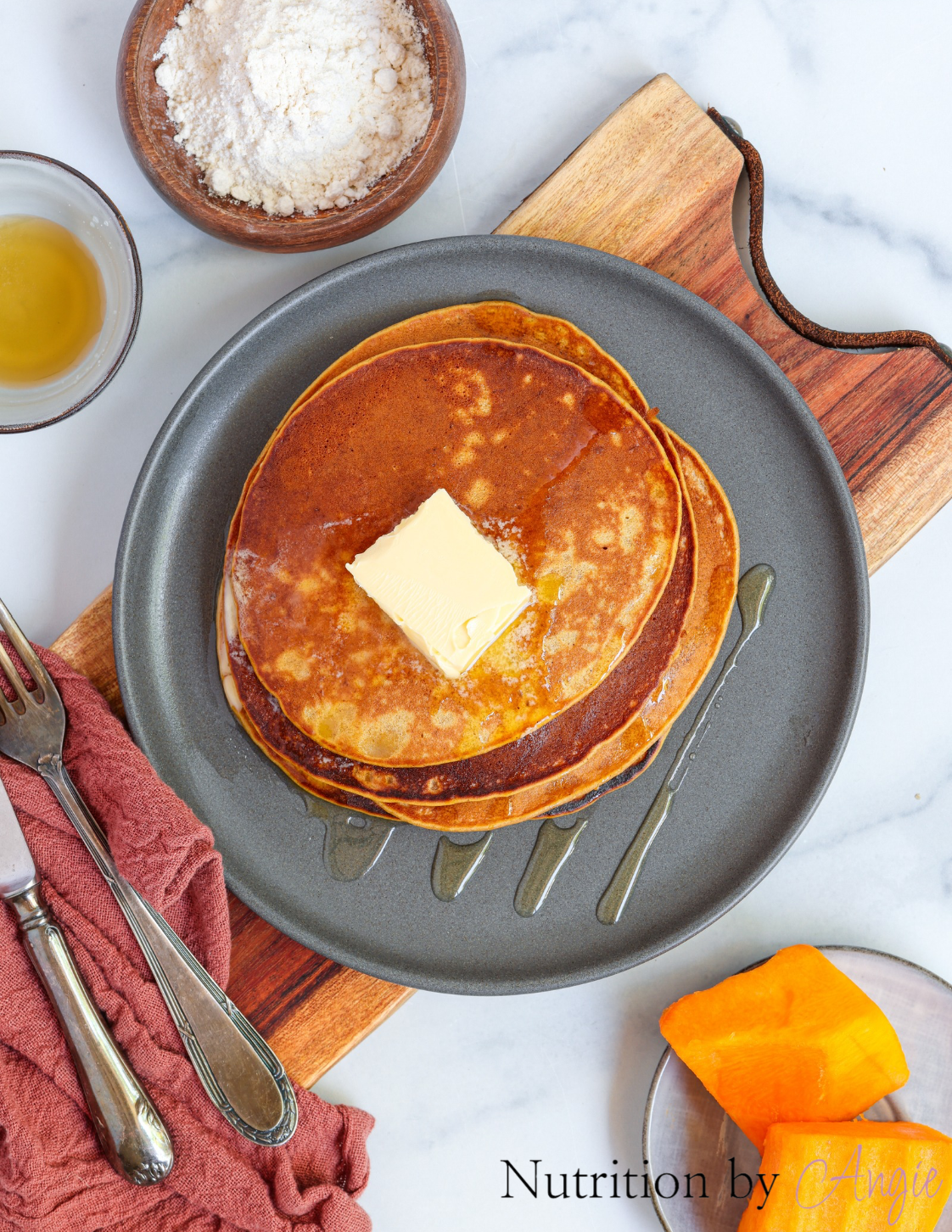
Fluffy Pumpkin Spice Pancakes with Maple Syrup
Vegetarian • Pumpkin Breakfast Recipe • Family-Friendly • Autumn-Inspired • Homemade Pancakes • Comforting Breakfast • Brunch Favourite
These pancakes contain wheat, milk and egg. For a gluten-free variation, use a suitable gluten-free all-purpose flour blend and certified gluten-free baking powder and spices. Choose pure pumpkin purée rather than sweetened pumpkin pie filling.
Introduction
These Fluffy Pumpkin Spice Pancakes with Maple Syrup are a delicious, comforting breakfast made with creamy pumpkin purée, warming autumn spices, whole milk, fresh egg, pure maple syrup and a touch of vanilla.
Soft, golden and wonderfully fluffy, these homemade pumpkin pancakes bring together the naturally sweet flavour of pumpkin with the aromatic warmth of cinnamon, ginger, nutmeg and other spices commonly found in pumpkin spice blends.
Finished with a little butter and a drizzle of maple syrup, they make a satisfying breakfast or weekend brunch that the whole family can enjoy.
One of the highlights of this easy pumpkin spice pancake recipe is the addition of real pumpkin purée.
Pumpkin provides beta-carotene, a naturally occurring carotenoid that the body can convert into vitamin A.
Vitamin A contributes to normal vision, immune function and the maintenance of healthy skin.
Pumpkin also provides dietary fibre, potassium and other naturally occurring plant compounds.
The whole milk contributes protein, calcium, phosphorus and vitamin B12, while the egg provides high-quality protein, choline, selenium and several important vitamins.
Together, these ingredients create pancakes that offer more than just comforting flavour.
The flour provides carbohydrates for energy, while baking powder helps create the light, airy texture that makes homemade pancakes so enjoyable.
Pumpkin spice adds a warm, fragrant flavour without requiring a long list of individual spices.
Pure maple syrup contributes a distinctive caramel-like sweetness that complements the pumpkin beautifully.
Melted butter adds richness and helps create a tender pancake texture, while vanilla extract brings a gentle aromatic sweetness.
These homemade pumpkin pancakes are particularly enjoyable during autumn, when pumpkin-inspired dishes become a favourite in many households.
However, canned pumpkin purée makes them easy to prepare throughout the year.
The recipe is also versatile and can be adapted to suit different preferences.
For a higher-fibre variation, part of the all-purpose flour can be replaced with whole-wheat flour.
Fresh berries, chopped walnuts or natural yogurt can also be added as toppings to increase the variety of nutrients.
For people interested in balanced, cholesterol-conscious eating, these pancakes can be enjoyed as part of a varied diet.
The pumpkin contributes fibre and carotenoids, while the milk and egg provide protein and important micronutrients.
Choosing appropriate portion sizes and pairing the pancakes with fruit, nuts or yogurt can create a more balanced breakfast.
With their soft, fluffy texture, warming pumpkin spices and delicious maple flavour, these Pumpkin Spice Pancakes are a wonderful addition to a collection of homemade breakfast recipes.
Benefits of All the Ingredients
All-Purpose Flour
All-purpose flour provides the main structure of these pumpkin spice pancakes.
It is typically made from refined wheat flour and is widely used in baking because of its versatility.
All-purpose flour provides:
Carbohydrates: Supply energy for everyday activities.
Plant-Based Protein: Contributes to overall protein intake.
B Vitamins: Depending on flour enrichment.
Iron: Particularly in fortified or enriched varieties.
Small Amounts of Dietary Fibre: Supports normal digestion.
Gluten Proteins: Help provide structure and texture.
Flour and Energy
Carbohydrates are an important source of energy.
During digestion, carbohydrates are broken down into glucose, which can be used by the body's cells.
Flour provides carbohydrates that make pancakes a satisfying breakfast food.
Flour and Pancake Structure
Wheat flour contains proteins that can form gluten when mixed with liquid.
Gluten helps provide structure and elasticity.
In pancakes, gentle mixing helps create a soft, tender texture.
Flour and B Vitamins
Depending on the country and product, all-purpose flour may be enriched or fortified with nutrients such as iron and certain B vitamins.
These nutrients contribute to normal energy metabolism and other essential functions.
Flour and Dietary Fibre
Refined all-purpose flour generally contains less dietary fibre than whole-wheat flour.
For a higher-fibre variation, part of the flour can be replaced with whole-wheat flour.
Whole grains contribute additional fibre, vitamins and minerals.
Why All-Purpose Flour Works Well
All-purpose flour creates a soft, light pancake texture.
Its mild flavour allows the pumpkin, spices and vanilla to stand out.
Baking Powder
Baking powder is a raising agent that helps create light and fluffy pancakes.
It usually contains sodium bicarbonate, one or more acidifying ingredients and a starch.
Baking Powder and Pancake Texture
When baking powder comes into contact with moisture and heat, it releases carbon dioxide gas.
These gas bubbles help the pancake batter rise.
The result is a lighter, softer texture.
Baking Powder and Consistency
Using the correct amount of baking powder helps create evenly risen pancakes.
Too much can affect the flavour, while too little may produce a denser texture.
Choosing Baking Powder
Baking powder contributes sodium, although the amount varies between products.
For gluten-free baking, choose a product labelled gluten-free where necessary.
Why Baking Powder Works Well
Baking powder helps create the fluffy texture that makes these pumpkin pancakes particularly enjoyable.
Pumpkin Spice Blend
Pumpkin spice is a warming blend of aromatic spices commonly used in autumn-inspired recipes.
It typically contains cinnamon, ginger, nutmeg and cloves or allspice.
The exact combination varies between brands.
Pumpkin Spice and Aromatic Plant Compounds
Herbs and spices contain naturally occurring aromatic compounds and polyphenols.
These contribute to their distinctive flavours and have been studied for antioxidant properties.
Cinnamon
Cinnamon provides a warm, sweet aroma.
It contains naturally occurring polyphenols and aromatic compounds, including cinnamaldehyde.
Cinnamon has been studied for its potential relationship with glucose metabolism, although ordinary culinary quantities should not be considered a treatment for blood sugar management.
Ginger
Ginger provides gentle warmth and a slightly spicy flavour.
It contains naturally occurring compounds such as gingerols.
These compounds have been studied for their biological properties.
Nutmeg
Nutmeg contributes a warm, slightly nutty flavour.
Its aromatic compounds complement pumpkin and vanilla beautifully.
Cloves and Allspice
Cloves and allspice provide rich, warming aromas.
They contain naturally occurring compounds such as eugenol.
Why Pumpkin Spice Works Well
Pumpkin spice enhances the naturally sweet flavour of pumpkin.
Its warming aroma makes these pancakes particularly comforting.
Whole Milk
Whole milk provides moisture, richness and valuable nutrients.
It helps create a smooth pancake batter and contributes to the tender texture of the finished pancakes.
Whole milk provides:
Complete Protein: Contains all nine essential amino acids.
Calcium: Supports healthy bones and teeth.
Vitamin B12: Supports normal nervous system function.
Phosphorus: Supports normal bone maintenance.
Riboflavin (Vitamin B2): Supports normal energy metabolism.
Potassium: Supports normal muscle function.
Iodine: Supports normal thyroid function.
Fat: Contributes richness and texture.
Whole Milk and Complete Protein
Milk contains two main groups of proteins: casein and whey.
These provide all nine essential amino acids.
Protein contributes to normal muscle maintenance and tissue repair.
Whole Milk and Calcium
Milk is a useful source of calcium.
Calcium contributes to the maintenance of normal bones and teeth.
It also supports normal muscle function and nerve signalling.
Whole Milk and Vitamin B12
Milk provides vitamin B12.
Vitamin B12 contributes to normal red blood cell formation and nervous system function.
Whole Milk and Iodine
Milk can contribute iodine, an essential mineral involved in normal thyroid hormone production.
Iodine intake from milk varies depending on farming practices and other factors.
Whole Milk and Pancake Texture
The milk provides moisture and helps combine the dry ingredients.
Its fat content contributes richness and a tender texture.
Whole Milk and Cholesterol-Conscious Nutrition
Whole milk contains saturated fat.
For people aiming to lower LDL cholesterol, replacing some saturated fat with unsaturated fats or choosing lower-fat dairy products can be helpful.
Semi-skimmed or skimmed milk can also be used in many pancake recipes.
Why Whole Milk Works Well
Whole milk creates a smooth batter and contributes a rich, comforting flavour.
Pumpkin Purée
Pumpkin purée is the ingredient that gives these pancakes their distinctive colour, flavour and nutritional benefits.
It provides natural sweetness, moisture and a soft texture.
Pumpkin belongs to the squash family and is particularly rich in carotenoids.
Pumpkin purée provides:
Beta-Carotene: Can be converted into vitamin A.
Dietary Fibre: Supports normal digestive function.
Potassium: Supports normal muscle function.
Vitamin C: Supports normal immune function.
Vitamin E: Helps protect cells from oxidative stress.
Carotenoids: Naturally occurring plant pigments.
Small Amounts of Folate: Supports normal cell division.
Pumpkin and Vitamin A
Pumpkin is particularly rich in beta-carotene.
Beta-carotene is a provitamin A carotenoid, meaning the body can convert it into vitamin A.
Vitamin A contributes to normal vision, immune function and the maintenance of healthy skin and mucous membranes.
Pumpkin and Eye Health
Pumpkin contains naturally occurring carotenoids.
These contribute to its vibrant orange colour.
Including carotenoid-rich foods regularly helps support normal vitamin A intake.
Pumpkin and Digestive Health
Pumpkin provides dietary fibre.
Fibre contributes to normal bowel function and supports digestive health.
Although the 80g of pumpkin purée is distributed throughout the pancake batter, it adds some fibre and plant nutrients.
Pumpkin and Potassium
Pumpkin contributes potassium.
Potassium supports normal muscle function and the maintenance of normal blood pressure.
Pumpkin and Antioxidant Plant Compounds
Pumpkin contains carotenoids and other naturally occurring plant compounds.
These have been studied for their antioxidant properties.
Pumpkin and Pancake Texture
Pumpkin purée contributes moisture and helps create soft, tender pancakes.
Its mild sweetness complements the maple syrup and spices.
Choosing Pumpkin Purée
Use pure pumpkin purée without added sugar.
Homemade pumpkin purée or plain canned pumpkin can both be used.
Pumpkin pie filling is a different product and often contains added sugar and spices.
Why Pumpkin Purée Works Well
Pumpkin creates a beautiful golden-orange colour and adds a naturally sweet, comforting flavour.
Egg
Egg provides high-quality protein and helps bind the pancake ingredients together.
It also contributes important vitamins, minerals and choline.
One large egg provides:
Complete Protein: Contains all nine essential amino acids.
Choline: Supports normal liver function and lipid metabolism.
Vitamin B12: Supports normal nervous system function.
Vitamin D: Supports normal bone and immune function.
Selenium: Supports normal thyroid function.
Vitamin A: Supports normal vision.
Riboflavin (Vitamin B2): Supports normal energy metabolism.
Lutein and Zeaxanthin: Naturally occurring carotenoids.
Egg and Complete Protein
Egg contains high-quality protein with all nine essential amino acids.
Protein contributes to normal muscle maintenance and tissue repair.
Egg and Choline
Egg yolks are a valuable source of choline.
Choline contributes to normal liver function and lipid metabolism.
It is also involved in the production of acetylcholine, a neurotransmitter important for normal nervous system function.
Egg and Vitamin B12
Eggs provide vitamin B12.
Vitamin B12 contributes to normal red blood cell formation and nervous system function.
Egg and Eye Health
Egg yolks contain lutein and zeaxanthin.
These carotenoids are found in the retina and have been studied for their relationship with eye health.
Egg and Cholesterol
Egg yolks naturally contain dietary cholesterol.
For most people, saturated fat intake has a greater effect on LDL cholesterol than dietary cholesterol alone.
However, individual responses vary, and people with elevated LDL cholesterol may benefit from considering their overall dietary pattern and egg intake.
Why Egg Works Well in Pancakes
Egg helps bind the ingredients and contributes structure.
It also supports a soft, tender texture.
Pure Maple Syrup
Pure maple syrup provides natural sweetness and a distinctive caramel-like flavour.
It is made by concentrating the sap of maple trees.
Maple syrup contains naturally occurring sugars and small amounts of minerals and plant compounds.
Maple syrup provides:
Carbohydrates: Primarily sugars that supply energy.
Manganese: Contributes to normal metabolism.
Riboflavin (Vitamin B2): Supports normal energy metabolism.
Small Amounts of Zinc: Supports normal immune function.
Phenolic Compounds: Naturally occurring plant substances.
Maple Syrup and Flavour
Maple syrup has a rich, distinctive sweetness.
Its caramel-like flavour complements pumpkin spice and vanilla beautifully.
Maple Syrup and Plant Compounds
Pure maple syrup contains small amounts of naturally occurring phenolic compounds.
These have been studied for their antioxidant properties.
However, maple syrup is primarily a source of sugar, and its micronutrient contribution in typical portions is modest.
Maple Syrup and Pancake Texture
Maple syrup contributes sweetness and moisture to the batter.
It also enhances browning during cooking.
Why Maple Syrup Works Well
Maple syrup complements the natural sweetness of pumpkin and the warming spice blend.
Unsalted Butter
Unsalted butter contributes richness, flavour and a tender texture.
It is made from cream and contains milk fat.
Butter provides:
Fat: Contributes flavour and texture.
Vitamin A: Supports normal vision and immune function.
Small Amounts of Vitamin E: Helps protect cells from oxidative stress.
Fat-Soluble Compounds: Present naturally in milk fat.
Butter and Vitamin A
Butter provides vitamin A.
Vitamin A contributes to normal vision, immune function and the maintenance of healthy skin.
The amount depends on the quantity used.
Butter and Pancake Texture
Melted butter contributes richness and tenderness.
It helps create a soft pancake texture.
Butter and Flavour
Butter provides a familiar, creamy flavour that complements pumpkin and maple syrup.
Butter and Cholesterol-Conscious Nutrition
Butter contains saturated fat.
Replacing some saturated fat with unsaturated fats can help improve LDL cholesterol levels.
For a variation lower in saturated fat, a suitable unsaturated vegetable oil can replace some or all of the melted butter.
Why Unsalted Butter Works Well
Unsalted butter allows better control over the overall seasoning.
It adds richness without overpowering the pumpkin and spices.
Vanilla Extract
Vanilla extract adds a gentle, sweet aroma that complements the pumpkin spice.
It is made by extracting flavour compounds from vanilla beans.
Vanilla and Aromatic Compounds
Vanilla contains vanillin and other naturally occurring aromatic compounds.
These contribute to its distinctive flavour.
Vanilla and Perceived Sweetness
Vanilla's aroma enhances the perception of sweetness.
It complements maple syrup and pumpkin beautifully.
Why Vanilla Works Well
Vanilla creates a warm, comforting flavour that brings the pancake ingredients together.
Benefits of the Serving Ingredients
Butter
A little butter adds richness and a creamy finish to warm pancakes.
Its flavour complements the pumpkin and maple syrup.
Because butter contains saturated fat, the quantity can be adjusted according to personal preference and nutritional goals.
Maple Syrup
A drizzle of maple syrup adds a rich, caramel-like sweetness.
It pairs particularly well with the warming pumpkin spice blend.
Using a measured amount allows its distinctive flavour to be enjoyed as part of a balanced breakfast.
Why Pumpkin Spice Pancakes Make a Nourishing Breakfast
Provides Beta-Carotene-Rich Pumpkin
Pumpkin contributes beta-carotene, which the body can convert into vitamin A.
Contains High-Quality Protein
Milk and egg provide complete protein.
Provides Calcium
Milk contributes calcium, which supports healthy bones and teeth.
Contains Important B Vitamins
Milk, egg and flour contribute B vitamins involved in normal energy metabolism.
Provides Choline
Egg contributes choline, which supports normal liver function and lipid metabolism.
Contains Carbohydrates for Energy
Flour and maple syrup provide carbohydrates for everyday activities.
Includes Warming Aromatic Spices
Pumpkin spice contributes flavour and naturally occurring plant compounds.
Offers a Soft, Fluffy Texture
Baking powder, egg and milk help create light, tender pancakes.
Works Well for Family Breakfasts
The pancakes are easy to customise with different toppings.
Delicious Serving Suggestions
With Fresh Blueberries
Serve with blueberries for additional fibre, vitamin C and naturally occurring anthocyanins.
With Natural Greek Yogurt
Add plain Greek yogurt for extra protein and calcium.
Its tangy flavour complements the sweet pancakes.
With Chopped Walnuts
Sprinkle chopped walnuts over the pancakes for crunch, fibre and plant-based omega-3 fatty acids.
With Sliced Banana
Add fresh banana for natural sweetness, potassium and dietary fibre.
With Warm Cinnamon Apples
Serve with gently cooked apple slices and cinnamon for a comforting autumn-inspired breakfast.
With a Light Maple Drizzle
Finish with a small drizzle of pure maple syrup to enhance the pumpkin spice flavour.
Tips for the Best Pumpkin Spice Pancakes
Use pure pumpkin purée: Choose plain pumpkin rather than sweetened pumpkin pie filling.
Measure the flour accurately: This helps create the right batter consistency.
Use fresh baking powder: It helps the pancakes rise properly.
Choose a good-quality pumpkin spice blend: The flavour varies between brands.
Mix the dry ingredients first: This helps distribute the baking powder and spices evenly.
Use room-temperature milk if convenient: It can help the ingredients combine smoothly.
Beat the egg before mixing: This helps distribute it evenly.
Melt the butter gently: Allow it to cool slightly before adding it to the batter.
Avoid overmixing: A few small lumps are fine and help keep pancakes tender.
Allow the batter to rest briefly: This can help the flour hydrate.
Use a non-stick frying pan: This makes the pancakes easier to cook.
Cook over medium heat: This encourages even cooking without excessive browning.
Use a small amount of butter for cooking: Add more as needed.
Wait for bubbles to appear: This helps indicate when the pancake may be ready to turn.
Flip gently: This helps preserve the fluffy texture.
Cook pancakes thoroughly: The centre should be set, with no raw batter remaining.
Keep cooked pancakes warm: A low oven can help while preparing the remaining batch.
Choose whole-wheat flour for additional fibre: Replace part of the all-purpose flour if preferred.
Use gluten-free flour when required: Choose a suitable blend and check other packaged ingredients.
Add fresh fruit for extra nutrients: Berries, bananas and apples work particularly well.
Try chopped nuts for crunch: Walnuts or pecans complement pumpkin spice.
Adjust maple syrup to taste: The sweetness can be tailored to preference.
Refrigerate leftovers promptly: Store cooked pancakes in an airtight container and consume within approximately 2–3 days.
Freeze pancakes for convenient breakfasts: Separate with baking parchment and freeze for up to approximately 2 months for best quality.
Reheat thoroughly: Warm until hot throughout before serving.
Clearly identify allergens: These pancakes contain wheat, milk and egg.
A Note on Pumpkin, Dairy, Eggs and Cholesterol-Friendly Nutrition
These Pumpkin Spice Pancakes combine pumpkin purée, milk, egg, flour and warming spices to create a comforting homemade breakfast.
Pumpkin provides beta-carotene, dietary fibre and potassium.
Beta-carotene can be converted into vitamin A, which supports normal vision and immune function.
Milk contributes complete protein, calcium, phosphorus and vitamin B12.
Egg provides high-quality protein, choline, selenium and other important nutrients.
The flour supplies carbohydrates for energy.
For people interested in increasing dietary fibre, replacing part of the all-purpose flour with whole-wheat flour can be a useful variation.
Whole grains contribute more fibre than many refined grain products.
Dietary fibre supports normal digestive function, while soluble fibre from foods such as oats and barley can help lower LDL cholesterol.
Butter and whole milk contribute saturated fat.
For people aiming to reduce LDL cholesterol, replacing some saturated fat with unsaturated fats or choosing lower-fat dairy products can help support healthier blood cholesterol levels.
Egg yolks contain dietary cholesterol, although saturated fat intake generally has a greater effect on LDL cholesterol for most people.
Maple syrup adds delicious sweetness and is best enjoyed in a quantity that suits individual preferences and overall dietary goals.
Serving these pancakes with fresh fruit, natural yogurt or walnuts can increase the variety of nutrients in the meal.
Walnuts provide predominantly unsaturated fats, including plant-based omega-3 fatty acids.
Berries contribute dietary fibre and naturally occurring polyphenols.
Natural yogurt adds protein and calcium.
A balanced dietary pattern that regularly includes fruit, vegetables, whole grains, nuts, seeds, unsaturated fats and appropriate protein sources can support cardiovascular health and overall nutritional wellbeing.
With their fluffy texture, naturally sweet pumpkin, warming spices and rich maple flavour, these Pumpkin Spice Pancakes are a delicious homemade breakfast that can be enjoyed as part of a varied and balanced diet.