
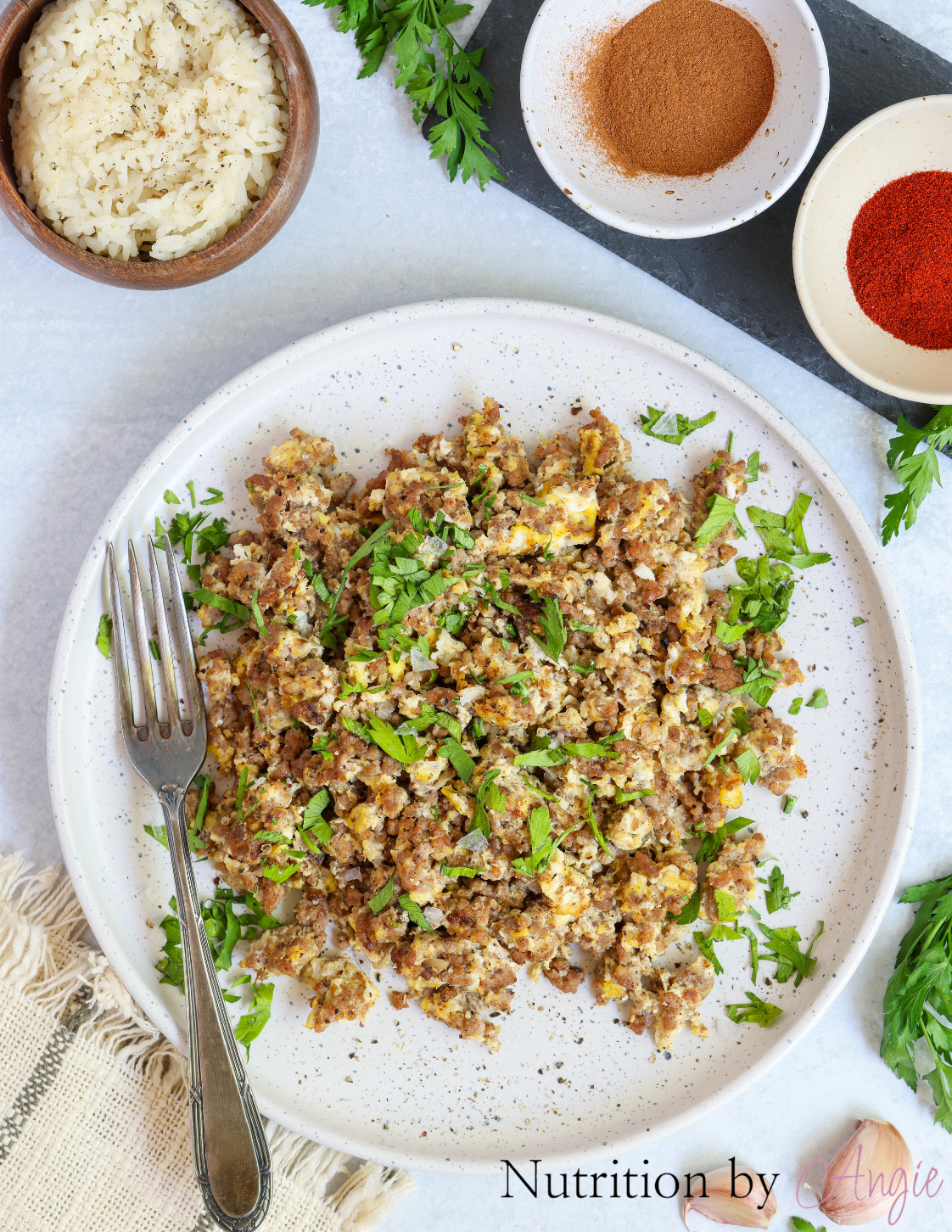
Ground Beef and Eggs with Garlic and Warming Spices
High-Protein • Low-Carb • Keto-Friendly • Gluten-Free with Suitable Spices • Mediterranean-Inspired • Middle Eastern-Inspired • Nutrient-Dense • Family-Friendly
This recipe contains eggs and beef. Check the ingredients of the seven-spice blend if you need to avoid gluten or specific allergens.
Introduction
This Ground Beef and Eggs with Garlic and Warming Spices is a delicious, satisfying and protein-rich dish made with lean minced beef, fresh garlic, aromatic seven-spice seasoning, cinnamon, paprika and eggs.
Inspired by the warming flavours commonly found in Middle Eastern and Mediterranean cooking, this simple recipe combines savoury beef with tender eggs and fragrant spices to create a comforting meal.
The combination of ground beef and eggs provides a generous amount of high-quality protein, alongside essential vitamins and minerals such as iron, zinc, vitamin B12, selenium and choline.
Lean ground beef contributes a rich, savoury flavour and provides haem iron, a form of iron that is generally absorbed more efficiently than the non-haem iron found in plant foods.
Eggs complement the beef beautifully, adding a creamy texture and additional complete protein.
They are also particularly valuable for their choline content, an essential nutrient that contributes to normal liver function and lipid metabolism.
Fresh garlic adds aromatic depth, while the seven-spice blend introduces a combination of warm, earthy and slightly sweet flavours.
Cinnamon adds a gentle sweetness that complements the savoury beef, while paprika provides colour and a mild, warming flavour.
One of the main nutritional highlights of this high-protein ground beef and eggs recipe is its combination of two complete protein sources.
Both beef and eggs contain all nine essential amino acids, which are necessary for normal muscle maintenance, tissue repair and many essential functions throughout the body.
The recipe is also naturally low in carbohydrates because its main ingredients are meat, eggs and spices.
This makes it suitable for people who prefer lower-carbohydrate meals, including those following a ketogenic-style eating pattern.
However, its nutritional value extends beyond its carbohydrate content.
Beef provides important nutrients such as iron, zinc and vitamin B12, while eggs contribute choline, vitamin D, selenium, lutein and zeaxanthin.
These nutrients support normal immune function, red blood cell formation, muscle maintenance and other important biological processes.
The warming spices add flavour without requiring a complicated sauce or a long list of ingredients.
This easy beef and egg skillet is particularly suitable for breakfast, brunch, lunch or a quick evening meal.
It can be enjoyed on its own or served alongside fresh vegetables, a colourful salad or whole-grain bread, depending on individual preferences.
For anyone interested in balanced, cholesterol-conscious nutrition, choosing lean ground beef is a useful way to reduce saturated fat intake compared with higher-fat mince.
The eggs provide valuable nutrients, while the overall meal can be complemented with fibre-rich vegetables and whole grains.
With its rich savoury beef, tender eggs, aromatic garlic and warming spices, this Ground Beef and Eggs recipe is a simple and satisfying addition to everyday cooking.
Benefits of All the Ingredients
Garlic
Garlic provides the aromatic foundation of this recipe.
It belongs to the Allium family, alongside onions, leeks and spring onions.
Garlic has been used in cooking for centuries and is valued for its distinctive flavour and naturally occurring sulphur compounds.
Garlic provides:
Organosulphur Compounds: Contribute to its characteristic aroma.
Vitamin B6: Supports normal energy metabolism.
Manganese: Contributes to normal metabolism.
Vitamin C: Supports normal immune function.
Small Amounts of Dietary Fibre: Supports normal digestive function.
Naturally Occurring Plant Compounds: Contribute to flavour and dietary variety.
Garlic and Sulphur Compounds
When garlic is chopped or crushed, naturally occurring enzymes help form compounds such as allicin.
These substances contribute to garlic's characteristic aroma and flavour.
Garlic and its sulphur-containing compounds have been studied for their potential relationship with cardiovascular health.
However, the small amount used in this recipe should primarily be appreciated for its flavour rather than considered a therapeutic dose.
Garlic and Antioxidant Plant Compounds
Garlic contains naturally occurring compounds that have been investigated for antioxidant properties.
Including garlic regularly contributes to the variety of plant foods and flavours in the diet.
Garlic and Savoury Cooking
Garlic enhances the rich flavour of ground beef.
Its aromatic qualities complement cinnamon, paprika and seven-spice seasoning.
Why Garlic Works Well
Finely minced garlic distributes evenly throughout the beef.
It adds savoury depth without overpowering the other ingredients.
Lean Ground Beef
Lean ground beef is one of the main protein sources in this recipe.
It provides a rich, savoury flavour and a satisfying texture that complements the eggs beautifully.
Beef is particularly valued for its complete protein, haem iron, zinc and vitamin B12 content.
Lean ground beef provides:
Complete Protein: Contains all nine essential amino acids.
Haem Iron: Contributes to normal oxygen transport.
Vitamin B12: Supports normal nervous system function and red blood cell formation.
Zinc: Supports normal immune function and wound healing.
Niacin (Vitamin B3): Supports normal energy metabolism.
Vitamin B6: Supports normal protein metabolism.
Phosphorus: Supports healthy bones and teeth.
Selenium: Supports normal thyroid and immune function.
Potassium: Supports normal muscle function.
Creatine: A naturally occurring compound involved in muscle energy metabolism.
Lean Beef and Complete Protein
Beef provides complete protein containing all nine essential amino acids.
Essential amino acids must be obtained through the diet because the body cannot produce them in sufficient amounts.
Protein contributes to normal muscle maintenance, tissue repair and the production of enzymes and other important molecules.
The 150g of lean ground beef used in this recipe provides a concentrated source of protein.
When combined with eight eggs, the overall recipe contains a substantial amount of high-quality protein.
Lean Beef and Muscle Health
Protein is essential for maintaining muscle mass.
It is particularly valuable during growth, recovery from physical activity and healthy ageing.
Lean beef provides a convenient protein source that can be combined with eggs, vegetables and other foods.
Lean Beef and Haem Iron
Beef provides haem iron, a form of iron found naturally in animal foods.
Haem iron is generally absorbed more efficiently than non-haem iron from plant foods.
Iron contributes to normal oxygen transport and helps reduce tiredness and fatigue when intake is adequate.
Lean Beef and Vitamin B12
Beef is a valuable source of vitamin B12.
Vitamin B12 supports normal nervous system function, red blood cell formation and energy metabolism.
It is naturally found in animal-derived foods, including meat, fish, eggs and dairy products.
Lean Beef and Zinc
Zinc is an essential mineral involved in numerous biological processes.
It contributes to normal immune function, wound healing and the maintenance of healthy skin.
Beef provides zinc in a form that is generally well absorbed.
Lean Beef and Selenium
Selenium supports normal thyroid function and contributes to the protection of cells from oxidative stress.
Beef provides selenium alongside other animal and plant foods.
Lean Beef and Cholesterol-Conscious Nutrition
Choosing lean ground beef helps reduce total and saturated fat intake compared with higher-fat mince.
This can be useful for people who enjoy beef while aiming to manage dietary saturated fat.
However, beef still contributes saturated fat, and the frequency and portion size of red meat remain relevant to cardiovascular health.
A balanced dietary pattern that includes a variety of protein sources, vegetables, legumes, whole grains and unsaturated fats can support healthy blood cholesterol levels.
Why Lean Ground Beef Works Well with Eggs
Ground beef develops a rich, savoury flavour during cooking.
Its texture complements the softness of the eggs.
The mild sweetness of cinnamon and the warmth of paprika create a delicious contrast to the beef.
Seven-Spice Blend
Seven-spice seasoning is an aromatic spice mixture commonly used in Middle Eastern cooking.
The exact ingredients vary depending on the region and brand.
A typical blend may contain allspice, black pepper, cinnamon, cloves, cumin, coriander and nutmeg.
Some varieties also contain ginger, cardamom or paprika.
Seven-Spice Blend and Aromatic Compounds
Herbs and spices contain naturally occurring aromatic compounds and polyphenols.
These substances contribute to their distinctive flavours and have been studied for antioxidant properties.
Allspice
Allspice provides a warm flavour reminiscent of cinnamon, cloves and nutmeg.
It contains naturally occurring aromatic compounds, including eugenol.
Black Pepper
Black pepper adds gentle warmth and pungency.
It contains piperine, a naturally occurring compound responsible for much of its flavour.
Cinnamon
Cinnamon provides a warm, slightly sweet aroma.
It contains naturally occurring polyphenols and compounds such as cinnamaldehyde.
Cloves
Cloves provide a rich, aromatic flavour.
They contain eugenol, a naturally occurring compound studied for its antioxidant properties.
Cumin
Cumin adds an earthy, savoury flavour.
It contains aromatic compounds that complement meat dishes particularly well.
Coriander
Ground coriander provides a mild citrus-like aroma.
It contributes warmth and balance to spice blends.
Nutmeg
Nutmeg adds a warm, slightly sweet flavour.
Its aroma complements cinnamon and allspice.
Why Seven-Spice Works Well
Seven-spice seasoning creates a rich, aromatic flavour that complements both beef and eggs.
Its combination of warming spices adds depth without requiring a complicated sauce.
Ground Cinnamon
Cinnamon provides a warm, gently sweet flavour that complements the savoury beef.
It comes from the inner bark of trees belonging to the Cinnamomum genus.
Cinnamon contains naturally occurring aromatic compounds and polyphenols.
Cinnamon and Polyphenols
Cinnamon contains naturally occurring polyphenols.
These compounds have been studied for antioxidant properties.
Including spices regularly contributes to dietary variety.
Cinnamon and Glucose Metabolism
Cinnamon has been studied for its potential relationship with blood glucose regulation.
Research findings are mixed, and culinary amounts should not be considered a substitute for medical treatment or established dietary strategies.
Cinnamon and Savoury Cooking
Although cinnamon is commonly associated with sweet dishes, it is also widely used in savoury Middle Eastern and Mediterranean-inspired recipes.
Its warm flavour complements beef, lamb, poultry and legumes.
Why Cinnamon Works Well
The small amount of cinnamon adds gentle sweetness and depth.
It balances the savoury beef and warming paprika.
Paprika
Paprika provides colour, mild warmth and a slightly sweet flavour.
It is made from dried and ground peppers.
Depending on the variety, paprika may be sweet, hot or smoked.
Paprika contains:
Carotenoid Pigments: Contribute to its vibrant red colour.
Capsaicinoids: Present in varying amounts depending on the pepper variety.
Naturally Occurring Polyphenols: Contribute to its plant compound content.
Aromatic Compounds: Provide flavour and warmth.
Paprika and Carotenoids
Paprika contains naturally occurring carotenoid pigments.
These contribute to its red colour.
Carotenoids are also found in red peppers, tomatoes and other colourful vegetables.
Paprika and Antioxidant Plant Compounds
Paprika contains naturally occurring plant compounds that have been studied for antioxidant properties.
Because paprika is used in relatively small amounts, its main contribution to this recipe is flavour and colour.
Paprika and Flavour
Sweet paprika provides mild warmth and a slightly sweet taste.
Smoked paprika can create a deeper, smoky flavour.
Why Paprika Works Well
Paprika complements the beef and seven-spice blend.
It also adds an attractive colour to the dish.
Large Eggs
Eggs are the other main protein source in this recipe.
They provide high-quality protein, essential vitamins, minerals and choline.
Eggs are particularly valuable because they contain all nine essential amino acids.
Eggs provide:
Complete Protein: Supports normal muscle maintenance.
Choline: Supports normal liver function and lipid metabolism.
Vitamin B12: Supports normal nervous system function.
Vitamin D: Supports normal bone and immune function.
Vitamin A: Supports normal vision and immune function.
Selenium: Supports normal thyroid function.
Riboflavin (Vitamin B2): Supports normal energy metabolism.
Phosphorus: Supports healthy bones and teeth.
Iodine: Supports normal thyroid function.
Lutein and Zeaxanthin: Naturally occurring carotenoids associated with eye health.
Eggs and Complete Protein
Eggs provide high-quality protein containing all nine essential amino acids.
Protein contributes to normal muscle maintenance, tissue repair and the production of enzymes and other important molecules.
The eight large eggs used in this recipe provide a substantial amount of protein across the entire dish.
The exact amount per serving depends on how many portions are prepared.
Eggs and Muscle Health
Protein is essential for maintaining muscle mass.
Eggs provide a convenient source of complete protein that can be included in breakfast, lunch or dinner.
Combining eggs with lean beef creates a particularly protein-rich meal.
Eggs and Choline
Egg yolks are one of the richer dietary sources of choline.
Choline contributes to normal liver function and lipid metabolism.
It is also involved in the production of acetylcholine, a neurotransmitter important for normal nervous system function.
Eggs and Vitamin B12
Eggs provide vitamin B12.
Vitamin B12 contributes to normal red blood cell formation and nervous system function.
Eggs and Vitamin D
Eggs contain vitamin D, primarily in the yolk.
Vitamin D contributes to the maintenance of normal bones and teeth.
It also supports normal immune function.
The amount varies depending on the eggs.
Eggs and Eye Health
Egg yolks contain lutein and zeaxanthin.
These carotenoids are found in the retina and have been studied for their relationship with eye health.
Eggs and Selenium
Selenium is an essential mineral involved in normal thyroid function and antioxidant defence.
Eggs contribute selenium alongside other foods such as meat, fish and nuts.
Eggs and Dietary Cholesterol
Egg yolks naturally contain dietary cholesterol.
For many people, saturated fat intake has a greater effect on LDL cholesterol than dietary cholesterol alone.
However, individual responses to dietary cholesterol vary.
People with elevated LDL cholesterol or other cardiovascular risk factors may benefit from considering both their overall dietary pattern and the number of egg yolks they regularly consume.
Because this recipe contains eight eggs, the cholesterol contribution per serving depends on how the dish is divided.
Why Eggs Work Well with Ground Beef
Eggs provide a soft, creamy texture that complements the savoury beef.
Their mild flavour allows the warming spices to stand out.
They also increase the protein and micronutrient content of the dish.
Why Ground Beef and Eggs Makes a Nutrient-Rich Meal
Provides Complete Protein
Both beef and eggs contain all nine essential amino acids.
Supports Normal Muscle Maintenance
The combination of beef and eggs provides a substantial amount of high-quality protein.
Contains Haem Iron
Beef provides haem iron, which contributes to normal oxygen transport.
Provides Vitamin B12
Beef and eggs contribute vitamin B12, which supports normal nervous system function.
Contains Choline
Eggs provide choline, which supports normal liver function and lipid metabolism.
Provides Important Minerals
Beef and eggs contribute zinc, selenium, phosphorus and other essential minerals.
Naturally Low in Carbohydrates
The recipe contains very little carbohydrate from its main ingredients.
Includes Warming Aromatic Spices
Seven-spice seasoning, cinnamon and paprika provide rich, comforting flavours.
Works Well for Different Meals
This dish can be enjoyed for breakfast, brunch, lunch or dinner.
Delicious Serving Suggestions
With Fresh Tomatoes
Serve alongside sliced tomatoes for additional vitamin C, potassium and lycopene.
The freshness of tomatoes complements the rich beef and eggs.
With Avocado
Add sliced avocado for creaminess, dietary fibre and monounsaturated fats.
Avocado also provides potassium and vitamin E.
With Sautéed Spinach
Serve with gently cooked spinach for additional folate, vitamin K and carotenoids.
With Whole-Grain Sourdough Bread
Pair with whole-grain sourdough bread for additional carbohydrates and dietary fibre.
With a Cucumber and Tomato Salad
A fresh salad made with cucumber, tomatoes and lemon juice adds colour and freshness.
With Roasted Mushrooms
Serve alongside roasted mushrooms for additional B vitamins, minerals and savoury flavour.
Tips for the Best Ground Beef and Eggs
Choose lean ground beef: This helps reduce total and saturated fat compared with higher-fat mince.
Use fresh garlic: It provides the best aromatic flavour.
Mince the garlic finely: This helps distribute it evenly.
Choose a good-quality seven-spice blend: The ingredients vary between brands.
Adjust the spices to taste: Cinnamon and paprika can be increased or reduced according to preference.
Use sweet paprika for mild flavour: Smoked paprika adds a deeper, smoky taste.
Cook the beef thoroughly: Ground beef should reach a safe internal temperature of 71°C.
Break up the beef while cooking: This creates an even texture.
Use a suitable frying pan: A non-stick or well-seasoned pan makes cooking easier.
Avoid overcrowding: This helps the beef cook evenly.
Cook garlic gently: Garlic can become bitter if burned.
Use fresh eggs: Follow the use-by date and storage instructions.
Cook eggs to your preferred texture while observing food safety: Fully cooked eggs are the safest choice, particularly for vulnerable individuals.
Use pasteurised eggs if serving undercooked eggs to higher-risk individuals: This reduces food safety risks.
Add fresh herbs if preferred: Parsley or coriander complements the spices.
Serve with vegetables: Tomatoes, spinach, mushrooms and peppers work particularly well.
Choose whole-grain bread for additional fibre: This creates a more balanced meal.
Adjust portion sizes: The recipe contains eight eggs, so the nutritional contribution depends on the number of servings.
Refrigerate leftovers promptly: Store in an airtight container and consume within approximately 3–4 days.
Reheat thoroughly: Ensure the beef and eggs are steaming hot throughout.
Check spice blends for allergens: This is particularly important when following a gluten-free diet.
A Note on Beef, Eggs and Cholesterol-Friendly Nutrition
This Ground Beef and Eggs recipe combines two high-quality protein sources with aromatic spices.
Lean ground beef provides complete protein, haem iron, zinc, selenium and vitamin B12.
Eggs contribute complete protein, choline, vitamin D, vitamin B12, selenium and carotenoids such as lutein and zeaxanthin.
These nutrients support normal muscle maintenance, red blood cell formation, nervous system function and other essential processes.
Choosing lean ground beef can help reduce saturated fat intake compared with higher-fat minced beef.
This is particularly relevant for people aiming to manage LDL cholesterol.
Egg yolks contain dietary cholesterol.
For many people, saturated fat intake has a greater effect on LDL cholesterol than dietary cholesterol alone.
However, some individuals experience a more pronounced cholesterol response to dietary cholesterol.
Because this recipe contains eight eggs, portion size and overall dietary pattern are important considerations.
For people with elevated LDL cholesterol, replacing some whole eggs with egg whites is one way to retain protein while reducing dietary cholesterol and saturated fat.
Another useful approach is to serve the dish alongside fibre-rich vegetables, legumes or whole grains.
Dietary fibre supports normal digestive function, while soluble fibre from foods such as oats, barley, beans and lentils can contribute to lowering LDL cholesterol.
Adding avocado or using a small amount of olive oil for cooking can provide predominantly unsaturated fats.
Replacing saturated fats with unsaturated fats can help improve blood cholesterol levels.
The spices contribute flavour and naturally occurring plant compounds without requiring a complicated sauce.
A balanced dietary pattern that regularly includes vegetables, fruit, whole grains, legumes, nuts, seeds, unsaturated fats and a variety of protein sources can support cardiovascular health and overall nutritional wellbeing.
With its savoury ground beef, tender eggs, aromatic garlic and warming spices, this Ground Beef and Eggs recipe is a delicious, satisfying and protein-rich meal that can be adapted to suit different nutritional preferences.