
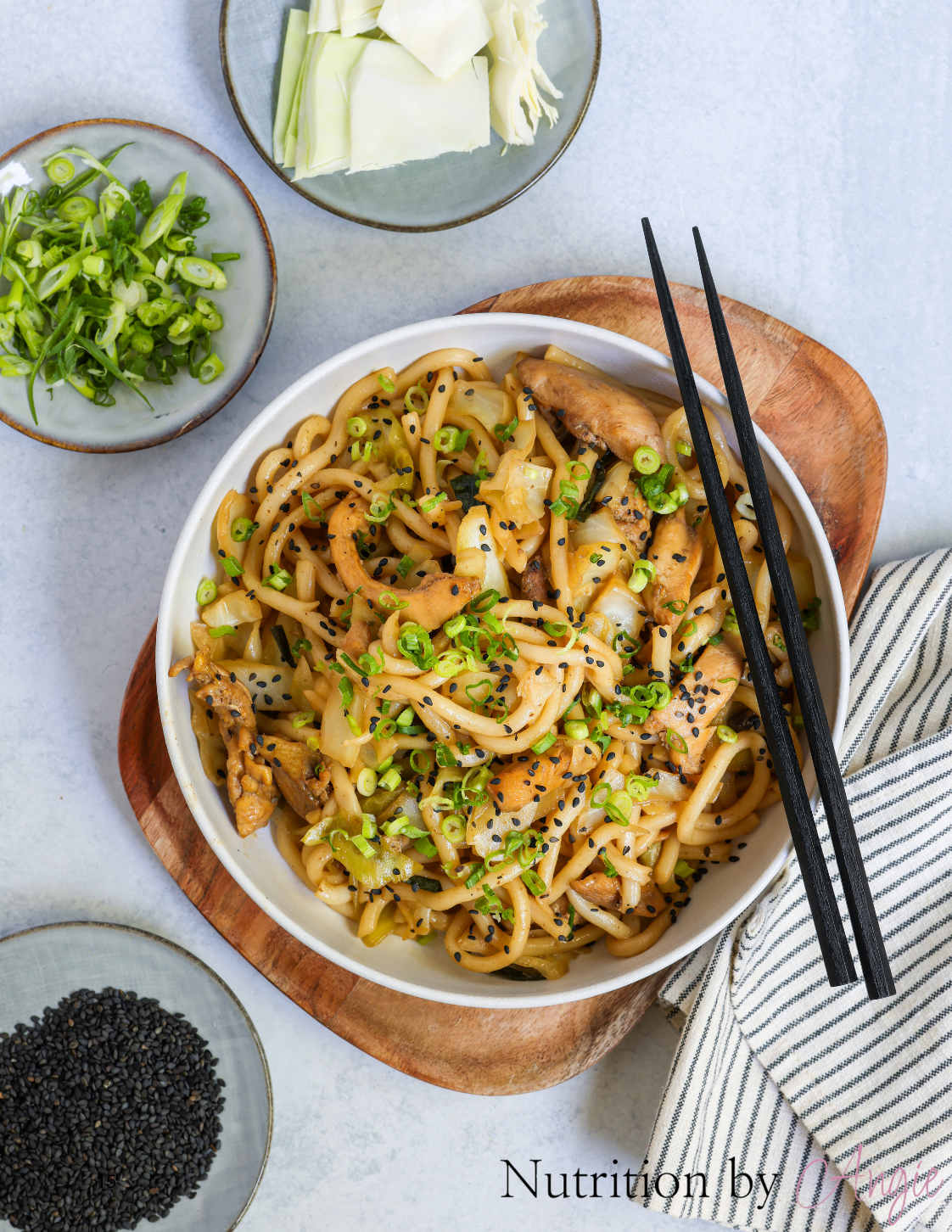
Chicken Noodle Stir Fry with Udon Noodles and Cabbage
High-Protein • Asian-Inspired • Dairy-Free with Suitable Ingredients • Family-Friendly • Vegetable-Rich • Quick and Easy Dinner
This recipe contains chicken, wheat-based udon noodles, soy and fish sauce. Check the ingredient labels for allergens and dietary suitability.
Introduction
This Chicken Noodle Stir Fry with Udon Noodles and Cabbage is a delicious, satisfying and flavourful meal made with tender chicken thighs, thick udon noodles, fresh green cabbage, aromatic garlic and spring onions, all tossed in a rich, savoury Asian-inspired sauce.
Combining juicy chicken with soft, chewy noodles and lightly cooked vegetables, this easy chicken stir fry offers a wonderful balance of protein, carbohydrates, vegetables and bold flavours.
The sauce is made with just three ingredients: kecap manis, fish sauce and black pepper.
Kecap manis is a sweet Indonesian-style soy sauce that provides a rich, slightly caramelised flavour. Fish sauce contributes savoury depth and umami, while black pepper adds gentle warmth.
Together, these ingredients create a delicious sauce that coats the noodles, chicken and vegetables without requiring a long list of additional ingredients.
One of the main nutritional highlights of this chicken udon noodle stir fry is its combination of high-quality animal protein and nutrient-rich vegetables.
Chicken thighs provide complete protein, vitamin B12, niacin, vitamin B6, selenium, phosphorus and other important nutrients.
Protein supports normal muscle maintenance, tissue repair and many essential functions throughout the body.
Udon noodles provide carbohydrates, which supply energy for everyday activities.
Green cabbage adds dietary fibre, vitamin C, vitamin K and naturally occurring plant compounds associated with cruciferous vegetables.
Garlic and spring onions contribute aromatic flavour, vitamins and beneficial plant compounds.
This combination makes the dish satisfying while providing a variety of nutrients from both animal and plant foods.
The chicken thighs are skinless and boneless, making them convenient to prepare and a useful protein source for everyday cooking.
Compared with chicken breast, thighs generally contain slightly more fat, which contributes to their tender texture and rich flavour.
The vegetables add freshness, colour and crunch, while the udon noodles create a comforting, filling base.
For anyone interested in balanced eating, this easy chicken and cabbage noodle stir fry is a practical way to combine protein, vegetables and carbohydrates in one meal.
It is particularly suitable for busy evenings because the ingredients cook quickly and require relatively little preparation.
The recipe is also family-friendly and can be adapted by adjusting the amount of sauce or adding extra vegetables.
With its tender chicken, chewy udon noodles, crisp cabbage and rich savoury sauce, this Chicken Noodle Stir Fry is a delicious addition to a collection of healthy and comforting everyday recipes.
Benefits of All the Ingredients
Skinless, Boneless Chicken Thighs
Chicken thighs provide the main protein source in this noodle stir fry.
They are naturally tender, flavourful and particularly suitable for quick cooking methods such as stir-frying.
Removing the skin reduces the amount of fat compared with skin-on chicken thighs.
Chicken thighs provide:
Complete Protein: Contains all nine essential amino acids.
Vitamin B12: Supports normal nervous system function and red blood cell formation.
Niacin (Vitamin B3): Supports normal energy metabolism.
Vitamin B6: Supports normal protein metabolism and immune function.
Selenium: Supports normal thyroid and immune function.
Phosphorus: Supports healthy bones and teeth.
Zinc: Supports normal immune function.
Iron: Contributes to normal oxygen transport.
Potassium: Supports normal muscle function.
Chicken Thighs and Complete Protein
Chicken thighs provide high-quality protein containing all nine essential amino acids.
Essential amino acids must be obtained through the diet because the body cannot produce them in sufficient amounts.
Protein contributes to normal muscle maintenance, tissue repair and the production of enzymes and other important molecules.
The 400g of chicken thighs used in this recipe provides a substantial amount of protein across the entire dish.
The amount per serving depends on how the meal is divided.
Chicken Thighs and Muscle Health
Protein plays an important role in maintaining muscle mass.
It is particularly valuable as part of a balanced diet alongside regular physical activity.
Chicken thighs provide a convenient source of protein that can be combined with vegetables and whole grains.
Chicken Thighs and B Vitamins
Chicken thighs provide several B vitamins, including niacin, vitamin B6 and vitamin B12.
Niacin contributes to normal energy metabolism and nervous system function.
Vitamin B6 supports normal protein metabolism and immune function.
Vitamin B12 is essential for normal red blood cell formation and neurological function.
Chicken Thighs and Iron
Chicken thighs provide iron, including some haem iron.
Haem iron is generally absorbed more efficiently than non-haem iron from plant foods.
Iron contributes to normal oxygen transport and helps reduce tiredness and fatigue when intake is adequate.
Chicken Thighs and Selenium
Selenium is an essential trace mineral involved in thyroid function and antioxidant defence.
Chicken provides selenium alongside other foods such as fish, eggs, nuts and whole grains.
Chicken Thighs and Heart-Conscious Nutrition
Skinless chicken thighs can fit into a balanced, cholesterol-conscious dietary pattern.
They provide protein and essential nutrients while containing less fat than skin-on thighs.
For people aiming to reduce saturated fat intake, skinless chicken breast is a leaner alternative.
The overall meal also benefits from including plenty of vegetables and fibre-rich foods.
Why Chicken Thighs Work Well in Stir Fries
Chicken thighs remain tender during quick cooking.
Their slightly richer flavour complements the savoury sauce and chewy udon noodles.
Thinly slicing the chicken helps it cook evenly and absorb the sauce.
Udon Noodles
Udon noodles are thick, soft Japanese-style wheat noodles known for their pleasantly chewy texture.
They provide the comforting carbohydrate base of this stir fry.
Udon noodles are commonly made from wheat flour, water and salt.
Depending on the product, they may be sold fresh, vacuum-packed, frozen or dried.
Udon noodles provide:
Carbohydrates: Supply energy for everyday activities.
Plant-Based Protein: Contribute to overall protein intake.
Small Amounts of B Vitamins: Depending on the flour used.
Iron: Particularly in enriched varieties.
A Satisfying Texture: Complements protein-rich ingredients and vegetables.
Udon Noodles and Energy
Carbohydrates are an important source of energy.
During digestion, carbohydrates are broken down into glucose, which can be used by the body's cells.
Udon noodles provide carbohydrates that help make this stir fry a satisfying meal.
Udon Noodles and Balanced Meals
Combining noodles with chicken and vegetables creates a meal containing protein, carbohydrates and dietary fibre.
The chicken provides substantial protein, while the cabbage and spring onions add vegetables and plant compounds.
Udon Noodles and Protein
Wheat-based udon noodles provide some plant protein.
Although they are not as protein-rich as chicken or legumes, they contribute to the overall protein content of the meal.
Choosing Udon Noodles
Fresh and vacuum-packed udon noodles are convenient for quick stir fries.
Dried udon noodles can also be used, although their preparation and cooked weight differ.
Follow the package instructions for the variety selected.
Why Udon Noodles Work Well
Their thick, chewy texture holds the rich sauce beautifully.
They provide a satisfying contrast to the tender chicken and lightly cooked vegetables.
Garlic
Garlic provides a rich, aromatic flavour that complements the savoury sauce.
It belongs to the Allium family, alongside onions, leeks and chives.
Garlic contains naturally occurring sulphur compounds responsible for its characteristic aroma.
Garlic provides:
Organosulphur Compounds: Contribute to its distinctive flavour.
Vitamin B6: Supports normal energy metabolism.
Manganese: Contributes to normal metabolism.
Vitamin C: Supports normal immune function.
Small Amounts of Dietary Fibre: Supports normal digestion.
Garlic and Sulphur Compounds
When garlic is chopped or crushed, naturally occurring enzymes help form compounds such as allicin.
These compounds contribute to garlic's characteristic aroma and flavour.
Garlic has been studied for its potential relationship with cardiovascular health, although ordinary culinary amounts should be considered part of an overall balanced diet rather than a treatment.
Garlic and Antioxidant Compounds
Garlic contains naturally occurring plant compounds that have been investigated for antioxidant properties.
Including garlic regularly adds flavour and variety to meals.
Garlic and Savoury Cooking
Garlic enhances the flavour of chicken, noodles and vegetables.
Its aromatic qualities complement both kecap manis and fish sauce.
Why Garlic Works Well in Stir Fries
Finely minced garlic distributes evenly throughout the dish.
It releases its aroma quickly during cooking, making it particularly suitable for stir-frying.
Spring Onions (Green Onions)
Spring onions add freshness, colour and a mild onion flavour.
Both the white and green parts are edible and contribute different textures and flavours.
Spring onions belong to the Allium family.
They provide:
Vitamin K: Supports normal blood clotting and bone maintenance.
Vitamin C: Supports normal immune function.
Folate: Contributes to normal cell division.
Beta-Carotene: Can be converted into vitamin A.
Dietary Fibre: Supports normal digestive function.
Flavonoids: Naturally occurring plant compounds.
Organosulphur Compounds: Contribute to their characteristic flavour.
Spring Onions and Vitamin K
The green parts of spring onions provide vitamin K.
Vitamin K contributes to normal blood clotting and the maintenance of healthy bones.
Including green vegetables regularly helps support vitamin K intake.
Spring Onions and Antioxidant Plant Compounds
Spring onions contain naturally occurring flavonoids and sulphur compounds.
These contribute to the variety of plant substances found in vegetables.
Spring Onions and Digestive Health
Spring onions provide dietary fibre.
The white parts contain fermentable carbohydrates, while the green parts are often milder in flavour.
Individual digestive tolerance varies.
Why the White and Green Parts Are Separated
The white parts have a stronger onion flavour and benefit from cooking.
The green parts are more delicate and provide freshness and colour.
Adding the green parts towards the end of cooking helps preserve their texture and flavour.
Green Cabbage
Green cabbage adds crunch, freshness and valuable nutrients to this chicken noodle stir fry.
It belongs to the cruciferous vegetable family, alongside broccoli, cauliflower, kale and Brussels sprouts.
Green cabbage is particularly valued for its vitamin C, vitamin K, dietary fibre and naturally occurring glucosinolates.
Green cabbage provides:
Vitamin C: Supports normal immune function and collagen formation.
Vitamin K: Supports normal blood clotting.
Dietary Fibre: Supports normal digestive function.
Folate: Contributes to normal cell division.
Potassium: Supports normal muscle function.
Glucosinolates: Naturally occurring compounds found in cruciferous vegetables.
Small Amounts of Calcium: Supports normal bone maintenance.
Green Cabbage and Vitamin C
Green cabbage provides vitamin C.
Vitamin C supports normal immune function, collagen formation and the protection of cells from oxidative stress.
It also improves the absorption of non-haem iron from plant foods.
Green Cabbage and Digestive Health
Cabbage contains dietary fibre that supports normal bowel function.
Fibre contributes to digestive health and helps maintain regularity.
Including cabbage alongside other vegetables, whole grains and legumes can help increase overall fibre intake.
Green Cabbage and Glucosinolates
Cruciferous vegetables contain naturally occurring glucosinolates.
When cabbage is chopped or chewed, these compounds can be converted into other substances, including isothiocyanates.
These compounds have been widely studied for their biological properties.
Including cruciferous vegetables regularly contributes to a varied vegetable intake.
Green Cabbage and Heart-Conscious Nutrition
Cabbage is naturally low in saturated fat and provides fibre, vitamins and plant compounds.
It is a useful ingredient in a vegetable-rich dietary pattern.
Why Cabbage Works Well in Stir Fries
Cabbage softens slightly during cooking while retaining a pleasant bite.
Its mild sweetness balances the rich, savoury sauce.
The generous 425g quantity also adds volume and freshness to the meal.
Benefits of the Stir Fry Sauce
Kecap Manis (Sweet Soy Sauce)
Kecap manis is a thick, sweet Indonesian-style soy sauce.
It is commonly made from soy sauce and sugar, creating a rich, slightly caramelised flavour.
Kecap manis provides the sweet and savoury balance that makes this noodle stir fry particularly delicious.
Kecap Manis and Umami
Soy sauce contains naturally occurring savoury flavour compounds produced during fermentation.
These contribute to umami, one of the five basic tastes.
Umami enhances the overall savoury character of a dish.
Kecap Manis and Flavour Balance
Kecap manis combines sweetness with the savoury flavour of soy sauce.
Its thick consistency helps coat the udon noodles and chicken.
The sweetness also balances the salty flavour of fish sauce.
Why Kecap Manis Works Well
Kecap manis creates a glossy, flavourful coating.
Its rich taste complements garlic, spring onions and cabbage beautifully.
Because it contains added sugar and sodium, the quantity can be adjusted according to personal preferences.
Fish Sauce
Fish sauce is a traditional savoury seasoning commonly used in Southeast Asian cooking.
It is generally made by fermenting fish with salt.
Fish sauce is particularly valued for its concentrated umami flavour.
Fish Sauce and Umami
Fish sauce contains naturally occurring amino acids and other flavour compounds produced during fermentation.
These contribute to its rich, savoury taste.
A relatively small amount can add significant depth to a dish.
Fish Sauce and Flavour
Fish sauce enhances the savoury character of chicken, noodles and vegetables.
It combines particularly well with sweet soy sauce.
Fish Sauce and Protein Compounds
Fish sauce contains amino acids derived from fish proteins.
However, because it is used primarily as a seasoning, it should not be considered a significant protein source in this meal.
Choosing Fish Sauce
Fish sauce varies in sodium concentration.
For people managing blood pressure or sodium intake, using a smaller amount or selecting a suitable reduced-sodium alternative can be helpful.
Allergen consideration: Fish sauce contains fish.
Black Pepper
Black pepper adds gentle warmth and aromatic flavour.
It comes from the dried fruit of the black pepper plant.
Black pepper contains piperine, a naturally occurring compound responsible for much of its pungency.
Black Pepper and Piperine
Piperine has been studied for its biological properties.
In ordinary culinary quantities, black pepper primarily contributes flavour.
Black Pepper and Savoury Dishes
Black pepper complements chicken, garlic, cabbage and soy-based sauces.
It adds a subtle warmth without overwhelming the other ingredients.
Why Black Pepper Works Well
A pinch of black pepper enhances the overall flavour of the stir fry.
Freshly ground black pepper provides a particularly aromatic finish.
Why Chicken Noodle Stir Fry Makes a Nourishing Meal
Provides Complete Protein
Chicken thighs contain all nine essential amino acids and support normal muscle maintenance.
Contains Nutrient-Rich Vegetables
Green cabbage and spring onions contribute vitamins, minerals and dietary fibre.
Provides Carbohydrates for Energy
Udon noodles supply carbohydrates that support everyday energy needs.
Contains Important B Vitamins
Chicken provides niacin, vitamin B6 and vitamin B12.
Supports Iron Intake
Chicken contributes iron, including some haem iron.
Includes Cruciferous Vegetables
Green cabbage provides glucosinolates and other naturally occurring plant compounds.
Offers a Satisfying Combination of Textures
Tender chicken, chewy noodles and crisp vegetables make the meal enjoyable.
Provides Rich, Savoury Flavour
Kecap manis, fish sauce, garlic and black pepper create a delicious Asian-inspired sauce.
Works Well for Family Meals
The recipe is convenient, adaptable and suitable for everyday cooking.
Delicious Serving Suggestions
With Steamed Broccoli
Serve alongside steamed broccoli for additional fibre, vitamin C and other nutrients.
With Fresh Cucumber Salad
A refreshing cucumber salad provides a crisp contrast to the savoury noodles.
With Extra Spring Onions
Sprinkle additional chopped spring onion greens over the finished dish for freshness and colour.
With Sesame Seeds
Add a small sprinkle of sesame seeds for nutty flavour, unsaturated fats and minerals.
With Fresh Lime
A squeeze of fresh lime juice adds brightness and balances the sweet and savoury sauce.
With Additional Stir-Fried Vegetables
Add mushrooms, carrots, bell peppers or pak choi to increase the variety of vegetables.
Tips for the Best Chicken Noodle Stir Fry
Choose fresh chicken thighs: Skinless, boneless thighs are convenient and flavourful.
Slice chicken evenly: Thin strips cook quickly and consistently.
Use a large frying pan or wok: This provides enough space for the ingredients.
Prepare all ingredients before cooking: Stir-frying works best when everything is ready.
Keep raw chicken separate from ready-to-eat ingredients: Use clean utensils and chopping boards.
Cook chicken thoroughly: Ensure it reaches a safe internal temperature of 75°C.
Use fresh garlic: It provides the best aroma.
Separate the spring onion whites and greens: They benefit from different cooking times.
Slice cabbage evenly: This helps it cook consistently.
Avoid overcooking the cabbage: A little crunch provides a pleasant texture.
Prepare udon noodles according to the package: Fresh, vacuum-packed and dried varieties require different preparation.
Loosen the noodles gently: This helps prevent them from breaking.
Mix the sauce before adding it: This distributes the flavours evenly.
Use kecap manis for sweetness: It creates a glossy coating.
Adjust fish sauce to taste: Different brands vary in saltiness.
Add black pepper gradually: Adjust the warmth to your preference.
Avoid overcrowding the pan: Cook in batches if necessary.
Toss the noodles gently: This helps coat them without breaking them.
Add spring onion greens towards the end: This preserves their fresh flavour.
Serve immediately: Stir-fried noodles have the best texture when freshly cooked.
Refrigerate leftovers promptly: Store in an airtight container and consume within approximately 2–3 days.
Reheat thoroughly: Ensure the chicken and noodles are steaming hot throughout.
Clearly identify allergens: This recipe contains wheat, soy and fish.
A Note on Chicken, Vegetables and Cholesterol-Friendly Nutrition
This Chicken Noodle Stir Fry combines high-quality protein from chicken thighs with carbohydrates from udon noodles and nutrients from green cabbage, garlic and spring onions.
Chicken provides complete protein, B vitamins, selenium, phosphorus and iron.
Skinless chicken thighs can be included in a balanced dietary pattern that supports cardiovascular health.
The fat content of chicken thighs is generally higher than that of chicken breast, but removing the skin helps reduce the total fat content.
For people specifically aiming to lower LDL cholesterol, choosing lean poultry, fish, legumes and other protein sources while limiting saturated fat can help support healthy blood cholesterol levels.
Green cabbage contributes dietary fibre, vitamin C, vitamin K and naturally occurring glucosinolates.
Including vegetables regularly is an important part of a heart-conscious dietary pattern.
Udon noodles provide carbohydrates for energy.
For a higher-fibre variation, whole-wheat noodles or other suitable whole-grain noodles can be used.
Dietary fibre is particularly valuable for cholesterol management, especially soluble fibre found in foods such as oats, barley, beans and lentils.
The sauce provides delicious sweet and savoury flavours.
Kecap manis contains added sugar, while fish sauce and soy-based seasonings can contribute substantial sodium.
Adjusting the sauce quantities or choosing suitable lower-sodium products can help tailor the meal to individual nutritional goals.
For a more vegetable-rich version, additional cabbage, broccoli, mushrooms or bell peppers can be included.
A balanced dietary pattern that regularly includes vegetables, fruit, whole grains, legumes, nuts, seeds, unsaturated fats and appropriate protein sources can support cardiovascular health and overall nutritional wellbeing.
With its tender chicken, thick udon noodles, fresh cabbage, aromatic spring onions and rich savoury sauce, this Chicken Noodle Stir Fry with Udon Noodles and Cabbage is a delicious, comforting and satisfying meal for everyday cooking.