
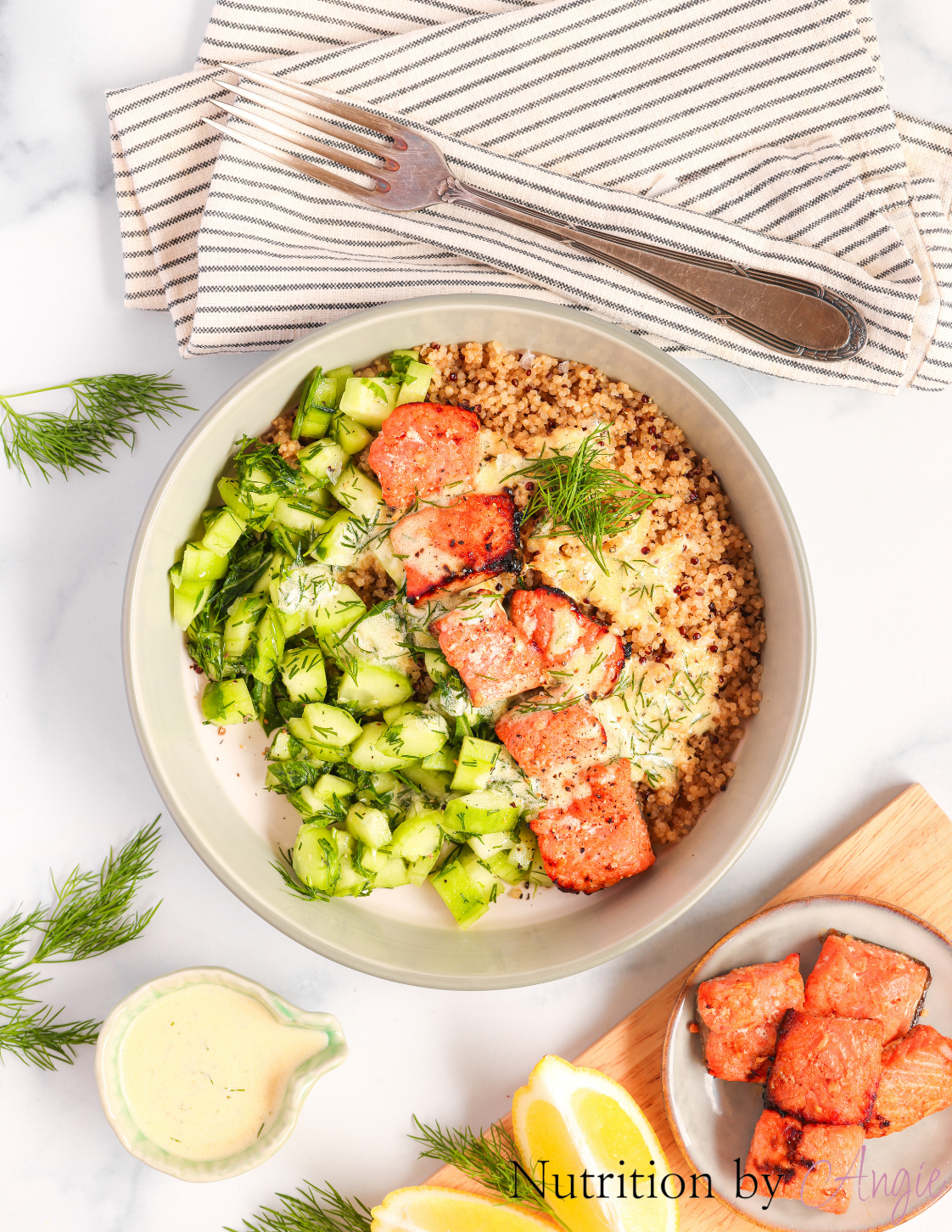
Salmon Quinoa Bowl with Fresh Cucumber Salad and Creamy Lemon Dill Sauce
Salmon Quinoa Bowl • Healthy Salmon Recipe • High-Protein Dinner • Omega-3 Rich Meal • Mediterranean-Inspired Bowl • Quinoa Salad Bowl • Easy Salmon Dinner • Balanced Lunch Idea • Homemade Lemon Dill Dressing
Allergen information: This recipe contains fish (salmon), egg (typically present in mayonnaise) and mustard (Dijon mustard). Check the mayonnaise and mustard labels for additional allergens. Quinoa is naturally gluten-free, but cross-contact may occur during processing. Use certified gluten-free ingredients where necessary.
Introduction
This Salmon Quinoa Bowl with Fresh Cucumber Salad and Creamy Lemon Dill Sauce is a colourful, nourishing meal combining tender salmon, fluffy quinoa, refreshing cucumber and a tangy homemade dressing.
The salmon is flavoured with honey, fresh lemon juice, paprika, garlic powder and onion powder, creating a delicious balance of sweetness, citrus and warming spices.
Quinoa provides a satisfying base with complex carbohydrates, dietary fibre and plant-based protein.
The cucumber salad adds freshness and crunch, while fresh dill and lemon juice create a bright, aromatic flavour.
A creamy sauce made with mayonnaise, Dijon mustard, lemon and dill brings all the ingredients together.
This recipe provides a balanced combination of high-quality protein, omega-3 fatty acids, carbohydrates, dietary fibre and essential vitamins and minerals.
Salmon is particularly valued for its omega-3 fatty acids, vitamin D, vitamin B12 and selenium.
Quinoa contributes magnesium, folate, iron and fibre, while cucumber and fresh herbs add freshness and dietary variety.
The result is a satisfying meal suitable for lunch, dinner or meal preparation.
Benefits of All the Ingredients
Salmon Fillets
Salmon is an oily fish rich in protein and important nutrients.
Key nutritional benefits:
High-Quality Protein: Supports normal muscle maintenance and tissue repair.
Omega-3 Fatty Acids: Provides EPA and DHA, which contribute to normal heart function at sufficient daily intakes.
Vitamin D: Supports normal immune function and bone health.
Vitamin B12: Supports normal nervous system function.
Selenium: Supports normal thyroid function.
Potassium: Contributes to normal muscle function.
Salmon is a valuable source of unsaturated fats and can form part of a heart-healthy dietary pattern.
Quinoa
Quinoa is a naturally gluten-free seed commonly prepared like a grain.
It provides carbohydrates, fibre and plant-based protein.
Key nutritional benefits:
Complex Carbohydrates: Provide energy for everyday activities.
Plant-Based Protein: Contains all nine essential amino acids.
Dietary Fibre: Supports digestive health.
Magnesium: Contributes to normal muscle and nerve function.
Iron: Supports normal oxygen transport.
Folate: Supports normal cell division.
Phosphorus: Contributes to healthy bones and teeth.
Quinoa is a nutritious alternative to refined grains and adds a pleasantly nutty flavour.
Honey
Honey adds a gentle sweetness that balances the lemon and spices.
Key nutritional characteristics:
Provides carbohydrates, mainly natural sugars.
Helps create a lightly caramelised coating.
Balances the smoky flavour of paprika.
Adds sweetness without requiring a separate sauce.
Although honey is naturally produced, it still counts as free sugar and is best used in moderation.
Lemon Juice
Lemon juice is used in the salmon, cucumber salad and creamy sauce.
Key nutritional benefits:
Vitamin C: Supports normal immune function.
Citric Acid: Adds a refreshing tangy flavour.
Flavonoids: Naturally occurring citrus plant compounds.
Low Sodium: Adds flavour without requiring additional salt.
Lemon helps balance the richness of salmon and mayonnaise.
Paprika
Paprika adds colour, warmth and a gently sweet pepper flavour.
Key nutritional characteristics:
Contains naturally occurring carotenoids.
Provides small amounts of vitamin A precursors.
Adds flavour without substantial sodium.
Complements salmon and citrus.
The nutritional contribution depends on the amount used.
Garlic Powder
Garlic powder adds savoury depth to the salmon seasoning.
Key nutritional characteristics:
Contains naturally occurring garlic compounds.
Adds flavour without requiring fresh garlic.
Complements paprika and onion powder.
Provides small amounts of minerals.
Choose garlic powder without added salt if managing sodium intake.
Onion Powder
Onion powder adds a mild savoury sweetness.
Key nutritional characteristics:
Contains naturally occurring plant compounds.
Adds aromatic depth.
Complements garlic and paprika.
Provides flavour without significant fat.
Cucumber
Cucumber creates a refreshing, crunchy salad.
Key nutritional benefits:
Contains substantial amounts of water.
Provides small amounts of vitamin K.
Contains potassium.
Contributes a little dietary fibre.
Cucumber balances the richness of the salmon and creamy dressing.
Fresh Dill
Fresh dill adds a delicate herbal flavour to the cucumber salad and sauce.
Key nutritional characteristics:
Contains naturally occurring aromatic compounds.
Provides small amounts of vitamin C.
Contains carotenoids and other plant compounds.
Adds flavour without substantial sodium.
Dill pairs particularly well with salmon and lemon.
Mayonnaise
Mayonnaise provides the creamy base of the sauce.
Key nutritional characteristics:
Provides fats, often predominantly unsaturated depending on the oil used.
May contribute vitamin E.
Creates a smooth, creamy texture.
Adds richness to the dressing.
Mayonnaise is energy-dense, so moderate portions are useful.
Dijon Mustard
Dijon mustard adds a sharp, savoury flavour.
Key nutritional characteristics:
Contains naturally occurring compounds from mustard seeds.
Adds flavour with relatively little energy.
Balances the richness of mayonnaise.
May contain sodium.
Mustard is a recognised food allergen.
Why This Salmon Quinoa Bowl Makes a Nourishing Meal
High in Protein: Salmon and quinoa provide protein that supports muscle maintenance.
Rich in Omega-3 Fatty Acids: Salmon supplies EPA and DHA, important for normal heart function.
Provides Complex Carbohydrates: Quinoa contributes carbohydrates for energy.
Contains Dietary Fibre: Quinoa and cucumber provide fibre for digestive health.
Source of Vitamin D: Salmon contributes vitamin D for bone and immune function.
Rich in Vitamin B12: Salmon supports normal nervous system function.
Contains Magnesium: Quinoa contributes magnesium for normal muscle function.
Includes Fresh Vegetables: Cucumber adds hydration, crunch and dietary variety.
Balanced Flavours: Honey, lemon, paprika and dill create a delicious combination of sweet, tangy and savoury notes.
Suitable for Meal Preparation: The components can be prepared and stored separately for convenient meals.
Delicious Serving Suggestions
Classic Salmon Quinoa Bowl
Serve the seasoned salmon over fluffy quinoa with cucumber salad and creamy lemon dill sauce.
With Fresh Rocket
Add rocket or mixed salad leaves for extra colour and a peppery flavour.
With Avocado
Include sliced avocado for additional unsaturated fats and a creamy texture.
With Roasted Vegetables
Pair with roasted courgette, broccoli or asparagus for extra fibre and variety.
With Extra Fresh Herbs
Finish with parsley, dill or chives for a brighter flavour.
With Lemon Wedges
Serve with fresh lemon wedges to add extra citrus flavour before eating.
Tips for the Best Salmon Quinoa Bowl
Choose fresh salmon: Look for firm flesh and a mild smell.
Use responsibly sourced salmon: Choose certified sustainable options where possible.
Check for bones: Remove any remaining pin bones before cooking.
Cut salmon evenly: Similar-sized pieces cook more consistently.
Avoid excessive honey: A small amount provides sweetness without overwhelming the dish.
Use fresh lemon juice: It provides the brightest flavour.
Choose good-quality paprika: Smoked paprika can add extra depth.
Check garlic and onion powders: Avoid versions with unnecessary added salt.
Rinse quinoa before cooking: This can help remove naturally occurring saponins that may taste bitter.
Cook quinoa according to package instructions: This helps achieve a fluffy texture.
Allow quinoa to rest after cooking: This helps separate the grains.
Fluff quinoa with a fork: Avoid compacting it.
Avoid overcooking salmon: It can become dry.
Cook salmon thoroughly: A centre temperature of 63°C is a commonly used safety target.
Dice cucumber evenly: This creates a consistent salad texture.
Add lemon to cucumber shortly before serving: This helps preserve freshness.
Use fresh dill: It provides the best aroma.
Choose mayonnaise made with unsaturated oils: This can support a favourable fat profile.
Check Dijon mustard sodium: Different brands vary.
Taste the sauce before adding salt: Mayonnaise and mustard may already contain sodium.
Keep the sauce chilled: Refrigerate at 5°C or below.
Store components separately: This helps maintain texture.
Refrigerate cooked salmon and quinoa promptly: Do not leave cooked food at room temperature for extended periods.
Consume refrigerated leftovers within approximately 1–2 days: This is a cautious target for cooked fish bowls.
Reheat salmon thoroughly: Ensure it is piping hot throughout.
Serve cucumber salad and sauce chilled: Avoid reheating these components.
A Note on Salmon, Quinoa and Cholesterol-Friendly Nutrition
This Salmon Quinoa Bowl combines oily fish, wholegrain-like seeds, fresh vegetables and a creamy dressing.
Salmon provides omega-3 fatty acids, particularly EPA and DHA.
These fatty acids contribute to normal heart function when consumed in sufficient amounts.
Salmon also contains unsaturated fats that can form part of a heart-healthy dietary pattern.
Quinoa provides dietary fibre, plant-based protein and minerals.
Fibre-rich foods can support digestive health and contribute to a balanced dietary pattern.
Cucumber and dill add freshness and dietary variety.
The creamy sauce contains mayonnaise, which may provide predominantly unsaturated fats depending on the oil used.
However, mayonnaise is energy-dense, so portion size remains important.
Honey contributes free sugars, even though it is a natural sweetener.
For people managing LDL cholesterol, replacing saturated fats with unsaturated fats and increasing fibre intake can support healthier cholesterol levels.
Regular consumption of fish, whole grains, vegetables, legumes, nuts and seeds is consistent with heart-healthy dietary patterns.
The overall nutritional composition of this bowl depends on the serving size and ingredient choices.
Final Thoughts
This Salmon Quinoa Bowl with Fresh Cucumber Salad and Creamy Lemon Dill Sauce is a delicious, balanced meal combining tender salmon, fluffy quinoa, refreshing vegetables and a tangy homemade dressing.
Rich in protein, omega-3 fatty acids and important micronutrients, it makes a satisfying choice for lunch or dinner.
With its colourful ingredients and fresh Mediterranean-inspired flavours, this recipe is an easy way to enjoy a nourishing meal that fits into a varied and balanced diet.