
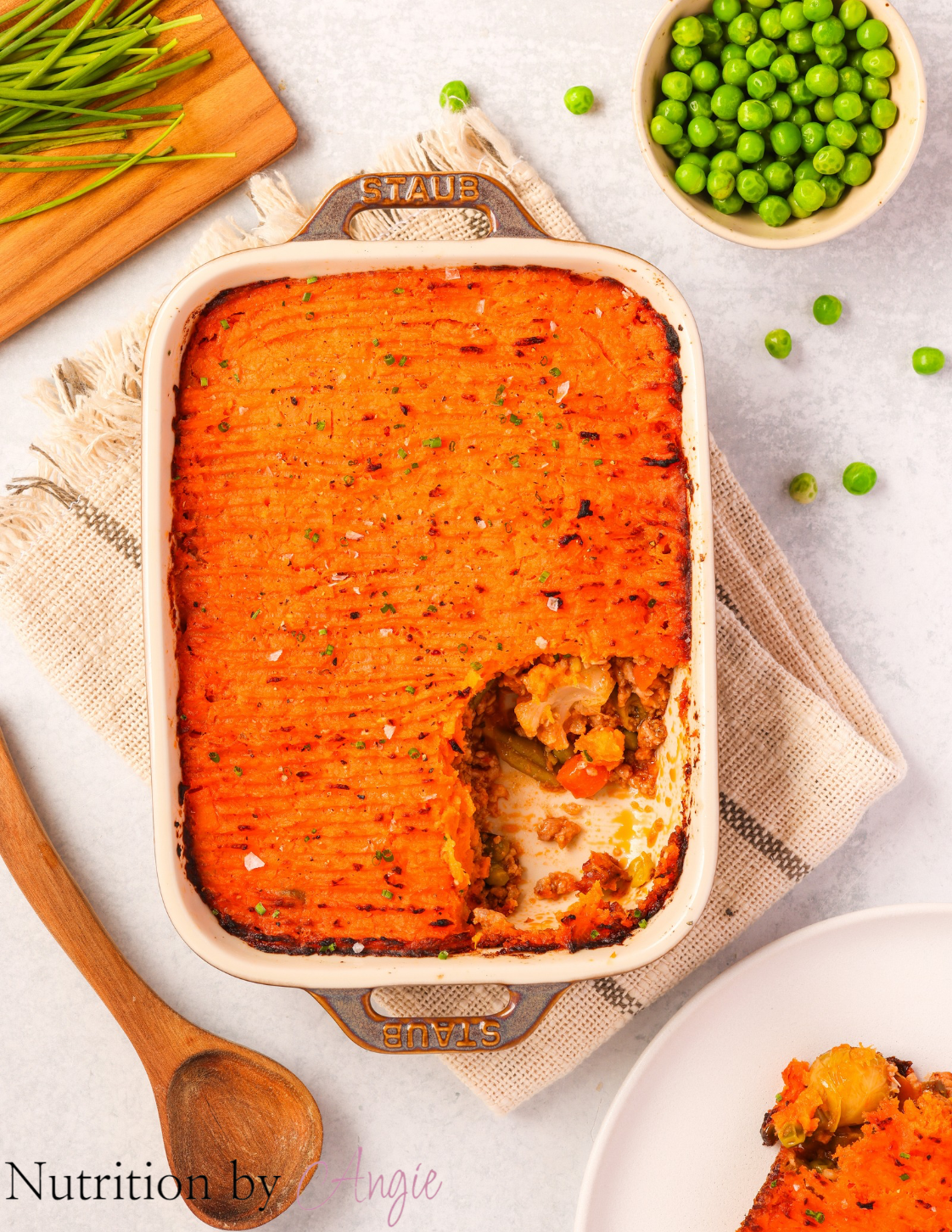
Sweet Potato Cottage Pie with Lean Beef, Vegetables and Creamy Greek Yoghurt Mash
High-Protein Ingredients • Comfort Food • Sweet Potato Cottage Pie • Lean Beef Recipe • Family-Friendly Dinner • Gluten-Free with Suitable Ingredients • Vegetable-Rich Meal • Healthy Cottage Pie Alternative • Homemade Beef Pie • Nutritious Weeknight Dinner • Make-Ahead Meal
Allergen information: This recipe contains milk (Greek yoghurt and butter). Worcestershire sauce may contain fish (anchovies), soy or other allergens, depending on the brand. Beef stock may contain celery, wheat, soy or other ingredients. Although gluten-free Worcestershire sauce is specified and cornflour is naturally gluten-free, the entire recipe is gluten-free only when the stock, tomato purée, seasonings and other packaged ingredients are also suitable and cross-contact is avoided.
Introduction
This Sweet Potato Cottage Pie with Lean Beef, Vegetables and Creamy Greek Yoghurt Mash is a comforting, satisfying and flavourful twist on a traditional British and Irish cottage pie.
It combines a rich filling of lean minced beef, carrots, onion, garlic, peas and aromatic thyme with a smooth sweet potato topping.
Greek yoghurt and a little unsalted butter give the sweet potato mash a creamy texture, while tomato purée, beef stock and Worcestershire sauce create a deeply savoury filling.
The result is a hearty, warming dish that balances the natural sweetness of sweet potatoes with the rich flavour of beef and vegetables.
Traditional cottage pie is usually topped with mashed white potatoes.
This version uses sweet potatoes, introducing a slightly sweeter flavour and a vibrant orange colour.
Sweet potatoes also contribute beta-carotene, dietary fibre, potassium and vitamin C.
Their naturally creamy texture works particularly well in mashed toppings.
Greek yoghurt adds a gentle tang that balances the sweetness of the potatoes.
It also contributes protein and calcium.
Unsalted butter provides richness and helps create a smooth consistency.
Because butter contains saturated fat, the quantity used is relevant for people following a cholesterol-conscious dietary pattern.
The filling uses lean minced beef containing approximately 5% fat.
Choosing lean beef reduces the total fat and saturated fat content compared with higher-fat mince.
Beef provides high-quality protein, iron, zinc and vitamin B12.
These nutrients contribute to normal muscle maintenance, oxygen transport, immune function and nervous system health.
The recipe also includes carrots, onion, garlic and peas.
These vegetables add colour, texture, flavour and nutritional variety.
Carrots provide beta-carotene, which the body can convert into vitamin A.
Peas contribute dietary fibre, plant-based protein, folate and vitamin C.
Onion and garlic provide savoury depth and naturally occurring plant compounds.
Tomato purée adds concentrated tomato flavour and contributes lycopene, a naturally occurring carotenoid.
Thyme brings a fragrant herbal note that complements the beef and vegetables.
Beef stock provides moisture and helps create the savoury sauce.
Worcestershire sauce adds a distinctive combination of tanginess, sweetness and umami.
The exact nutritional composition of these packaged ingredients depends on the brands used.
In particular, beef stock and Worcestershire sauce can contribute substantial sodium.
For people managing blood pressure or sodium intake, checking the nutrition labels can be useful.
Cornflour acts as a thickening ingredient.
It helps give the filling a cohesive texture so the sauce does not become excessively watery.
Although cornflour is naturally gluten-free, it contributes refined starch rather than substantial fibre or micronutrients.
The main nutritional strengths of this healthy sweet potato cottage pie come from its combination of protein-rich beef, colourful vegetables and carbohydrate-rich sweet potatoes.
Protein supports normal muscle maintenance and tissue repair.
Carbohydrates provide energy for everyday activities.
Dietary fibre supports normal digestive function.
The vegetables also contribute a variety of vitamins, minerals and naturally occurring plant compounds.
Sweet potatoes are particularly notable for their beta-carotene content.
Beta-carotene is a carotenoid that the body can convert into vitamin A.
Vitamin A contributes to normal vision, immune function and the maintenance of normal skin and mucous membranes.
The amount of beta-carotene varies depending on the sweet potato variety.
Orange-fleshed sweet potatoes are generally especially rich in this nutrient.
The beef filling provides haem iron.
Haem iron is generally more readily absorbed than non-haem iron found in plant foods.
Iron contributes to normal red blood cell formation and oxygen transport.
Beef also provides vitamin B12, which contributes to normal nervous system function.
Zinc is another important nutrient found in beef.
It supports normal immune function and protein synthesis.
The peas and other vegetables complement these nutrients by contributing fibre and additional micronutrients.
This lean beef and sweet potato cottage pie is particularly suitable for family dinners.
It can be prepared in advance, making it useful for busy weekdays.
It also reheats well when stored and handled appropriately.
The dish can be divided into portions and served with additional vegetables or a fresh side salad.
For a more vegetable-focused meal, steamed broccoli, green beans or leafy greens make excellent accompaniments.
The recipe is not vegetarian or vegan because it contains beef, dairy products and beef stock.
It may be suitable for people avoiding gluten when all packaged ingredients are verified as gluten-free.
However, the recipe should not automatically be described as low-fat, low-carbohydrate or low-calorie.
The finished nutritional profile depends on portion size, the fat content of the beef, the yoghurt used and the exact packaged ingredients.
For people following a cholesterol-conscious dietary pattern, choosing lean beef and suitable dairy products can help moderate saturated fat intake.
Replacing some saturated fat with unsaturated fat and including plenty of fibre-rich plant foods can also support cardiovascular health.
The sweet potatoes, carrots and peas provide an opportunity to include more vegetables in a familiar comfort-food dish.
Their colours and flavours create a visually appealing meal.
The contrast between the savoury beef filling and the creamy sweet potato topping makes this cottage pie particularly satisfying.
With its tender lean beef, colourful vegetables, aromatic herbs and creamy sweet potato mash, this Sweet Potato Cottage Pie is a delicious, nourishing and comforting meal that can be enjoyed as part of a varied and balanced diet.
Benefits of All the Ingredients
Sweet Potatoes
Sweet potatoes are nutritious root vegetables that provide carbohydrates, dietary fibre, potassium and a variety of vitamins.
Orange-fleshed sweet potatoes are particularly rich in beta-carotene.
They have a naturally sweet flavour and a creamy texture when cooked.
Sweet potatoes provide:
Carbohydrates: Supply energy for everyday activities.
Beta-Carotene: A precursor to vitamin A.
Dietary Fibre: Supports normal digestive function.
Potassium: Supports normal muscle function.
Vitamin C: Supports normal immune function.
Vitamin B6: Supports normal protein metabolism.
Manganese: Contributes to normal metabolism.
Copper: Supports normal connective tissue maintenance.
Naturally Occurring Polyphenols: Contribute to dietary plant compound intake.
Sweet Potatoes and Carbohydrates
Sweet potatoes provide carbohydrates.
Carbohydrates are an important source of energy for the body.
The 907g used in this recipe forms the main carbohydrate component of the cottage pie.
Sweet Potatoes and Beta-Carotene
Orange-fleshed sweet potatoes are rich in beta-carotene.
Beta-carotene is a naturally occurring carotenoid.
The body can convert it into vitamin A as needed.
Sweet Potatoes and Vitamin A
Vitamin A contributes to normal vision, immune function and the maintenance of normal skin.
The beta-carotene in orange sweet potatoes contributes to vitamin A intake.
Sweet Potatoes and Eye Health
Vitamin A is important for normal vision.
It contributes to the normal function of the retina.
However, sweet potatoes should not be considered a treatment for eye disease.
Sweet Potatoes and Dietary Fibre
Sweet potatoes provide dietary fibre.
Fibre supports normal digestive function.
The amount depends partly on whether the skin is retained.
Sweet Potatoes and Potassium
Sweet potatoes provide potassium.
Potassium contributes to normal muscle function and the maintenance of normal blood pressure.
Sweet Potatoes and Vitamin C
Sweet potatoes contain vitamin C.
Vitamin C contributes to normal immune function and collagen formation.
Some vitamin C may be lost during cooking.
Sweet Potatoes and Vitamin B6
Sweet potatoes provide vitamin B6.
Vitamin B6 contributes to normal protein metabolism and nervous system function.
Sweet Potatoes and Manganese
Sweet potatoes contain manganese.
Manganese contributes to normal metabolism and bone maintenance.
Sweet Potatoes and Copper
Sweet potatoes provide copper.
Copper contributes to normal connective tissue maintenance and iron transport.
Sweet Potatoes and Polyphenols
Sweet potatoes contain naturally occurring polyphenols.
These contribute to dietary plant compound intake.
Sweet Potatoes and Blood Glucose
Sweet potatoes contain digestible carbohydrates.
Their effect on blood glucose depends on portion size, cooking method and the composition of the overall meal.
Combining them with protein, fat and fibre changes the meal's nutritional balance.
Sweet Potatoes and Satiety
Sweet potatoes provide carbohydrates, fibre and water.
These nutrients can contribute to feelings of fullness.
Sweet Potatoes and Texture
Cooked sweet potatoes have a naturally creamy texture.
They create a smooth topping without requiring large amounts of added fat.
Sweet Potatoes and Natural Sweetness
Sweet potatoes provide natural sweetness.
This balances the savoury beef and vegetable filling.
Why Sweet Potatoes Work Well
Sweet potatoes provide colour, energy and beta-carotene.
Their creamy texture makes them an excellent topping for cottage pie.
Greek Yoghurt
Greek yoghurt is a thick, creamy dairy product made by straining yoghurt.
It generally contains more protein than many conventional natural yoghurts, although amounts vary between brands.
Greek yoghurt provides protein, calcium and other nutrients.
Greek yoghurt provides:
Protein: Supports normal muscle maintenance.
Calcium: Supports healthy bones and teeth.
Vitamin B12: Supports normal nervous system function.
Riboflavin (Vitamin B2): Supports normal energy metabolism.
Phosphorus: Supports healthy bones and teeth.
Iodine: Depending on the milk source.
Live Cultures: In products containing viable cultures.
Saturated Fat: Depending on the fat content.
Greek Yoghurt and Protein
Greek yoghurt provides protein.
Protein contributes to normal muscle maintenance and tissue repair.
The amount depends on the product.
Greek Yoghurt and Calcium
Greek yoghurt provides calcium.
Calcium contributes to the maintenance of normal bones and teeth.
Greek Yoghurt and Vitamin B12
Greek yoghurt contains vitamin B12.
Vitamin B12 contributes to normal nervous system function and red blood cell formation.
Greek Yoghurt and Riboflavin
Greek yoghurt provides riboflavin.
Riboflavin contributes to normal energy metabolism.
Greek Yoghurt and Phosphorus
Greek yoghurt contains phosphorus.
Phosphorus contributes to the maintenance of normal bones and teeth.
Greek Yoghurt and Iodine
Dairy yoghurt may provide iodine.
The amount varies depending on the milk source and production methods.
Greek Yoghurt and Live Cultures
Some Greek yoghurts contain live bacterial cultures.
These cultures are involved in fermentation.
However, not all products contain sufficient viable cultures to support specific probiotic claims.
Greek Yoghurt and Saturated Fat
Full-fat Greek yoghurt contains saturated fat.
Lower-fat varieties generally contain less saturated fat.
Greek Yoghurt and Lactose
Greek yoghurt contains lactose.
Some people with lactose intolerance may tolerate yoghurt better than milk, but tolerance varies.
Greek Yoghurt and Texture
Greek yoghurt provides a thick, creamy texture.
It helps create a smooth sweet potato topping.
Greek Yoghurt and Flavour
Greek yoghurt adds a gentle tang.
This balances the natural sweetness of the sweet potatoes.
Why Greek Yoghurt Works Well
Greek yoghurt adds creaminess and protein.
It creates a smooth topping with a pleasant tangy flavour.
Unsalted Butter
Butter is a dairy fat that provides richness and flavour.
It contains saturated fat and small amounts of fat-soluble vitamins.
Unsalted butter allows greater control over added sodium.
Unsalted butter provides:
Fat: Supplies energy.
Saturated Fat: Present in relatively high proportions.
Vitamin A: Supports normal vision and immune function.
Small Amounts of Vitamin E: Helps protect cells from oxidative stress.
Small Amounts of Vitamin K: Supports normal blood clotting.
Creamy Texture: Enhances the sweet potato topping.
Butter and Dietary Fat
Butter provides dietary fat.
Fat supplies energy and contributes to the texture of food.
Butter and Saturated Fat
Butter is relatively high in saturated fat.
Replacing saturated fats with unsaturated fats can help improve LDL cholesterol levels.
Butter and Vitamin A
Butter contains vitamin A.
Vitamin A contributes to normal vision and immune function.
Butter and Vitamin E
Butter contains small amounts of vitamin E.
Vitamin E helps protect cells from oxidative stress.
Butter and Vitamin K
Butter contains small amounts of vitamin K.
Vitamin K contributes to normal blood clotting.
Butter and Energy Density
Butter is energy-dense.
The two tablespoons used in this recipe contribute additional fat and energy.
Butter and Sodium
Unsalted butter contains very little added sodium.
This allows greater control over the recipe's salt content.
Butter and Flavour
Butter provides richness.
It complements the sweet potatoes and Greek yoghurt.
Why Unsalted Butter Works Well
Unsalted butter adds creaminess and flavour.
It helps create a smooth, comforting sweet potato topping.
Cornflour (Cornstarch)
Cornflour, also known as cornstarch in North America, is a refined starch extracted from maize.
It is commonly used to thicken sauces.
Cornflour provides:
Carbohydrates: Supply energy.
Starch: Helps thicken liquids.
A Naturally Gluten-Free Ingredient: When uncontaminated.
Minimal Fat: Contains very little fat.
Minimal Protein: Contains very little protein.
Cornflour and Carbohydrates
Cornflour provides carbohydrates.
Carbohydrates supply energy.
However, the two teaspoons used in this recipe provide only a small contribution.
Cornflour and Starch
Cornflour contains concentrated starch.
Starch granules absorb water and swell when heated.
This helps thicken the beef filling.
Cornflour and Gluten-Free Cooking
Pure cornflour is naturally gluten-free.
However, cross-contact during processing is possible.
Certified gluten-free products are preferable for people with coeliac disease.
Cornflour and Dietary Fibre
Cornflour contains very little dietary fibre.
It should not be considered a significant fibre source.
Cornflour and Micronutrients
Refined cornflour contains relatively few vitamins and minerals.
Its main role in this recipe is thickening.
Cornflour and Texture
Cornflour helps create a cohesive sauce.
It prevents the beef filling from becoming excessively watery.
Why Cornflour Works Well
Cornflour thickens the sauce.
It helps the filling hold together beneath the sweet potato topping.
Beef Stock
Beef stock provides savoury flavour and moisture.
It is typically made from beef, bones, vegetables, herbs and seasonings.
The nutritional composition varies considerably between homemade and commercial products.
Beef stock may provide:
Water: Contributes moisture.
Sodium: Depending on added salt.
Small Amounts of Minerals: Depending on preparation.
Small Amounts of Protein: Depending on the product.
Savoury Compounds: Contribute to umami flavour.
Beef Stock and Hydration
Beef stock contains water.
This provides moisture for the filling.
Beef Stock and Sodium
Commercial beef stock may contain substantial sodium.
Choosing a reduced-salt product can help moderate sodium intake.
Beef Stock and Minerals
Beef stock may contain small amounts of minerals.
The quantities vary depending on preparation.
Beef Stock and Protein
Some stocks contain small amounts of protein.
However, ordinary beef stock should not be considered a concentrated protein source.
Beef Stock and Umami
Beef stock contains savoury flavour compounds.
These contribute to the rich taste of the filling.
Beef Stock and Allergens
Commercial stock may contain celery, wheat, soy or other allergens.
Checking the ingredient list is important.
Beef Stock and Gluten-Free Suitability
Not all commercial stocks are gluten-free.
A suitable gluten-free product is required when preparing the dish for someone with coeliac disease.
Beef Stock and Flavour
Beef stock enhances the savoury flavour of the mince and vegetables.
Why Beef Stock Works Well
Beef stock provides moisture and depth.
It helps create a rich, flavourful filling.
Lean Minced Beef (5% Fat)
Lean minced beef is a valuable source of high-quality protein, iron, zinc and vitamin B12.
Choosing beef with approximately 5% fat reduces the fat content compared with higher-fat mince.
Lean beef provides:
High-Quality Protein: Supports normal muscle maintenance.
Essential Amino Acids: Required for normal protein synthesis.
Haem Iron: Supports normal oxygen transport.
Vitamin B12: Supports normal nervous system function.
Zinc: Supports normal immune function.
Selenium: Supports normal thyroid function.
Niacin (Vitamin B3): Supports normal energy metabolism.
Vitamin B6: Supports normal protein metabolism.
Phosphorus: Supports healthy bones and teeth.
Creatine: A naturally occurring compound found in muscle tissue.
Lean Beef and High-Quality Protein
Lean beef provides high-quality protein.
Protein contributes to normal muscle maintenance and tissue repair.
The 454g used in this recipe provides a substantial amount of protein across the cottage pie.
Lean Beef and Essential Amino Acids
Beef contains all nine essential amino acids.
These are required for normal protein synthesis.
Lean Beef and Muscle Maintenance
Protein contributes to the maintenance of normal muscle mass.
Adequate protein intake is important throughout adulthood.
Lean Beef and Haem Iron
Beef provides haem iron.
Haem iron is generally more readily absorbed than non-haem iron found in plant foods.
Iron contributes to normal red blood cell formation and oxygen transport.
Lean Beef and Vitamin B12
Beef is a valuable source of vitamin B12.
Vitamin B12 contributes to normal nervous system function and red blood cell formation.
Lean Beef and Zinc
Beef provides zinc.
Zinc contributes to normal immune function, protein synthesis and wound healing.
Lean Beef and Selenium
Beef contains selenium.
Selenium contributes to normal thyroid function and helps protect cells from oxidative stress.
Lean Beef and Niacin
Beef provides niacin.
Niacin contributes to normal energy metabolism.
Lean Beef and Vitamin B6
Beef contains vitamin B6.
Vitamin B6 contributes to normal protein metabolism and nervous system function.
Lean Beef and Phosphorus
Beef provides phosphorus.
Phosphorus contributes to the maintenance of normal bones and teeth.
Lean Beef and Creatine
Beef naturally contains creatine.
Creatine is involved in cellular energy metabolism, particularly in muscle tissue.
However, the amount consumed in an ordinary serving of beef should not be equated with a supplemental dose.
Lean Beef and Saturated Fat
Beef contains saturated fat.
Choosing lean mince reduces saturated fat intake compared with higher-fat varieties.
Lean Beef and Cholesterol-Friendly Nutrition
Lean beef can be included in a balanced dietary pattern.
However, frequent high intakes of red meat may be associated with increased health risks.
Portion size and overall dietary variety are important.
Lean Beef and Food Safety
Minced beef should be cooked thoroughly.
A centre temperature of 75°C is a useful food safety target.
Why Lean Beef Works Well
Lean beef provides protein, iron, zinc and vitamin B12.
It creates a rich, satisfying filling without requiring higher-fat mince.
Carrots
Carrots are root vegetables that provide beta-carotene, dietary fibre and other nutrients.
They add natural sweetness, colour and texture to savoury dishes.
Carrots provide:
Beta-Carotene: A precursor to vitamin A.
Dietary Fibre: Supports normal digestive function.
Potassium: Supports normal muscle function.
Vitamin K: Supports normal blood clotting.
Vitamin B6: Supports normal protein metabolism.
Naturally Occurring Polyphenols: Contribute to dietary plant compound intake.
Carrots and Beta-Carotene
Carrots are rich in beta-carotene.
Beta-carotene contributes to their orange colour.
The body can convert it into vitamin A.
Carrots and Vitamin A
Vitamin A contributes to normal vision and immune function.
Carrots provide vitamin A precursors rather than preformed vitamin A.
Carrots and Dietary Fibre
Carrots provide dietary fibre.
Fibre supports normal digestive function.
Carrots and Potassium
Carrots contain potassium.
Potassium contributes to normal muscle function.
Carrots and Vitamin K
Carrots contain vitamin K.
Vitamin K contributes to normal blood clotting.
Carrots and Vitamin B6
Carrots contain vitamin B6.
Vitamin B6 contributes to normal protein metabolism.
Carrots and Polyphenols
Carrots contain naturally occurring polyphenols.
These contribute to dietary plant compound intake.
Carrots and Natural Sweetness
Carrots provide natural sweetness.
This balances the savoury beef filling.
Carrots and Texture
Thinly sliced carrots add texture.
They complement the soft peas and minced beef.
Why Carrots Work Well
Carrots provide colour, fibre and beta-carotene.
They add natural sweetness to the savoury filling.
Yellow Onion
Yellow onion provides savoury flavour and natural sweetness.
It belongs to the allium family.
Onions contain naturally occurring sulphur compounds and flavonoids.
Yellow onion provides:
Quercetin: A naturally occurring flavonoid.
Sulphur Compounds: Contribute to onion flavour.
Dietary Fibre: Supports normal digestive function.
Vitamin C: Supports normal immune function.
Folate: Supports normal cell division.
Potassium: Supports normal muscle function.
Prebiotic Fructans: Fermentable carbohydrates.
Onion and Quercetin
Onions contain quercetin.
Quercetin is a naturally occurring flavonoid.
It has been studied for its antioxidant properties.
Onion and Sulphur Compounds
Onions contain sulphur compounds.
These contribute to their distinctive flavour and aroma.
Onion and Dietary Fibre
Onions provide dietary fibre.
Fibre supports normal digestive function.
Onion and Vitamin C
Onions contain vitamin C.
Vitamin C contributes to normal immune function and collagen formation.
Onion and Folate
Onions contain folate.
Folate contributes to normal cell division.
Onion and Potassium
Onions provide potassium.
Potassium contributes to normal muscle function.
Onion and Prebiotic Fibres
Onions contain fructans.
These can be fermented by intestinal bacteria.
However, they may cause digestive discomfort in people sensitive to FODMAPs.
Onion and Flavour
Cooking softens the sharp flavour of onion.
It helps create a rich, savoury base.
Why Yellow Onion Works Well
Yellow onion provides sweetness and depth.
It enhances the flavour of the beef and vegetables.
Garlic
Garlic provides a distinctive savoury flavour.
It belongs to the allium family.
Garlic contains naturally occurring sulphur compounds.
Garlic provides:
Organosulphur Compounds: Contribute to garlic flavour.
Allicin-Related Compounds: Form when garlic is crushed or chopped.
Vitamin B6: Supports normal protein metabolism.
Manganese: Contributes to normal metabolism.
Vitamin C: Supports normal immune function.
Naturally Occurring Polyphenols: Contribute to dietary plant compound intake.
Garlic and Organosulphur Compounds
Garlic contains naturally occurring sulphur compounds.
These contribute to its distinctive aroma and flavour.
Garlic and Allicin
When garlic is chopped or crushed, compounds can react to form allicin.
Allicin has been studied for its biological properties.
However, it is unstable and changes during cooking.
Garlic and Vitamin B6
Garlic contains vitamin B6.
Vitamin B6 contributes to normal protein metabolism.
The three cloves used in this recipe provide a modest contribution.
Garlic and Manganese
Garlic contains manganese.
Manganese contributes to normal metabolism.
Garlic and Vitamin C
Garlic contains vitamin C.
However, the quantity used does not provide a major contribution.
Garlic and Antioxidant Plant Compounds
Garlic contains naturally occurring plant compounds.
These have been studied for their antioxidant properties.
However, garlic should not be considered a treatment for disease.
Garlic and Digestive Tolerance
Garlic contains fructans.
These can cause digestive discomfort in people sensitive to FODMAPs.
Garlic and Flavour
Garlic adds savoury depth.
It complements the beef, onion and tomato purée.
Why Garlic Works Well
Garlic provides aroma and richness.
It enhances the savoury flavour of the filling.
Tomato Purée
Tomato purée, also known as tomato paste, is made from concentrated tomatoes.
It provides a rich tomato flavour and naturally occurring carotenoids.
Tomato purée provides:
Lycopene: A naturally occurring carotenoid.
Potassium: Supports normal muscle function.
Vitamin C: Supports normal immune function.
Naturally Occurring Polyphenols: Contribute to dietary plant compound intake.
Dietary Fibre: Present in small amounts.
Concentrated Tomato Flavour: Enhances savoury dishes.
Tomato Purée and Lycopene
Tomatoes contain lycopene.
Lycopene is a naturally occurring carotenoid responsible for their red colour.
Processing and cooking can improve its availability.
Tomato Purée and Potassium
Tomato purée provides potassium.
Potassium contributes to normal muscle function.
Tomato Purée and Vitamin C
Tomato purée contains vitamin C.
However, some vitamin C may be lost during processing and cooking.
Tomato Purée and Polyphenols
Tomatoes contain naturally occurring polyphenols.
These contribute to dietary plant compound intake.
Tomato Purée and Dietary Fibre
Tomato purée contains small amounts of dietary fibre.
The amount depends on the product.
Tomato Purée and Concentrated Flavour
Tomato purée provides a rich savoury taste.
It adds depth to the beef filling.
Tomato Purée and Sodium
Some tomato purée products contain added salt.
Checking the label can help manage sodium intake.
Tomato Purée and Added Sugar
Some tomato products contain added sugar.
Plain tomato purée generally does not require added sugar.
Why Tomato Purée Works Well
Tomato purée adds richness and colour.
It complements the beef stock, garlic and thyme.
Thyme
Thyme is an aromatic herb commonly used in savoury cooking.
It has a distinctive earthy flavour.
Thyme contains naturally occurring aromatic compounds, including thymol.
Thyme provides:
Aromatic Compounds: Contribute to its distinctive flavour.
Polyphenols: Naturally occurring plant compounds.
Small Amounts of Vitamin K: Supports normal blood clotting.
Small Amounts of Minerals: Depending on the form used.
Herbal Flavour: Enhances savoury dishes.
Thyme and Aromatic Compounds
Thyme contains aromatic compounds such as thymol.
These contribute to its distinctive fragrance.
Thyme and Polyphenols
Thyme contains naturally occurring polyphenols.
These have been studied for their antioxidant properties.
Thyme and Vitamin K
Thyme contains vitamin K.
However, the two teaspoons used in this recipe provide a limited nutritional contribution.
Thyme and Minerals
Thyme contains small amounts of minerals.
The amount consumed depends on whether fresh or dried thyme is used.
Thyme and Flavour
Thyme provides an earthy herbal flavour.
It complements beef, onion and tomato purée.
Thyme and Convenience
Dried thyme is convenient to store.
Fresh thyme provides a more delicate herbal aroma.
Why Thyme Works Well
Thyme adds aromatic depth.
It enhances the traditional cottage pie flavour.
Frozen Peas
Peas are legumes that provide dietary fibre, plant-based protein and a variety of vitamins and minerals.
Frozen peas are convenient and retain many nutrients when stored and prepared appropriately.
Peas provide:
Plant-Based Protein: Contributes to normal muscle maintenance.
Dietary Fibre: Supports normal digestive function.
Vitamin C: Supports normal immune function.
Folate: Supports normal cell division.
Vitamin K: Supports normal blood clotting.
Vitamin B1 (Thiamin): Supports normal energy metabolism.
Manganese: Contributes to normal metabolism.
Iron: Supports normal oxygen transport.
Potassium: Supports normal muscle function.
Peas and Plant-Based Protein
Peas provide plant-based protein.
Protein contributes to normal muscle maintenance and tissue repair.
Peas and Dietary Fibre
Peas are a useful source of dietary fibre.
Fibre supports normal digestive function.
Peas and Vitamin C
Peas provide vitamin C.
Vitamin C contributes to normal immune function and collagen formation.
Peas and Folate
Peas contain folate.
Folate contributes to normal cell division and red blood cell formation.
Peas and Vitamin K
Peas provide vitamin K.
Vitamin K contributes to normal blood clotting and bone maintenance.
Peas and Thiamin
Peas contain thiamin, also known as vitamin B1.
Thiamin contributes to normal energy metabolism.
Peas and Manganese
Peas provide manganese.
Manganese contributes to normal metabolism.
Peas and Iron
Peas contain non-haem iron.
Iron contributes to normal red blood cell formation and oxygen transport.
Peas and Potassium
Peas provide potassium.
Potassium contributes to normal muscle function.
Peas and Frozen Vegetables
Freezing helps preserve peas.
Frozen peas can provide a convenient source of vegetables throughout the year.
Peas and Natural Sweetness
Peas provide natural sweetness.
This balances the rich beef filling.
Peas and Texture
Peas add a soft but slightly firm texture.
They complement the minced beef and carrots.
Why Frozen Peas Work Well
Peas provide fibre, plant-based protein and colour.
They add sweetness and nutritional variety to the filling.
Gluten-Free Worcestershire Sauce
Worcestershire sauce is a savoury condiment traditionally made with vinegar, molasses, tamarind, spices and anchovies.
Gluten-free versions are available, but formulations vary.
Worcestershire sauce may provide:
Acidity: Enhances flavour.
Umami Compounds: Contribute to savoury depth.
Small Amounts of Carbohydrates: Depending on the formulation.
Sodium: Depending on added salt.
Aromatic Spices: Contribute flavour.
Worcestershire Sauce and Umami
Worcestershire sauce provides a savoury umami flavour.
This enhances the richness of the beef filling.
Worcestershire Sauce and Acidity
Worcestershire sauce contains acidic ingredients.
These help balance rich savoury flavours.
Worcestershire Sauce and Sodium
Worcestershire sauce can contain substantial sodium.
The tablespoon used in this recipe contributes to the total sodium content.
Worcestershire Sauce and Carbohydrates
Some Worcestershire sauces contain molasses or sugar.
The carbohydrate content depends on the product.
Worcestershire Sauce and Gluten-Free Suitability
Gluten-free Worcestershire sauce is made without gluten-containing ingredients.
However, checking the label is important for people with coeliac disease.
Worcestershire Sauce and Fish Allergens
Traditional Worcestershire sauce often contains anchovies.
This makes it unsuitable for people with fish allergy.
Fish-free alternatives are available.
Worcestershire Sauce and Flavour
Worcestershire sauce provides tanginess, sweetness and savoury depth.
It complements the beef, tomato purée and thyme.
Why Worcestershire Sauce Works Well
Worcestershire sauce adds complexity and richness.
It enhances the traditional cottage pie flavour.
Why Sweet Potato Cottage Pie Makes a Nourishing Family Meal
Provides High-Quality Protein
Lean beef and Greek yoghurt contribute protein that supports normal muscle maintenance.
Contains Haem Iron
Beef provides haem iron, supporting normal oxygen transport.
Provides Vitamin B12
Beef and Greek yoghurt contribute vitamin B12.
Contains Beta-Carotene
Sweet potatoes and carrots provide beta-carotene.
Provides Dietary Fibre
Sweet potatoes, carrots, onion and peas contribute fibre.
Contains Potassium
Sweet potatoes and vegetables provide potassium.
Includes Zinc
Lean beef provides zinc, supporting normal immune function.
Offers a Variety of Vegetables
The recipe includes sweet potatoes, carrots, onion, garlic, tomatoes and peas.
Uses Lean Minced Beef
Choosing 5% fat mince helps moderate saturated fat intake compared with higher-fat beef.
Works Well for Family Meals and Meal Preparation
The dish can be portioned, refrigerated and reheated appropriately.
Delicious Serving Suggestions
With Steamed Broccoli
Serve alongside steamed broccoli for additional fibre, vitamin C and colour.
With Green Beans
Pair with lightly cooked green beans for a fresh vegetable accompaniment.
With a Mixed Leaf Salad
Serve with rocket, spinach and lettuce for a lighter contrast.
With Roasted Brussels Sprouts
Add roasted Brussels sprouts for extra vegetables and a slightly nutty flavour.
With Sautéed Cabbage
Pair with gently cooked cabbage for a traditional comfort-food combination.
With Fresh Parsley
Finish with chopped fresh parsley for colour and herbal freshness.
Tips for the Best Sweet Potato Cottage Pie
Choose orange-fleshed sweet potatoes: These generally provide plenty of beta-carotene.
Use fresh sweet potatoes: Avoid soft or damaged vegetables.
Peel sweet potatoes evenly: This helps create a smooth mash.
Cut sweet potatoes into similar-sized pieces: This encourages even cooking.
Avoid overcooking sweet potatoes in excessive water: This can make the mash watery.
Drain sweet potatoes thoroughly: Excess moisture can affect the topping.
Mash sweet potatoes until smooth: This creates a creamy texture.
Use plain Greek yoghurt: Avoid sweetened varieties.
Choose lower-fat Greek yoghurt if preferred: This can reduce saturated fat.
Measure butter accurately: It contributes saturated fat and energy.
Use unsalted butter: This allows greater control over sodium.
Choose 5% fat minced beef: This helps moderate fat intake.
Brown beef evenly: This helps develop savoury flavour.
Cook minced beef thoroughly: A centre temperature of 75°C is a useful safety target.
Drain excess fat if necessary: This can help reduce the fat content.
Slice carrots evenly: This helps them cook consistently.
Chop onion finely: This distributes its flavour throughout the filling.
Mince garlic finely: This prevents large pieces.
Use tomato purée: It adds concentrated tomato flavour.
Choose reduced-salt beef stock if possible: This can help manage sodium intake.
Check beef stock allergens: Some products contain celery, wheat or soy.
Use cornflour carefully: Too much can create an overly thick sauce.
Mix cornflour with a little cool liquid before adding to hot sauce: This helps prevent lumps.
Use thyme according to preference: Fresh and dried thyme have different flavour intensities.
Add frozen peas without unnecessary prolonged cooking: This helps preserve their texture.
Check Worcestershire sauce ingredients: Some products contain anchovies.
Use certified gluten-free Worcestershire sauce if required: This helps maintain gluten-free suitability.
Taste before adding extra salt: Stock and Worcestershire sauce may already contribute sodium.
Avoid an excessively watery filling: This helps the pie hold together.
Spread the sweet potato topping evenly: This encourages consistent heating.
Avoid excessive added cheese or butter: This can increase saturated fat.
Serve with vegetables: This increases nutritional variety.
Allow the pie to settle briefly before serving: This helps portions hold their shape.
Use suitable portion sizes: This helps balance energy and saturated fat intake.
Refrigerate leftovers promptly: Keep at 5°C or below.
Consume refrigerated leftovers within approximately 3–4 days: Follow appropriate food safety guidance.
Reheat thoroughly: Ensure the centre is piping hot throughout.
Avoid repeated reheating: This can affect quality and increase food safety risks.
Freeze suitable portions if desired: Cool promptly before freezing.
Thaw frozen portions safely: Thaw in the refrigerator rather than at room temperature.
Use a food thermometer when needed: A centre temperature of 75°C provides a useful safety target.
A Note on Sweet Potatoes, Lean Beef and Cholesterol-Friendly Nutrition
This Sweet Potato Cottage Pie combines lean beef, sweet potatoes, vegetables, Greek yoghurt and butter.
Lean beef provides high-quality protein, haem iron, zinc and vitamin B12.
These nutrients contribute to normal muscle maintenance, oxygen transport, immune function and nervous system health.
Choosing beef containing approximately 5% fat helps reduce saturated fat intake compared with higher-fat mince.
However, beef remains a source of saturated fat.
For people managing LDL cholesterol, the overall amount of saturated fat consumed is important.
Replacing saturated fats with unsaturated fats can help improve LDL cholesterol levels.
Sweet potatoes provide carbohydrates, beta-carotene, potassium and dietary fibre.
They are naturally low in fat.
Their creamy texture makes them a useful alternative to traditional mashed potato toppings.
Carrots provide additional beta-carotene.
Peas contribute plant-based protein, fibre, folate and vitamin C.
Onion and garlic add flavour and naturally occurring plant compounds.
Tomato purée provides concentrated tomato flavour and lycopene.
Greek yoghurt contributes protein and calcium.
Choosing lower-fat Greek yoghurt can help reduce saturated fat intake.
Butter adds richness but is relatively high in saturated fat.
Using a measured amount helps control its contribution.
Beef stock and Worcestershire sauce provide savoury flavour.
However, they may contain substantial sodium.
High sodium intake can contribute to elevated blood pressure.
Choosing reduced-salt stock and checking packaged ingredient labels can help manage sodium intake.
For people following a cholesterol-conscious dietary pattern, the overall balance of foods is important.
Regular consumption of vegetables, fruit, whole grains, legumes, nuts, seeds and unsaturated fats can support cardiovascular health.
Red meat can be included in a balanced diet, but portion size and frequency matter.
A varied protein intake that also includes beans, lentils, fish and other suitable protein sources can help support dietary balance.
Serving this cottage pie with additional vegetables can increase fibre and micronutrient intake.
The combination of protein, carbohydrates and vegetables makes it a satisfying family meal.
With its tender lean beef, colourful vegetables, aromatic herbs and creamy sweet potato topping, this Sweet Potato Cottage Pie is a comforting and nourishing dish that can be enjoyed as part of a varied and balanced diet.