
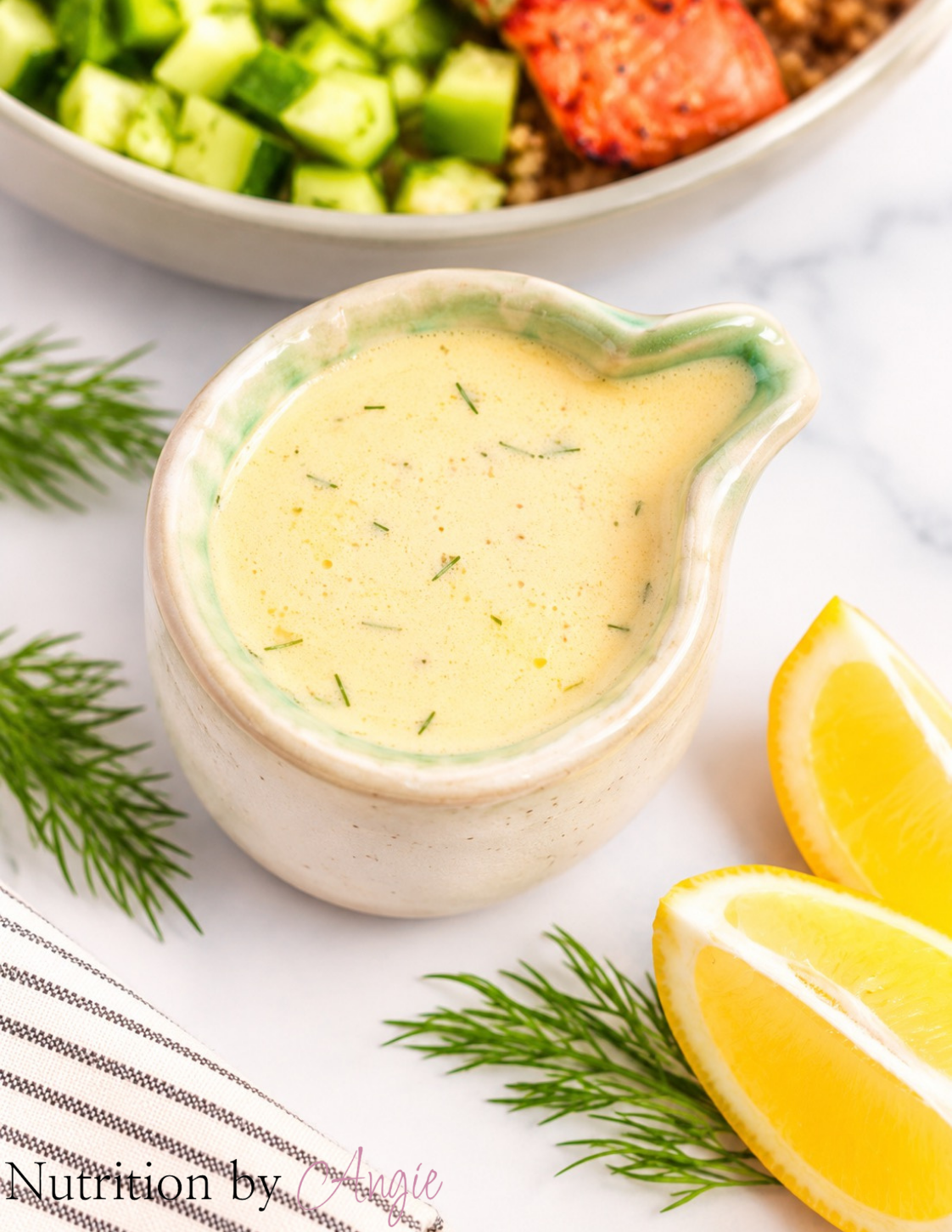
Creamy Lemon, Dill and Dijon Sauce – Easy Homemade Dressing
Creamy Lemon Sauce • Dill and Dijon Dressing • Homemade Mayonnaise Sauce • Lemon Mustard Sauce • Easy Four-Ingredient Recipe • Creamy Fish Sauce • Homemade Salad Dressing • Quick and Flavourful Sauce
Allergen information: This recipe typically contains egg (mayonnaise) and mustard (Dijon mustard). Some mayonnaise and mustard products may contain additional allergens, so always check the labels. The sauce can be gluten-free when all packaged ingredients are suitable.
Introduction
This Creamy Lemon, Dill and Dijon Sauce is a quick, delicious and versatile homemade dressing made with just four simple ingredients.
Combining creamy mayonnaise, tangy Dijon mustard, fresh lemon juice and aromatic dill, this sauce delivers a refreshing balance of richness, acidity and savoury flavour.
The mayonnaise creates a smooth, creamy texture, while Dijon mustard adds a gentle sharpness. Lemon juice brings brightness, and dill provides a delicate herbal finish.
Perfect for grilled salmon, baked chicken, roasted vegetables, sandwiches and fresh salads, this easy sauce adds flavour without complicated preparation.
Although mayonnaise is relatively high in fat and energy, it often contains predominantly unsaturated fats, depending on the oil used. The nutritional profile of the sauce depends largely on the type and quantity of mayonnaise.
Benefits of All the Ingredients
Mayonnaise
Mayonnaise provides the creamy base of this sauce.
It is typically made from oil, egg yolk and an acidic ingredient such as vinegar or lemon juice.
Key nutritional characteristics:
Unsaturated Fats: May contribute monounsaturated and polyunsaturated fats, depending on the oil used.
Vitamin E: May be present depending on the oil.
Energy: Provides a concentrated source of energy.
Creamy Texture: Creates a smooth, rich sauce.
Mayonnaise is energy-dense, so portion size is important.
Choosing mayonnaise made with rapeseed or olive oil may provide a favourable unsaturated fat profile.
Dijon Mustard
Dijon mustard adds a sharp, slightly spicy flavour.
Key nutritional characteristics:
Contains naturally occurring compounds from mustard seeds.
Adds flavour with relatively little energy.
Provides a small amount of minerals.
May contain added sodium.
Mustard is a recognised food allergen and should be clearly identified.
Lemon Juice
Fresh lemon juice adds acidity and brightness.
Key nutritional benefits:
Vitamin C: Supports normal immune function and collagen formation.
Citric Acid: Provides a refreshing tart flavour.
Flavonoids: Naturally occurring citrus plant compounds.
Low Sodium: Adds flavour without significant salt.
The quantity used contributes mainly flavour rather than a substantial amount of vitamin C.
Fresh Dill
Dill is a fragrant herb with a delicate flavour.
Key nutritional characteristics:
Contains naturally occurring aromatic compounds.
Provides small amounts of plant compounds.
Adds freshness without substantial sodium.
Complements lemon and mustard.
Because only ¼ teaspoon is used, its nutritional contribution is minimal.
Why This Homemade Sauce Is a Delicious Addition to Meals
Quick and Easy: Made with just four ingredients.
Rich and Creamy: Mayonnaise creates a smooth texture without requiring cream.
Fresh Citrus Flavour: Lemon juice balances the richness of the mayonnaise.
Aromatic Herbs: Dill adds a delicate, refreshing finish.
Versatile: Works well with fish, poultry, vegetables and salads.
No Added Sugar Required: The recipe does not call for added sugar, although some commercial mayonnaise products may contain it.
Customisable: Adjust the lemon or mustard to suit your taste.
Delicious Serving Suggestions
With Baked Salmon
Spoon over baked or grilled salmon for a classic combination of lemon, dill and fish.
With Grilled Chicken
Use as a creamy accompaniment to grilled chicken breast or chicken skewers.
As a Salad Dressing
Toss a small amount through leafy greens, cucumber and tomatoes.
With Roasted Vegetables
Serve alongside roasted carrots, courgettes, broccoli or asparagus.
In Sandwiches and Wraps
Spread a thin layer inside chicken, turkey or vegetable sandwiches.
With Homemade Fish Cakes
Serve as a dipping sauce for fish cakes or seafood patties.
Tips for the Best Creamy Lemon, Dill and Dijon Sauce
Choose good-quality mayonnaise: Its flavour strongly influences the finished sauce.
Check the oil used: Mayonnaise made with predominantly unsaturated oils may be preferable for cholesterol-conscious eating.
Use fresh lemon juice: It provides the brightest flavour.
Add lemon gradually: This helps prevent the sauce from becoming too thin.
Choose smooth Dijon mustard: It creates an even consistency.
Check mustard sodium: Different brands contain varying amounts.
Use fresh dill if available: It provides the best herbal aroma.
Chop dill finely: This distributes its flavour evenly.
Mix until smooth: This helps combine the ingredients thoroughly.
Taste before adding salt: Mayonnaise and mustard may already contain sodium.
Adjust the mustard: Add slightly more for a sharper flavour.
Adjust the lemon: Add more for a tangier sauce.
Use smaller portions: Mayonnaise is energy-dense.
Choose lighter mayonnaise if preferred: This may reduce energy and fat, depending on the product.
Check allergens: Mayonnaise commonly contains egg, while Dijon contains mustard.
Store in an airtight container: This helps maintain freshness.
Refrigerate promptly: Keep at 5°C or below.
Use within approximately 2–3 days: Follow the shortest applicable ingredient storage period.
Avoid leaving the sauce at room temperature: Mayonnaise-based sauces are perishable.
Use clean utensils: This helps prevent contamination.
A Note on Mayonnaise and Cholesterol-Friendly Nutrition
This Creamy Lemon, Dill and Dijon Sauce is based on mayonnaise, which provides most of the recipe's fat and energy.
The nutritional composition of mayonnaise depends on the oil used.
Many commercial mayonnaise products contain predominantly unsaturated fats.
Replacing saturated fats with unsaturated fats can help improve LDL cholesterol levels.
However, mayonnaise remains energy-dense, so portion size is important.
Choosing mayonnaise made with rapeseed or olive oil may provide a favourable fat profile.
Dijon mustard contributes flavour but may also contain sodium.
Lemon juice and dill add freshness without requiring substantial additional salt.
For people managing cholesterol, the overall balance of dietary fats is more important than avoiding individual sauces entirely.
A dietary pattern rich in vegetables, whole grains, legumes, nuts, seeds and unsaturated fats can support cardiovascular health.
Using a moderate portion of this sauce alongside fish, lean poultry or vegetables can fit into a balanced eating pattern.
Final Thoughts
This Creamy Lemon, Dill and Dijon Sauce is a simple, flavourful dressing that combines rich mayonnaise, tangy mustard, fresh lemon and aromatic dill.
Perfect for fish, chicken, vegetables and salads, it adds a creamy, refreshing finish to everyday meals.
With just four ingredients and minimal preparation, it is an easy homemade sauce to keep in your recipe collection.