
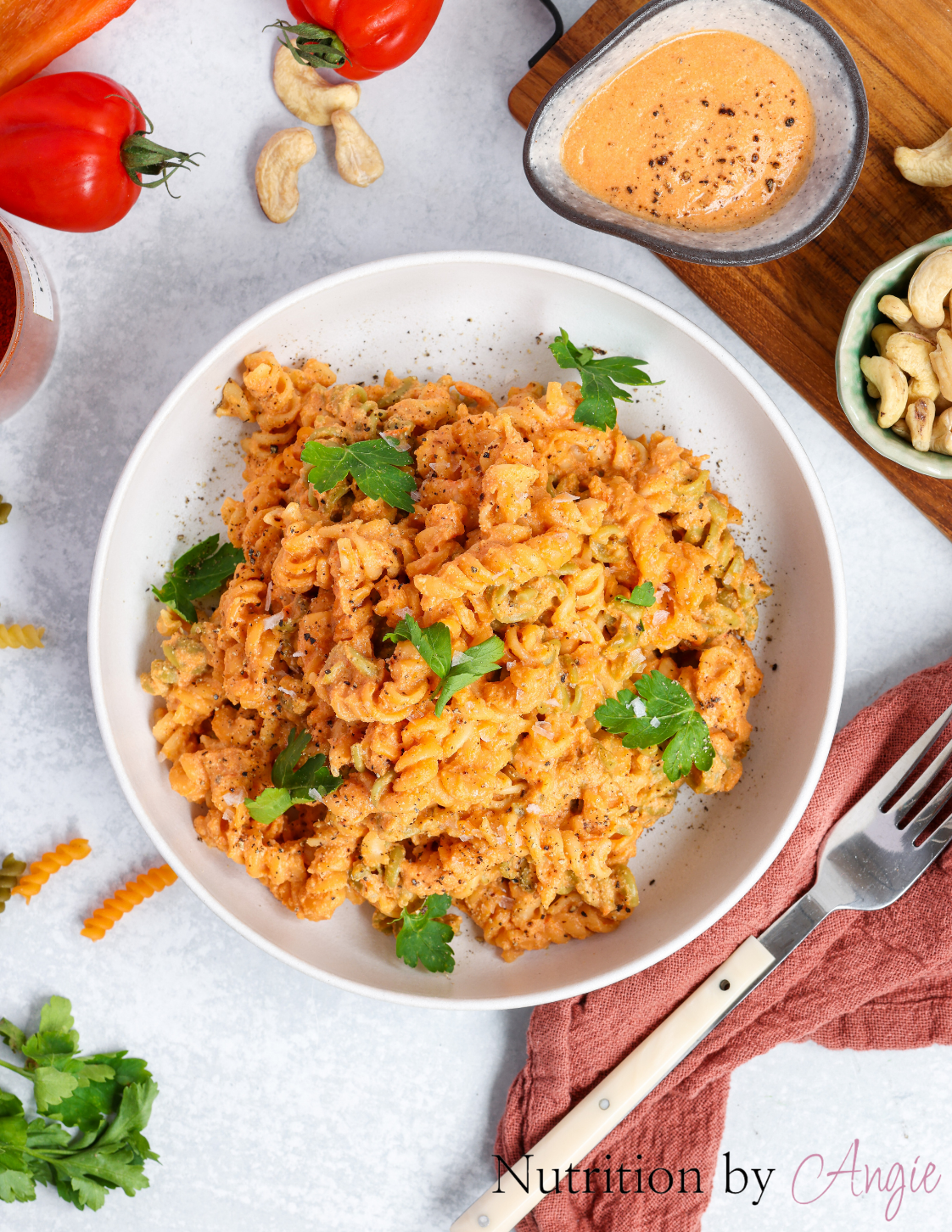
Creamy Vegan High-Protein Pasta Sauce
Diet Category: Vegan • Vegetarian • Plant-Based • Dairy-Free • High-Protein • High-Fibre • Gluten-Free
*Use lentil pasta or another certified gluten-free pasta.
Introduction
This creamy Vegan High-Protein Pasta Sauce is a delicious plant-based alternative to traditional creamy pasta sauces, made with roasted red pepper, tomatoes, silken tofu and cashews. Rich, smooth and packed with flavour, it's an easy way to add extra plant-based protein to a comforting bowl of pasta without using dairy or cream.
Silken tofu and soaked cashews create an irresistibly creamy texture, while roasted tomatoes, red pepper, onion and an entire bulb of garlic build a rich vegetable-based sauce. Italian seasoning and smoked paprika add warmth and depth, with optional red pepper flakes providing a little extra heat.
Serve this creamy tofu pasta sauce with protein-rich lentil pasta for an even more satisfying vegan meal. Perfect for healthy weeknight dinners, family meals or plant-based meal prep, this easy vegan pasta recipe combines vegetables, legumes, soy and nuts in one flavour-packed dish.
Benefits of the Main Ingredients
Silken Tofu
Silken tofu provides high-quality plant-based protein containing all nine essential amino acids while creating a smooth and creamy sauce without dairy. It also provides iron, magnesium and phosphorus, while calcium-set tofu can be a valuable source of calcium.
Lentil Pasta
Lentil pasta is made primarily from lentils and generally provides more protein and fibre than traditional refined wheat pasta. Lentils also provide nutrients including folate, iron, magnesium and potassium. Nutritional values vary between brands, so check the individual product when tracking protein or fibre.
Red Bell Pepper
Red bell peppers are particularly rich in vitamin C and also provide carotenoids, including beta-carotene. Roasting the pepper brings out its natural sweetness and helps create the rich colour and flavour of the sauce.
Tomatoes
Tomatoes provide vitamin C, potassium and naturally occurring carotenoids, particularly lycopene. Cooking tomatoes can make lycopene more bioavailable, making cooked tomato sauces a useful way to include this plant compound in the diet.
Cashews
Cashews create a rich, creamy consistency while providing plant-based protein and predominantly unsaturated fats. They're also a source of minerals including copper, magnesium, zinc and phosphorus.
Onion
Onion creates a savoury base and develops natural sweetness as it cooks. It also provides fibre and naturally occurring plant compounds, including flavonoids such as quercetin.
Garlic
Garlic adds considerable flavour to the sauce and contains naturally occurring sulfur compounds. Roasting a whole bulb also transforms its sharper raw flavour into something softer, sweeter and more mellow.
Italian Seasoning
Italian seasoning typically combines herbs such as oregano, basil, thyme and rosemary. These dried herbs provide aromatic plant compounds and make it easy to add plenty of Mediterranean-inspired flavour without relying heavily on salt.
Smoked Paprika
Smoked paprika provides warmth, colour and a distinctive smoky flavour that complements the roasted vegetables. It's made from dried peppers and contains naturally occurring carotenoid plant compounds.
Parsley
Fresh parsley adds freshness and colour to the finished pasta while providing vitamin K, vitamin C and carotenoids. Adding fresh herbs is also a simple way to increase the variety of plant foods in a meal.