
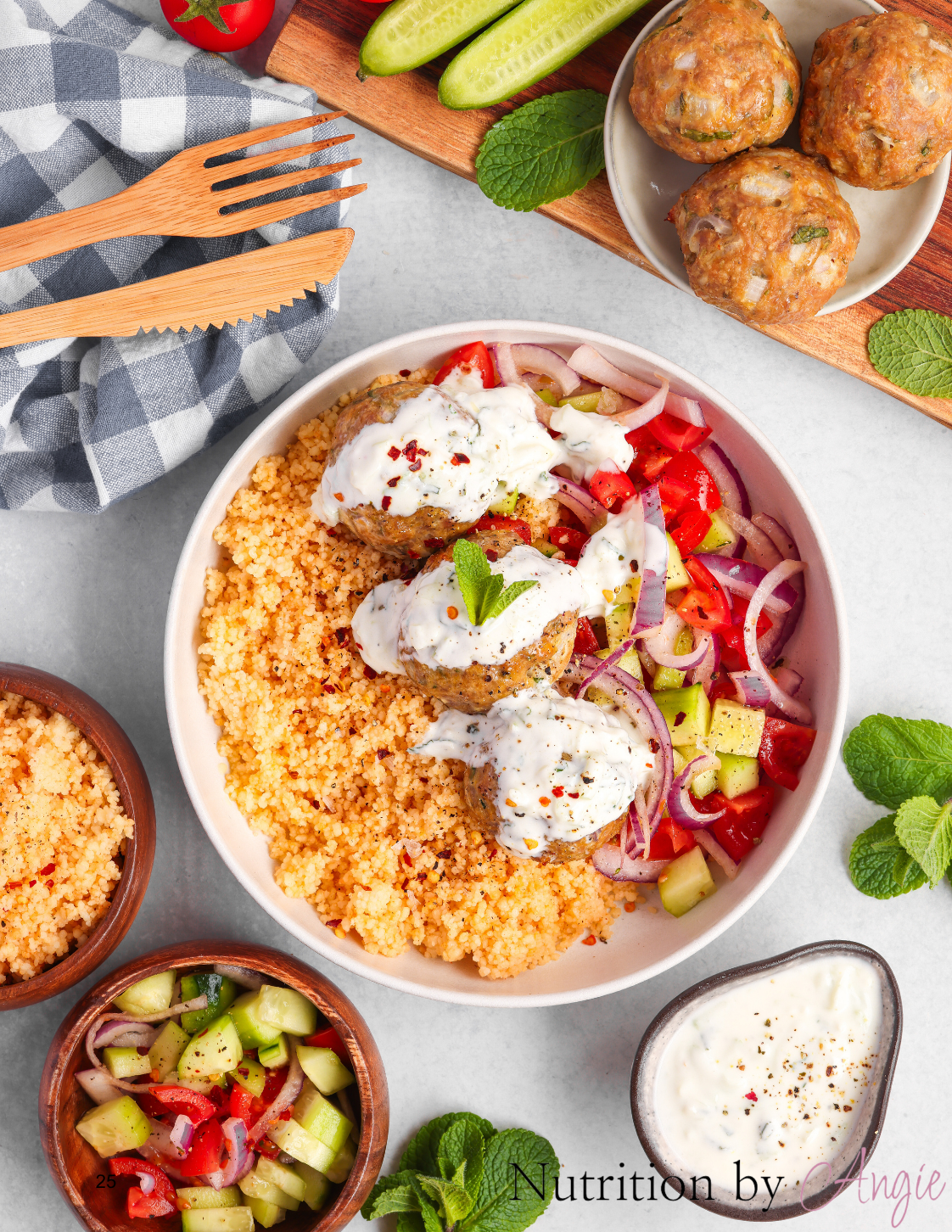
Baked Greek Meatballs with Tzatziki, Orzo and Fresh Mediterranean Vegetables
Baked Greek Meatballs • Turkey Meatball Bowls • Greek-Inspired Dinner • High-Protein Meal • Mediterranean-Inspired Recipe • Homemade Tzatziki • Healthy Family Dinner • Orzo Pasta Bowls • Easy Meal Prep Recipe
Allergen information: This recipe contains egg, wheat (breadcrumbs and orzo) and milk (Greek yoghurt in the tzatziki). Check packaged ingredients for additional allergens and cross-contact. The dish is not vegetarian or vegan.
Introduction
These Baked Greek Meatballs with Tzatziki are a delicious Mediterranean-inspired meal combining tender turkey meatballs, soft orzo pasta, fresh vegetables and creamy homemade tzatziki sauce.
The meatballs are made with lean minced turkey breast, egg, breadcrumbs, red onion, garlic, fresh mint and oregano. Baking creates a convenient alternative to pan-frying and can reduce the need for added cooking oil.
The meatballs are served over orzo pasta with juicy cherry tomatoes, crisp cucumber, sliced red onion and fresh mint.
A generous spoonful of homemade tzatziki brings everything together with its refreshing combination of Greek yoghurt, cucumber, lemon, garlic and herbs.
This recipe provides a satisfying balance of protein, carbohydrates, vegetables and fats.
Turkey breast contributes high-quality protein, vitamin B6, niacin and selenium. Orzo provides carbohydrates for energy, while tomatoes, cucumber and red onion add fibre, vitamins and naturally occurring plant compounds.
The tzatziki contributes additional protein and calcium from Greek yoghurt.
These Greek turkey meatball bowls are ideal for family dinners, packed lunches and meal preparation. They offer plenty of flavour while incorporating a variety of fresh ingredients.
Benefits of All the Ingredients
Ground Turkey Breast
Turkey breast is a lean source of high-quality protein.
Key nutritional benefits:
Protein: Supports normal muscle maintenance and tissue repair.
Vitamin B6: Contributes to normal protein metabolism.
Niacin (Vitamin B3): Supports normal energy metabolism.
Selenium: Supports normal thyroid function.
Phosphorus: Contributes to healthy bones and teeth.
Vitamin B12: Supports normal nervous system function.
Using minced turkey breast helps moderate saturated fat intake compared with many higher-fat minced meats.
Egg
Egg helps bind the meatball ingredients together while contributing additional nutrients.
Key nutritional benefits:
Protein: Provides essential amino acids.
Choline: Supports normal liver function.
Vitamin B12: Contributes to normal nervous system function.
Selenium: Helps protect cells from oxidative stress.
Vitamin D: Contributes to normal bone and immune function.
Egg also helps the meatballs hold their shape during baking.
Breadcrumbs
Breadcrumbs absorb moisture and help create tender meatballs.
Key nutritional benefits:
Provide carbohydrates for energy.
Help bind the meatball mixture.
Contribute texture and structure.
May provide additional fibre when wholemeal breadcrumbs are used.
Traditional breadcrumbs contain wheat and gluten.
Red Onion
Red onion adds natural sweetness, texture and savoury depth.
Key nutritional benefits:
Contains dietary fibre.
Provides small amounts of vitamin C.
Contains quercetin and other naturally occurring flavonoids.
Adds flavour without requiring substantial added fat.
Red onion is used in both the meatballs and the fresh vegetable bowls.
Garlic
Garlic adds a distinctive savoury aroma.
Key nutritional benefits:
Contains naturally occurring sulphur compounds.
Provides small amounts of vitamin B6 and manganese.
Adds flavour without added sugar.
Complements the fresh mint and oregano.
Fresh Mint
Fresh mint gives the meatballs and bowls a refreshing Mediterranean-inspired flavour.
Key nutritional benefits:
Contains naturally occurring aromatic compounds.
Provides small amounts of vitamin A precursors.
Contains small quantities of vitamin C.
Adds flavour without substantial sodium.
Mint pairs particularly well with turkey, cucumber and yoghurt.
Dried Oregano
Oregano adds a warm, aromatic flavour.
Key nutritional benefits:
Contains naturally occurring polyphenols.
Adds flavour without significant energy.
Complements garlic, onion and mint.
The small quantity used contributes mainly flavour rather than substantial micronutrients.
Dry Orzo
Orzo is a small, rice-shaped pasta traditionally made from wheat.
It provides carbohydrates that supply energy.
Key nutritional benefits:
Carbohydrates: Provide energy for everyday activities.
Protein: Contributes a modest amount of plant-based protein.
B Vitamins: May be present depending on the flour and enrichment.
Dietary Fibre: Higher in wholewheat varieties.
The 300g dry weight is shared across the bowls.
Wholewheat orzo can be used to increase fibre intake.
Cherry Tomatoes
Cherry tomatoes add sweetness, colour and freshness.
Key nutritional benefits:
Vitamin C: Supports normal immune function.
Lycopene: A naturally occurring carotenoid.
Potassium: Supports normal muscle function.
Dietary Fibre: Supports normal digestive function.
Tomatoes also provide a juicy contrast to the meatballs and pasta.
Cucumber
Cucumber adds freshness and crunch.
Key nutritional benefits:
Contains substantial amounts of water.
Provides small amounts of vitamin K.
Contains potassium.
Contributes a little dietary fibre.
Cucumber balances the warm meatballs and soft orzo.
Homemade Tzatziki Sauce
Homemade tzatziki combines Greek yoghurt, cucumber, lemon juice, garlic, dill and mint.
Key nutritional benefits:
Protein: From Greek yoghurt.
Calcium: Supports healthy bones and teeth.
Vitamin B12: Supports normal nervous system function.
Fresh Herbs: Add flavour and dietary variety.
No Added Sugar: When prepared according to the homemade recipe.
The saturated fat content depends on whether full-fat or lower-fat Greek yoghurt is used.
Why Baked Greek Meatballs with Tzatziki Make a Nourishing Meal
High-Quality Protein: Turkey breast, egg and Greek yoghurt contribute protein for normal muscle maintenance.
Carbohydrates for Energy: Orzo provides carbohydrates to support everyday activities.
Source of B Vitamins: Turkey and egg contribute vitamins involved in normal energy metabolism.
Contains Selenium: Turkey and egg provide selenium, supporting normal thyroid function.
Provides Calcium: Greek yoghurt in the tzatziki contributes calcium.
Includes Fresh Vegetables: Tomatoes, cucumber and red onion provide fibre and micronutrients.
Contains Naturally Occurring Plant Compounds: Tomatoes, onion, garlic and herbs contribute dietary plant compounds.
Baked Rather Than Fried: Baking can reduce the need for additional cooking oil.
Balanced and Satisfying: The combination of protein, pasta, vegetables and yoghurt sauce creates a substantial meal.
Family-Friendly: The flavours are fresh and aromatic without relying on excessive heat or spice.
Delicious Serving Suggestions
Classic Greek-Inspired Meatball Bowls
Serve the baked turkey meatballs over orzo with cherry tomatoes, cucumber, red onion and homemade tzatziki.
With Extra Fresh Herbs
Finish with additional mint or parsley for a brighter herbal flavour.
With a Greek-Style Salad
Pair with tomatoes, cucumber, olives and leafy greens for additional vegetables.
With Roasted Mediterranean Vegetables
Serve alongside roasted courgette, aubergine and bell peppers.
With Wholewheat Orzo
Replace regular orzo with wholewheat orzo for additional dietary fibre.
With Lemon Wedges
Add fresh lemon wedges for a tangy finish that complements the meatballs and tzatziki.
Tips for the Best Baked Greek Meatballs
Choose lean minced turkey breast: This helps moderate saturated fat intake.
Use fresh ingredients: Fresh mint, garlic and onion provide the best flavour.
Mince onion finely: This helps distribute it evenly throughout the meatballs.
Avoid overmixing: Excessive mixing can make meatballs dense.
Use breadcrumbs carefully: They help maintain a tender texture.
Choose wholemeal breadcrumbs if preferred: These can provide additional fibre.
Use an egg to bind: This helps the meatballs hold their shape.
Shape evenly sized meatballs: This encourages consistent cooking.
Avoid overcrowding the baking tray: This helps the meatballs cook evenly.
Cook turkey thoroughly: Poultry meatballs should reach a centre temperature of 75°C.
Use a food thermometer: This is the most reliable way to check doneness.
Avoid overbaking: Lean turkey can become dry.
Cook orzo according to package instructions: This helps achieve the desired texture.
Avoid overcooking pasta: Overcooked orzo can become sticky.
Drain orzo thoroughly: Excess water can dilute the sauce.
Use fresh cherry tomatoes: They provide sweetness and juiciness.
Dice cucumber evenly: This creates a consistent texture.
Slice red onion thinly: This prevents it from overpowering the dish.
Prepare tzatziki in advance: Refrigerating briefly allows the flavours to develop.
Remove excess cucumber moisture from tzatziki: This helps maintain a thick consistency.
Use plain Greek yoghurt: Avoid sweetened varieties.
Keep tzatziki separate during meal preparation: This helps preserve freshness.
Add fresh mint before serving: This maintains its aroma.
Serve with additional vegetables: This increases dietary variety.
Refrigerate leftovers promptly: Keep at 5°C or below.
Store cooked meatballs and orzo safely: Consume refrigerated leftovers within approximately 3–4 days, or sooner if other ingredients have a shorter shelf life.
Store fresh vegetables separately: This helps preserve their texture.
Reheat meatballs thoroughly: Ensure they are piping hot throughout.
Avoid reheating tzatziki: It is best served chilled.
Freeze cooked meatballs separately if desired: This makes meal preparation easier.
A Note on Turkey, Orzo and Cholesterol-Friendly Nutrition
These Baked Greek Meatballs with Tzatziki combine lean turkey breast, orzo pasta, fresh vegetables and a yoghurt-based sauce.
Turkey breast provides high-quality protein with relatively little saturated fat when compared with many fattier minced meats.
This can make it a useful choice for people managing saturated fat intake.
Egg contributes protein, choline and several vitamins and minerals.
Although eggs contain dietary cholesterol, saturated fat intake is generally a more important dietary consideration for LDL cholesterol in most people.
Orzo provides carbohydrates for energy.
Regular orzo generally contains less fibre than wholegrain pasta.
Choosing wholewheat orzo can help increase dietary fibre intake.
Tomatoes, cucumber and red onion contribute vitamins, minerals and naturally occurring plant compounds.
Fresh mint, garlic and oregano provide flavour without requiring substantial additional salt.
Homemade tzatziki adds protein and calcium from Greek yoghurt.
Choosing lower-fat Greek yoghurt can help moderate saturated fat intake.
For a cholesterol-conscious dietary pattern, the overall balance of foods is important.
Regular consumption of vegetables, fruit, whole grains, legumes, nuts, seeds and unsaturated fats can support cardiovascular health.
These meatball bowls provide a satisfying combination of protein, carbohydrates and vegetables.
Portion sizes and ingredient choices influence the finished meal's nutritional composition.
Final Thoughts
These Baked Greek Meatballs with Tzatziki bring together tender turkey meatballs, soft orzo, colourful vegetables and creamy homemade yoghurt sauce.
Rich in protein and full of fresh Mediterranean-inspired flavours, they make a satisfying family dinner or convenient meal-prep option.
Serve with extra herbs, fresh vegetables and homemade tzatziki for a delicious, balanced meal that fits into a varied and nourishing diet.