
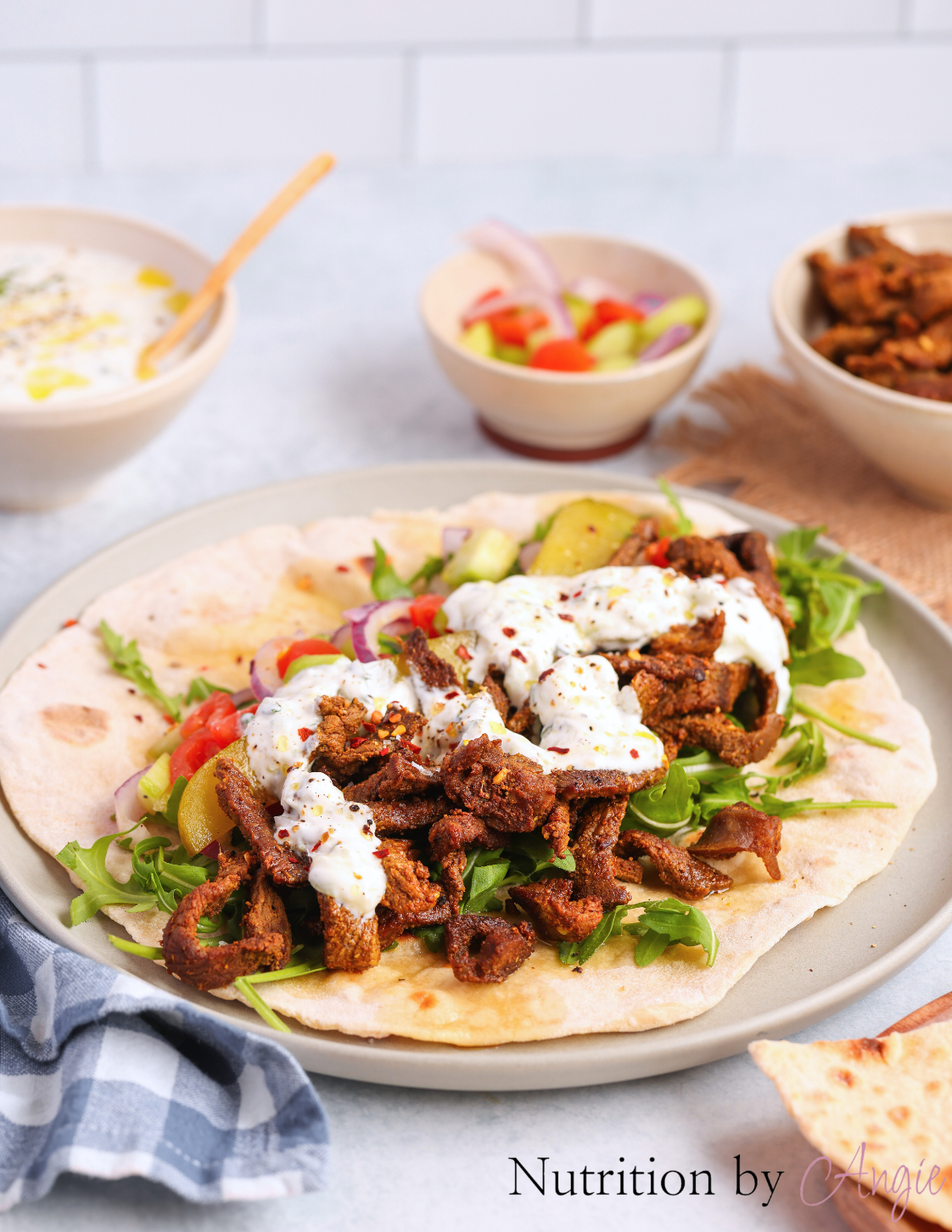
Beef Shawarma Wraps with Tender Flank Steak, Garlic and Lemon
Beef Shawarma Wraps • High-Protein Beef Recipe • Middle Eastern-Inspired Meal • Easy Homemade Shawarma • Dairy-Free Beef Marinade • Low-Carb Beef Filling • Family-Friendly Dinner • Healthy Lunch Ideas • Homemade Steak Wraps
Allergen information: The beef marinade is naturally free from dairy and gluten when the shawarma seasoning is suitable. However, commercial spice blends may contain allergens or traces of gluten. Optional pita bread typically contains wheat (gluten), while tzatziki contains milk. Always check packaged ingredients. The suggested serving ingredients are not included in the recipe's nutritional information.
Introduction
These Beef Shawarma Wraps combine tender, thinly sliced flank steak with fresh lemon juice, aromatic garlic and warming shawarma spices.
Inspired by the bold flavours of Middle Eastern cuisine, this simple recipe creates a savoury, fragrant beef filling that can be enjoyed in pita bread, lettuce wraps or colourful salad bowls.
Flank steak provides high-quality protein, iron, zinc and vitamin B12, while lemon juice adds freshness and garlic contributes a distinctive savoury flavour.
Shawarma seasoning typically contains spices such as cumin, coriander, paprika, turmeric, cinnamon and black pepper, although blends vary.
The result is a delicious combination of tender beef, citrus and aromatic spices.
For a traditional-style serving, pair the beef with warm pita bread, sliced tomatoes, shredded cucumber, red onion, rocket, pickles and homemade tzatziki sauce.
These optional accompaniments add freshness, crunch and creaminess.
The shawarma beef filling is naturally low in carbohydrates, making it suitable for low-carb meals when served with lettuce wraps or vegetables instead of pita bread.
Benefits of the Ingredients
Flank Steak
Flank steak is a flavourful cut of beef that provides several important nutrients.
Key nutritional benefits:
High-quality protein: Supports normal muscle maintenance and tissue repair.
Iron: Contributes to normal red blood cell formation and oxygen transport.
Vitamin B12: Supports normal nervous system function.
Zinc: Contributes to normal immune function.
Selenium: Supports normal thyroid function.
Vitamin B6: Supports normal protein metabolism.
Flank steak can be a relatively lean cut when visible fat is trimmed.
However, beef contains saturated fat, so portion size and overall dietary balance remain important.
Lemon Juice
Fresh lemon juice adds brightness and acidity to the marinade.
Key nutritional benefits:
Provides a small amount of vitamin C.
Contributes natural citrus flavour.
Adds acidity without substantial sodium.
Helps balance the richness of the beef.
The quantity used contributes flavour rather than a significant amount of vitamin C.
Garlic
Garlic provides a strong, savoury aroma and complements the shawarma spices.
Key nutritional benefits:
Contains naturally occurring sulphur compounds.
Provides small amounts of vitamin B6 and manganese.
Adds flavour without requiring additional sugar.
Contributes aromatic depth to the marinade.
Garlic has been studied for its naturally occurring plant compounds, but ordinary culinary amounts should not be considered a treatment for disease.
Shawarma Seasoning
Shawarma seasoning creates the distinctive warm, fragrant flavour of this dish.
Depending on the blend, it may contain cumin, coriander, paprika, turmeric, cinnamon, cardamom and black pepper.
Key benefits:
Adds rich flavour with relatively few carbohydrates.
Contains naturally occurring plant compounds from herbs and spices.
Creates depth without requiring a creamy sauce.
Makes the beef versatile for wraps, bowls and salads.
Some commercial blends contain added salt, sugar or starch, so checking the label is useful.
Why Beef Shawarma Makes a Nourishing Meal
High in Protein: Flank steak provides protein that supports muscle maintenance and helps make the meal satisfying.
Source of Iron: Beef contains haem iron, which is generally more readily absorbed than plant-based non-haem iron.
Rich in Vitamin B12: Beef contributes vitamin B12 for normal nervous system function.
Naturally Low in Carbohydrates: The beef, lemon, garlic and spices contain relatively few carbohydrates. Pita bread and other accompaniments change the total carbohydrate content.
Full of Flavour: Garlic, lemon and shawarma spices create a delicious marinade without needing added sugar.
Easy to Customise: Serve with vegetables, pita bread or lettuce wraps depending on your dietary preferences.
Delicious Serving Suggestions
The following ingredients are optional and are not included in the nutritional information for the beef recipe.
Classic Beef Shawarma Pita
Fill warm pita bread with sliced beef, tomatoes, cucumber, red onion and a spoonful of homemade tzatziki sauce.
Low-Carb Shawarma Lettuce Wraps
Replace pita bread with large lettuce leaves and add beef, cucumber, tomato and rocket.
Beef Shawarma Salad Bowl
Serve the seasoned steak over rocket with sliced tomatoes, cucumber, red onion and a little tzatziki.
Mediterranean-Inspired Beef Plate
Pair the beef with grilled vegetables, fresh salad and a small serving of tzatziki sauce.
Beef Shawarma with Pickles
Add sliced pickles for a sharp, tangy contrast to the rich, aromatic beef.
High-Protein Shawarma Bowl
Combine the beef with a generous serving of fresh vegetables and a yoghurt-based sauce for a satisfying meal.
Tips for the Best Homemade Beef Shawarma
Slice the steak thinly: This helps create tender, easy-to-eat pieces.
Cut against the grain: This shortens the muscle fibres and improves tenderness.
Use fresh lemon juice: It provides the brightest flavour.
Grate or mince garlic finely: This distributes its flavour evenly.
Choose a good-quality shawarma seasoning: Check the ingredients for added salt and sugar.
Allow time for marinating: This helps the flavours develop.
Refrigerate meat while marinating: Never leave raw beef at room temperature.
Avoid excessive marinating in lemon juice: Prolonged exposure to acid can affect the meat's texture.
Use a hot pan: This helps develop a browned exterior.
Cook in batches: Overcrowding can cause the beef to steam rather than brown.
Avoid overcooking: Thinly sliced flank steak can become tough.
Cook according to appropriate food safety guidance: Whole-muscle beef steaks should reach at least 63°C followed by a three-minute rest; use 75°C for thoroughly cooked beef, particularly when serving vulnerable individuals.
Prevent cross-contamination: Keep raw beef separate from ready-to-eat vegetables.
Prepare vegetables freshly: This preserves their crisp texture.
Check pita bread allergens: Most traditional pitas contain wheat.
Use lettuce wraps for a lower-carb option: This avoids the carbohydrates contributed by pita bread.
Add tzatziki just before serving: This helps prevent soggy wraps.
Use homemade tzatziki for freshness: Greek yoghurt, cucumber, lemon and herbs complement the shawarma spices.
Check pickles for sodium: Pickled vegetables can contain substantial salt.
Store leftovers promptly: Refrigerate cooked beef at 5°C or below.
Consume refrigerated cooked beef within approximately 3–4 days: Follow appropriate food safety guidance.
Reheat thoroughly: Ensure leftovers are piping hot throughout.
Beef Shawarma and Cholesterol-Friendly Nutrition
Beef shawarma can be included in a balanced diet when prepared with suitable portions and accompanied by plenty of vegetables.
Flank steak provides protein, iron, zinc and vitamin B12.
Choosing a lean, trimmed cut helps moderate saturated fat intake compared with fattier beef cuts.
However, red meat still contributes saturated fat, and frequent high consumption may be associated with increased health risks.
For people managing LDL cholesterol, the overall balance of saturated and unsaturated fats is important.
Replacing saturated fats with unsaturated fats can help improve LDL cholesterol levels.
Fresh vegetables such as tomatoes, cucumber, rocket and red onion add dietary fibre and nutritional variety.
Homemade tzatziki made with lower-fat Greek yoghurt can provide a creamy accompaniment with less saturated fat than some richer sauces.
Pita bread can contribute carbohydrates for energy, while wholemeal varieties generally provide more fibre than white pita.
For a lower-carbohydrate meal, serve the shawarma beef with lettuce wraps or a fresh salad.
The nutritional profile of the finished meal depends on the accompaniments and portion sizes.
Final Thoughts
These Homemade Beef Shawarma Wraps offer a delicious combination of tender flank steak, fresh lemon, garlic and aromatic Middle Eastern-inspired spices.
Rich in protein and naturally low in carbohydrates before adding the wrap, the beef filling is versatile enough for traditional pita wraps, fresh salads or low-carb lettuce wraps.
Serve with crunchy vegetables, pickles and homemade tzatziki for a flavourful, satisfying meal that can fit into a varied and balanced diet.