
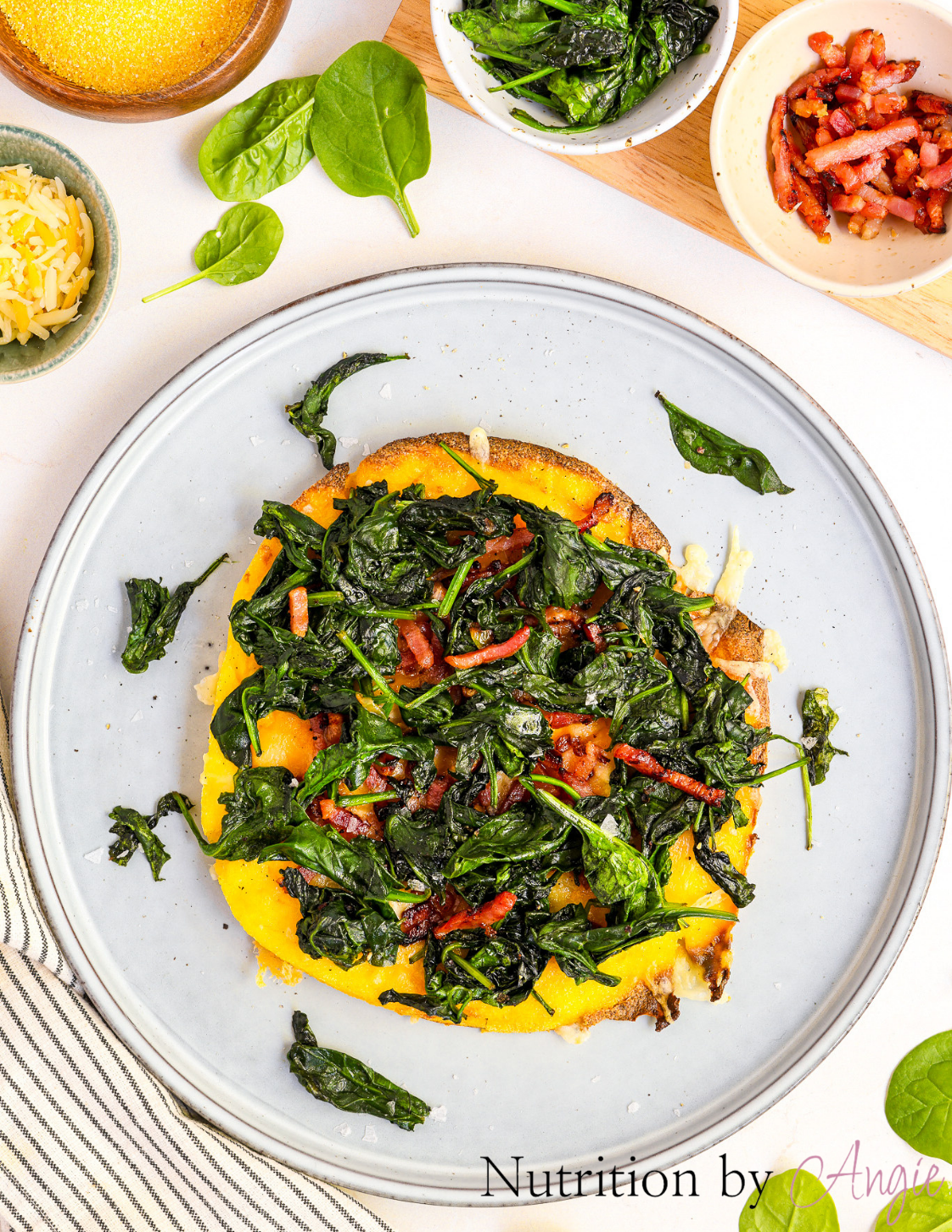
Polenta Pizza with Bacon and Spinach – A Delicious Gluten-Free-Style Pizza Alternative
Polenta Pizza • Bacon and Spinach Pizza • Homemade Polenta Crust • Easy Family Dinner • Cornmeal Pizza Base • Spinach and Mozzarella Pizza • Italian-Inspired Recipe • Comfort Food Dinner • Homemade Pizza Alternative
Allergen information: This recipe contains milk from whole milk and mozzarella cheese. Pancetta may contain additional ingredients or preservatives, so check the packaging. Polenta is naturally gluten-free, but cross-contact can occur during processing. Use certified gluten-free cornmeal and check all packaged ingredients if preparing this dish for someone with coeliac disease.
Introduction
This Polenta Pizza with Bacon and Spinach is a comforting, Italian-inspired dish that replaces a traditional wheat-based pizza crust with a golden cornmeal base.
Topped with savoury pancetta, tender spinach, sweet onion and melted mozzarella, it combines familiar pizza flavours with the creamy texture of polenta.
Polenta provides carbohydrates for energy, while spinach contributes folate, vitamin K, beta-carotene and dietary fibre.
Mozzarella adds protein and calcium, and pancetta brings a rich, salty flavour.
The combination creates a satisfying meal with a balance of carbohydrates, protein, fats and vegetables.
Unlike a traditional flour-based pizza dough, polenta has a softer texture and may become crisp around the edges when cooked appropriately.
The result is a delicious alternative for anyone who enjoys trying different homemade pizza bases.
This recipe is ideal for a family dinner, weekend meal or a comforting lunch served with a fresh side salad.
Because pancetta is a processed meat and mozzarella contains saturated fat, moderate portions and a balanced overall dietary pattern are important.
Benefits of All the Ingredients
Whole Milk
Whole milk helps create a smooth, creamy polenta base.
Key nutritional benefits:
Calcium: Supports healthy bones and teeth.
Protein: Contributes to normal muscle maintenance.
Vitamin B12: Supports normal nervous system function.
Riboflavin: Contributes to normal energy metabolism.
Iodine: Supports normal thyroid function.
Phosphorus: Contributes to bone health.
Whole milk contains saturated fat.
Semi-skimmed milk can be used if reducing saturated fat intake is a priority, although the finished texture may be slightly less rich.
Coarse Cornmeal (Polenta)
Polenta is made from ground maize and forms the base of this pizza.
Key nutritional benefits:
Carbohydrates: Provide energy for everyday activities.
Dietary Fibre: Contributes to digestive health, with the amount depending on processing.
Plant-Based Protein: Provides a modest amount of protein.
Magnesium: Supports normal muscle function.
Phosphorus: Contributes to healthy bones and teeth.
B Vitamins: May be present depending on the type and enrichment.
Polenta is naturally gluten-free, making it a useful alternative to wheat-based pizza crusts when cross-contact is avoided.
Coarse cornmeal creates a slightly more textured base than finely ground varieties.
Onion
Onion adds sweetness and savoury depth.
Key nutritional benefits:
Dietary Fibre: Supports normal digestive function.
Vitamin C: Contributes to normal immune function.
Folate: Supports normal cell division.
Quercetin: A naturally occurring flavonoid.
Prebiotic Compounds: Onions contain fructans that can support certain gut bacteria.
Cooking onion softens its texture and develops its natural sweetness.
Pancetta
Pancetta is an Italian cured pork product that adds a rich, savoury flavour.
Key nutritional characteristics:
Protein: Contributes to muscle maintenance.
Vitamin B12: Supports normal nervous system function.
Thiamin: Contributes to normal energy metabolism.
Zinc: Supports normal immune function.
Savoury Flavour: Adds depth and richness to the dish.
Pancetta is processed meat and can contain substantial sodium and saturated fat.
Processed meat consumption is associated with increased colorectal cancer risk, particularly with frequent or high intake. It is best enjoyed occasionally and in moderate portions.
Spinach
Spinach adds colour, freshness and a variety of micronutrients.
Key nutritional benefits:
Vitamin K: Supports normal blood clotting and bone health.
Folate: Contributes to normal cell division.
Beta-Carotene: Converted into vitamin A as needed.
Vitamin C: Supports normal immune function.
Magnesium: Contributes to normal muscle function.
Iron: Supports normal oxygen transport.
Dietary Fibre: Supports digestive health.
Spinach contains non-haem iron, which is less readily absorbed than the haem iron found in meat.
Cooking spinach reduces its volume considerably, making it easier to include a generous serving of vegetables.
Mozzarella Cheese
Mozzarella provides the familiar melted cheese topping.
Key nutritional benefits:
High-Quality Protein: Supports normal muscle maintenance.
Calcium: Contributes to healthy bones and teeth.
Phosphorus: Supports bone health.
Vitamin B12: Supports normal nervous system function.
Riboflavin: Contributes to normal energy metabolism.
Mozzarella contains saturated fat and sodium, although amounts vary by product.
Part-skim mozzarella can be used to reduce saturated fat.
Why Polenta Pizza with Bacon and Spinach Makes a Satisfying Meal
Provides Carbohydrates for Energy: Polenta supplies carbohydrates for everyday activities.
Contains Protein: Milk, mozzarella and pancetta contribute protein.
Includes Leafy Green Vegetables: Spinach provides vitamins, minerals and dietary fibre.
Source of Calcium: Milk and mozzarella support healthy bones and teeth.
Contains Folate: Spinach contributes folate for normal cell division.
Naturally Wheat-Free Base: Polenta provides an alternative to traditional wheat-based pizza dough.
Full of Savoury Flavour: Pancetta, onion and mozzarella create a rich, satisfying topping.
Customisable: Additional vegetables can be included to increase dietary variety.
Family-Friendly: The combination of melted cheese and a golden base makes it an appealing homemade dinner.
Comforting and Versatile: Serve as a main meal or alongside a fresh salad.
Delicious Serving Suggestions
With a Fresh Green Salad
Serve with rocket, lettuce, cucumber and tomatoes for additional fibre and freshness.
With Roasted Mediterranean Vegetables
Pair with roasted courgette, aubergine or bell peppers for extra colour and nutrients.
With Fresh Basil
Finish with fresh basil leaves for an aromatic Italian-inspired flavour.
With Cherry Tomatoes
Add halved cherry tomatoes to provide sweetness and acidity.
With a Balsamic-Dressed Salad
Serve alongside mixed salad leaves with a light balsamic dressing.
With Steamed Broccoli
Pair with steamed broccoli for additional vegetables and dietary fibre.
Tips for the Best Polenta Pizza
Choose coarse cornmeal: This creates a slightly rustic texture.
Check cooking instructions: Different polenta varieties require different cooking times.
Stir polenta regularly: This helps prevent lumps.
Use a heavy-based saucepan: It distributes heat more evenly.
Add liquid gradually if needed: This helps achieve a smooth consistency.
Avoid undercooking polenta: The grains should be fully hydrated and tender.
Spread polenta evenly: This helps create a consistent pizza base.
Allow the base to firm up: Cooling helps polenta hold its shape.
Use baking parchment: This can help prevent sticking.
Avoid an overly thick base: A thinner layer can develop firmer edges.
Cook the base before adding wet toppings if needed: This helps prevent sogginess.
Cook pancetta thoroughly: Follow the product's cooking instructions.
Drain excess pancetta fat: This can reduce the amount of fat in the finished dish.
Use pancetta moderately: It contains sodium and saturated fat.
Chop onion finely: This helps distribute its flavour.
Cook onion until softened: This develops sweetness.
Wash spinach thoroughly: Remove any dirt or grit.
Dry spinach well: Excess moisture can soften the polenta base.
Wilt spinach before topping: This reduces its volume and moisture.
Squeeze out excess spinach liquid: This helps maintain the base's texture.
Use shredded mozzarella: It melts evenly.
Avoid excessive cheese: Too much can make the pizza heavy.
Try part-skim mozzarella: This can reduce saturated fat.
Taste before adding salt: Pancetta and mozzarella may already contain substantial sodium.
Add fresh herbs after baking: This preserves their flavour.
Allow the pizza to rest briefly: This can make slicing easier.
Serve with vegetables: This helps create a more balanced meal.
Refrigerate leftovers promptly: Keep at 5°C or below.
Consume refrigerated leftovers within approximately 2–3 days: Follow appropriate food safety guidance.
Reheat thoroughly: Ensure leftovers are piping hot throughout.
A Note on Polenta, Pancetta and Cholesterol-Friendly Nutrition
This Polenta Pizza with Bacon and Spinach combines cornmeal, dairy ingredients, processed meat and leafy green vegetables.
Polenta provides carbohydrates for energy and may contribute some dietary fibre.
Spinach provides folate, vitamin K, beta-carotene and other micronutrients.
Including vegetables regularly is an important part of a heart-healthy dietary pattern.
Whole milk and mozzarella contribute calcium and protein but also contain saturated fat.
Choosing lower-fat milk and part-skim mozzarella can help moderate saturated fat intake.
Pancetta provides savoury flavour but is a processed meat.
It can contain substantial amounts of sodium and saturated fat.
Frequent consumption of processed meat is associated with increased health risks, including colorectal cancer.
For people managing LDL cholesterol, replacing saturated fats with unsaturated fats can help improve cholesterol levels.
Reducing sodium intake may also support healthy blood pressure.
Adding more vegetables and serving the pizza with a fresh salad can increase dietary fibre and nutritional variety.
A dietary pattern rich in vegetables, fruit, whole grains, legumes, nuts, seeds and unsaturated fats can support cardiovascular health.
This polenta pizza can fit into a balanced diet when enjoyed occasionally and in suitable portions.
Final Thoughts
This Polenta Pizza with Bacon and Spinach is a comforting, Italian-inspired alternative to traditional pizza.
With a golden cornmeal base, savoury pancetta, tender spinach, sweet onion and melted mozzarella, it offers a delicious combination of flavour and texture.
Serve with a colourful salad or additional vegetables for a satisfying homemade meal that fits into a varied and balanced diet.