
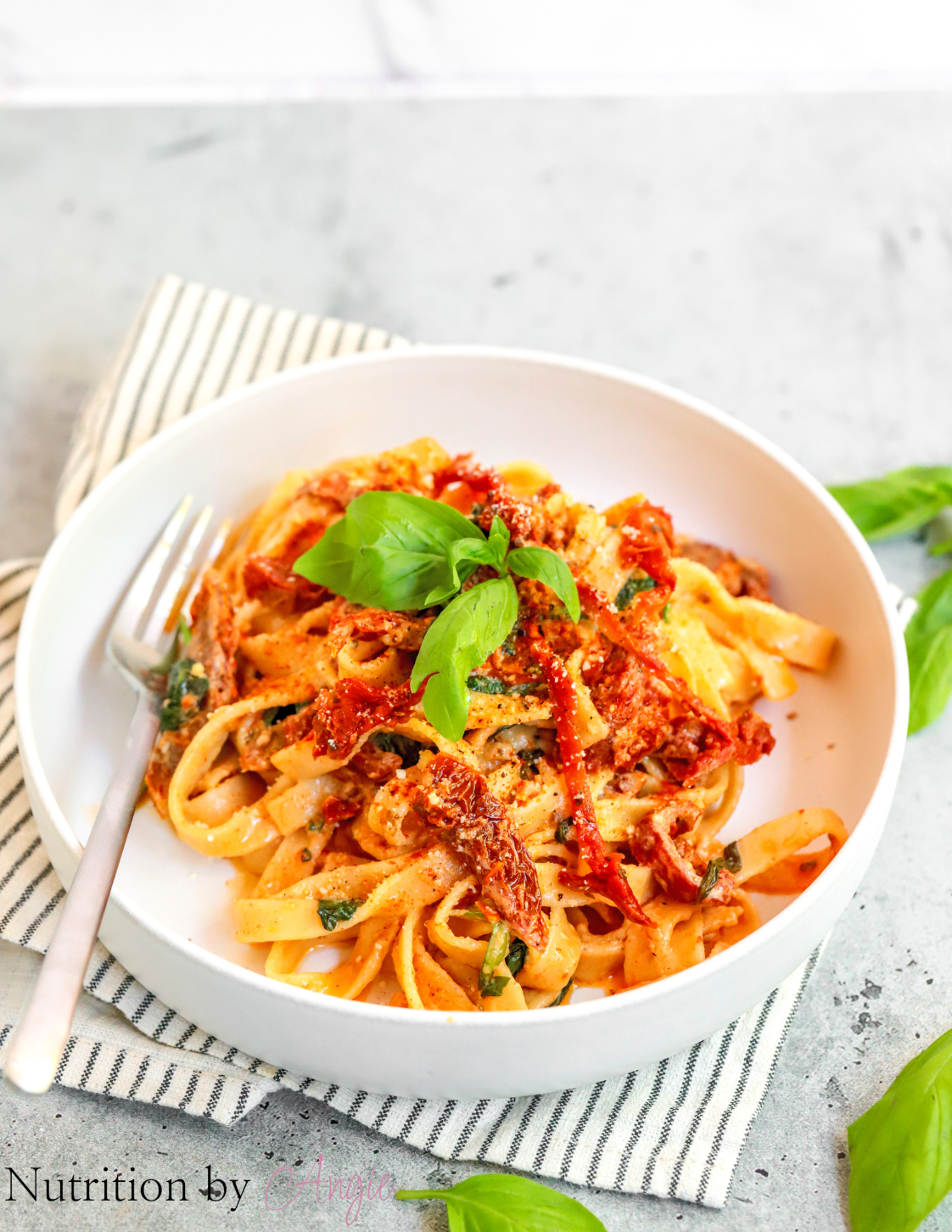
Spinach and Sun-Dried Tomato Pasta
Gluten-Free • Vegan • Vegetarian • Plant-Based • Dairy-Free • Egg-Free • Whole-Food Focused
Use vegan Parmesan-style cheese, gluten-free pasta and suitable packaged ingredients to keep this recipe completely vegan, dairy-free and gluten-free.
Introduction
This Spinach and Sun-Dried Tomato Pasta is a rich, creamy and comforting plant-based dish made with tender gluten-free tagliatelle, flavourful sun-dried tomatoes, fresh spinach, aromatic garlic and a silky coconut milk sauce.
The combination of intensely flavoured sun-dried tomatoes, creamy coconut milk and savoury vegan Parmesan-style cheese creates a delicious balance of flavours. A touch of paprika and chilli adds warmth, while fresh basil provides a fragrant Mediterranean-inspired finish.
Sun-dried tomatoes are particularly well known for containing lycopene, a naturally occurring carotenoid responsible for their deep red colour. Spinach contributes folate, vitamin K and beta-carotene, while garlic provides aromatic plant compounds.
Gluten-free tagliatelle provides the carbohydrate base of the meal, making it satisfying and comforting. Choosing a wholegrain or legume-based gluten-free pasta can increase the fibre and protein content compared with varieties made primarily from refined starches.
The coconut milk creates a smooth, creamy sauce without traditional dairy cream, making this dish suitable for vegan and dairy-free diets when paired with vegan Parmesan-style cheese.
This gluten-free vegan spinach and sun-dried tomato pasta is perfect for a comforting family dinner, a quick weekday meal or a satisfying plant-based lunch.
Although the recipe includes nutritious vegetables and herbs, coconut milk and some vegan cheese alternatives can contain substantial amounts of saturated fat. Choosing lower-saturated-fat alternatives can help make the dish more suitable for a heart-conscious eating pattern.
Benefits of All the Ingredients
Gluten-Free Tagliatelle Pasta
Gluten-free tagliatelle provides the comforting foundation of this dish.
Traditional tagliatelle is usually made with wheat flour and often contains eggs. Gluten-free varieties are commonly prepared using rice flour, maize flour, potato starch, legumes or combinations of gluten-free ingredients.
The nutritional value depends on the type of pasta selected.
Gluten-free pasta provides:
Carbohydrates: Supply energy for everyday activities.
Small Amounts of Protein: Contribute to overall daily protein intake.
Dietary Fibre: Varies considerably depending on the ingredients.
B Vitamins and Minerals: May be present in greater amounts in wholegrain or legume-based varieties.
Choosing More Nutritious Gluten-Free Pasta
Not all gluten-free pasta provides the same nutritional benefits.
Some varieties are made primarily from refined rice flour or maize starch and contain relatively little fibre or protein.
Other varieties made from brown rice, buckwheat, chickpeas or lentils can provide additional fibre, protein and minerals.
For a whole-food-focused meal, consider choosing wholegrain or legume-based gluten-free tagliatelle where available.
Check the packaging carefully because some gluten-free tagliatelle products contain eggs.
For a completely vegan recipe, choose an egg-free variety.
Oil-Packed Sun-Dried Tomatoes
Sun-dried tomatoes provide a rich, concentrated tomato flavour that gives this pasta much of its distinctive character.
They are made by removing much of the water from ripe tomatoes, concentrating their natural flavour.
Sun-dried tomatoes provide:
Lycopene: A naturally occurring carotenoid with antioxidant properties.
Potassium: Supports normal muscle function.
Dietary Fibre: Supports normal digestive function.
Iron: Contributes to normal oxygen transport.
Copper: Supports normal iron transport.
Naturally Occurring Polyphenols: Plant compounds studied for their antioxidant properties.
Lycopene and Tomato-Based Foods
Lycopene is responsible for much of the red colour of tomatoes.
It has been studied for its antioxidant properties and potential role in long-term health.
Processing and heating tomatoes can make lycopene more accessible for absorption.
Because lycopene is fat-soluble, consuming tomato products alongside dietary fat may also improve its absorption.
The oil surrounding the sun-dried tomatoes and the fat in the coconut milk provide dietary fat alongside the tomatoes.
Choosing Sun-Dried Tomatoes
Sun-dried tomatoes packed in oil are convenient because they are already softened and ready to use.
However, the nutritional profile depends on the type of oil used.
Choose varieties packed in olive oil or another predominantly unsaturated oil where possible.
Sun-dried tomatoes can also contain substantial amounts of sodium, so additional salt may not be necessary.
For people with coeliac disease, check the packaging for gluten-containing additives or cross-contact warnings.
Garlic
Garlic adds a rich, savoury aroma that complements the sun-dried tomatoes and creamy sauce.
It belongs to the allium vegetable family and contains naturally occurring organosulfur compounds.
When garlic is chopped or crushed, enzymatic reactions produce compounds such as allicin, which contribute to its characteristic aroma.
Garlic provides small amounts of:
Manganese: Supports normal metabolism.
Vitamin B6: Contributes to normal energy metabolism.
Vitamin C: Supports normal immune function.
Selenium: Contributes to normal thyroid function.
Although the amount used contributes relatively small quantities of micronutrients, garlic adds significant flavour without requiring additional salt.
Fresh garlic is naturally gluten-free, vegan and dairy-free.
Coconut Milk
Coconut milk creates the rich, creamy texture of the pasta sauce.
It is made from the flesh of mature coconuts blended with water.
Coconut milk provides a mild sweetness and smooth consistency that complements the savoury sun-dried tomatoes and garlic.
Depending on the brand, coconut milk contains:
Fat: Contributes to the creamy texture.
Manganese: Supports normal metabolism.
Copper: Supports normal iron transport.
Small Amounts of Iron and Magnesium: Contribute to overall mineral intake.
Coconut Milk and Saturated Fat
Coconut milk contains predominantly saturated fat, particularly when using full-fat canned varieties.
Although coconut milk is plant-based, consuming large amounts of saturated fat can raise LDL cholesterol in some people.
The recipe uses 240ml of coconut milk, which may contribute a substantial amount of saturated fat depending on the product.
For a lower-saturated-fat alternative, consider using an unsweetened soy-based cooking cream or another suitable plant-based cream with less saturated fat.
Light coconut milk can also reduce the saturated fat content, although the sauce may be less rich.
Choose unsweetened coconut milk without unnecessary added sugar.
Coconut milk is naturally gluten-free, vegan and dairy-free, but packaged products should be checked for additives.
Paprika
Paprika adds mild warmth, colour and a subtle pepper flavour.
It is made from dried and ground peppers.
Paprika contains naturally occurring carotenoids, including capsanthin and beta-carotene, which contribute to its characteristic red colour.
It also contains small amounts of vitamin E and other plant compounds.
Because this recipe uses only a quarter teaspoon, paprika contributes primarily flavour rather than substantial nutritional benefits.
Pure paprika is naturally gluten-free, although commercial seasoning blends should be checked for possible cross-contact.
Chilli Powder
Chilli powder adds a gentle heat that balances the creamy coconut sauce.
Chilli peppers contain naturally occurring capsaicinoids, including capsaicin, which are responsible for their spicy flavour.
They also contain small amounts of carotenoids and other plant compounds.
The small quantity used in this recipe contributes primarily flavour.
For a milder pasta, reduce or omit the chilli powder.
Some commercial chilli powder blends contain additional spices, starches or other ingredients, so check the label when preparing this recipe for someone with coeliac disease.
Vegan Parmesan-Style Cheese
Vegan Parmesan-style cheese adds a savoury, slightly salty flavour that complements the garlic, tomatoes and creamy sauce.
Traditional Parmesan is made from dairy milk and is not suitable for vegan diets.
Vegan alternatives are commonly made from ingredients such as nuts, seeds, nutritional yeast, starches or plant-based oils.
The nutritional benefits vary considerably depending on the ingredients.
Nut-Based Vegan Parmesan
Varieties made from almonds or cashews may provide:
Unsaturated Fats: Contribute to a heart-conscious dietary pattern when replacing saturated fats.
Plant-Based Protein: Supports normal muscle maintenance.
Magnesium: Supports normal muscle and nerve function.
Vitamin E: Helps protect cells from oxidative stress, particularly in almond-based products.
Nutritional Yeast-Based Parmesan
Nutritional yeast provides a savoury, cheesy flavour.
Fortified varieties may contain B vitamins, including vitamin B12.
However, not all nutritional yeast is fortified, so the label should be checked.
Coconut Oil-Based Vegan Parmesan
Some commercial vegan cheese alternatives contain substantial amounts of coconut oil and refined starches.
These products may be relatively high in saturated fat while providing little protein or calcium.
For a whole-food-focused recipe, choose a vegan Parmesan-style cheese made from nuts, seeds or nutritional yeast where possible.
Check that the product is gluten-free and dairy-free.
Fresh Spinach
Spinach adds vibrant colour, freshness and valuable micronutrients.
It is a leafy green vegetable that provides folate, vitamin K and carotenoids.
Spinach contains:
Vitamin K: Supports normal blood clotting and bone maintenance.
Folate: Contributes to normal cell division and red blood cell formation.
Beta-Carotene: Can be converted into vitamin A.
Lutein and Zeaxanthin: Carotenoids found in the eye.
Magnesium: Supports normal muscle and nerve function.
Iron: Contributes to normal oxygen transport.
Vitamin C: Supports normal immune function.
Spinach also contains naturally occurring polyphenols.
Understanding Iron in Spinach
Although spinach contains iron, it also contains oxalates, which can reduce the absorption of certain minerals.
Combining spinach with vitamin C-rich ingredients can help improve the absorption of non-haem iron.
Spinach wilts quickly when heated, making it particularly convenient for pasta dishes.
Fresh spinach is naturally gluten-free, vegan and dairy-free.
Fresh Basil
Fresh basil adds a fragrant, slightly sweet and peppery flavour.
It is a popular herb in Mediterranean-inspired cooking and pairs particularly well with tomatoes and garlic.
Basil contains naturally occurring aromatic compounds, including linalool and eugenol.
It also provides small amounts of:
Vitamin K: Supports normal blood clotting and bone maintenance.
Beta-Carotene: Can be converted into vitamin A.
Vitamin C: Supports normal immune function.
Manganese: Contributes to normal metabolism.
Because the recipe uses only five basil leaves, their main contribution is flavour and freshness rather than substantial quantities of nutrients.
Fresh basil is naturally gluten-free, vegan and dairy-free.
Why Spinach and Sun-Dried Tomato Pasta Makes a Nourishing Meal
Contains Nutrient-Rich Vegetables
Spinach, sun-dried tomatoes and garlic provide vitamins, minerals and naturally occurring plant compounds.
Provides Naturally Occurring Lycopene
Sun-dried tomatoes contribute lycopene, a carotenoid studied for its antioxidant properties.
Contains Leafy Greens
Spinach provides folate, vitamin K and beta-carotene.
Can Provide Whole-Grain or Legume-Based Carbohydrates
Choosing wholegrain or legume-based gluten-free pasta can increase the fibre and protein content.
Naturally Dairy-Free with Suitable Ingredients
Coconut milk and vegan Parmesan-style cheese create a creamy sauce without traditional dairy cream.
Suitable for Gluten-Free Diets
Using certified gluten-free tagliatelle and suitable packaged ingredients makes the recipe appropriate for gluten-free diets.
Easy to Adapt
The dish can be prepared with different gluten-free pasta varieties and lower-saturated-fat plant-based creams.
Delicious Serving Suggestions
Fresh Green Salad
Serve with rocket, lettuce or mixed leafy greens and a light lemon dressing.
Roasted Broccoli
Roasted broccoli adds additional vegetables, fibre and vitamin C.
Grilled Courgette
Grilled courgette complements the creamy tomato sauce and adds vegetable variety.
Toasted Pine Nuts
A small sprinkle of toasted pine nuts adds crunch, magnesium and predominantly unsaturated fats.
White Beans
Add cannellini beans for extra plant-based protein and dietary fibre.
Extra Fresh Basil
Finish with additional basil leaves for a fragrant, fresh flavour.
Tips for the Best Spinach and Sun-Dried Tomato Pasta
Choose certified gluten-free tagliatelle: Traditional tagliatelle contains wheat.
Check for eggs: Some gluten-free tagliatelle products contain eggs, so choose an egg-free variety for a vegan meal.
Cook the pasta according to the packaging instructions: Gluten-free pasta can become soft or break apart if overcooked.
Reserve a little pasta cooking water: It can help loosen the sauce and improve its consistency.
Use good-quality sun-dried tomatoes: They provide much of the dish's flavour.
Choose tomatoes packed in unsaturated oil: Olive oil-based varieties are a useful choice.
Avoid burning the garlic: Cook gently to preserve its flavour.
Adjust the chilli: Reduce or omit it for a milder dish.
Choose a lower-saturated-fat cream if preferred: Soy-based cooking cream may be a suitable alternative to coconut milk.
Use vegan Parmesan-style cheese: Traditional Parmesan is not vegan.
Add spinach towards the end: It wilts quickly and does not need prolonged cooking.
Add basil just before serving: This helps preserve its fresh aroma.
Taste before adding salt: Sun-dried tomatoes and vegan Parmesan-style cheese may already contain substantial sodium.
Serve freshly prepared: Gluten-free pasta generally has the best texture immediately after cooking.
Refrigerate leftovers: Store in an airtight container and enjoy within approximately 3–4 days.
Reheat gently: Add a splash of water or unsweetened plant-based milk if the sauce thickens.
Prevent gluten cross-contact: Use clean utensils, cookware and preparation surfaces when preparing this recipe for someone with coeliac disease.