
Vegan Sri Lankan Inspired Curry
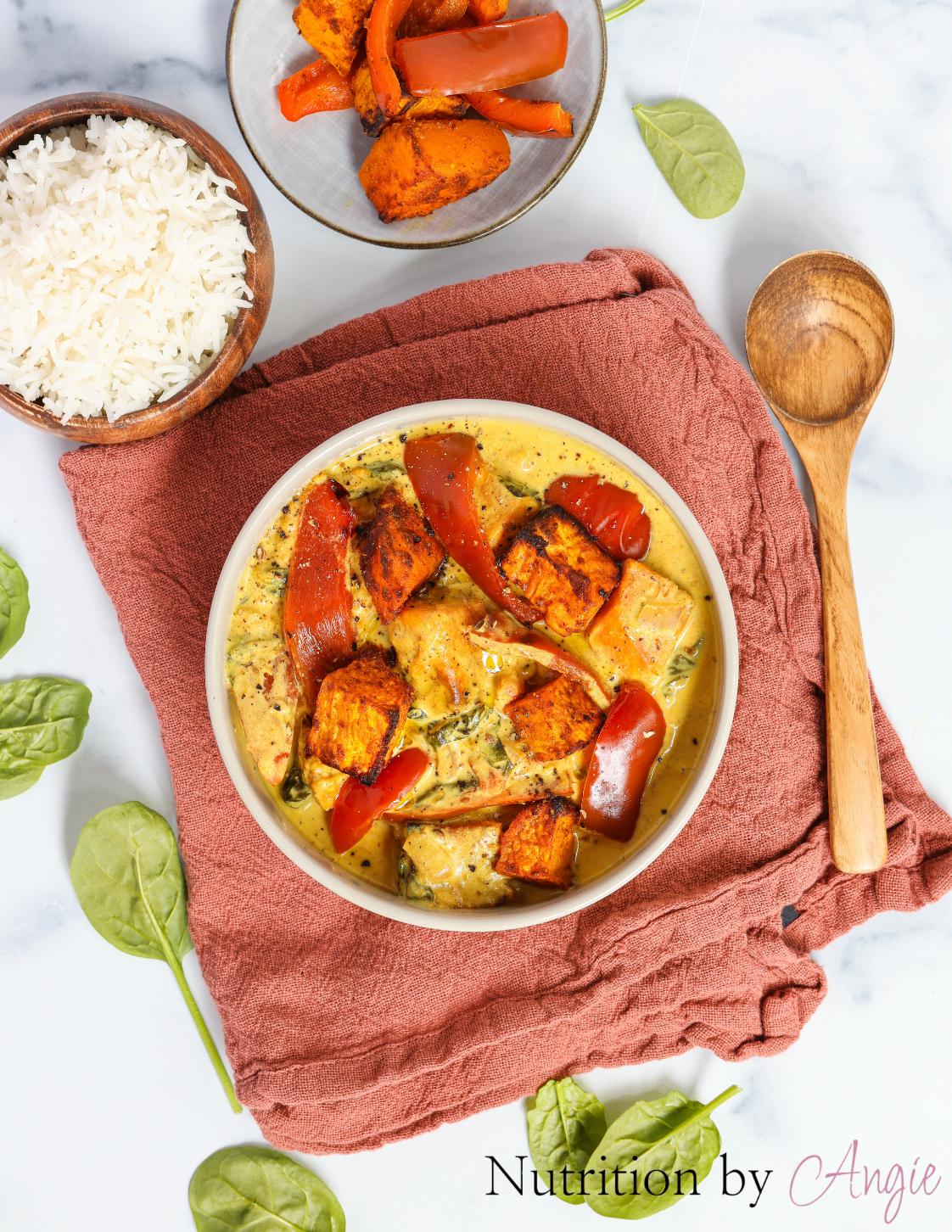
Vegan Sri Lankan Inspired Curry
Gluten-Free • Vegan • Vegetarian • Plant-Based • Dairy-Free • Grain-Free • Whole-Food Focused • High-Fibre
Introduction
This Vegan Sri Lankan Inspired Curry is a warming, aromatic and nourishing vegetable curry made with tender butternut squash, sweet potato, red bell peppers, spinach and a rich coconut milk sauce.
Inspired by the fragrant spices and creamy coconut-based curries of Sri Lankan cuisine, this colourful dish combines naturally sweet vegetables with warming curry paste, fresh garlic and a touch of lime juice.
Butternut squash and sweet potato provide complex carbohydrates, dietary fibre and beta-carotene, while red bell peppers contribute vitamin C and spinach adds folate, vitamin K and other valuable micronutrients. Coconut milk creates a silky, creamy sauce without requiring dairy cream or flour-based thickeners.
The combination of curry paste, garlic, coconut sugar and lime juice creates a delicious balance of spicy, savoury, sweet and tangy flavours.
This curry can be an excellent gluten-free vegan or gluten-free vegetarian dinner when prepared with a curry paste that is specifically labelled gluten-free and contains no animal-derived ingredients.
For a more substantial meal, serve it with rice, quinoa or another naturally gluten-free accompaniment.
Benefits of All the Ingredients
Butternut Squash
Butternut squash provides natural sweetness, a tender texture and a beautiful golden-orange colour.
It is particularly rich in beta-carotene, a carotenoid that the body converts into vitamin A as needed.
Butternut squash also provides several important nutrients:
Vitamin A precursors: Support normal vision, immune function and healthy skin.
Vitamin C: Contributes to normal immune function and collagen formation.
Dietary fibre: Supports normal digestive function.
Potassium: Contributes to normal muscle function and healthy blood pressure.
Manganese: Supports normal metabolism and antioxidant enzyme function.
Butternut squash is naturally gluten-free, vegan and dairy-free, making it an excellent whole-food ingredient for vegetable-based curries.
Sweet Potato
Sweet potato adds natural sweetness and makes the curry more substantial.
Orange-fleshed sweet potatoes are particularly rich in beta-carotene, alongside dietary fibre, potassium, vitamin C and manganese.
Their complex carbohydrates provide energy, while their naturally soft texture complements the creamy coconut sauce.
Sweet potatoes are naturally gluten-free, vegan and grain-free.
Coconut Oil
Coconut oil provides the cooking fat used to develop the flavours of the curry paste, garlic and vegetables.
It is naturally gluten-free, vegan and dairy-free.
Unlike olive oil and many other plant oils, coconut oil contains a relatively high proportion of saturated fat.
Although coconut oil works well in coconut-based curries, its saturated fat content is worth considering as part of a balanced diet, particularly because this recipe also contains coconut milk.
Sri Lankan Curry Paste or Red Curry Paste
Curry paste provides the aromatic foundation of this dish.
Sri Lankan curry pastes vary but may contain ingredients such as chillies, coriander, cumin, turmeric, garlic, ginger, curry leaves and other spices.
These ingredients contribute naturally occurring aromatic compounds and polyphenols.
Turmeric contains curcuminoids, while chilli peppers contain capsaicinoids responsible for their characteristic heat.
Red curry paste can be used as an alternative, although it creates a different flavour profile and is more commonly associated with Thai cuisine.
Important for gluten-free vegan and vegetarian diets:
Some commercial curry pastes contain shrimp paste, fish sauce or other animal-derived ingredients. Others may contain wheat-based ingredients or be exposed to gluten cross-contact.
Choose curry paste specifically labelled gluten-free and vegan to keep the finished dish suitable for both diets.
Red Bell Peppers
Red bell peppers add sweetness, colour and freshness to the curry.
They are particularly rich in vitamin C, which supports normal immune function and collagen formation.
Vitamin C also helps improve the absorption of non-haem iron from plant foods such as spinach.
Red bell peppers provide:
Vitamin C: Supports normal immune function.
Vitamin B6: Contributes to normal energy metabolism.
Folate: Supports normal cell division.
Dietary fibre: Contributes to digestive health.
Carotenoids: Naturally occurring pigments, including beta-carotene.
Red bell peppers are naturally gluten-free, vegan and dairy-free.
Red Onion
Red onion creates a savoury base and contributes a gentle sweetness as it cooks.
It contains naturally occurring plant compounds, including quercetin, a flavonoid with antioxidant properties.
Red onions also provide small amounts of vitamin C, folate and potassium, alongside organosulfur compounds characteristic of the allium family.
Fresh red onion is naturally gluten-free and vegan.
Fresh Garlic
Garlic adds depth and savoury flavour to the coconut curry sauce.
It contains naturally occurring organosulfur compounds, which contribute to its distinctive aroma and flavour.
When garlic is chopped or crushed, enzymatic reactions produce compounds responsible for many of its characteristic properties.
Garlic also provides small amounts of manganese, vitamin B6 and vitamin C.
Fresh garlic is naturally gluten-free, vegan and dairy-free.
Coconut Milk
Coconut milk creates the rich, creamy sauce that brings together the vegetables and spices.
It is naturally dairy-free and vegan, making it a useful alternative to dairy cream in plant-based cooking.
Coconut milk provides fat and small amounts of minerals, although the nutritional composition varies between brands.
Most of its fat is saturated fat, so the quantity used contributes significantly to the overall saturated fat content of the curry.
For a lighter version, reduced-fat coconut milk can be used, although the sauce may be less rich.
Choose plain canned coconut milk with a simple ingredient list and check gluten-free labelling when preparing the curry for someone with coeliac disease.
Coconut Sugar
Coconut sugar adds a gentle caramel-like sweetness that balances the heat of the curry paste and the acidity of the lime juice.
It is made from the sap of coconut palm flowers and contains small amounts of minerals and naturally occurring plant compounds.
However, coconut sugar is still an added sugar, and its trace mineral content does not make it substantially more nutritious than conventional sugar.
Its main role in this curry is to balance the flavours.
Coconut sugar is naturally vegan and generally gluten-free, although packaged products should be checked when strict gluten avoidance is required.
Lime Juice
Lime juice adds freshness and acidity, balancing the richness of the coconut milk.
It provides vitamin C and naturally occurring citrus flavonoids.
Vitamin C also helps improve the absorption of non-haem iron from plant-based ingredients such as spinach.
Fresh lime juice is naturally gluten-free, vegan and dairy-free.
Spinach
Spinach adds a generous serving of leafy greens and valuable micronutrients.
It is particularly rich in vitamin K, folate and provitamin A carotenoids and also provides vitamin C, magnesium and dietary fibre.
Spinach contains the carotenoids lutein and zeaxanthin, which are naturally present in the eye.
It also provides non-haem iron, although the absorption of this form of iron is generally lower than that of haem iron from animal foods.
Combining spinach with vitamin C-rich ingredients such as red bell peppers and lime juice can help improve iron absorption.
Spinach is naturally gluten-free, vegan and dairy-free.
Tips for a Nourishing Gluten-Free Curry
Choose gluten-free vegan curry paste: Check for wheat, shrimp paste, fish sauce and other animal-derived ingredients.
Use plenty of vegetables: Butternut squash, sweet potato, peppers and spinach provide a variety of vitamins, minerals and plant compounds.
Consider lighter coconut milk: This can reduce the saturated fat content while maintaining a creamy texture.
Add legumes for extra protein: Chickpeas or red lentils can make the curry more substantial and increase its plant-based protein and fibre content.
Serve with gluten-free grains: Rice or quinoa makes an excellent accompaniment.
Prevent gluten cross-contact: Use clean utensils, preparation surfaces and cookware when preparing the dish for someone with coeliac disease.