
One-Pan Coconut Squash Bake
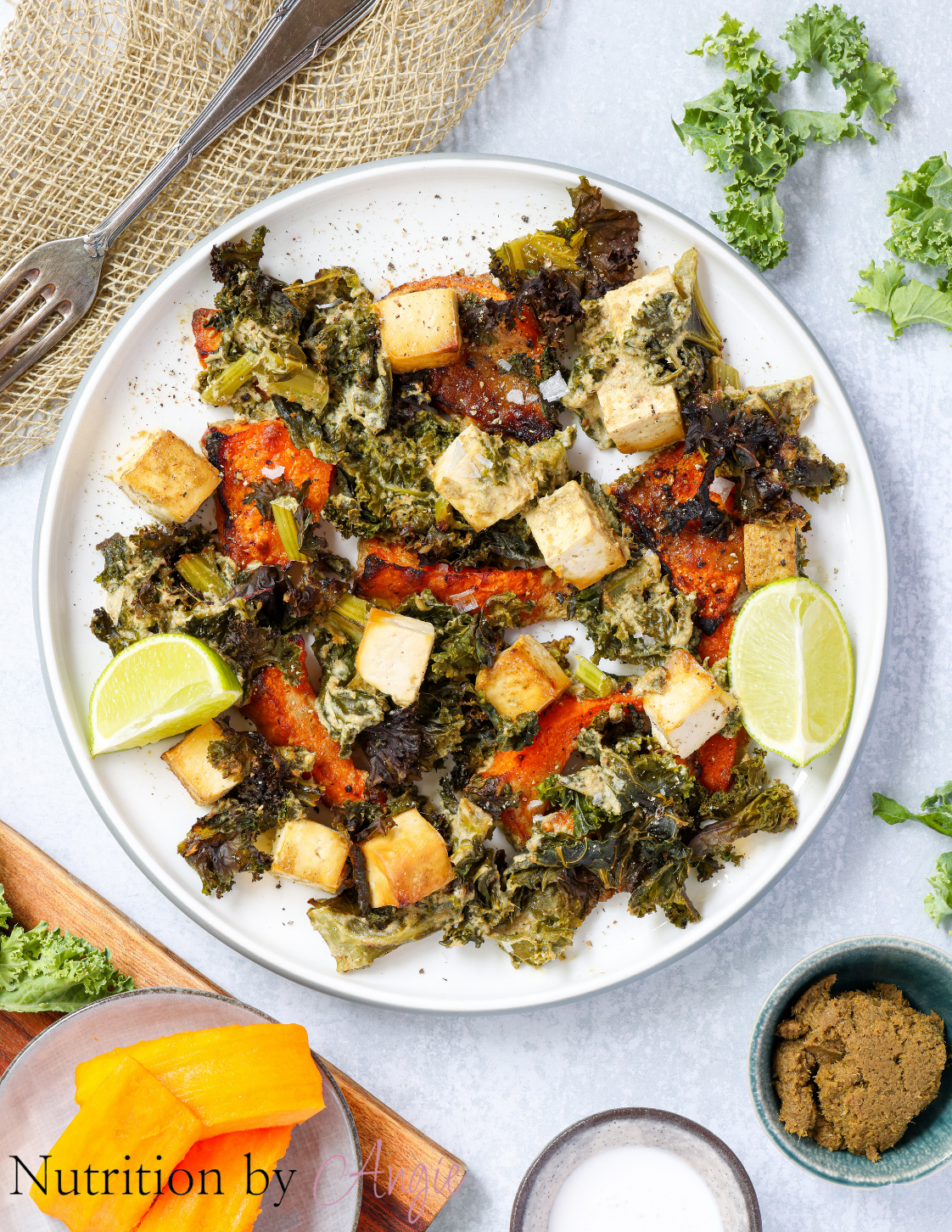
One-Pan Coconut Squash Bake
Gluten-Free • Vegan • Vegetarian • Plant-Based • Dairy-Free • High-Protein • High-Fibre • Whole-Food Focused
Introduction
This One-Pan Coconut Squash Bake is a creamy, aromatic and nourishing plant-based meal made with tender squash or pumpkin, protein-rich tofu, fresh kale and a fragrant green curry coconut sauce.
Inspired by Thai-style curry flavours, this comforting dish combines the natural sweetness of roasted squash with the richness of coconut milk and the warming, aromatic flavours of green curry paste. Firm tofu adds a satisfying source of complete plant-based protein, while kale provides dietary fibre, vitamins and minerals.
The combination of sweet vegetables, savoury tofu and creamy coconut sauce creates a delicious balance of flavours and textures, all prepared in one baking dish.
Squash and pumpkin are particularly rich in beta-carotene, while kale provides vitamin K, vitamin C and folate. Tofu contributes protein, iron and other essential nutrients, making this a satisfying meat-free meal.
This recipe can be an excellent gluten-free vegan or gluten-free vegetarian dinner when prepared with a green curry paste specifically labelled gluten-free and vegan. Many traditional Thai green curry pastes contain shrimp paste, so checking the ingredients is particularly important.
Finish with fresh lime wedges to add brightness and balance the richness of the coconut sauce.
Benefits of All the Ingredients
Squash or Pumpkin
Squash and pumpkin form the nourishing vegetable foundation of this dish.
Orange-fleshed varieties are particularly rich in beta-carotene, a carotenoid that the body converts into vitamin A as needed.
They also provide dietary fibre and several important vitamins and minerals, although the exact amounts vary between varieties.
These include:
Beta-carotene: Supports normal vision, immune function and healthy skin through its conversion into vitamin A.
Vitamin C: Contributes to normal immune function and collagen formation.
Potassium: Supports normal muscle function and healthy blood pressure.
Dietary fibre: Supports normal digestive function.
Manganese: Contributes to normal metabolism and antioxidant enzyme function.
Roasting squash or pumpkin enhances its natural sweetness and creates a tender texture that works particularly well with coconut-based sauces.
Both squash and pumpkin are naturally gluten-free, vegan and dairy-free.
Coconut Milk
Coconut milk creates the rich, creamy sauce that brings the vegetables, tofu and curry paste together.
It is naturally dairy-free and vegan, making it a useful alternative to dairy cream in plant-based cooking.
Coconut milk provides fat and small amounts of minerals, although its nutritional composition varies depending on the brand and coconut content.
Most of its fat is saturated fat, which means full-fat coconut milk can contribute a substantial amount of saturated fat to the finished dish.
For a lighter version, reduced-fat coconut milk can be used, although the sauce may be slightly less rich.
Choose plain canned coconut milk with a simple ingredient list and check gluten-free labelling when preparing this dish for someone with coeliac disease.
Green Curry Paste
Green curry paste provides the aromatic, spicy foundation of this dish.
Traditional Thai green curry paste commonly contains ingredients such as:
Green chillies
Lemongrass
Galangal
Garlic
Shallots
Kaffir lime or makrut lime
Coriander
Cumin
These ingredients contain naturally occurring aromatic compounds and plant polyphenols.
Green chillies contain capsaicinoids, responsible for their characteristic heat, while herbs and spices contribute the fresh, fragrant flavours associated with Thai-inspired curries.
Important for gluten-free vegan and vegetarian diets:
Many traditional green curry pastes contain shrimp paste, making them unsuitable for vegan and vegetarian diets.
Some commercial varieties may also contain wheat-based ingredients or be subject to gluten cross-contact.
For a gluten-free vegan coconut squash bake, choose green curry paste specifically labelled both gluten-free and vegan.
Kale
Kale adds leafy greens, colour and valuable micronutrients to the dish.
It belongs to the cruciferous vegetable family and is particularly rich in vitamin K, vitamin C and provitamin A carotenoids.
Kale also provides:
Folate: Supports normal cell division and red blood cell formation.
Dietary fibre: Contributes to digestive health.
Calcium: Supports healthy bones and teeth.
Potassium: Supports normal muscle function.
Lutein and zeaxanthin: Carotenoids naturally found in the eye.
As a cruciferous vegetable, kale also contains naturally occurring compounds called glucosinolates.
Kale is naturally gluten-free, vegan and dairy-free.
Firm Tofu
Firm tofu provides the main protein source in this recipe.
Made from soybeans, tofu supplies complete plant-based protein, meaning it contains all nine essential amino acids.
It also provides several important nutrients:
Protein: Supports normal muscle maintenance and tissue repair.
Iron: Contributes to normal oxygen transport.
Magnesium: Supports normal muscle and nerve function.
Phosphorus: Contributes to healthy bones and teeth.
Calcium: Can be present in significant amounts when tofu is prepared using calcium salts.
Firm tofu holds its shape particularly well during baking and absorbs the flavours of the coconut milk and green curry paste.
Plain tofu is naturally gluten-free and dairy-free. However, pre-marinated or flavoured tofu may contain wheat-based soy sauce or other gluten-containing ingredients.
Choose plain tofu or a product specifically labelled gluten-free when preparing this dish for someone with coeliac disease.
Fresh Lime
Fresh lime adds a bright, tangy finish that balances the richness of the coconut milk and the warming curry spices.
Lime provides vitamin C and naturally occurring citrus flavonoids.
Vitamin C contributes to normal immune function and collagen formation and helps improve the absorption of non-haem iron from plant foods such as tofu and kale.
Fresh lime juice also enhances the flavours of the curry without needing additional salt or bottled sauces.
Lime is naturally gluten-free, vegan and dairy-free.
Tips for a Nourishing Gluten-Free Coconut Squash Bake
Choose gluten-free vegan curry paste: Check carefully for shrimp paste, fish sauce, wheat and other gluten-containing ingredients.
Use plain firm tofu: This provides complete plant-based protein without unnecessary flavourings or additives.
Choose orange-fleshed squash or pumpkin: These varieties provide beta-carotene and natural sweetness.
Consider light coconut milk: This can reduce the saturated fat content while maintaining a creamy sauce.
Add extra vegetables: Broccoli, green beans or spinach can increase the variety of vegetables in the dish.
Serve with rice or quinoa: Both are naturally gluten-free and can make the meal more substantial.
Prevent gluten cross-contact: Use clean utensils, cookware and preparation surfaces when preparing the dish for someone with coeliac disease.