
Gluten-Free Sesame Noodles with Spicy Tahini Sauce
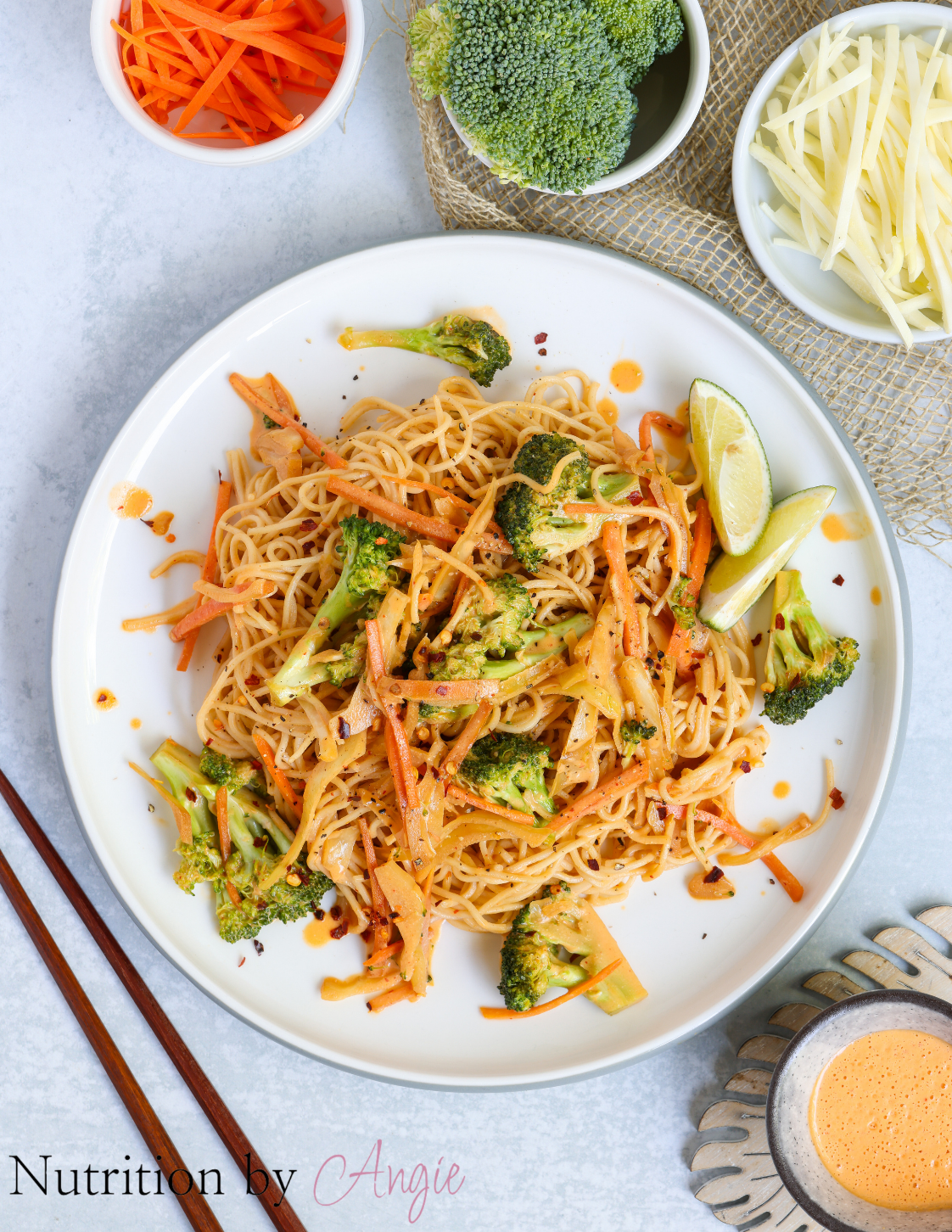
Gluten-Free Sesame Noodles with Spicy Tahini Sauce
Gluten-Free • Vegan • Vegetarian • Plant-Based • Dairy-Free • Egg-Free • Whole-Food Focused
Introduction
These Gluten-Free Sesame Noodles with Spicy Tahini Sauce are a delicious combination of tender spaghetti, crunchy vegetables and a rich, creamy sesame dressing with Asian-inspired flavours.
Made with gluten-free spaghetti, a colourful mixture of cabbage, broccoli and carrots, toasted sesame oil and tamari, this satisfying noodle dish is packed with flavour and texture.
The homemade tahini sauce brings everything together with a combination of creamy tahini, savoury tamari, tangy rice vinegar, fresh garlic, ginger, coconut milk, maple syrup and lime juice. The result is a wonderfully balanced sauce with nutty, savoury, sweet and tangy flavours.
Tahini provides predominantly unsaturated fats, plant-based protein and important minerals, while the vegetables contribute dietary fibre, vitamins and naturally occurring plant compounds. Garlic and ginger add aromatic depth, and lime juice gives the sauce a refreshing finish.
Unlike traditional wheat-based noodle dishes, this recipe uses gluten-free spaghetti and gluten-free tamari, making it suitable for people following a gluten-free diet, including those with coeliac disease, when all ingredients are appropriately sourced and cross-contact is prevented.
Naturally vegan, vegetarian and dairy-free, these sesame noodles are ideal for a nourishing lunch, easy dinner or meal-preparation recipe.
Finish with red chilli flakes and fresh lime wedges for an extra burst of flavour.
Benefits of All the Ingredients
Gluten-Free Spaghetti
Gluten-free spaghetti provides the carbohydrate-rich foundation of this dish.
The nutritional value depends on the ingredients used to make the pasta.
Common gluten-free spaghetti varieties include rice, corn, quinoa, chickpea and lentil pasta.
Brown Rice Pasta
Brown rice pasta provides carbohydrates and may contain more fibre than refined white rice pasta.
Quinoa Pasta
Quinoa-based pasta can contribute additional protein and minerals, depending on its composition.
Chickpea or Lentil Pasta
Legume-based pasta is often higher in plant-based protein and dietary fibre than conventional refined pasta.
For a more nutritious, whole-food-focused meal, choose gluten-free spaghetti made from whole grains or legumes where possible.
Gluten-free spaghetti is suitable for people with coeliac disease when it is appropriately labelled and prepared without gluten cross-contact.
Vegetable Slaw Mix: Cabbage, Broccoli and Carrots
The vegetable slaw mix adds freshness, colour, crunch and a variety of valuable nutrients.
Using several different vegetables increases the diversity of vitamins, minerals and naturally occurring plant compounds in the meal.
Cabbage
Cabbage belongs to the cruciferous vegetable family.
It provides:
Vitamin C: Supports normal immune function and collagen formation.
Vitamin K: Contributes to normal blood clotting and bone maintenance.
Dietary fibre: Supports normal digestive function.
Folate: Contributes to normal cell division.
Cabbage also contains naturally occurring glucosinolates, compounds characteristic of cruciferous vegetables.
Its crisp texture contrasts beautifully with the creamy tahini sauce.
Broccoli
Broccoli is another cruciferous vegetable and provides several important micronutrients.
These include:
Vitamin C: Supports normal immune function.
Vitamin K: Contributes to healthy bones and normal blood clotting.
Folate: Supports normal cell division.
Dietary fibre: Contributes to digestive health.
Potassium: Supports normal muscle function.
Broccoli also contains glucosinolates, including glucoraphanin, which can be converted into sulforaphane under certain conditions.
Carrots
Carrots provide natural sweetness and vibrant colour.
They are particularly rich in beta-carotene, a carotenoid that the body converts into vitamin A as needed.
Carrots also provide dietary fibre, potassium and vitamin K1.
Their natural sweetness helps balance the salty tamari and tangy rice vinegar.
All three vegetables are naturally gluten-free, vegan and dairy-free.
Sesame Oil
Sesame oil contributes a distinctive nutty aroma and savoury depth.
It contains predominantly unsaturated fats, including monounsaturated and polyunsaturated fatty acids.
Sesame oil also contains naturally occurring compounds such as sesamin and sesamolin.
Toasted sesame oil is particularly flavourful, so a relatively small amount can provide plenty of flavour.
Sesame oil is naturally gluten-free and vegan.
Tamari
Tamari provides the rich, savoury umami flavour in both the noodles and the tahini sauce.
It is a Japanese-style soy sauce traditionally associated with fermented soybeans.
Tamari contains naturally occurring amino acids and flavour compounds produced during fermentation.
However, not all tamari is gluten-free. Some products contain wheat or may be exposed to gluten during manufacturing.
For this recipe, choose tamari specifically labelled gluten-free.
Tamari can also be relatively high in sodium. Because the recipe uses tamari in both the noodles and the sauce, a reduced-sodium gluten-free variety may be useful.
Benefits of the Spicy Tahini Sauce Ingredients
Tahini
Tahini is the main ingredient in this creamy sauce.
Made from ground sesame seeds, tahini provides a rich, nutty flavour and smooth consistency without requiring dairy cream.
It contains plant-based protein, predominantly unsaturated fats and important minerals.
These include:
Calcium: Contributes to healthy bones and teeth.
Copper: Supports normal iron transport and connective tissue maintenance.
Magnesium: Supports normal muscle and nerve function.
Phosphorus: Contributes to healthy bones and teeth.
Iron: Supports normal oxygen transport.
Zinc: Contributes to normal immune function.
Tahini also contains naturally occurring lignans, including sesamin.
Its healthy unsaturated fats make it a useful ingredient in plant-based cooking.
Choose pure tahini made from sesame seeds without unnecessary added oils or sugar.
Tahini is naturally gluten-free, although cross-contact can occur during processing.
Rice Vinegar
Rice vinegar adds acidity and helps balance the richness of the tahini and coconut milk.
It is made through the fermentation of rice and has a relatively mild flavour compared with some other vinegars.
Rice vinegar contributes primarily flavour rather than significant amounts of vitamins or minerals.
Plain rice vinegar is generally gluten-free, but seasoned varieties may contain additional ingredients.
For a gluten-free noodle dish, choose plain rice vinegar with appropriate gluten-free labelling.
Fresh Garlic
Garlic adds savoury depth and complements the sesame, ginger and tamari.
It contains naturally occurring organosulfur compounds, which contribute to its characteristic aroma and flavour.
Garlic also provides small amounts of manganese, vitamin B6 and vitamin C.
Fresh garlic is naturally gluten-free, vegan and dairy-free.
Fresh Ginger
Fresh ginger adds warmth, freshness and a slightly spicy flavour to the sauce.
It contains naturally occurring compounds called gingerols, which contribute to its characteristic pungency.
Gingerols and related compounds have been studied for their biological properties, although the small amount used in this recipe is primarily included for flavour.
Fresh ginger also provides small amounts of potassium and other micronutrients.
Ginger is naturally gluten-free, vegan and dairy-free.
Coconut Milk
Coconut milk gives the tahini sauce an extra creamy consistency and a subtle coconut flavour.
It is naturally dairy-free and vegan.
Coconut milk contains fat and small amounts of minerals, although its composition varies between brands.
Most of its fat is saturated fat, so using a modest amount helps keep the sauce rich without relying on a large quantity of coconut milk.
Choose plain canned coconut milk and check the ingredient label when preparing the dish for someone with coeliac disease.
Maple Syrup
Maple syrup provides sweetness and balances the salty tamari, tangy vinegar and fresh lime juice.
Pure maple syrup contains small amounts of manganese, riboflavin and naturally occurring phenolic compounds.
However, maple syrup remains an added sugar, despite being derived from a natural source.
Its primary purpose in this sauce is to create a balanced flavour.
Choose 100% pure maple syrup rather than maple-flavoured syrup.
Fresh Lime Juice
Fresh lime juice brightens the sauce and complements the nutty sesame flavour.
It provides vitamin C and naturally occurring citrus flavonoids.
Vitamin C contributes to normal immune function and collagen formation.
It also helps improve the absorption of non-haem iron from plant foods when consumed as part of the same meal.
Fresh lime juice is naturally gluten-free, vegan and dairy-free.
Benefits of the Suggested Serving Ingredients
Red Chilli Flakes
Red chilli flakes add heat and make the dish more aromatic.
They contain naturally occurring capsaicinoids, which are responsible for their spicy flavour.
The amount used can be adjusted according to individual preference.
Pure chilli flakes are naturally gluten-free, although packaged spice products should be checked for cross-contact when strict gluten avoidance is required.
Fresh Lime Wedges
Fresh lime wedges provide an extra burst of acidity just before serving.
A squeeze of lime enhances the flavours of the tahini, ginger and tamari without needing additional salt.
Lime also provides a small amount of vitamin C.
Tips for the Best Gluten-Free Sesame Noodles
Choose certified gluten-free spaghetti: Brown rice, quinoa, chickpea or lentil spaghetti can all work well.
Use gluten-free tamari: Regular soy sauce usually contains wheat, and not all tamari products are gluten-free.
Consider reduced-sodium tamari: This recipe contains a substantial amount of tamari, so a lower-sodium version can help reduce the salt content.
Choose pure tahini: Look for tahini made from sesame seeds without added sugar or unnecessary oils.
Keep the vegetables slightly crisp: This adds texture and helps prevent the noodles from becoming too soft.
Adjust the sauce consistency: A little water can be added if the tahini sauce becomes too thick.
Add extra protein: Shelled edamame or plain firm tofu can increase the plant-based protein content.
Add chilli flakes to taste: The base sauce is aromatic and savoury; the chilli flakes provide the optional heat.
Prevent gluten cross-contact: Use clean utensils, preparation surfaces, cookware and a fresh pot of cooking water when preparing the noodles for someone with coeliac disease.