
Tex-Mex Quinoa Power Bowl
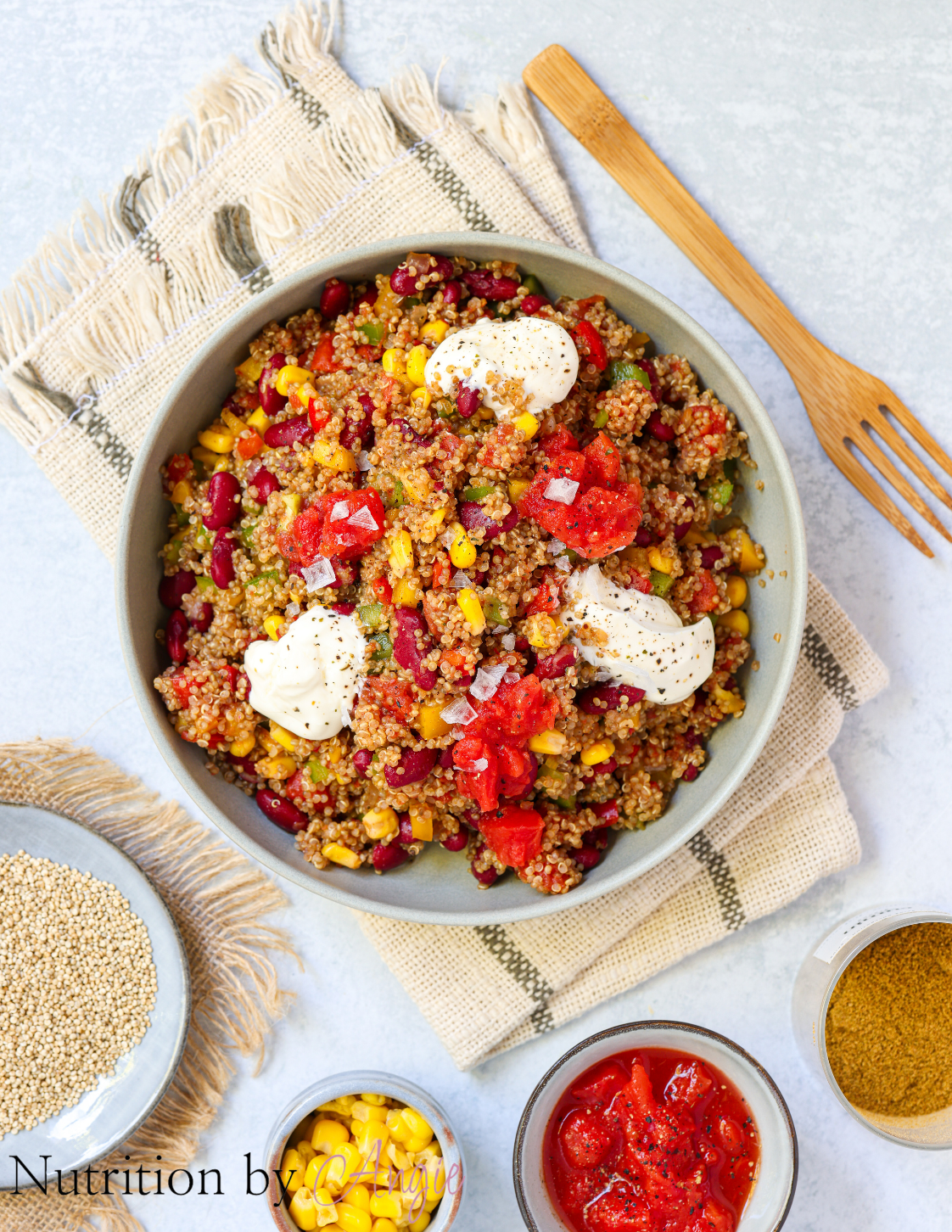
Tex-Mex Quinoa Power Bowl
Gluten-Free • Vegan • Vegetarian • Plant-Based • Dairy-Free • High-Fibre • High-Protein • Whole-Food Focused
Introduction
This Tex-Mex Quinoa Power Bowl is a colourful, nourishing and satisfying plant-based meal combining fluffy quinoa, kidney beans, sweetcorn, tomatoes, green bell pepper and aromatic Mexican-inspired spices.
Quinoa provides plant-based protein, complex carbohydrates and dietary fibre, while kidney beans contribute additional protein, fibre and essential minerals. Sweetcorn adds natural sweetness, green bell pepper provides freshness and vitamin C, and tomatoes bring a rich, savoury flavour to the dish.
Garlic, onion and Mexican seasoning create a delicious combination of warming, smoky and savoury flavours, making this an excellent option for a wholesome lunch or dinner.
Naturally vegan, vegetarian and dairy-free, this recipe can also be a wonderful gluten-free vegan or gluten-free vegetarian power bowl when prepared with gluten-free-labelled quinoa, seasonings and other packaged ingredients.
Serve with fresh lime juice, coriander and a spoonful of unsweetened plant-based yogurt for a refreshing, creamy finish.
Benefits of All the Ingredients
Quinoa
Quinoa forms the nourishing foundation of this power bowl.
Although commonly prepared like a grain, quinoa is technically a pseudocereal and is naturally gluten-free.
It provides complex carbohydrates, dietary fibre and plant-based protein, making it a valuable ingredient for satisfying vegan and vegetarian meals.
Quinoa contains all nine essential amino acids, although the overall protein content and amino acid proportions differ from those of animal-based protein sources.
It also provides important micronutrients, including:
Magnesium: Supports normal muscle and nerve function.
Manganese: Contributes to normal metabolism and antioxidant enzyme function.
Phosphorus: Supports healthy bones and teeth.
Folate: Contributes to normal cell division and red blood cell formation.
Iron: Supports normal oxygen transport.
Copper: Contributes to normal iron transport and connective tissue maintenance.
Quinoa is particularly useful in gluten-free vegan and vegetarian recipes, where it provides a nutritious alternative to wheat-based grains.
For someone with coeliac disease, choose quinoa specifically labelled gluten-free because cross-contact with wheat or other gluten-containing grains can occur during processing.
Rinsing quinoa before cooking helps remove naturally occurring saponins, which can otherwise give it a bitter taste.
Fresh Garlic
Garlic provides savoury depth and complements the warming Mexican-inspired spices.
It contains naturally occurring organosulfur compounds, which contribute to its distinctive aroma and flavour.
When garlic is chopped or crushed, enzymatic reactions produce compounds responsible for many of its characteristic properties.
Fresh garlic also provides small amounts of manganese, vitamin B6 and vitamin C.
Garlic is naturally gluten-free, vegan and dairy-free.
Onion
Onion creates a flavourful aromatic base and adds natural sweetness as it cooks.
It contains small amounts of vitamin C, folate and potassium, alongside naturally occurring plant compounds such as quercetin and organosulfur compounds.
Onion also contributes a small amount of dietary fibre.
Fresh onion is naturally gluten-free and makes a versatile whole-food ingredient for plant-based meals.
Green Bell Pepper
Green bell pepper adds freshness, colour and a slightly grassy flavour.
It is particularly rich in vitamin C, which supports normal immune function and collagen formation.
Vitamin C also helps improve the absorption of non-haem iron from plant-based foods such as quinoa and kidney beans when consumed together.
Green bell peppers additionally provide:
Vitamin B6: Supports normal energy metabolism.
Folate: Contributes to normal cell division.
Dietary fibre: Supports digestive health.
Carotenoids: Naturally occurring plant pigments.
Green bell peppers are naturally gluten-free, vegan and dairy-free.
Kidney Beans
Kidney beans are one of the main protein and fibre sources in this recipe.
They provide plant-based protein, dietary fibre and complex carbohydrates, helping create a satisfying meal.
Kidney beans also contain several important micronutrients:
Folate: Supports normal cell division and red blood cell formation.
Iron: Contributes to normal oxygen transport.
Magnesium: Supports normal muscle and nerve function.
Potassium: Contributes to normal muscle function and healthy blood pressure.
Phosphorus: Supports healthy bones and teeth.
Manganese: Contributes to normal metabolism.
Kidney beans are particularly valuable in gluten-free vegan and vegetarian meals because they contribute protein and fibre without requiring animal-derived ingredients.
Plain canned kidney beans are naturally gluten-free. Draining and rinsing them can remove some of the sodium from the canning liquid.
Always use fully cooked kidney beans. Raw or undercooked kidney beans contain high levels of naturally occurring lectins that can cause illness.
Sweetcorn
Sweetcorn adds natural sweetness, colour and a pleasant texture to the power bowl.
It provides carbohydrates, dietary fibre and small amounts of plant-based protein.
Sweetcorn also contains nutrients such as folate, thiamine and potassium.
Yellow sweetcorn provides the carotenoids lutein and zeaxanthin, which are naturally found in the eye.
Plain canned sweetcorn is naturally gluten-free, although products containing sauces or seasonings should be checked.
Canned Tomatoes
Tomatoes provide moisture, acidity and a rich savoury base.
They are a source of vitamin C, potassium and folate, alongside naturally occurring plant compounds.
Tomatoes are particularly well known for containing lycopene, a carotenoid responsible for much of their red colour.
Cooking tomatoes can increase the bioavailability of lycopene, making canned tomatoes a useful ingredient in cooked dishes.
Choose canned tomatoes with a simple ingredient list and without unnecessary added sugar where possible.
Plain canned tomatoes are naturally gluten-free and vegan.
Mexican Seasoning
Mexican seasoning provides the warming, smoky and savoury flavours that give this bowl its Tex-Mex character.
Commercial blends vary but commonly contain ingredients such as:
Ground cumin
Paprika
Chilli powder
Garlic powder
Onion powder
Oregano
Ground coriander
These spices contain naturally occurring aromatic compounds and polyphenols.
However, commercial seasoning blends may contain additional ingredients, including wheat-based thickeners, flavourings or anti-caking agents, or may experience cross-contact during processing.
For a gluten-free Tex-Mex quinoa bowl, choose Mexican seasoning specifically labelled gluten-free.
A homemade spice blend made from individual gluten-free spices is another excellent option.
Benefits of the Optional Serving Suggestions
Fresh Lime Juice
Lime juice adds brightness and balances the savoury spices.
It provides vitamin C and naturally occurring citrus flavonoids.
Vitamin C also helps improve the absorption of non-haem iron from plant foods such as quinoa and kidney beans.
Fresh lime juice is naturally gluten-free, vegan and dairy-free.
Fresh Coriander (Cilantro)
Fresh coriander adds a bright herbal flavour that complements the lime and Mexican-inspired seasoning.
It contains small amounts of vitamin K, vitamin C and provitamin A carotenoids, alongside naturally occurring aromatic plant compounds.
Fresh coriander is naturally gluten-free and plant-based.
Natural Yogurt or Plant-Based Yogurt
A spoonful of natural yogurt adds a cool, creamy contrast to the warming spices.
Dairy Yogurt
Natural dairy yogurt provides protein, calcium, phosphorus and vitamin B12.
However, it is not suitable for vegan or dairy-free diets.
Plant-Based Yogurt
Unsweetened plant-based yogurt keeps the meal completely vegan and dairy-free.
Soy-based yogurt can contribute additional plant-based protein, while fortified varieties may provide calcium, vitamin D and vitamin B12.
Coconut-based yogurts are often lower in protein and may contain more saturated fat, depending on the product.
For a gluten-free vegan power bowl, choose plain, unsweetened plant-based yogurt specifically labelled gluten-free.