
Chickpea Salad Sandwich
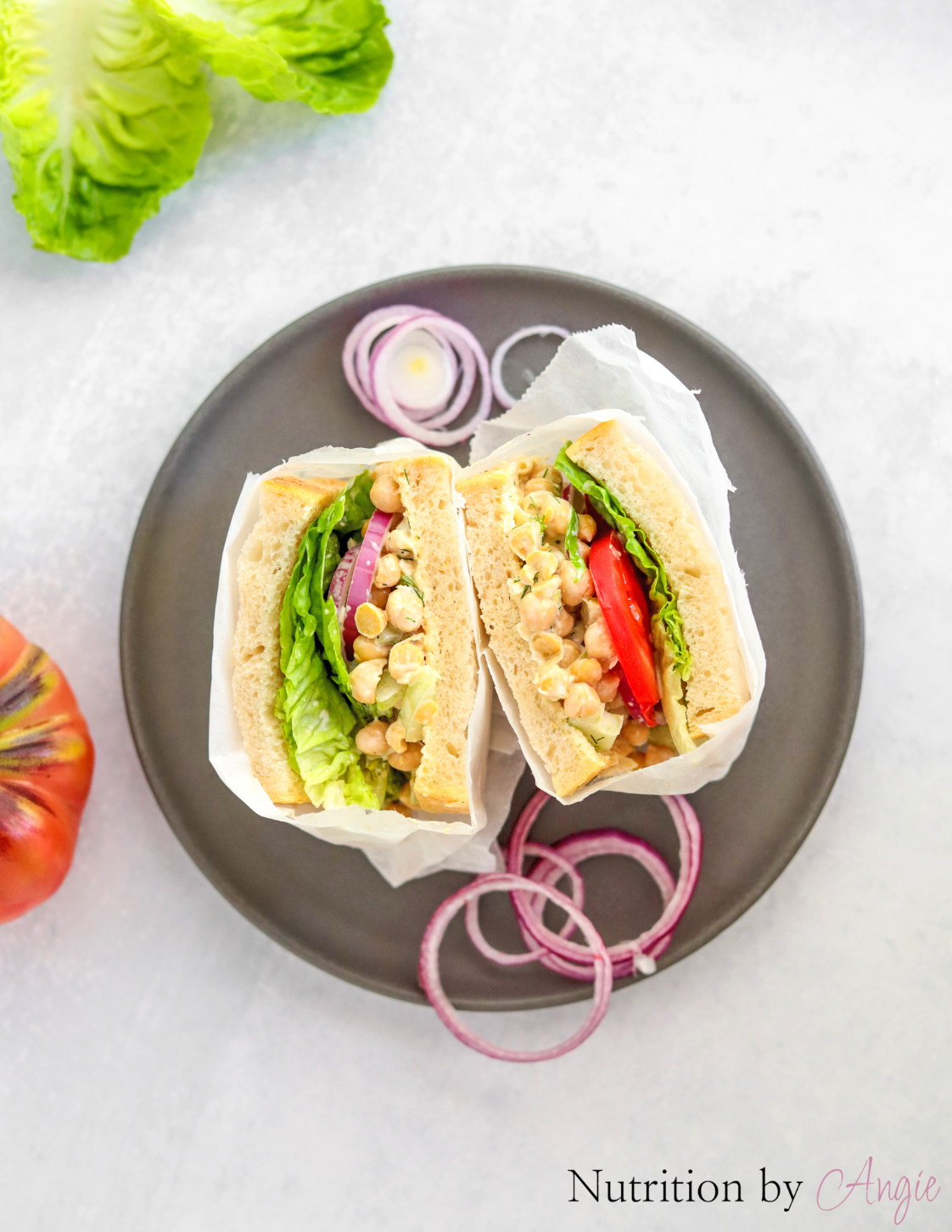
Chickpea Salad Sandwich
Gluten-Free • Vegan • Vegetarian • Plant-Based • Dairy-Free • Egg-Free • High-Fibre • Protein-Rich • Whole-Food Focused
Introduction
This Chickpea Salad Sandwich is a delicious, nourishing and satisfying plant-based alternative to traditional tuna, chicken or egg salad sandwiches. Made with mashed chickpeas, extra virgin olive oil, fresh lemon juice, Dijon mustard, crunchy celery and aromatic dill, it delivers a wonderful combination of creamy, tangy and savoury flavours.
Served between slices of toasted gluten-free bread with vegan mayonnaise, crisp lettuce, fresh tomato and thinly sliced red onion, this sandwich is perfect for a wholesome lunch, light dinner or convenient meal preparation.
Chickpeas provide plant-based protein, dietary fibre, complex carbohydrates and important minerals, including iron, magnesium, phosphorus and zinc. Their naturally creamy texture makes them particularly useful for creating satisfying sandwich fillings without relying on meat or eggs.
Olive oil contributes predominantly monounsaturated fats, while lemon juice adds freshness and vitamin C. Celery provides a refreshing crunch, and fresh dill introduces a distinctive herbaceous flavour.
The combination of legumes, vegetables and wholegrain gluten-free bread can create a balanced meal containing carbohydrates, fibre, plant-based protein and beneficial fats.
Unlike many commercially prepared sandwich fillings, this homemade version allows you to control the ingredients, seasoning and amount of mayonnaise.
This gluten-free vegan chickpea salad sandwich is especially convenient for packed lunches, picnics and busy weekdays.
For the most nourishing version, choose wholegrain or seeded gluten-free bread and a vegan mayonnaise made with predominantly unsaturated oils.
Benefits of All the Ingredients
Chickpeas
Chickpeas are the main ingredient in this sandwich filling.
Also known as garbanzo beans, chickpeas belong to the legume family and are valued for their combination of plant-based protein, dietary fibre and complex carbohydrates.
They provide a satisfying texture and can be mashed into a creamy consistency while retaining some larger pieces for a pleasant bite.
Chickpeas contain several important nutrients:
Plant-Based Protein: Contributes to normal muscle maintenance and tissue repair.
Dietary Fibre: Supports normal digestive function.
Folate: Contributes to normal cell division and red blood cell formation.
Iron: Supports normal oxygen transport.
Magnesium: Supports normal muscle and nerve function.
Phosphorus: Supports healthy bones and teeth.
Zinc: Supports normal immune function.
Manganese: Contributes to normal metabolism.
Complex Carbohydrates: Provide energy for everyday activities.
Chickpeas also contain resistant starch and fermentable carbohydrates that can be used by certain bacteria in the digestive system.
Chickpeas and Digestive Health
The fibre in chickpeas supports normal bowel function and contributes to a varied dietary fibre intake.
Certain carbohydrates in chickpeas can be fermented by gut bacteria, producing short-chain fatty acids.
These compounds play important roles in normal intestinal function.
However, chickpeas can cause bloating or gas in some people, particularly those who are not accustomed to eating legumes.
Starting with smaller portions and gradually increasing fibre intake may help improve tolerance.
Why Rinsing Canned Chickpeas Matters
Draining and rinsing canned chickpeas removes some of the sodium from the canning liquid.
It also helps remove excess starch and liquid, creating a better texture for the sandwich filling.
Plain canned chickpeas are naturally gluten-free, although flavoured varieties should be checked for additional ingredients.
Olive Oil
Olive oil adds richness and helps create a smooth, creamy chickpea filling.
It is particularly rich in monounsaturated fatty acids, especially oleic acid.
Replacing saturated fats with unsaturated fats can help maintain healthy blood cholesterol levels.
Extra virgin olive oil also contains naturally occurring phenolic compounds and vitamin E.
Olive oil provides:
Monounsaturated Fats: Support a heart-conscious dietary pattern when replacing saturated fats.
Vitamin E: Helps protect cells from oxidative stress.
Phenolic Compounds: Naturally occurring plant substances with antioxidant properties.
Extra virgin olive oil is generally preferred for its flavour and naturally occurring plant compounds.
Although olive oil contains beneficial fats, it is energy-dense, so moderate amounts are sufficient.
Olive oil is naturally gluten-free, vegan and dairy-free.
Fresh Lemon Juice
Fresh lemon juice adds acidity and brightness to the chickpea salad.
It helps balance the richness of the olive oil and vegan mayonnaise while enhancing the fresh flavour of the herbs.
Lemon juice provides vitamin C, which contributes to:
Normal immune function.
Collagen formation.
Protection of cells from oxidative stress.
Improved absorption of non-haem iron from plant foods.
This is particularly useful because chickpeas contain non-haem iron, the form of iron found in plant foods.
Combining chickpeas with vitamin C-rich ingredients can help improve iron absorption.
Fresh lemon juice is naturally gluten-free, vegan and dairy-free.
Dijon Mustard
Dijon mustard provides a sharp, tangy flavour that complements the chickpeas and fresh dill.
It is traditionally made from mustard seeds, vinegar or wine, water and seasonings.
Mustard seeds contain naturally occurring glucosinolates, which contribute to their distinctive pungent flavour.
Dijon mustard also provides small amounts of minerals, although the quantity used in this recipe contributes primarily flavour rather than significant nutritional benefits.
Choosing Gluten-Free Dijon Mustard
Most traditional Dijon mustard ingredients are naturally gluten-free, but some commercial products may contain additional ingredients or experience cross-contact during manufacturing.
Choose a gluten-free labelled Dijon mustard when preparing this recipe for someone with coeliac disease.
Mustard is also a recognised food allergen in the EU and must be declared on packaged foods.
Garlic Powder
Garlic powder adds savoury depth without overpowering the fresh lemon and dill.
It is made from dehydrated garlic and contains naturally occurring organosulfur compounds.
Garlic provides small amounts of manganese, vitamin B6 and other minerals.
However, the half teaspoon used in this recipe contributes primarily flavour rather than substantial nutritional benefits.
Pure garlic powder is naturally gluten-free, but seasoning blends may contain gluten-containing ingredients.
Celery
Celery adds a refreshing crunch that contrasts beautifully with the creamy mashed chickpeas.
It is a low-energy vegetable with a high water content.
Celery provides small amounts of:
Vitamin K: Supports normal blood clotting and bone maintenance.
Potassium: Supports normal muscle function.
Folate: Contributes to normal cell division.
Dietary Fibre: Supports normal digestive function.
Celery also contains naturally occurring flavonoids, including apigenin and luteolin.
Its crisp texture makes the sandwich filling more interesting and helps balance the softness of the chickpeas.
Celery is naturally gluten-free, vegan and dairy-free.
Allergen consideration: Celery is one of the 14 allergens that must be declared on packaged foods in the EU.
Fresh Dill
Fresh dill provides a delicate, aromatic flavour that pairs particularly well with lemon, mustard and chickpeas.
It belongs to the same botanical family as parsley and fennel.
Dill contains naturally occurring aromatic compounds, including carvone and limonene, which contribute to its distinctive flavour.
It also provides small amounts of:
Vitamin C: Supports normal immune function.
Vitamin A Precursors: Contribute to normal vision and immune function.
Folate: Supports normal cell division.
Manganese: Contributes to normal metabolism.
Because dill is generally consumed in small quantities, its main contribution is flavour and freshness.
Fresh dill is naturally gluten-free, vegan and dairy-free.
Benefits of the Sandwich Ingredients
Gluten-Free Bread
Gluten-free bread provides the structure of the sandwich and contributes carbohydrates for energy.
The nutritional value varies considerably depending on the ingredients used.
Some gluten-free breads are made primarily from refined rice flour, maize starch, potato starch or tapioca starch.
Others contain whole grains, seeds, legumes and additional fibre.
For a more nourishing sandwich, choose wholegrain or seeded gluten-free bread where possible.
Depending on the ingredients, it may provide:
Complex Carbohydrates: Supply energy for everyday activities.
Dietary Fibre: Supports normal digestive function.
Plant-Based Protein: Contributes to normal muscle maintenance.
Magnesium: Supports normal muscle and nerve function.
Iron: Contributes to normal oxygen transport.
B Vitamins: Support normal energy metabolism.
Why Gluten-Free Labelling Matters
For people with coeliac disease, bread must be appropriately labelled gluten-free.
Conventional wheat, rye and barley bread contains gluten and is not suitable.
Some gluten-free breads also contain oats, so check whether they are certified gluten-free.
Toasting the bread creates a firmer texture that helps prevent the chickpea filling from making the sandwich soggy.
Use a clean toaster or a dedicated gluten-free toaster to avoid gluten cross-contact.
Vegan Mayonnaise
Vegan mayonnaise adds creaminess and helps balance the tangy chickpea filling.
It is generally made using plant-based oils, water, vinegar or lemon juice and emulsifying ingredients.
The nutritional profile depends on the type and amount of oil used.
Mayonnaise made with rapeseed, olive or sunflower oil provides predominantly unsaturated fats.
Some products contain added sugar, starches or other ingredients.
For a whole-food-focused sandwich, choose a vegan mayonnaise with a relatively simple ingredient list and predominantly unsaturated oils.
Vegan mayonnaise is typically egg-free and dairy-free, but check the label for gluten-containing ingredients and allergens.
Lettuce
Lettuce adds freshness, crunch and additional vegetable variety.
It contains a high proportion of water and provides small amounts of several nutrients.
Depending on the variety, lettuce may provide:
Vitamin K: Supports normal blood clotting and bone maintenance.
Folate: Contributes to normal cell division.
Beta-Carotene: Can be converted into vitamin A.
Dietary Fibre: Supports normal digestive function.
Darker green lettuce varieties generally contain more carotenoids than pale varieties.
Lettuce also creates a useful barrier between the moist chickpea filling and the bread.
Fresh lettuce is naturally gluten-free, vegan and dairy-free.
Red Onion
Red onion adds a sharp, slightly sweet flavour and a satisfying crunch.
It belongs to the allium vegetable family and contains naturally occurring organosulfur compounds.
Red onions also contain flavonoids, including quercetin, and anthocyanins that contribute to their reddish-purple colour.
They provide small amounts of:
Vitamin C: Supports normal immune function.
Vitamin B6: Contributes to normal energy metabolism.
Folate: Supports normal cell division.
Potassium: Supports normal muscle function.
Dietary Fibre: Supports digestive health.
Red onion adds considerable flavour even when used in small amounts.
For a milder taste, the slices can be soaked briefly in cold water before serving.
Red onion is naturally gluten-free, vegan and dairy-free.
Fresh Tomato
Fresh tomato adds juiciness, natural sweetness and a refreshing contrast to the savoury chickpea filling.
Tomatoes are particularly well known for containing lycopene, a naturally occurring carotenoid responsible for their red colour.
They also provide:
Vitamin C: Supports normal immune function and collagen formation.
Potassium: Supports normal muscle function.
Folate: Contributes to normal cell division.
Dietary Fibre: Supports normal digestive function.
Lycopene: A naturally occurring carotenoid with antioxidant properties.
Lycopene has been studied for its potential role in long-term health.
Fresh tomatoes provide a combination of water, fibre and micronutrients while adding very little energy to the sandwich.
Tomatoes are naturally gluten-free, vegan and dairy-free.
Why This Chickpea Salad Sandwich Makes a Nourishing Meal
Provides Plant-Based Protein
Chickpeas contribute protein, helping make the sandwich more satisfying.
Rich in Dietary Fibre
Chickpeas, vegetables and wholegrain gluten-free bread provide fibre that supports normal digestive function.
Contains Heart-Friendly Unsaturated Fats
Olive oil and suitably formulated vegan mayonnaise contribute predominantly unsaturated fats.
Supports Plant-Based Iron Absorption
Vitamin C from lemon juice and tomatoes helps improve the absorption of non-haem iron from chickpeas.
Includes a Variety of Vegetables
Celery, lettuce, red onion and tomato contribute freshness, texture and a range of nutrients.
Naturally Egg-Free and Dairy-Free
The sandwich uses chickpeas and vegan mayonnaise instead of eggs or dairy-based fillings.
Suitable for Gluten-Free Diets
Using certified gluten-free bread and suitable packaged ingredients makes this sandwich appropriate for gluten-free diets.
Convenient for Meal Preparation
The chickpea filling can be prepared in advance and assembled into sandwiches when needed.
Delicious Serving Suggestions
Fresh Vegetable Sticks
Serve with cucumber, carrot or bell pepper sticks for extra crunch and vegetable variety.
A Simple Green Salad
Pair with leafy greens, fresh herbs and a light lemon dressing.
Homemade Sweet Potato Wedges
Serve with baked sweet potato wedges for a more substantial meal.
Fresh Fruit
Add berries, an apple or an orange for a refreshing side.
Avocado
Include a few slices of avocado for extra creaminess, fibre and predominantly monounsaturated fats.
Tips for the Best Chickpea Salad Sandwich
Drain and rinse the chickpeas: This removes excess canning liquid and can reduce some of the sodium.
Mash the chickpeas partially: Leave some whole or roughly crushed for a more satisfying texture.
Use fresh lemon juice: It provides a brighter flavour than bottled juice.
Choose good-quality Dijon mustard: Check that it is gluten-free when preparing the sandwich for someone with coeliac disease.
Finely chop the celery: This distributes the crunch evenly throughout the filling.
Use fresh dill: Fresh herbs provide a brighter flavour than dried alternatives.
Choose wholegrain gluten-free bread: Look for varieties containing whole grains, seeds and fibre.
Toast the bread: This helps prevent it from becoming soggy.
Add lettuce before the filling: It creates a barrier between the bread and the moist chickpea mixture.
Use vegan mayonnaise made with unsaturated oils: This is preferable to mayonnaise made predominantly with coconut or palm fat.
Assemble shortly before serving: This helps keep the bread fresh and the vegetables crisp.
Prepare the filling ahead: Store the chickpea mixture in an airtight container in the refrigerator for approximately 3–4 days.
Keep the vegetables separate: Add lettuce, tomato and onion just before serving for the best texture.
Prevent gluten cross-contact: Use clean utensils, preparation surfaces and a dedicated gluten-free toaster when preparing this recipe for someone with coeliac disease.