
Chickpea Sweet Potato Coconut Curry
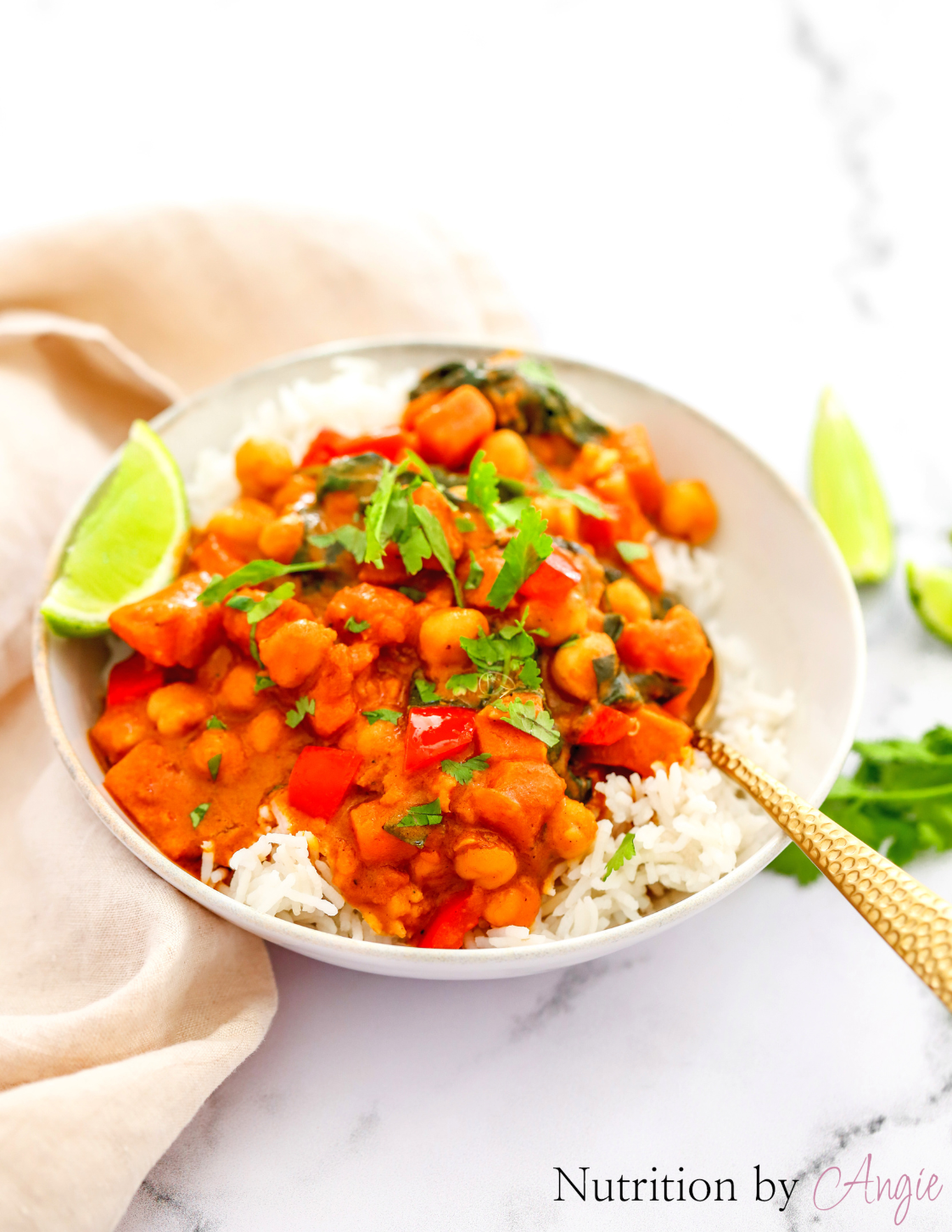
Chickpea Sweet Potato Coconut Curry
Gluten-Free • Vegan • Vegetarian • Plant-Based • Dairy-Free • Egg-Free • High-Fibre • Whole-Food Focused
Introduction
This Chickpea Sweet Potato Coconut Curry is a rich, creamy and comforting plant-based meal made with tender sweet potatoes, protein-rich chickpeas, fresh spinach and red bell pepper, all simmered in a fragrant coconut curry sauce.
The combination of warming spices, naturally sweet vegetables and creamy coconut milk creates a delicious balance of flavours. Curry powder and ground ginger add warmth and aromatic depth, while garlic, onion and tomato paste provide a savoury foundation.
Full-fat coconut milk creates a smooth, velvety sauce that coats the chickpeas and vegetables beautifully. Tamari adds umami, and fresh lime brings brightness and acidity, balancing the richness of the coconut milk.
Sweet potatoes provide beta-carotene, dietary fibre, potassium and complex carbohydrates, while chickpeas contribute plant-based protein, folate, iron and magnesium. Red bell pepper adds vitamin C, and spinach provides valuable micronutrients, including folate, vitamin K and carotenoids.
This gluten-free vegan chickpea curry is a wonderful way to incorporate more legumes, vegetables and aromatic spices into everyday meals.
It is naturally free from meat, eggs and dairy, making it suitable for vegan and vegetarian diets. With certified gluten-free tamari and suitable curry powder, it can also be enjoyed by people following a gluten-free diet.
Perfect for a comforting family dinner, convenient meal preparation or a warming lunch, this curry can be served on its own or alongside brown rice, quinoa or another gluten-free grain.
Although this recipe contains many nutrient-rich plant foods, full-fat coconut milk is also high in saturated fat. Anyone monitoring saturated fat or LDL cholesterol may prefer to replace some or all of it with a lower-saturated-fat alternative.
Benefits of All the Ingredients
Coconut Oil
Coconut oil provides the cooking fat used to soften the onion, garlic and spices.
It has a mild coconut flavour that complements the creamy curry sauce.
Coconut oil contains predominantly saturated fatty acids, particularly lauric acid.
Although coconut oil is plant-based, it contains substantially more saturated fat than oils such as olive or rapeseed oil.
Replacing saturated fats with unsaturated fats can help maintain healthy blood cholesterol levels.
The teaspoon used in this recipe is a relatively small amount, but it adds to the saturated fat already provided by the full-fat coconut milk.
For a heart-conscious alternative, rapeseed oil or olive oil can be used instead.
Coconut oil is naturally gluten-free, vegan and dairy-free.
Onion
Onion provides the savoury foundation of the curry.
As it cooks, its sharp flavour softens and develops a gentle sweetness that complements the sweet potatoes and coconut milk.
Onions belong to the allium vegetable family and contain naturally occurring organosulfur compounds and flavonoids, including quercetin.
They also provide small amounts of:
Vitamin C: Supports normal immune function and collagen formation.
Vitamin B6: Contributes to normal energy metabolism.
Folate: Supports normal cell division.
Potassium: Supports normal muscle function.
Dietary Fibre: Supports digestive health.
Onions also contain fructans, fermentable carbohydrates that can be used by certain intestinal bacteria.
However, fructans may cause bloating or digestive discomfort in people who are sensitive to FODMAPs.
Fresh onion is naturally gluten-free, vegan and dairy-free.
Garlic
Garlic adds aromatic depth and a rich, savoury flavour.
It belongs to the allium vegetable family and contains naturally occurring organosulfur compounds.
When garlic is chopped or crushed, enzymatic reactions produce compounds such as allicin, which contribute to its distinctive aroma.
Garlic provides small amounts of:
Manganese: Supports normal metabolism.
Vitamin B6: Contributes to normal energy metabolism.
Vitamin C: Supports normal immune function.
Selenium: Contributes to normal thyroid function.
The single clove used in this recipe contributes primarily flavour rather than substantial quantities of micronutrients.
Garlic is naturally gluten-free, vegan and dairy-free.
Curry Powder
Curry powder provides much of the warm, aromatic flavour in this dish.
It is typically a blend of spices such as turmeric, coriander, cumin, fenugreek, ginger and chilli.
The exact ingredients vary between brands.
Turmeric
Turmeric contains naturally occurring curcuminoids, including curcumin, which contribute to its golden colour.
Curcumin has been studied for its antioxidant and anti-inflammatory properties, although the amount consumed in ordinary culinary portions is much lower than doses used in many studies.
Coriander
Coriander seeds contain aromatic compounds, including linalool, which contributes to their distinctive flavour.
Cumin
Cumin provides earthy warmth and contains naturally occurring aromatic compounds, including cuminaldehyde.
Fenugreek
Fenugreek adds a slightly bitter, nutty flavour and contains naturally occurring plant compounds.
Curry powder contributes mainly flavour in the amount used, rather than substantial quantities of vitamins or minerals.
Gluten-free consideration: Some commercial curry powders contain additional ingredients or may experience gluten cross-contact during processing. Choose a gluten-free labelled curry powder when preparing this dish for someone with coeliac disease.
Tomato Paste
Tomato paste adds concentrated tomato flavour, richness and colour to the curry.
It is made by cooking tomatoes and reducing their water content.
Tomato paste is particularly well known for containing lycopene, a naturally occurring carotenoid responsible for the red colour of tomatoes.
It also provides small amounts of:
Potassium: Supports normal muscle function.
Vitamin C: Supports normal immune function, although some is lost during processing.
Iron: Contributes to normal oxygen transport.
Naturally Occurring Polyphenols: Plant compounds studied for their antioxidant properties.
Lycopene and Cooked Tomatoes
Cooking and processing tomatoes can make lycopene more accessible for absorption.
Because lycopene is fat-soluble, consuming tomato products alongside dietary fat may improve its absorption.
The coconut milk and cooking oil in this curry provide fat alongside the tomato paste.
Choose tomato paste without unnecessary added sugar or excessive salt.
Plain tomato paste is naturally gluten-free and vegan.
Ground Ginger
Ground ginger adds warmth and a slightly spicy, aromatic flavour.
Ginger contains naturally occurring compounds called gingerols and shogaols, which contribute to its characteristic taste.
Ginger has been studied for its effects on nausea and digestive comfort.
However, the teaspoon used in this recipe contributes primarily flavour rather than a therapeutic dose.
Ground ginger also contains small amounts of manganese and other minerals.
Pure ground ginger is naturally gluten-free, although packaged spice blends should be checked for possible cross-contact.
Full-Fat Coconut Milk
Full-fat coconut milk creates the rich, creamy sauce that makes this curry particularly comforting.
It is made from the flesh of mature coconuts blended with water.
Coconut milk provides a smooth texture and a mild coconut flavour that complements the spices, sweet potatoes and chickpeas.
It contains:
Fat: Provides richness and contributes to the creamy texture.
Manganese: Supports normal metabolism.
Copper: Supports normal iron transport.
Small Amounts of Iron and Magnesium: Contribute to overall mineral intake.
The exact nutritional profile varies between brands and depends on the coconut content.
Coconut Milk and Saturated Fat
Full-fat coconut milk is particularly high in saturated fat.
A 400g can can contribute a substantial amount of saturated fat to the recipe, depending on the brand.
Although coconut milk is plant-based, high saturated fat intake can raise LDL cholesterol in some people.
For a lower-saturated-fat version, consider replacing some or all of the full-fat coconut milk with a lighter coconut milk or a suitable unsweetened soy-based cooking cream.
Light coconut milk generally contains less saturated fat because it contains more water, although the exact amount varies.
Coconut milk is naturally gluten-free, vegan and dairy-free, but packaged products should be checked for additives.
Water
Water helps adjust the consistency of the curry sauce.
It allows the coconut milk, tomato paste and spices to combine into a smooth sauce while providing enough liquid for the sweet potatoes to cook.
Water does not contribute energy or macronutrients, but it is essential for hydration and normal bodily functions.
The amount can be adjusted slightly depending on the desired thickness of the curry.
Tamari Sauce
Tamari adds a rich, savoury umami flavour to the curry.
It is a Japanese-style soy sauce traditionally made primarily from fermented soybeans.
Tamari contains naturally occurring amino acids and flavour compounds that develop during fermentation.
Its main contribution to this recipe is flavour rather than substantial nutritional benefits.
Tamari and Gluten-Free Diets
Although many tamari sauces are made without wheat, not all tamari products are gluten-free.
Some varieties contain wheat or may experience gluten cross-contact during production.
For people with coeliac disease, choose tamari that is clearly labelled gluten-free.
Tamari can also contain substantial amounts of sodium.
Using a reduced-sodium gluten-free tamari may be beneficial for people monitoring their salt intake.
Sweet Potatoes
Sweet potatoes provide natural sweetness, satisfying texture and valuable nutrients.
Orange-fleshed sweet potatoes are particularly rich in beta-carotene, which the body converts into vitamin A as needed.
Vitamin A supports normal vision, immune function and skin health.
Sweet potatoes provide:
Beta-Carotene: Can be converted into vitamin A.
Vitamin C: Supports normal immune function and collagen formation.
Potassium: Supports normal muscle function and healthy blood pressure.
Dietary Fibre: Supports normal digestive function.
Manganese: Contributes to normal metabolism.
Vitamin B6: Supports normal energy metabolism.
Complex Carbohydrates: Provide energy for everyday activities.
Sweet potatoes also contain naturally occurring phenolic compounds.
Sweet Potatoes and Nutrient Absorption
Beta-carotene is a fat-soluble carotenoid.
Consuming sweet potatoes alongside dietary fat can help improve carotenoid absorption.
The coconut milk in this curry provides fat alongside the sweet potatoes.
Sweet potatoes are naturally gluten-free, vegan and dairy-free.
Red Bell Pepper
Red bell pepper adds natural sweetness, colour and a pleasant texture.
It is particularly rich in vitamin C, which supports normal immune function and helps improve the absorption of non-haem iron from plant foods.
Red bell pepper provides:
Vitamin C: Supports normal immune function and collagen formation.
Beta-Carotene: Can be converted into vitamin A.
Vitamin B6: Supports normal energy metabolism.
Folate: Contributes to normal cell division.
Potassium: Supports normal muscle function.
Dietary Fibre: Supports digestive health.
Red bell peppers also contain naturally occurring carotenoids, including capsanthin, which contributes to their bright red colour.
Their sweetness complements the warming curry spices.
Red bell pepper is naturally gluten-free, vegan and dairy-free.
Chickpeas
Chickpeas provide plant-based protein, dietary fibre and a satisfying texture.
Also known as garbanzo beans, chickpeas belong to the legume family.
They are particularly useful in vegan and vegetarian meals because they contribute both protein and complex carbohydrates.
Chickpeas provide:
Plant-Based Protein: Supports normal muscle maintenance and tissue repair.
Dietary Fibre: Supports normal digestive function.
Folate: Contributes to normal cell division and red blood cell formation.
Iron: Supports normal oxygen transport.
Magnesium: Supports normal muscle and nerve function.
Phosphorus: Supports healthy bones and teeth.
Zinc: Supports normal immune function.
Manganese: Contributes to normal metabolism.
Chickpeas also contain resistant starch and fermentable carbohydrates that can be used by certain bacteria in the digestive system.
Chickpeas and Digestive Health
The fibre in chickpeas contributes to normal bowel function and supports a varied dietary fibre intake.
Some of their carbohydrates are fermented by intestinal bacteria, producing short-chain fatty acids.
However, chickpeas can cause bloating or gas in people who are sensitive to fermentable carbohydrates.
Draining and rinsing canned chickpeas can remove some of the fermentable carbohydrates present in the canning liquid.
Plain canned chickpeas are naturally gluten-free, although varieties with added sauces or seasonings should be checked.
Spinach
Spinach adds colour, freshness and valuable micronutrients.
It is particularly rich in folate, vitamin K and carotenoids.
Spinach provides:
Vitamin K: Supports normal blood clotting and bone maintenance.
Folate: Contributes to normal cell division.
Beta-Carotene: Can be converted into vitamin A.
Lutein and Zeaxanthin: Carotenoids found in the eye.
Magnesium: Supports normal muscle and nerve function.
Iron: Supports normal oxygen transport.
Vitamin C: Supports normal immune function.
Spinach also contains naturally occurring polyphenols.
Understanding Iron in Spinach
Although spinach contains iron, it also contains oxalates, which can reduce the absorption of certain minerals.
Combining spinach with vitamin C-rich ingredients, such as bell pepper and lime juice, can help improve non-haem iron absorption.
Spinach is naturally gluten-free, vegan and dairy-free.
Fresh Lime
Fresh lime adds brightness and acidity, balancing the richness of the coconut milk.
Lime juice provides vitamin C, which contributes to:
Normal immune function.
Collagen formation.
Protection of cells from oxidative stress.
Improved absorption of non-haem iron from plant foods.
The vitamin C in lime complements the iron found in chickpeas and spinach.
Lime zest can also be used to add aromatic citrus oils, including limonene.
Fresh lime is naturally gluten-free, vegan and dairy-free.
Why Chickpea Sweet Potato Coconut Curry Makes a Nourishing Meal
Rich in Plant-Based Ingredients
The recipe combines chickpeas, sweet potatoes, spinach, bell pepper, onion, garlic and aromatic spices.
Provides Plant-Based Protein
Chickpeas contribute protein, making the curry more satisfying.
High in Dietary Fibre
Chickpeas, sweet potatoes, spinach and bell pepper provide fibre, supporting normal digestive function.
Rich in Beta-Carotene
Sweet potatoes and red bell pepper provide carotenoids, including beta-carotene.
Contains Important Vitamins and Minerals
The combination of legumes and vegetables contributes folate, potassium, magnesium, iron and vitamin C.
Supports Plant-Based Iron Absorption
Vitamin C from bell pepper and lime helps improve the absorption of non-haem iron from chickpeas and spinach.
Naturally Egg-Free and Dairy-Free
The curry contains no eggs, cheese or dairy ingredients.
Suitable for Gluten-Free Diets
Using certified gluten-free tamari and suitable curry powder makes this dish appropriate for gluten-free diets.
Delicious Serving Suggestions
Brown Rice
Serve with cooked brown rice for additional whole-grain carbohydrates, fibre and minerals.
Quinoa
Quinoa provides additional plant-based protein, fibre and magnesium.
Cauliflower Rice
Cauliflower rice is a lighter vegetable-based accompaniment that pairs well with creamy curry sauces.
Fresh Coriander
Scatter fresh coriander over the finished curry for additional freshness and flavour.
Extra Lime
Serve with lime wedges to add brightness just before eating.
Toasted Pumpkin Seeds
Add a small sprinkle of pumpkin seeds for crunch, magnesium, zinc and plant-based protein.
Tips for the Best Chickpea Sweet Potato Coconut Curry
Cut the sweet potatoes evenly: Similar-sized cubes cook more consistently.
Cook the onion until softened: This creates a sweeter, more balanced flavour.
Avoid burning the garlic: Garlic becomes bitter when overcooked.
Bloom the spices briefly: Heating curry powder and ginger gently helps release their aromas.
Choose gluten-free curry powder: Commercial spice blends may contain gluten-containing additives.
Use certified gluten-free tamari: Not all tamari products are suitable for coeliac disease.
Drain and rinse the chickpeas: This removes excess canning liquid and can reduce some of the sodium.
Adjust the coconut milk: Use a lighter version or replace some with a lower-saturated-fat alternative if desired.
Simmer until the sweet potatoes are tender: They should be soft without falling apart completely.
Add spinach towards the end: Spinach wilts quickly and does not need prolonged cooking.
Finish with fresh lime: Adding lime near the end preserves its bright flavour.
Taste before adding salt: Tamari and curry powder may already contribute sodium.
Adjust the consistency: Add a little water if the sauce becomes too thick.
Store leftovers correctly: Refrigerate in an airtight container and enjoy within approximately 3–4 days.
Freeze for longer storage: The curry can be frozen in suitable containers, although the coconut sauce may separate slightly when reheated.
Reheat thoroughly: Warm gently until piping hot throughout.
Prevent gluten cross-contact: Use clean utensils, cookware and preparation surfaces when preparing this recipe for someone with coeliac disease.