
Protein Bowl with Walnut and Basil Pesto
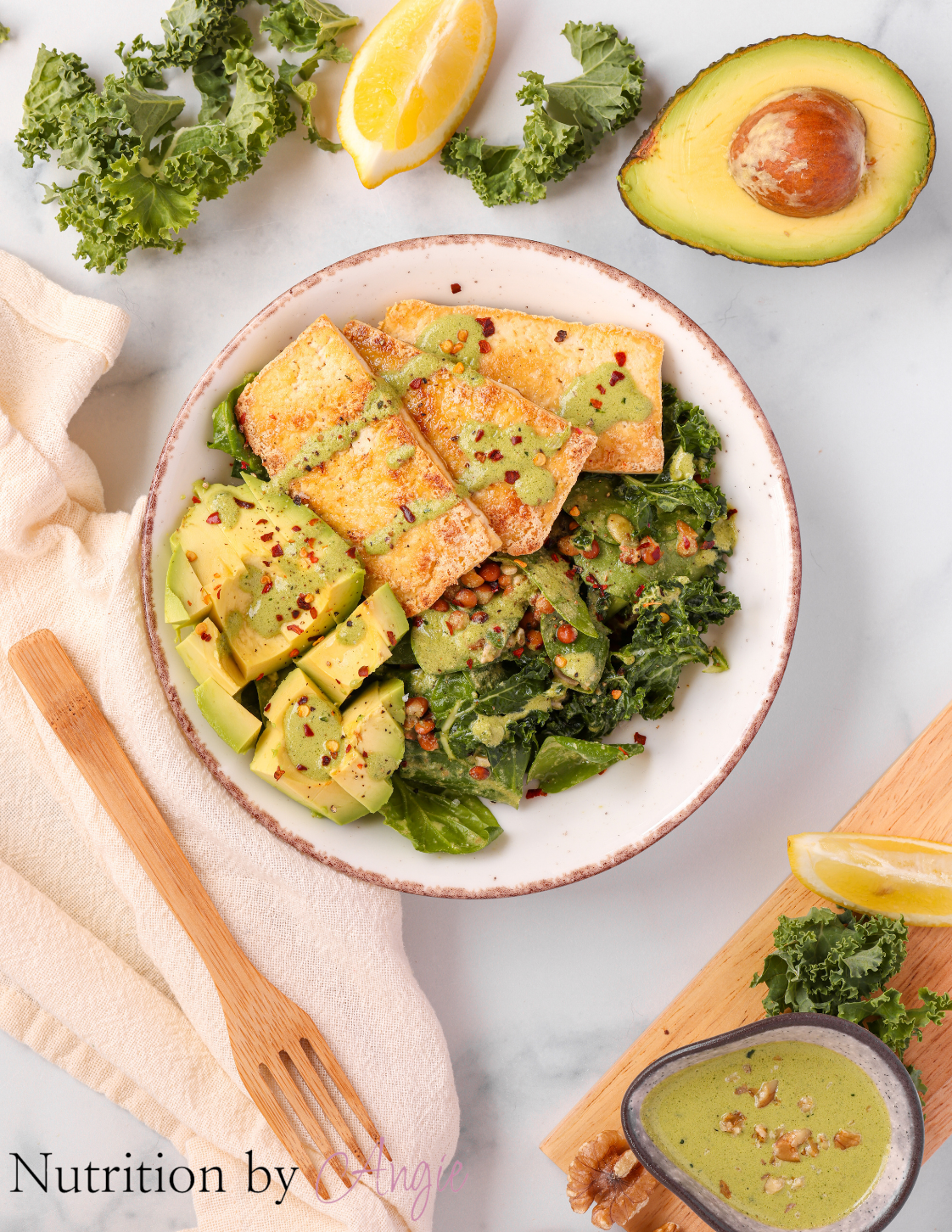
Protein Bowl with Walnut and Basil Pesto
Gluten-Free • Vegan • Vegetarian • Plant-Based • Dairy-Free • Egg-Free • High-Protein • High-Fibre • Whole-Food Focused
Use dairy-free walnut and basil pesto, plain gluten-free tofu and gluten-free labelled packaged ingredients to keep this bowl suitable for vegan and gluten-free diets.
Introduction
This Protein Bowl with Walnut and Basil Pesto is a colourful, nourishing and satisfying plant-based meal packed with protein-rich tofu, hearty brown lentils, leafy greens, crunchy mixed seeds and creamy avocado.
Finished with a fragrant walnut and basil pesto dressing, this wholesome bowl brings together a delicious combination of fresh, earthy, nutty and savoury flavours.
The combination of firm tofu and brown lentils provides a substantial amount of plant-based protein, while kale, spinach and lentils contribute dietary fibre, folate, iron and other important nutrients.
Mixed seeds add crunch, minerals and beneficial unsaturated fats, while avocado contributes a creamy texture and additional monounsaturated fats.
The walnut and basil pesto provides a rich, aromatic dressing that complements the vegetables and legumes. Fresh lemon juice adds brightness and helps balance the richness of the pesto, seeds and avocado.
This gluten-free vegan protein bowl is an excellent choice for anyone looking to include more legumes, vegetables, seeds and plant-based proteins in their diet.
Unlike many protein-focused meals that rely heavily on meat, eggs or dairy, this bowl provides protein from a variety of plant sources.
It is particularly suitable for a nourishing lunch, satisfying dinner or meal-preparation option.
Although the bowl contains nutrient-dense ingredients, the combination of pesto, mixed seeds and avocado also makes it relatively energy-dense. Portion sizes can be adjusted according to individual energy requirements.
Benefits of the Walnut and Basil Pesto Dressing
Walnut and Basil Pesto
Walnut and basil pesto provides the rich, aromatic dressing that brings the ingredients together.
Traditional pesto often contains basil, nuts, olive oil, garlic and hard cheese. A walnut-based version replaces pine nuts with walnuts, creating a slightly earthy flavour.
For this vegan recipe, choose a dairy-free walnut and basil pesto made without Parmesan or other animal-derived ingredients.
Benefits of Walnuts
Walnuts are particularly well known for their content of alpha-linolenic acid (ALA), an essential plant-based omega-3 fatty acid.
They also provide:
Polyunsaturated Fats: Contribute to a heart-conscious dietary pattern when replacing saturated fats.
Omega-3 Fatty Acids (ALA): Provide an essential fatty acid that the body cannot produce.
Copper: Supports normal iron transport.
Manganese: Contributes to normal metabolism.
Magnesium: Supports normal muscle and nerve function.
Plant-Based Protein: Contributes to normal muscle maintenance.
Dietary Fibre: Supports normal digestive function.
Walnuts also contain naturally occurring polyphenols.
Their rich flavour makes them particularly useful in plant-based sauces and dressings.
Benefits of Basil
Fresh basil provides a fragrant, slightly sweet and peppery flavour.
It contains naturally occurring aromatic compounds, including linalool and eugenol.
Basil also provides small amounts of vitamin K, beta-carotene and other plant compounds.
Benefits of Olive Oil
If the pesto is prepared with olive oil, it contributes predominantly monounsaturated fats.
Extra virgin olive oil also contains vitamin E and naturally occurring phenolic compounds.
Replacing saturated fats with unsaturated fats can help maintain healthy blood cholesterol levels.
Choosing a Nourishing Pesto
For a whole-food-focused dressing, choose pesto made with walnuts, fresh basil, olive oil, garlic and simple seasonings.
Check the label carefully because many commercially prepared pestos contain cheese.
Walnut pesto is naturally gluten-free when prepared with suitable ingredients, but packaged varieties should be checked for gluten-containing additives and cross-contact.
Benefits of the Salad Ingredients
Firm Tofu
Firm tofu is one of the main protein-rich ingredients in this bowl.
Made from soybeans, tofu provides complete plant-based protein, meaning it contains all nine essential amino acids.
This makes tofu a particularly useful ingredient in vegan and vegetarian diets.
Firm tofu provides:
Complete Plant-Based Protein: Supports normal muscle maintenance and tissue repair.
Iron: Contributes to normal oxygen transport.
Calcium: Supports healthy bones and teeth when calcium-set tofu is used.
Magnesium: Supports normal muscle and nerve function.
Phosphorus: Supports healthy bones and teeth.
Potassium: Supports normal muscle function.
Zinc: Supports normal immune function.
Tofu also contains naturally occurring soy isoflavones, including genistein and daidzein.
These compounds have been studied for their potential effects on various aspects of health.
Why Tofu Is Useful in a Protein Bowl
Tofu provides a satisfying source of protein without requiring meat, eggs or dairy.
Its mild flavour allows it to absorb the lemon juice and pesto dressing.
Firm tofu also holds its shape well when sliced, making it suitable for salads and meal-preparation bowls.
Choose plain tofu without gluten-containing marinades or seasonings.
Fresh Lemon Juice
Fresh lemon juice adds brightness and acidity to the bowl.
It balances the richness of the avocado, mixed seeds and walnut pesto.
Lemon juice provides vitamin C, which contributes to:
Normal immune function.
Collagen formation.
Protection of cells from oxidative stress.
Improved absorption of non-haem iron from plant foods.
This is particularly useful because lentils, tofu, kale and spinach all contribute plant-based iron.
Vitamin C helps improve the absorption of non-haem iron when consumed as part of the same meal.
Fresh lemon juice is naturally gluten-free, vegan and dairy-free.
Kale
Kale is a nutrient-rich leafy green vegetable belonging to the cruciferous vegetable family.
It provides vitamin K, vitamin C, beta-carotene, dietary fibre and several important minerals.
Kale contains:
Vitamin K: Supports normal blood clotting and bone maintenance.
Vitamin C: Supports normal immune function and collagen formation.
Beta-Carotene: Can be converted into vitamin A.
Folate: Supports normal cell division.
Calcium: Contributes to healthy bones and teeth.
Potassium: Supports normal muscle function.
Dietary Fibre: Supports normal digestive function.
Kale also contains naturally occurring glucosinolates, plant compounds found in cruciferous vegetables.
These compounds can break down into other biologically active substances when kale is chopped or chewed.
Why Kale Works Well in This Bowl
Kale has a slightly firmer texture than many other leafy greens.
Its sturdy leaves hold up well when combined with pesto, lentils and seeds.
Massaging kale briefly with a little lemon juice can help soften its texture and reduce bitterness.
Kale is naturally gluten-free, vegan and dairy-free.
Brown Lentils
Brown lentils are another important protein-rich ingredient in this recipe.
They belong to the legume family and provide an excellent combination of plant-based protein, dietary fibre and complex carbohydrates.
Brown lentils provide:
Plant-Based Protein: Supports normal muscle maintenance and tissue repair.
Dietary Fibre: Supports normal digestive function.
Folate: Contributes to normal cell division and red blood cell formation.
Iron: Supports normal oxygen transport.
Magnesium: Supports normal muscle and nerve function.
Potassium: Supports normal muscle function.
Phosphorus: Supports healthy bones and teeth.
Zinc: Supports normal immune function.
Lentils also contain resistant starch and fermentable carbohydrates that can be used by certain bacteria in the digestive system.
Lentils and Digestive Health
The fibre in lentils supports normal bowel function and contributes to a varied gut microbiota.
Some of their carbohydrates are fermented by intestinal bacteria, producing short-chain fatty acids.
However, lentils may cause bloating or gas in people who are sensitive to fermentable carbohydrates.
Draining and rinsing canned lentils can help remove some of the fermentable carbohydrates present in the canning liquid.
Why Brown Lentils Are Ideal for Salads
Brown lentils retain their shape relatively well after cooking.
Their mild, earthy flavour complements the walnut pesto and leafy greens.
They also add a satisfying texture that makes the bowl more substantial.
Plain brown lentils are naturally gluten-free, although canned varieties with additional seasonings should be checked.
Spinach
Spinach adds freshness, colour and valuable micronutrients.
It is particularly rich in folate, vitamin K and carotenoids.
Spinach provides:
Vitamin K: Supports normal blood clotting and bone maintenance.
Folate: Contributes to normal cell division.
Beta-Carotene: Can be converted into vitamin A.
Lutein and Zeaxanthin: Carotenoids found in the eye.
Magnesium: Supports normal muscle and nerve function.
Iron: Contributes to normal oxygen transport.
Vitamin C: Supports normal immune function.
Spinach also contains naturally occurring polyphenols.
Understanding Iron in Spinach
Although spinach contains iron, it also contains oxalates, which can reduce the absorption of certain minerals.
Combining spinach with vitamin C-rich lemon juice can help improve non-haem iron absorption.
Fresh spinach is naturally gluten-free, vegan and dairy-free.
Mixed Seeds
Mixed seeds add crunch, flavour and valuable nutrients.
The nutritional profile depends on the varieties included.
Common seed mixes contain pumpkin seeds, sunflower seeds, sesame seeds, flaxseeds and sometimes hemp seeds.
Seeds are particularly rich in unsaturated fats, plant-based protein, dietary fibre and minerals.
Pumpkin Seeds
Pumpkin seeds provide:
Magnesium: Supports normal muscle and nerve function.
Zinc: Supports normal immune function.
Iron: Contributes to normal oxygen transport.
Plant-Based Protein: Supports normal muscle maintenance.
Unsaturated Fats: Contribute essential fatty acids.
Sunflower Seeds
Sunflower seeds are particularly rich in vitamin E.
They also provide magnesium, selenium and predominantly unsaturated fats.
Vitamin E helps protect cells from oxidative stress.
Sesame Seeds
Sesame seeds provide calcium, copper, magnesium and plant-based fats.
They also contain naturally occurring lignans, including sesamin and sesamolin.
Flaxseeds
Flaxseeds provide dietary fibre and alpha-linolenic acid (ALA), an essential plant-based omega-3 fatty acid.
Ground flaxseeds generally make their nutrients more accessible during digestion than whole flaxseeds.
Hemp Seeds
Hemp seeds provide plant-based protein, magnesium, phosphorus and unsaturated fats.
They are particularly useful for adding protein and a mild, nutty flavour to salads.
A Note About Portion Sizes
This recipe includes 100g of mixed seeds, which is a substantial amount.
Seeds are nutrient-dense but also energy-dense because of their fat content.
The quantity can be divided across several servings or reduced according to individual energy requirements.
Choose plain, unsalted seeds without added sugar or unnecessary oils.
Avocado
Avocado adds creaminess and provides predominantly monounsaturated fats.
It is particularly rich in dietary fibre, potassium, folate and vitamin E.
Avocado provides:
Monounsaturated Fats: Contribute to a heart-conscious dietary pattern when replacing saturated fats.
Dietary Fibre: Supports normal digestive function.
Potassium: Supports normal muscle function and healthy blood pressure.
Folate: Contributes to normal cell division.
Vitamin E: Helps protect cells from oxidative stress.
Vitamin K: Supports normal blood clotting and bone maintenance.
Vitamin B6: Supports normal energy metabolism.
Avocado also contains naturally occurring carotenoids, including lutein.
Avocado and Nutrient Absorption
Some nutrients found in vegetables, including carotenoids, are fat-soluble.
Consuming vegetables alongside dietary fat can help improve the absorption of certain carotenoids.
The avocado and pesto in this bowl provide fats that complement the leafy greens.
Avocado is naturally gluten-free, vegan and dairy-free.
Fresh Chives
Fresh chives add a delicate onion-like flavour and a refreshing finish.
They belong to the allium vegetable family and contain naturally occurring organosulfur compounds.
Chives provide small amounts of:
Vitamin K: Supports normal blood clotting and bone maintenance.
Vitamin C: Supports normal immune function.
Folate: Contributes to normal cell division.
Beta-Carotene: Can be converted into vitamin A.
Although chives are generally consumed in small amounts, they add flavour and freshness without requiring additional salt.
Fresh chives are naturally gluten-free, vegan and dairy-free.
Why This Protein Bowl Makes a Nourishing Meal
Rich in Plant-Based Protein
Tofu, lentils, mixed seeds and walnut pesto contribute protein, making this a satisfying vegan meal.
High in Dietary Fibre
Lentils, kale, spinach, seeds and avocado provide dietary fibre, supporting normal digestive function.
Contains Heart-Friendly Unsaturated Fats
Walnuts, seeds, avocado and olive oil-based pesto provide predominantly unsaturated fats.
Provides Plant-Based Omega-3 Fatty Acids
Walnuts and certain seeds, particularly flaxseeds, contribute alpha-linolenic acid (ALA).
Rich in Leafy Green Vegetables
Kale and spinach provide folate, vitamin K and naturally occurring carotenoids.
Supports Plant-Based Iron Absorption
Vitamin C from lemon juice helps improve the absorption of non-haem iron from tofu, lentils and leafy greens.
Provides Important Minerals
Lentils, tofu and seeds contribute magnesium, iron, zinc and phosphorus.
Naturally Dairy-Free and Egg-Free
Using vegan walnut and basil pesto keeps the bowl free from dairy and eggs.
Suitable for Gluten-Free Diets
The bowl can be made entirely gluten-free using suitable tofu, pesto and packaged ingredients.
Delicious Serving Suggestions
Roasted Vegetables
Add roasted broccoli, courgette or bell peppers for additional vegetable variety.
Quinoa
Serve with cooked quinoa for extra carbohydrates, fibre and plant-based protein.
Fresh Cucumber
Add sliced cucumber for a refreshing contrast to the rich pesto dressing.
Cherry Tomatoes
Include fresh cherry tomatoes for additional vitamin C, potassium and naturally occurring lycopene.
Extra Lemon
Finish with a squeeze of fresh lemon juice to brighten the flavours.
Tips for the Best Protein Bowl with Walnut and Basil Pesto
Choose firm tofu: It holds its shape well when sliced.
Use plain gluten-free tofu: Avoid varieties with gluten-containing marinades.
Drain and rinse the lentils: This removes excess canning liquid and can reduce some of the sodium.
Massage the kale: A little lemon juice helps soften the leaves.
Use fresh spinach: It adds a tender contrast to the firmer kale.
Choose a variety of seeds: Pumpkin, sunflower, hemp and flaxseeds provide different nutrients.
Consider the seed quantity: The 100g of mixed seeds makes the dish energy-dense, so divide the bowl into appropriate portions.
Choose dairy-free pesto: Traditional pesto often contains Parmesan cheese.
Use olive oil-based pesto where possible: This provides predominantly monounsaturated fats.
Add avocado just before serving: This helps preserve its colour and texture.
Finish with fresh chives: They provide a mild onion flavour.
Prepare ingredients ahead: Cooked tofu and lentils can be prepared in advance.
Store the dressing separately: This helps keep the vegetables fresh.
Refrigerate leftovers: Store the prepared components in airtight containers for approximately 3–4 days, following the storage instructions for the tofu and pesto.
Prevent gluten cross-contact: Use clean utensils, chopping boards and preparation surfaces when preparing this recipe for someone with coeliac disease.